Author: staceymeeker

  • Nothingness and the Scene of Representation: East and West

    I

    As the Western-centered world order established after WWII appears to be losing its grip, most significantly in the West itself, considerations of “scholarship” and “theory” can no longer be pursued as if in the context of a civilization confident of self-perpetuation. As GA makes clear, the underlying purpose of language, religion, and all the other trappings of human culture is simply to perpetuate humanity itself. What we may consider the nobility of this quest is that of a simple response to necessity, as a result of which our ancestors invented human culture, not out of some transcendental drive toward perfection, but in order to preserve their species’ existence.

    Our species’ “transcendental” nature is a consequence of the fact that, being driven by necessity to create language, it has likewise been driven at every stage to improve its cultural functioning by the need to preserve itself, in what the French call a fuite en avant, a flight from the past toward the future. In past eras, this self-preservation was sought separately by communities, tribes, confederations, empires, and nations, but today, to an increasing extent, we feel the need to preserve humanity as a whole from self-destruction. Thus we combat, for example, the dangers of “climate change,” whose dangers we substitute for the far greater dangers posed to humanity by humanity itself, fearing—as we have always done—to face the latter directly.


    In order to understand the point of GA as the solution to the quintessentially modern disillusion with the metaphysical rationalization of the sacred, we must ask ourselves how a minimalist understanding of the function of language, and by extension, of the human itself as a cultural phenomenon, can be of service in helping us to diagnose our present state of incipient crisis and hopefully thereby increase our species’ chances of survival.

    The danger faced by the West in the cybernetic age is that the vast proliferation of the quintessentially human characteristic of “scenicity,” now transformed into the screenicity embodied most visibly in our ubiquitous smartphones, facilitates the intensification of what I have called the epistemology of resentment. This world-view, which grants resentment ipso facto moral truth, has generated since the French Revolution ideologies that on the one hand deny legitimacy to hierarchical differences, while on the other facilitating the accumulation of vast divergences in wealth and status, as the billionaire class, all the while denying any justification of privilege, profits from allowing the public to blanket the world with expressions of this same poisonous epistemology. The coexistence of multi-billionaires with the “anti-racist” doctrine of diversity-equity-inclusion or DEI can be considered an updated version of 19th-century Tory paternalism, but unlike its prototype, it is deliberately hostile to the traditional values of civil society including the rule of law and the traditional family, of which what increasingly seem the final remnants embody what we can still call “liberal democracy.”


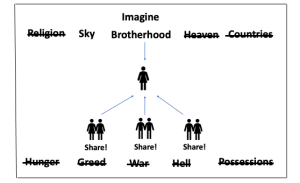
    As befits a student of the late René Girard, I have always been somewhat skeptical of the pretensions of Western philosophy. Hence I was from the first attracted to the dominant tendency in post-Hegelian philosophy to seek to escape the prison-house of language—a phrase become famous when Fred Jameson made a book title of Erich Heller’s fanciful translation of what Nietzsche had simply called “linguistic constraint” (sprachlichen Zwang: see Emily Apter, “The Prison-House of Translation?” Diacritics 47.4 2019, p. 54). What strikes me on reflection is that, as in one of those hippie drawings where the protagonist starts out enclosed in a cardboard box situated in a lovely landscape that he knows nothing of, this imaginary confinement is a condition based on what we may call the “metaphysical perspective” that is common to all of Western philosophy, even including its “existential” quasi-post-metaphysical stage. This perspective is founded on the tacit acceptance of Plato’s Myth of the Cave: viewing the “Ideas” of language as transcendent guarantees of ontology—of the ultimate understanding of reality. Which is to say that metaphysics is, very simply, the refusal to see that whenever we speak of thinking, we are speaking of language: the system of signs that permit us to communicate with our fellows—a system, as I have hypothesized, initiated in order to avoid the potential for intraspecific violence inherent in mimetic desire.

    The only exception to the linguistic mode of thinking is the sort of reasoning that we can attribute to Kohler’s apes, who were capable of picking up a pole or building a pile of boxes in order to reach a bunch of bananas hanging from the ceiling. Humans too engage in such thinking; when we want to put salt on our food, we look for the salt shaker, perhaps having to open a cabinet, and on finding it, satisfy our need, presumably without any use of even “internal” language. But when it comes to the kind of thinking that goes into philosophy books, or even newspapers, as soon as “thinking” means performing an act of reasoning or affirming a “truth,” which really means a true proposition, we are talking about the use of words. Without words, without signs whose meaning is in principle shared by our community, we cannot communicate our thoughts to others, and the fact that we can think privately without such communication overlooks the fact that our words connect us willy-nilly to the community formed by their users, however broadly or narrowly defined.

    However surprising it may seem, the simple idea that the human may be defined by the communication of signs on a scene seems never to have been previously thought of as sufficient unto itself as a definition of the human. Yet it neatly and unambiguously distinguishes homo sapiens from all other species. And although we all recognize that language in the human sense, even including pointing, is unique to our species, the idea that the scene is as well never seems to arise. (The bee-dance famously analyzed by Karl von Frisch is no exception: see Chronicle 724.) But all that is characteristically human is dependent on the cultural phenomenon of language, communication via non-instinctive signs, which can more specifically be described as gestures/sounds/inscriptions emitted deliberately, and whose utterance can be traced to a uniquely human act of what Jacques Derrida called différance: the deferral of the attempt to appropriate the object of semantic reference.

    Derrida understood the deferral embodied in an utterance as permitting the speaker to choose within a paradigm of words, for example, in deciding what color to call a given object. But the fundamental relationship of language to deferral is simply that language—think again of pointing—begins with a deliberate substitution of reference for appropriation. Thus I believe that we can say with some degree of confidence that the first sign may be defined as an aborted gesture of appropriation. Instead of grasping for something, we point at it—something which, surprisingly, animals, even chimps with hands, do not do as an act of communication.

    The scene of human interaction is not, as some of my early formulations of the originary hypothesis may have suggested, entirely defined by its “interdicted” center. But this configuration is indeed the source of the sharp gradient of meaningfulness between objects of interest and the empty space that surrounds them. Jean-Paul Sartre captured this aspect of the human scene in L’Etre et le Néant by speaking of a néant or nothingness (a term we shall encounter in Nishida) separating the human Self or pour-soi from its objects, a space which is so to speak an invisible barrier and consequently the source of desire. But more broadly, the human scene is a space of cultural interaction. A degree of potential scenicity exists between any two human beings; in the normal circumstances of “civil society,” their interaction will involve at least in part the mediation of language. The theatrical scene, or stage, which gave its name to this phenomenon, offers its audience a passive spectacle. But on the scene of everyday human interaction, there need be no predesignated participants and/or spectators. Indeed, making this distinction explicit defines, outside the norms of everyday human activity, the worlds of ceremony and art, a basic definition which is not modified in its essence by the postmodern violations found in spectator interactions with “installations” and the like.

    What permits this delimitation is what we call the sacred. The aborted or “deferred” gesture of appropriative action that came to be interpreted as a sign reflected a sense of interdiction surrounding the desired object, which we can only designate because we feel the attempt to possess it is impossible. The justification for calling it sacred is that it is experienced as the effect of an external interdiction whose authority we feel we should obey, but as Adam and Eve discovered, we may indeed choose to disobey, often but not always at a cost.

    My pet example of this experience—the simplest way for us to re-experience the originary event of human language—is our hesitation to take the last canapé on the serving dish at a party when we see another person reaching for it. Our aborted gesture feels “instinctive,” but it is not a reflex action like pulling your hand back from a hot surface. This action of deferral may indeed be considered the minimal human experience, the germ of both language on the one hand (designating the canapé rather than grabbing it) and religion on the other (treating the canapé as an interdicted or sacred object that we must admire from a distance without attempting to possess it).


    When I claim that GA is truly a new way of thinking, I do not mean that no one else has ever sought to provide an explanation for the origin of language. As I discussed in Chronicle 614, primatologist Richard Wrangham in The Goodness Paradox (Pantheon, 2019) emphasizes the human need to contain violence, and at one point suggests that the first use of language would have been to organize coalitions for the purpose of eliminating any member of the proto-human group found to be particularly prone to violence. Another explanation I have seen recently is that, having learned to use tools, proto-humans became able to inflict greater damage on each other than species fighting with bodily weapons alone, leading to the need for language to permit conscious negotiations that would defer conflict.

    But such superficially attractive hypotheses are anything but minimalistic, and above all, they fail to take into account the fundamental difference, which Terrence Deacon traces back to their control by different parts of the brain, between reflexive signals and conscious (and “arbitrary”) signs, which depend precisely on what I have been calling, after Derrida, deferral. Thus most recent writing about language origin deals, as in these examples, with the potential correlation with language of empirical details of primate interaction such as sociality or brain function, and seeks, in popular-science terms, to demonstrate that crossing the “Rubicon” of language wasn’t really all that great a problem.

    In this domain, the philosophical tradition retains its advantage over the empirical social sciences: the passage to language is indeed a Rubicon, and the empirical sciences lack a conceptual category into which a Rubicon can fall. What Engels called the “dialectic of nature” cannot be expressed in a scientific vocabulary. The fact that GA’s originary hypothesis, following Roy Rappaport’s neglected conclusion in his 1999 Ritual and Religion in the Making of Humanity (Cambridge UP) that the birth of language and religion must have been coeval, insists on introducing the category of the sacred to explain the sense of interdiction that gives birth to language tells us that empirical science is not capable of formulating a hypothesis for crossing this “Rubicon,” although this does not mean that its positive results, in this case the emergence of the human conscience or moral sense, remain in any way a transcendental mystery.


    Unlike the hard sciences, the fields of the “humanities” were not conceived as laboratory-based endeavors. Since the 19th century, literature and art themselves, and then the study of literature and art, had come to be seen as a privileged avenue toward understanding the human-in-general—that is, toward anthropology. 20th-century developments in this direction included Anglo-American “new criticism” and Russian formalism. Arguably the post-WWII French version of this movement, la nouvelle critique, sometimes spoken of as “post-structuralism,” was its last and most ambitious stage.

    This ambition was greatly stimulated in the US by the 1966 conference on The Languages of Criticism and the Sciences of Man, organized at Johns Hopkins University by René Girard and his colleagues, which brought a number of postmodern French thinkers to the US for the first time, many of whom continued to visit our campuses. This produced what literature departments at the time called “French Theory.” Jacques Derrida’s rock-star status in the 1980s and 90s, scarcely believable today, along with the only slightly lesser stardom of several other French critics (Foucault, Lacan, Deleuze, Althusser…), reflected its phenomenal outreach, which went beyond language and literature departments to influence scholars in the social sciences.

    Thus in the French Theory era, the ambition to escape from metaphysics led thinkers on the border of the humanities and social sciences to seek to understand the human at its root—to create what Girard called fundamental and I have called generative anthropology. This attitude was prevalent in the literary fields when I began my studies in the 1960s—and had the good fortune to study with the one humanistic thinker who had more faith in the anthropological truth of religion than of philosophy.

    But ironically, just at the moment around 1990 when GA’s humanistic theory of language origin emerged within “French Theory,” the era of its currency was coming to an end. (Hegel would no doubt have appreciated the dialectical nature of this transition.) Instead, the “deconstructive” element that had been focused on escaping the metaphysical “prison” turned its attention away from abstract thought to the directly political domain of Left politics and to what I have called the epistemology of resentment, the foregrounding of the resentment of inequality as the source of moral values, as though it were independent of the very structure of the human community that the originary hypothesis explains in terms of the sacred. With the emergence of “Wokeness,” humanistic thought turned away from its ambition to understand the human at its root, electing instead a Manichean pseudo-Marxism that saw the human community as from the beginning divided between oppressors and victims.

    Today, when survivors of French Theory such as Judith Butler can only spout post-Marxist varieties of Wokism, GA may appear somewhat passé. Yet we should remember that fashion is a poor indicator of what really matters in the course of humanity’s ongoing attempt to understand itself.

    II

    In our conference in Nagoya in 2017 (see Chronicles 515516), I compared the paradoxes of the Greek Eleatic philosopher Zeno, the best known of which is that of Achilles and the Tortoise, with the paradoxes of Nagarjuna: the traveler who doesn’t travel, etc. It is easy to see from a modern perspective that Zeno’s paradoxes of motion could be “solved” by a more advanced mathematical system in which the infinite number of “steps” required for Achilles to catch up with the Tortoise could be reduced to the sum of an infinite series. In contrast, Nagarjuna’s critique did not concern the accurate description of motion, or of anything else, but what he grasped as the necessarily paradoxical relationship of language to reality: that no sentence or series of sentences could fully “reproduce” or “embody” the traveler’s action.

    I concluded from this example that “Western” thought was ultimately concerned with reducing the world to an efficient system of notation, one that would permit such things as distances and the area under curves to be calculated, whereas the “Eastern” point was rather that no act such as the traveler’s could ever be fully captured by one or any number of sentences; what primarily mattered was not to improve our techniques of representing reality, but to realize that it was the scene of representation on which we observed and spoke together about these phenomena that was the fundamental, necessary element. That is, language was not unimportant, but its practical function in telling us about the world was less significant than the fact that as humans we possessed a scene on which we could share our experiences through language and other representational forms, however incapable we would always be of fully expressing the reality it represented.


    The attempt to draw a contrast between Nishida and Western philosophy is obviously complicated by the fact that he was the Japanese philosopher most preoccupied with Western philosophy. But between his 1911 Inquiry into the Good  and his final work, The Logic of the Place of Nothingness and the Religious Worldview, published after his death in 1945, there is an obvious return from his interest in Western thought to a more characteristically Eastern perspective. Interestingly enough, this change is above all evident in his constant references to nothingness as achieved by self-negation.

    Rather than immediately attempt to explicate these “Eastern” uses of the notion of nothingness, it will be more useful in the context of my own “Western” doctrine of generative anthropology to return to them following a discussion of the best-known use of the term “nothingness” in Western philosophy—that of Jean-Paul Sartre, whose most significant philosophical work was entitled L’être et le néant, translated as Being and Nothingness—a work published in 1943 that Nishida presumably did not have a chance to read. (We should note in passing that the French word néant is a much more natural term than “nothingness,” which exists only in philosophical discourse, whereas néant is often used as an emphatic synonym for “nothing.”)

    There is a fascinating and little-known “Japanese connection” relative to Sartre’s use of néant. In “The Problem of the Self in the Later Nishida and in Sartre,” Philosophy East and West, 44, 2 (Apr 1994): 303-316, Brian Elwood pointed out that in 1928, the 23-year-old Sartre had weekly discussions in Paris with the Japanese philosopher Kuki Shuzo. Quoting Elwood:

    Apparently Kuki and the young Sartre engaged in conversations on the topic of modern French philosophy. Although it is not clear that Sartre exerted any special influence on Kuki, it is now evident that it was Kuki who played the crucial role of introducing Sartre to the thought of both Husserl and Heidegger. (303)

    This last detail is certainly ironic: this celebrated European existentialist first learned about existentialism’s major sources from a Japanese philosopher! Thus it is far from impossible that Sartre’s adoption of the term néant was an effect of Kuki’s influence.

    Ellwood’s focus on Sartre’s use of néant is entirely “existential,” referring either to the self’s lack of a preconstituted essence or its ultimate death. Yet Sartre’s use of this term in what I would call an anthropological sense is not related to abstractions like our mortality or lack of an “originary essence.” It is, in contrast, the key element of his description of the human self-consciousness or “for-itself,” in French pour-soi, translating Hegel’s für-sich. The néant, the “free space” in the human self, a term that has no counterpart in Hegel, is what permits the pour-soi or human Self to contemplate its objects, cut off from the urges of appetite. This separation from our “instincts” is precisely what distinguishes human language from animal communications. It is on this self-conscious basis that we have built around our use of signs the rest of human religious, esthetic, and scientific culture. All derives from what was at its origin the scene of language on which the human self, Sartre’s pour-soi, contemplates its objects, separated from them by a néant which is a space of freedom.

    The spatial metaphor of the néant referring to the free space between the self-conscious human pour-soi and its object is the very root of Sartre’s “existentialist” philosophy of human freedom—distinguishing him from Heidegger and all the others, none of whom provide a simple physical analogue of what we can call the scene of consciousness.


    Clearly when Sartre described the human self as a pour-soi incorporating a spatial néant that separates the self from its object, he did not have in mind GA’s hunting/scavenging scene and even less its scenario of the origin of language. For, ironically enough, a striking feature of Being and Nothingness is that language as such is barely mentioned. Sartre makes a categorical distinction between the human self/mind and those of animals that reprises Descartes’ idea that animals were “soulless” like machines. Yet he never refers to our use of signs; he attributes this distinction entirely to the nothingness within the pour-soi or human consciousness that, by separating the self from its objects, makes it completely free in its relationship to them, but fails to consider the anthropological source of this néant in the individual’s relationship with his community.

    To the human pour-soi, Sartre contrasts the in-itself or en-soi, a parallel Hegelian term that describes being that is not “for”-itself, but simply is, like that of a rock—a category within which, following the example of Descartes, Sartre includes all other living beings, even the higher animals. Thus in contrast to the néant inside the pour-soi, Sartre conceives the entire world of the en-soi, from the stars and planets to grains of sand, as lacking in free space, as a collection of objects so to speak jammed up against each other. The idea of le néant as being embodied, for example, by interstellar “empty” space, is just the opposite of Sartre’s idea: his néant is solely a metaphorical mental space between the subject and the object that embodies human freedom.


    Let us now return to the East and try to understand what relationship Sartre’s néant bears to nothingness in Nishida and in the Buddhist tradition. In this tradition, rather than one thinker’s neologism, nothingness/Nirvana is a central conception at the intersection of religion and philosophy—indeed, one that makes the need for this Western distinction all but unnecessary. I hope to persuade you that, if we can justify this rapprochement, our understanding of Eastern thought will be shown to confirm and enrich my earlier point in describing Nagarjuna’s paradoxes as not so much critiques of language as reminders that the specific correspondence between language and “reality” is a less fundamental component of language than its demonstration of the néant that characterizes the scene of representation. And this is true not merely of the scene of language, but of the cultural scene in general, whether taking place within an individual mind, in a ritual or theatrical setting—or in a simple conversation, an exchange among humans where all freely emit, receive, and interpret the signs exchanged among the parties, each of whom embodies Sartre’s conception of a pour-soi inhabited by a néant.

    As I mentioned in my 2017 talk, the very idea of “mindfulness” that Westerners associate with Eastern thinking makes clear that these exercises that turn the mind’s attention to its own activity, for example by making you focus on some trivial object or repeat a mantra, are in the first place demonstrations of the néant within the pour-soi, all the more convincing for dispensing with philosophical terminology.

    What is “liberating” about focusing on a candle-flame or repeating a nonsense-word? It is superficially just the opposite of a “free” activity. But its point is to exemplify your own power over your attention, which implies your power to direct it elsewhere: the purpose of the exercise is to make you aware of this non-reflexive, conscious freedom to focus your attention, which is the real sense of the néant.

    It is in this context that the entire structure of Eastern thought centered on “nothingness” must be understood. Nothingness is the stuff of freedom. Just as samsara is meant to progress through a series of incarnations to the nothingness of Nirvana, so our specific intentionalities are, like the sentences whose incomplete grasp of reality Nagarjuna rejected, merely steps on the way to the universal freedom of the pour-soi as embodied in the néant from within whose protection we contemplate the world.

    To demonstrate these points, let us examine a few selections from Nishida’s final work, The Logic of the Place of Nothingness and the Religious Worldview (emphases mine):

    (69) Because God, or the absolute, stands to itself in the form of a contradictory identity—namely as its own absolute self-negation, or as possessing absolute self-negation within itself—it exists and expresses itself through itself. Because it is absolute nothingness, it is absolute being.

    (70) A God merely transcendent and self-sufficient would not be a true God. God must always, in St. Paul’s words, empty himself.

    (78) To know of one’s own death is already to exist while being nothing. To exist while being absolutely nothing is the ultimate self-contradiction.

    (87) The true absolute does not merely transcend the relative . . . It must absolutely negate, and thereby express, itself within itself.

    My position is . . . that eternal life is gained at the point where birth and death (samsara) and no-birth and no-death (nirvana) are realized as one. Samsara and nirvana, the self and the absolute God, are for me expressed in that verse of Daito Kokushi which refers to the paradoxical relation of simultaneous presence and absence of the self and the absolute.

    Buddha and I, distinct through a billion kalpas [1 kalpa=4.32 billion years] of time,
    Yet not separate for a single instant;
    Facing each other the whole day through,
    Yet not facing each other for an instant.

    (96) The true individual arises as a unique, momentary self-determination of the absolute present. . . . I interpret “having No Place wherein it abides, this Mind arises” in this light.


    I think the comparison between the néants of Sartre and Nishida allows us to understand why, despite all Eastern accomplishments in mathematics (zero, the “Arabic” numbers) and in science, as detailed in Joseph Needham’s series on Science and Civilization in China, it was the West with its conception of individual liberty, the freedom of the individual scene of representation, that opened up the world to modernity. Eastern nothingness is impersonal; it is not the nothingness inside my mind, as in Sartre, but nothingness as the limitless fecundity of what is in fact the mind, but a mind de-personalized—Sartre’s pour-soi extended to the endless womb of the universe.

  • Jewish Trump?

    If there is one thing I can guarantee about the antisemitic rioters of the past few months, it is that none of them intend to vote for Donald Trump. But something that does not appear to have been noticed by our public intellectuals is that the language of TDS—Trump Derangement Syndrome—is curiously similar to that of antisemitism, in both its vulgar mode (of which I need not give examples) and its “respectable” mode.

    For example, in the National Review, and even more egregiously in Commentary, the references to Trump exude, if at a higher density, the same odor of distaste as would once have been found in similarly “respectable” publications in the days when antisemitism was… “respectable.” Which is to say that formerly, in civilized society, one did not express open hatred of the Jews, and certainly not the murderous language of the pogrom, but rather a cultivated distaste, as if speaking of someone arrested by the Vice Squad.

    Here are a few examples from the latest issues: Commentary of June, and National Review of July, 2024:

    National Review: “The Week”, pp 4-6:

    [Trump] said [. . .] that the Biden administration was “running a Gestapo administration [. . . .]” Spritzing baseless Nazi comparisons at a time of heightened antisemitism is as gross as it is immoral. The only mitigation of such sentiments—and it isn’t much—is Trump’s frivolousness and inattention. He will utter some new outrage with the next sunrise. What a fine candidate Republican voters have saddled their party with.

    Trump’s prior efforts to falsely claim voter fraud by tarnishing early voting needlessly disadvantaged the Republican Party by leading it to neglect votes cast before Election Day.

    Michael Cohen, Trump’s former lawyer and bumbling “fixer” [. . .] is a loathsome figure, but that could cut both ways with the jury, loathsomeness being what made him useful to Trump for over a decade.

    * * *

    Commentary: Brian Stewart, Review of Robert Kagan’s Rebellion: How Antiliberalism is Tearing America Apart, pp. 49-53:

    The Trump phenomenon in American politics is simultaneously an eruption of an anti-liberal tradition [. . .] as well as the ignoble residue of conservative dogma as it has evolved in modern times.

    In our day, the crisis of American democracy, narrowly construed, is the result of the boorishness and malevolence of one man and of the vast swathes of American society that yielded to his misrule. The riot at the Capitol on January 6, 2021, should lay to rest any notion that Trump harbors any allegiance to constitutional principles.

    An undisguised demagogue who regards republican virtue with indifference bordering on contempt would never have pulled off a successful insurgency against a healthy and vigorous conservative party.

    Given Trump’s dearth of republican virtue, [. . .] the broad acquiescence to Trump as the Republican nominee also pointed to an attenuated sense of honor among a sullen Republican establishment.

    Somewhat begrudgingly, Kagan endorses the bien-pensant conceit that Trump is a latent fascist. [. . .] Notwithstanding Trump’s sound and fury against democratic norms, his record in office, reflecting his disordered character, suggests an idle and inept kleptocrat more than a ruthless dictator seizing power like the 18th Brumaire [i.e., Napoleon in 1799].

    * * *

    The NR material is typical of their tone of disparagement, as the contemptuous vocabulary (gross, immoral, frivolousness, inattention…) makes clear.

    But Stewart’s piece in Commentary is really over the line. A Jewish publication, which has expressed precious little thanks to Trump for his many acts of support to Israel, is willing to publish, at a time when Israel is struggling to win a war in the face of the current administration’s bad faith, a review filled with scurrilous name-calling that I doubt the journal has ever used in such concentration concerning another American politician, let alone a former and possibly future President. How indeed can it have the chutzpah to refer in such terms as ignoble, boorishness, malevolence, undisguised demagogue, idle and inept kleptocrat to the former president who has given Israel the firmest support of all since its foundation?

    No doubt not more firmly opposing the January 6 riot was in bad taste; no doubt Trump has other weak points. But if keeping up appearances is something we must take seriously, how can we even compare these faux pas with the whole series of crudely disrespectful acts directed at Trump by his political enemies from his very first days in office? The Mueller investigation; two impeachments; a raid on his residence, and to top it off, the current lawfare farce on a level that has never been in any way approached in the history of the US… Do we have to expect as the next step a coup d’état or an assassination?

    I have always been struck by how many Jews, like the editors of Commentary, rate Trump just a few millimeters above David Duke. The fact that he did more for Israel than any previous president, even including Harry Truman, who refused to supply arms in 1948 when the Jews were fighting for their lives, has apparently not gained him one milliliter of sympathy from this respectable Jewish publication, not even now when the contrast with Biden, let alone with real antisemites—who were, as this issue was being prepared, besieging our university campuses and city streets, financed by well-known “philanthropists”—is all too evident.

    And yet…


    And yet there is a sense that the violence of this vocabulary should be interpreted a contrario as reflecting an excessive familiarity, a sense of embarrassment such as one feels when a member of one’s family is caught committing a crime. Commentary‘s obsessive desire to distance itself from Trump could well be suspected of belonging in the category of “protesting too much.”

    On a deeper level, what offends the world of Commentary is indeed a personality trait that Trump shares with the Jews, although in a more strident fashion than a Jewish politician would find appropriate—one that I would not hesitate to call his firstness. As I pointed out at the time of the 2016 election, Trump was the only one of the dozen-plus candidates in the pre-nomination debates, aside from his future cabinet choice Ben Carson, who addressed himself directly to what was not yet called Wokeness: the turning of the American Left toward identifying with the resentment of designated “victims.” And conversely, as we have seen, this resentful virtue-signaling that was taking over the presumed institutional safeguards of our intellectual integrity was in retrospect the perfect vehicle for the return of antisemitism to an all-but-respectable public presence for the first time since the discovery of the Nazi death camps.

    Thus the overwrought tone of Stewart’s review secretly reflects the Jewish need to find in one’s own camp the cause of one’s misfortune. In the traditional battle of Jew vs antisemite, now seemingly revived, it’s the Jews we have to be careful of, since we have no control over the Gentiles. Trump’s boorishness and disordered character, not to speak of his frivolousness and inattention, are just the kind of thing that gets our people in trouble!

    And, as we have previously noted, Trump has Jewish grandchildren.

  • “Ordinariness of Spirituality”: An Anthropology of Personal Integration from a Perspective of Japanese Buddhist Philosophy

    Introduction

    Generative anthropology posits a collective and private scene tied to language and signification. Since both Eric Gans and Ian Dennis have begun a conversation with Buddhism and the problematic nature of desire as seen on the website of Anthropoetics (Gans, 2016a, 2016b; Dennis, 2016), I would like to engage that conversation in this presentation through a model of the self, derived from Japanese philosophy, specifically, “linguistic ālaya-vijñāna” in the philosophy of Toshihiko Izutsu, and “logic of place,” “philosophy of the individual,” and “self-identity of absolute contradiction” in the philosophy of Kitaro Nishida, both of whom are representative Japanese philosophers. I then examine the linguistic data of book reading sessions for a book on a cancer fight in order to verify the “ordinariness of spirituality” hypothesis.

    Spirituality

    First of all, I argue that each person embodies a spirit and that “spirituality” emerges at every moment in our daily lives. This is what I call the “ordinariness of spirituality” hypothesis. Here is WHO’s definition of “spiritual.”

    “Spiritual” refers to those aspects of human life relating to experiences that transcend sensory phenomena. This is not the same as “religious,” though for many people the spiritual dimension of their lives includes a religious component. The spiritual aspect of human life may be viewed as an integrating component, holding together the physical, psychological and social components. It is often perceived as being concerned with meaning and purpose and, for those nearing the end of life, this is commonly associated with a need for forgiveness, reconciliation, and affirmation of worth. (WHO, 1990, pp. 50-51)

    This statement or definition means that any human being is a spiritual existence (Kubotera, 2021, p. 67), and it entails the “ordinariness of spirituality” hypothesis, since every time we do something or say something as a spiritual existence, our actions or utterances necessarily reflect our spirituality, in other words, our spirituality comes to arise as our specific visible or audible actions or utterances. And here is a very common and general definition of “spirituality” by a scholar:

    Spirituality is a dynamic and intrinsic aspect of humanity through which persons seek ultimate meaning, purpose, and transcendence, and experience relationship to self, family, others, community, society, nature, and the significant or sacred. Spirituality is expressed through beliefs, values, traditions, and practices. (Puchalski et al., 2014)

    This definition was initially created in palliative care scenes, and it actually works well for spiritual care workers and care practitioners in the hospitals and other medical facilities. It is often said that when we face a crisis such as a terminal illness, a devastating disaster, a serious accident, unbearable difficulty or irrational misfortune, we become painfully aware of our spirituality. And Puchalski’s definition supposes such cases. However, as I mentioned above, our ordinary life is full of spirituality whether we are aware of it or not. Hence, I have tried to verify this “ordinariness of spirituality” hypothesis, using some everyday linguistic data. But before doing that, as a Buddhist monk, I will redefine “spirituality” from the perspective of Japanese philosophy which is deeply embedded in Buddhist concepts.

    Suzuki Daisetsu

    Suzuki Daisetsu, a well-known Zen monk who popularized Zen throughout the world, defined “Japanese spirituality” as ‘non-duality’ (Suzuki, 1972). ‘What is needed is something that somehow sees that the two are really not two, but one, and that the one is, as it is, two.’ Kashino and Becker argue that based on this fundamental characteristic of non-duality, we can note five characteristics of Japanese spirituality (Kashio & Becker, 2021, pp. 5-6):

      • The first is ‘achieving spirituality through praxis.’ Spirituality cannot be reduced to a form or object, but it can be triggered by body-mediated practice.

      • The second is ‘qi’ (invisible/impersonal spiritual energy). Eastern philosophy and religion traditionally understand human existence with a third term, like ‘breath,’ or ‘invisible impersonal energy,’ to the dichotomy of mind and body.

      • The third is ‘interdependence/interconnectedness.’ Spirituality is often described in psychology and other disciplines as an awareness or sense of individual existence. However, spirituality is fostered in the relation of the non-dual unity of self and other, underlying any superficial dualistic relationship between self and other.

      • The fourth is ‘social monism.’ The holistic understanding of spirituality as interdependence/ interconnectedness is related to the unique Japanese understanding of order. […] Western spirituality was explained in terms of the transcendental dimension—the relationship between the sacred and human beings. In Japan, however, there is no Western sense of sacred and profane space. Rather, the Japanese understand secular society as a unified ‘sacred canopy.’ […] Japanese people do not oppose the secular to the sacred; spirituality is the supreme order that unifies society.

      • The fifth characteristic of spirituality is a ‘Way of being, doing and living.’ […] In Japan, the Way is ingrained in everyday life, in forms like martial and artistic practices (budo and geido) and the daily behaviors in which they are traditionally expressed. […] This is an advantage of Japanese spirituality, a pioneering example of Integral Life Practice that has been around for a thousand years. The Japanese understanding of the Way emphasizes virtue, the power that underlies and drives our lives in everyday practice. Virtue is connected to the invisible energy, such as qi, that activates both the mind and the body.

      Based on these characteristics of the Japanese Way of spirituality, it can be summarized as an ontological and methodological holism, in contrast to the psychological and methodological individualism of the West. In addition, the very nature of “spirituality” is not one of a surface phenomenon, but one that exists on a much deeper, subconscious level. In this way, theorizing “spirituality” on the basis of Japanese Buddhist philosophy can offer a different perspective from conventional Western studies, with a hope of proposing a more global understanding of spirituality. Therefore, I will introduce the two representative Japanese philosophers, Izutsu Toshihiko and Kitaro Nishida.

      Izutsu Toshihiko

      In Esoteric and Tantric Buddhism, symbolic images are valuable, even though they appear to be absurd or insignificant to our common sense mind, because they represent deeper worldviews unattainable in our ordinary state of consciousness (Nakagawa, 2000, p. 23). According to Izutsu (1981):

      . . . the symbolic images . . . are extremely valuable in that the figures of the things looming up through the mist of these images do represent the primeval configurations of a reality which are psychically far more real and more relevant to the fate and existence of man than the sensory reality established at the surface level of consciousness. The world-vision presented by the images . . . is, in other words, a direct reflection of reality as it is viewed at a deeper level of consciousness, and as such it reveals the primeval structure of Being which remains hidden from the view of the empirical eyes. . . . (p. 443)

      The phenomenon of Ālaya-vijñāna is explained by William S. Waldron in
      https://www.oxfordbibliographies.com/display/document/obo-9780195393521/obo-9780195393521-0003.xml?rskey=MSCtcw&result=1&q=alaya-vijnana#firstMatch :

      Here, ālaya-vijñāna (storehouse consciousness) refers to a level of subliminal mental processes that occur uninterruptedly throughout one’s life and, in the Buddhist view, one’s multiple lifetimes. It represents, in effect, one’s personal continuity along with the continuity of one’s accumulated karmic potential (hence, “storehouse”). […] Initially, ālaya-vijñāna addressed a series of problems created by the Abhidharmic emphasis on the momentary nature of all mental processes, mostly concerning personal continuity: the continuity of karmic potential and the afflictions (kleśa) in a latent state, the gradual path to liberation, and the problem of rebirth. Once articulated, this underlying level of subliminal consciousness also allowed for a more robust explanation of the constructed nature of perception (“consciousness-,” “representation-,” or “appearance-only,” vijñapti-mātra) as well as the commonality of our experienced world (bhājana-loka). And since it represents the “store” of one’s past karma, ālaya-vijñāna is what must be eliminated, transformed, or purified on the path to liberation, when it becomes a “stainless consciousness” (amala-vijñāna).

      Izutsu regards “the house of the symbolic images” as mundus imaginalis (or the Imaginary and the Imaginal) and also posits the fundamental place that generates the images at the bottom of mundus imaginalis. lzutsu (1985; 1991) calls it the “linguistic ālaya-vijñāna,” or the “linguistic Storehouse Consciousness,” relying on the idea of ālaya-vijñāna developed in the Yogacara School of Mahayana Buddhism. The “linguistic Storehouse Consciousness” here in question is an underlying matrix where all images (including the sensory images as well as the symbolic images) are conceived and, to use a Yogacara terminology, stored as Bīja, or “psychic seeds,” which tend to transform themselves into actual images (Nakagawa, 2000, p. 23).

      Various schools of Buddhist thought held that karmic effects arose out of seeds that were latent in an individual’s mindstream or psycho-physical continuum (Fukuda, 2003). This means that the true nature of “spirituality” can be thought as exactly what has been accumulated in this “ālaya-vijñāna” or Storehouse Consciousness.

      When I perform an action motivated by greed, it plants a ‘seed’ in the series of dharmas [phenomena] that is my mind. Such a seed is not a thing in itself—a dharma but merely the modification or ‘perfuming’ of the subsequent flow of dharmas consequent upon the action. In the course of time this modification matures and issues in a particular result, in the same way as a seed does not produce its fruit immediately, but only after the ‘modifications’ of the shoot, stem, leaf, and flower. (Rupert, 1998, p. 222)

      In the introduction of this presentation, I proposed “ordinariness of spirituality” hypothesis with which I argue that each person embodies a spirit and that “spirituality” is present at every moment of our daily lives. This statement can be endorsed by the mechanism of “ālaya-vijñāna” (Storehouse Consciousness) and Bīja (psychic seeds). Every time we do something or say something as a spiritual existence, our actions or utterances necessarily reflect our spirituality, and vice versa, our actions or utterances necessarily infuse our spirituality as our karma at a very deep level of consciousness.

      Kitaro Nishida

      Here, a question arises. Does spirituality exclusively belong to an individual or does it arise among individuals intersubjectively? In order to answer this question, I will introduce Kitaro Nishida’s “logic of place” theory. But first, I will examine his most famous book.

      An Inquiry into the Good by Nishida begins with his rejection of dualism in order to return to primordial experience and from there explain all phenomena. Moving neither toward the world itself nor toward the world that exists behind experience, Nishida’s philosophy includes an inquiry into the origins of our experiences and their structure. In this sense, it may be called a kind of “radical empiricism” (Huang, 2007). Pure experience, as primordial, is a consciousness prior to the subject-object dichotomy; it is the pure, present consciousness. This consciousness is the origin of all realities but is itself without meaning, an immediate direct experience that cannot be grasped in object-oriented language (Huang, 2009, pp. 136).

      This “pure experience” is actually the world of what Izutsu describes as “ālaya-vijñāna” (Storehouse Consciousness), in which no language divides the world into parts, and no division, no differentiation or distinction occurs. It is the inner domain of our subconsciousness without any word or language making sense of the world. This is what Daisetsu Suzuki called “non-duality.” Therefore, it is in principle impossible to define spirituality with words, since no language functions in this domain.

      As for the concept “place,” Nishida notes that “being must exist somewhere; otherwise there is no difference between being and nothingness.” The earlier place of specific “being” is located in a more inclusive place. “Absolute nothingness” is the most inclusive and final place that is able to include everything without itself being included in any more encompassing place. Place is therefore nothingness in respect to that which is located within. Ultimate reality must therefore be the final place. The problem that remains is to show absolute nothingness to be a true nothingness and not a relative nothingness that positions non-being in relation to being (Huang, 2009, pp. 138-139).

      Absolute inclusiveness is the key concept of “place,” so that every time we have communication, we utter a word, express ourselves, and take some action as a surface phenomenon arising from our spirituality, or “ālaya-vijñāna,” and this occurs among people in a specific “place” which is shared among them intersubjectively. Spirituality comes into view among people in a specific place. In other words, at the beginning, there is absolute nothingness, and there people meet and have communication. And the fact that people are being there permits spirituality to surface there.

      In conclusion so far, based on Japanese philosophy, every time we do something, say something or have communication with others as a spiritual existence, our spirituality is manifested as our specific actions or utterances. This is the “ordinariness of spirituality” hypothesis, and since each individual has his/her own life experience infuse their spirituality as their karma at a very deep level of consciousness, what emerges as their action or utterances differ from person to person. This is related to Nishida’s ideas of “philosophy of the individual” and “self-identity of absolute contradiction,” but this subject cannot be dealt with here.

      Here, the conclusion for how we can conceive of “spirituality” is as follows:

      a) the core of spirituality: tathātā (“thusness” or “suchness”; the true, concrete essence or nature of things before ideas or words); absolute non-segmentation and the most fundamental sphere in a person’s subconscious
      b) the phenomena of spirituality: the attitude or appearance of the segmented aspects of a person; that is, the domain where we interact with others and use language in our everyday life
      c) the functions of spirituality: the self-awakening process through detachment from compulsive desires, resentment and competition

      I have not yet examined point c), so next I will verify this hypothesis and analyze how spirituality functions as a self-awakening process.

      Diversity of sense-making

      I held a total of 15 book reading sessions in three groups with 19 participants in 2021 and analyzed every comment by the participants about a book dealing with terminal illness. Although all participants read exactly the same text from the same book, different participants expressed different comments or opinions about the same lines of the book. This phenomenon can be called “diversity of sense-making.” People read a book and interpret the same passage each in their own way that is different from others. That is, interpretation or sense-making of the text totally depends on how the input information of the text and the information stored in their long-term memory interact, and as different people have different long-term memory, the interpretation or sense-making of the same passage differs from person to person, and is totally open to indeterminacy of linguistic meaning. This indeterminacy includes 1) polysemy (sense-making differs in different situations; dynamism of the place),  2) diversity (in a narrow sense; sense-making differs among different people; dynamism of people), 3) time alteration (sense-making alters with the lapse of time; dynamism of time), and 4) unknowability (impossibility to ultimately know the sense of utterances; dynamism of the subconscious).

      I will now discuss 2) and 3) and show how the participants express their own self in their unique ways, and find and awaken a new self through the dialogues with other participants.

      Firstly, I will explain about the book. The title is I suddenly become ill, which deals with a terminal illness, or a cancer, and it is a collection of 20 correspondences between a female philosopher who suddenly became ill (she is now deceased) and a female medical anthropologist. They talk about how a terminally ill patient struggles during the remainder of her life, contemplating how she faces her death, how she concludes her life, and how she recreates interpersonal relationships between her family and friends.

      As for 2) diversity, or dynamism of people, by getting triggered by a phrase “by chance” or “accidentally” as opposed to “necessarily” or “inevitably”—for example, she says she became terminally ill by chance—the participants of the book reading sessions expressed their experiences in life. One participant talked about her experience of being hit by Great East Japan Earthquake and seriously injured. Another talked about her experience of harassment in the workplace, reasoning that the happening was not by chance, but necessarily caused by her fate. Another talked about how she assisted people suffering from the major eruption of a volcano in Miyake Island and Great East Japan Earthquake. Another talked about a terminally ill patient to whom she offered spiritual care in a hospital. The patient said she became ill totally by accident, but tried to accept such an accident as necessity. Actually the literal meaning of “by accident” in a dictionary is the same and we all share the literal meaning, but each constructs his/her own sense of a word or a phrase every time we have communication with others. This is called linguistic constructionism and the construction of a meaning or sense-making fundamentally derives from our spirituality that arises every time we have communication. And this spirituality contributes to integration and peace. Back to Puchalski’s definition of spirituality, this dynamic nature of everyday communication reflects our inner struggle through which we seek ultimate meaning, purpose, and transcendence, and experience relationship to self, family, others, community, society, nature, and the sacred. Spirituality is expressed through such everyday conversation as seen in the book reading sessions.

      As for 3) dynamism of time, with the lapse of time, or as he/she participates in the book reading sessions, the same participant inevitably alters his/her interpretation of the book, and modifies the semantic universe of the book and its authors in relation to all the reactions and opinions that the other participants express. And he/she alters his/her own values, life views, world views, and meaning of life and so on by finding and awakening a new self, triggered by other participants’ opinions, beliefs and values. The mechanism of this process is that a participant hears other participants’ opinions about the book, meaning of life, sense of values and world views, and he/she interprets them as he/she renews his/her spirituality in the self-awakening process through detachment from compulsive desires, resentment, and competition. For example, one female participant reflected on the first session, saying that I tend to read this book from a perspective of a medical worker, and it reflects my egoism in appearing strong as a professional nurse. When she wrote a reflection on the second session, she said she was able to widen her view by listening to other participants’ opinions, and her impression of the author totally changed, which gave her a new perspective for her world view. She also said that she learned a lot through this book reading session by knowing how enthusiastically other participants listen to and try very hard to understand others, which creates a rapport within the group and a sense of security in the reading session. She said that she felt happiness being with other participants and sharing precious opinions with others with feelings of respect and reverence. And she said she herself felt healed by other participants’ telling their own life stories. As she reflected on the reading sessions, it seems that she renewed her own self or spirituality by absorbing other participants’ utterances that seemed precious for her life.

      Conclusion

      My assertion is that we realize that we always reconstitute and renew what could be called our authentic self at every moment of daily communication, sometimes with instantaneous awakening. This process includes detachment from our desires, from a competitive mode of our mindset, and from a dichotomic way of thinking such as winner vs. loser, assailant vs. victim, and center vs. periphery. In the terms of generative anthropology this corresponds to overcoming resentment. Instead of competition, struggle, and exclusion, we can mutually recognize ourselves as diverse beings each with something unique to contribute and advance toward integration instead of polarization.

      Again about the definition, aspects, and functions of spirituality, these layers of the self might correspond in generative anthropology to the center (a), the periphery (b), and the internal communication between the two (c). As suggested, the last is sometimes attainable even through everyday communication, but in a more disciplined way everyone, not restricted to Buddhist monks, can practice meditation, and through meditation we practice detachment from desires and negative feelings (but I must leave the details of this issue for another article). In this context, I would like to propose the shift from dichotomic mindset which entails confrontation and resentment, which is the ultimate source of polarization in society, to an absolute zero state in a subconscious sphere beyond dichotomic conflicts. And the concept of spirituality is a key to this process of mutual care communication.

      References

      Dennis, I. (2016). More skilled practitioners of wanting”: Buddhism and romanticism in the market world. Anthropoetics. XXII, no. 1 Fall. (https://anthropoetics.org/journal/ap-vol-22/ap2201/2201dennis/

      Fukuda, T. (2003). Bhadanta Rama: A Sautrantika before Vasubandhu. Journal of the International Association of Buddhist Studies. 26 (2).

      Gans, E. (2016a). Nagarjuna and Zeno: Paradox East and West I. Chronicles of love & resentment. (https://anthropoetics.org/views/vw515/)

      Gans, E. (2016b). Nagarjuna and Zeno: Paradox East and West II. Chronicles of love & resentment. (https://anthropoetics.org/views/vw516/)

      Huang, W. (2007). Nishida Kitarō and Xiong Shi-Li. Tsing Hua Journal of Chinese Studies. New Series XXXVII, No. 2, pp. 403-430.

      Huang, W. (2009). The shift in Nishida’s logic of place. In Wing-keung, L. & Ching-yuen, C. (Eds.). (2009). Frontiers of Japanese Philosophy 4: Facing the 21st Century. Nanzan Intitute for Religious & Culture. pp. 135-151.

      Izutsu, T. (1981). Between image and no-image: Far Eastern ways of thinking. In Portmann, A. & Ritsema, R. (Eds.). Eranos 1979 yearbook. vol. 48: Thought and mythic images. (pp. 427-461). lnsel Verlag.

      Izutsu, T. (1985). To the depths of meaning: The water levels of Eastern philosophy. Iwanami Shoten.

      Izutsu, T. (1991). Consciousness and essence: In search of the spiritual East. Iwanami Shoten.

      Kashio, N. & Becker, C. (2021). (Eds.). Spirituality as a way. Kyoto University Press.

      Kubotera, T. (2021). Spiritual care and church. Inochinokotobasha.

      Miyano, M. & Isono, M. (2019). Suddenly feeling sick, Shobunsha.

      Nakagawa, Y. (2000). Eastern philosophy and holistic education. A thesis submitted to Department of Theory and Policy Studies in Education, Ontario Institute for Studies in Education of the University of Toronto.

      Oxford Bibliographies (https://www.oxfordbibliographies.com/)

      Puchalski, C. M., Vitillo, R., Hull, S. K., & Reller, N. (2014). Improving the spiritual dimension of whole person care: Reaching national and international consensus. Journal of palliative medicine. 17(6). pp. 642-656.

      Rupert, G. (1998). The foundations of Buddhism. Oxford University Press.

      Suzuki, D. (1972). Japanese spirituality (Nihon teki reisei) (N. Waddell, trans.). Japanese Society for the Promotion of Science.

      WHO Technical Report Series. 804. (1990). pp. 50-51.


  • These bloody flowers: The Aesthetics of Resentment in Multicultural Literature

    This essay is dedicated to Edmond Wright, whose several demonstrations of the explicative power of Generative Anthropology graced the pages of Anthropoetics from 2008 until his passing in 2017. Edmond was a brilliant and witty man, with whom I shared a love for the poetry of William Wordsworth. At the 2015 Generative Anthropology Summer Conference dinner, Edmond held all the guests spellbound as he recited from memory—in its entirety—Wordsworth’s “Ode:  Intimations of Immortality.” His conference paper that year offered an intriguing paradoxical reading of the poem, and was subsequently published in Anthropoetics XXI, no. 1. For Edmond, memorizing poetry was a way of expressing love for the hard-won insights into human experience that these works can capture and transmit. For several decades now, large swathes of contemporary academia have disdained Wordsworth—along with many of the other “canonical” poets whose works I studied in the course of earning my PhD in English literature—for his late-life conservatism and the cultural/literary imperialism enacted by twentieth-century educators in the British Commonwealth, who forced their students to admire his poems about landscapes and objects they had never seen. I offer this essay in tribute to Edmond, and in the hope that it will embolden Wordsworth’s current and future readers to allow their love for his poetry to counterbalance and overwhelm the resentment of literary greatness fomented by identity-based literary criticism.

    Marlene NourbeSe Philip is a Caribbean-born Canadian novelist, poet, and essayist, whose multicultural coming-of-age novel, Harriet’s Daughter, has been a mainstay of Canadian high school English courses since its publication in 1988.  In a 2017 interview, Philip identified the “central image that sums English literature studies in the Caribbean” as “the daffodil,” explaining that as a child in Trinidad, she and her fellow students “had to engage with Wordsworth’s daffodils at some time, although we had never seen them.”  This amounted to an injustice, said Philip, because it was as if “our very futures depended on being able to write about these bloody flowers,” instead of the “flora and fauna” of her native land.  Voicing the common multicultural complaint that “colonial education” neglects students’ need to “see ourselves reflected back to us,” Philip proffered a corrective to what she saw as the unearned centrality of Wordsworth’s most famous flower:  “A daffodil is not a hibiscus, poinsettia, croton, or flamboyant,” all of which are—unlike daffodils—native to the tropical clime in which she was born and raised (Zucker interview).

    I first became aware of Philip’s enmity for daffodils at a Romanticism conference in 2019, when a presenter approvingly referenced it. At the time I took it as an expression of the recently ascendant trend in academia to “decolonize the curriculum,” an imperative observable from kindergartens to doctoral programs across Western Europe and North America. An afternoon’s research, however, revealed that Caribbean writers’ resentment of Wordsworth’s most famous lyric goes back more than half a century, and is widespread enough to have launched a longstanding trope in post-colonial literary studies: “the daffodil gap.” In the words of Helen Tiffin, the daffodil gap is the difference “between the lived colonial or post-colonial experience and the imported/imposed world of the Anglo-written” (920).  In fact, there is scarcely a writer from the tropical regions of the British Commonwealth who does not invoke the daffodil as the emblem of oppressive colonial miseducation.  “I don’t like daffodils,” says a Dominican boy in Jean Rhys’ 1960 story “The Day They Burned the Books,” and the unnamed narrator silently assents, remarking “I was also tired of learning and reciting poems in praise of daffodils” (39). In a 1964 essay, V.S. Naipaul told of meeting a Caribbean writer who protested “against what the English language had imposed on us. The language was ours, to use as we pleased. The literature that came with it was therefore of peculiar authority, but this literature was like an alien mythology. There was, for instance, Wordsworth’s notorious poem about the daffodil. A pretty little flower, no doubt, but we had never seen it. Could the poem have any meaning for us (23)?”  Caribbean novelists of the 1980s and 90s—like Michelle Cliff and Edwidge Danticat—echoed Rhys’ and Naipaul’s complaints. In Cliff’s Abeng, a schoolmaster requires his students to memorize “the ‘Daffodils’ poem of Mr. Wordsworth, ‘spoken with as little accent as possible; here as elsewhere, the use of pidgin is to be severely discouraged” (84).  As a result, the narrator muses, across the empire on which “‘the sun never set,’” “probably there were a million children who could recite ‘Daffodils,’ and a million who had never seen the flower. . .and so did not know why the poet had been stunned” (85).  The dead mother of Sophie, the narrator of Danticat’s Breath, Eyes, Memory loved daffodils, but as the story unfolds, we learn that only hybrid strains of the flower can withstand the Haitian heat, and instead of a delicate yellow, “they were the color of pumpkins and golden summer squash, as though they had acquired a bronze tinge from the skin of the natives who had adopted them” (20).

    The most extensive—and angriest—treatment of the daffodil gap in these multicultural classics, though, is Jamaica Kincaid’s Lucy, an autobiographical coming-of-age novel as beloved in American high school English classes as Harriet’s Daughter is in Canada. Lucy narrates the journey of its eponymous heroine from a dysfunctional relationship with her Trinidadian mother to New York, where she is hired as an au pair by wealthy Manhattanites Mariah and Lewis.  Arriving in January, Lucy is discomfited by the winter cold she has never experienced, but Mariah excitedly tells her that in spring, she’ll see “‘daffodils pushing their way up out of the ground’”:

    “And when they’re in bloom and all massed together, a breeze comes along and makes them do a curtsy to the lawn stretching out in front of them.  Have you ever seen that?  When I see that, I feel so glad to be alive.”  And I thought, So Mariah is made to feel alive in the breeze.  How does a person get to be that way (17)?

    Of course, Lucy has never seen daffodils, but as a result of her colonial education, she has heard of them.  As a ten-year-old pupil at Queen Victoria Girls’ School, Lucy had been forced to memorize “an old poem” which she then recited to “an auditorium full of parents, teachers, and my fellow pupils.”

    After I was done, everyone stood up and applauded with an enthusiasm that surprised me, and later they told me how nicely I had pronounced every word, how I had placed just the right amount of special emphasis in places where that was needed, and how proud the poet, now long dead, would have been to hear his words ringing out of my mouth (18).

    These congratulations leave Lucy cold, however; instead, she attributes to this experience her first awareness of what we’re invited to see as the colonizer’s obliteration of her true self:

    I was then at the height of my two-facedness:  that is, outside false, inside true.  And so I made pleasant little noises that showed both modesty and appreciation, but inside I was making a vow to erase from my mind, line by line, every word of that poem.  The night after I had recited the poem, I dreamt, continuously it seemed, that I was being chased down a narrow cobbled street by bunches and bunches of those same daffodils that I had vowed to forget, and when finally I fell down from exhaustion they all piled on top of me, until I was buried deep underneath them and was never seen again.  I had forgotten all this until Mariah mentioned daffodils, and now I told it to her with such an amount of anger I surprised both of us (18-19).

    Later, Mariah brings a blindfolded Lucy to a field of daffodils, hoping that seeing the flowers in real life will help the younger woman forget her anger.  Lucy initially allows that the daffodils looked beautiful and simple, “as if made to erase a complicated and unnecessary idea.”  Unbidden, though, Lucy’s rage returns:

    I did not know what these flowers were, and so it was a mystery to me why I wanted to kill them.  I wished that I had an enormous scythe; I would just walk down the path, dragging it alongside me, and I would cut these flowers down at the place where they emerged from the ground (29).

    Scholars of post-colonial studies have, as one would expect, eagerly interpreted Lucy’s dream and her unacted wish to decapitate the daffodils as the return of the colonized repressed, the understandable rage of colonial subject impelled to admire a distant, unseen master.  “In her act of repeating the words of the English poet laureate, William Wordsworth, Lucy exhibits the false consciousness that is the hallmark of the colonized,” writes Kristin Mahlis (173).  For Allison Donnell, Lucy’s

    retrospective vision of reciting Wordsworth’s poem works as both a literal example of colonial education and as a metonym for the colonial apparatus’ promotion of an aesthetic which is ideologically motivated in its very essence of seeming to be devoid of ideology. . . .  The poetic subject (daffodils) signifies the forced adoption of the motherland and the attendant suppression of difference (50).

    To Ian Smith, Lucy‘s “examination of Wordsworth’s exportation to the tropics registers a concomitant exportation of desire so powerful that it requires self-invalidation and obfuscation of native, West Indian traditions” (802).  Kincaid’s trauma of being “forced to memorize a poem about daffodils, when none were to be found in the place I grew up” could be seen as the impetus for an “anticolonial” aesthetics, in which the standard of beauty is directly proportional to the contempt one expresses for the tastes of the master culture. This response is based, though, on an illogical imputation, which nevertheless serves to intensify the colonial subject’s resentment. In saying that daffodils are beautiful, Wordsworth does not obfuscate or invalidate “native, West Indian traditions.” Both daffodils and tropical flowers can be beautiful; praising the beauty of one does not necessarily denigrate the other as ugly or insignificant.

    Like Kincaid’s Lucy and, presumably, millions of other British Commonwealth schoolchildren around the world, Marlene NourbeSe Philip proudly carries into adulthood her childhood resentment of having to learn about something she had never seen.  Now identifying herself as a “language poet” who has come deeply to distrust the ability of “any European language” to “truly speak our truths without the language in question being put through some sort of . . . decontaminating process,” Philip avenges Wordsworth’s domination of her literary education by dismembering the daffodil, “riffing” on the image to turn “out something like this:”

    Is not a daffodil
    is
    and not
    is— (

    What Philip and the other Caribbean writers  who resent Wordsworth really want is for their school days to have been structured along the lines of what is today called “culturally inclusive education” or “a decolonized curriculum.” In a 2020 interview, Philip complained that as a schoolgirl, she was forced to study the European flowers mentioned in the works of Shakespeare and Wordsworth rather than the Trinidadian poui trees that bloomed with yellow flowers every March and April. “And the blossoms dropped and there was this carpet of gold, across which I remember walking, so many mornings, to school. Do you know, it was like somebody had just thrown this carpet out for me. But we had nothing about that, you know? We had to learn about wandering daffodils [laughs] and things like that. . . . We need to see ourselves reflected back to us. . . .  And a colonial education did not see us” (Zucker interview).

    Pleas like this for “relevant” or “inclusive” curricula represent the orthodoxy in today’s schools of education, and undergird movements like #DisruptTexts, “a crowdsourced, grass roots effort by teachers for teachers to challenge the traditional canon in order to create a more inclusive, representative, and equitable language arts curriculum that our students deserve” (https://disrupttexts.org/2021/01/02/january-2021-statement/). “For too long,” wrote Patricia Ebarvia in 2021, “the traditional ‘canon’—at all grade levels—has excluded the voices and rich literary legacies of communities of color. This exclusion hurts all students, and especially students of color.” And while the founders of #DisruptTexts assert that they have “studied, taught, and continue to teach from canonical texts,” their members (via conversations on X at #DisruptTexts) encourage teachers to jettison “irrelevant” classics like The Odyssey and Moby Dick, and have also attacked To Kill a Mockingbird for lionizing the “ineffectual white savior” Atticus Finch (https://disrupttexts.org/2018/05/13/disrupting-to-kill-a-mockingbird/).

    Daffodils are native to North Africa, come in many colors, and are not gendered. So why all the hate? And is Wordsworth’s poem even about daffodils?  Reading the poem through the lens of Generative Anthropology demonstrates that accusing this widely admired lyric—as the resentful Caribbeans do—of forcing them to admire a flower they’ve never seen misapprehends the text. First published in Poems in Two Volumes (1807), the twenty-four-line lyric was originally titled by its first line, but is often called “Daffodils,” though Wordsworth never gave it that title in subsequent publications during his lifetime.

    I wandered lonely as a Cloud
    That floats on high o’er Vales and Hills,
    When all at once I saw a crowd,
    A host of golden Daffodils;
    Beside the Lake, beneath the trees,
    Fluttering and dancing in the breeze.

    Continuous as the stars that shine
    And twinkle on the milky way,
    They stretched in never-ending line
    Along the margin of a bay:
    Ten thousand saw I at a glance,
    Tossing their heads in sprightly dance.

    The waves beside them danced, but they
    Out-did the sparkling waves in glee:—
    A Poet could not but be gay
    In such a jocund company:
    I gazed—and gazed—but little thought
    What wealth the shew to me had brought:

    For oft when on my couch I lie
    In vacant or in pensive mood,
    Which is the bliss of solitude,
    And then my heart with pleasure fills,
    And dances with the Daffodils (Poetical Works,311-12).

    The poem identifies its real subject in the first word:  “I,” the peripatetic poet in a recurring Wordsworthian situation, walking numbly through the countryside in a state of perturbed self-absorption—”lonely as a cloud.”  His sighting of the grouped daffodils interrupts this reverie, with the flowers presenting themselves not as arrestingly beautiful natural objects perceived singly, but as numerous, and therefore the antithesis of the speaker’s solipsism:  they are a “host,” a “crowd,” engaged in a “sprightly dance”—that is, in coordinated, harmonious motion.  This glimpsed scene—taken in “all at once”—thus juxtaposes the single with the many, offering the poet an opportunity to rejoin a community from which he has been self-excluded. For the 1815 republication of “I wandered lonely as a cloud” in a collection of his works, Wordsworth appended a note stating that the “subject of these Stanzas is rather an elementary feeling and simple impression (approaching the nature of an ocular spectrum) upon the imaginative faculty rather than an exertion it” (Poems, 329). It is not the beauty, or even the distinct morphology of the daffodil that the poem celebrates. In fact, it could be any flower, or plant, or, for that matter, any individual thing put into motion that strikes the imagination, bringing forth a sudden perception of the originary juxtaposition of self and collective.

    That daffodils are merely the vehicle for an originary insight is suggested by Wordsworth’s description of the moment of the poem’s inspiration as an “elementary feeling and simple impression.” The poem’s final stanza, which moves from the remembered sight at the lake shore to an imagined future, continues and elaborates the paradoxical trope of prospective memory, rendered most famously in “Lines Composed a Few Miles Above Tintern Abbey”:

    And now, with gleams of half-extinguished thought,
    With many recognitions dim and faint,
    And somewhat of a sad perplexity,
    The picture of the mind revives again:
    While here I stand, not only with the sense
    Of present pleasure, but with pleasing thoughts
    That in this moment there is life and food
    For future years (Poetical Works, 92).

    In both poems, the speaker—with the inspiring sight still in view—feels a double bolus of pleasure from the realization that his imagination has both the power and willingness to reconstitute this scene in the future. Just as the sight of the beautiful Wye River valley will provide “life and food/For future years,” the “wealth” that he will take from the sight of the “never-ending line” of daffodils stretched “along the margin of the bay” comes from the power of memory to assure the “vacant” and “pensive” poet of his membership in a community, constituted by the uniquely human capacity for memory becoming aware of itself.

    So while “I wandered lonely as a cloud” can be said to celebrate nature, that’s hardly the point. As many generations of readers have realized, Wordsworth celebrates nature not for its beauty, but for the insights nature furnishes into the fundamental operations of human consciousness. In light of this, it is useful to note what “I wandered lonely as a cloud” does not do.  The poem does not provide its readers with a paean to the beauty of narcissus pseudonarcissus, nor, really, much in the way of description at all.  Only one adjective is applied to the flowers (“golden”), and it merely specifies their color.  While it could be argued that in order to imagine the flowers dancing, it is necessary to know that daffodils—unlike the flowering bushes and trees typical of the tropics—grow out of the ground on single stalks, and therefore are particularly apt to move in unison when stirred by the wind.  But surely those raised in the tropics would have seen single-stalk plants moved by the wind. And there is no dearth of bodies of water in the Caribbean, over which the wind could stir the “sparkling waves” Wordsworth saw dancing next to the daffodils. The poem also refers to the Milky Way, a constellation certainly as visible in the West Indies as it is in England. Again, why so much anger at these “bloody flowers?”

    Resentment, we hardly need reminding, is highly contagious.  An anticolonialist aesthetics of resentment therefore has a great deal of mimetic energy to propel it forward.  But like all mimetic phenomena, resentment succeeds at nothing so well as generating oppositional resentment at ever-escalating levels. If building a “new, more inclusive literary canon” begins with the petulant rejection of everything that has come before—symbolized by Kincaid’s Lucy decapitating daffodils—how receptive are general readers going to be to #DisruptTexts’ aim to “center Black, indigenous, and voices of color in literature?” If your starting point for reform of literary education is Philip’s solipsistic claim that in our reading “we need to see ourselves reflected back to us” (Zucker interview), what hope can there be for finding any common reading? Under this way of thinking, literary criticism and education are doomed to devolve into schoolyard battles, an ever-escalating tit-for-tat in which trampling our opponents’ flower beds replaces reasoned argumentation and aesthetic discernment. Do you detest daffodils, Marlene NourbeSe Philip and Jamaica Kincaid? Well, I hate your garish hibiscus, your poisonous poinsettias, and your voraciously colonizing bougainvilleas, which ruined the stucco on my house in Los Angeles.  So there.  And, by the way, the poem you find so traumatic is not even about daffodils; it depicts the benefits that accrue both to the individual and to society by the recognition—enabled, in many cases, by “canonical” authors like William Wordsworth—of our participation in a community that stretches far beyond what we already know.

    Works Cited

    Cliff, Michelle.  Abeng.  New York: Plume, 1995.

    Danticate, Edwidge. Breath, Eyes, Memory. New York: Soho Press, 1994.

    Donnell, Alison, “Dreaming of Daffodils: Cultural Resistance in the Narratives of Theory, Kunapipi, 14:2 (1992), 45-59.

    Kincaid, Jamaica. Lucy. Harmondsworth: Penguin, 1990.

    Mahlis, Kristin, “Gender and Exile: Jamaica Kincaid’s Lucy,” Modern Fiction Studies 44:1 (Spring, 1998), 164-183.

    Naipaul. V.S., “Jasmine,” in The Overcrowded Barracoon, New York: Vintage, 1984. The essay was originally published as “Words on their own” in the Times Literary Supplement, June 4, 1964.

    Philip, Marlene NourbeSe, Interview with Rachel Zucker, https://christine-larusso-azne.squarespace.com/home/2020/3/25/episode-84-m-nourbese-philip. Accessed March 5, 2024.

    Rhys, Jean, “The Day They Burned the Books,” in Tigers are Better-Looking. London: Penguin, 1972.

    Smith, Ian, “Misusing Canonical Intertexts: Jamaica Kincaid, Wordsworth and Colonialism’s ‘Absent Things,’” Callaloo 25:3 (Summer, 2002), 801-820.

    Tiffin, Helen, “Cold Hearts and (Foreign) Tongues: Recitation and the Reclamation of the Female Body in the Works of Erna Brodber and Jamaica Kincaid,” Callaloo 16:4 (Autumn, 1993), 909-921.

    Wordsworth, William. The Poetical Works of Wordsworth. Ed. Paul D. Sheats. New York: Houghton-Mifflin, 1982.

    —————. Poems. Vol. I. London: Longman, 1815.

  • Joseph Conrad’s “An Outpost of Progress”: History and the Epistemics of Fiction

    *For permission to publish this essay in its original English, I wish to thank Alexei Zygmont, who is publishing a volume of essays in Russian to commemorate the 100th anniversary of René Girard’s birth.

    Almost any mention of Conrad is likely to bring to mind his novella, Heart of Darkness (1899), which has been widely applauded for its thoroughgoing critique of Europe’s imperialist invasion of the African continent and of the murderous devastation wrought by what was being pitched as a “civilizing mission,” a slogan employed by British, Belgian, and French colonialists. The work has also been pilloried in Chinua Achebe’s scathing essay (1965) in which the Nigerian novelist denounces the flagrant racism put on display in the form of its portrayal of Africa and its native inhabitants according to crude ethnic stereotypes routinely entertained by Europeans. Achebe’s critique has resulted in closer scrutiny of the work; indeed, his challenge has renewed highly commendable attention to all the issues—political, historical, ethnic, ethical, anthropological, and rhetorical—that the novella raises.

    This controversy has been most recently invigorated by Nidesh Lawtoo’s mimetic reading of the novelist’s entire oeuvre. Because of its racist, neo-colonial bias, Achebe denies the title of “masterpiece” to the novella. Lawtoo reads Conrad through mimetic lenses, demonstrating persuasively that they are Conrad’s own. This is in keeping with René Girard’s claims about the cultural authority enjoyed by literary masterpieces for their explanatory power of human self-understanding; he has argued persuasively for their own cognitive agency in our quest for real knowledge about human interaction, which he did not hesitate to label “Fundamental Anthropology” in Things Hidden since the Foundation of the World (Part I).  In this masterwork, Girard took a step further—a great leap for many—in arguing for biblical revelation as the unimpeachable impetus of our human scientific knowledge, indeed as the impetus of all our human sciences and ethical concerns, including our scrupulously circumspect historiography (Part II).  Accordingly Eric Gans (1997) has identified our literary masterpieces as an ongoing “discovery procedure” of decisive anthropological import.

    All this is of especial interest for Conrad’s short story, “An Outpost of Progress,” where the writer’s mimetic lenses are less oblique than in his novella. Written two years before the latter, it exhibits a cogent analysis of mimetic behavior as it leads to violence, the dynamic that lies at the core of Girard’s anthropology. The tale also engages religious, specifically Christian, imagery, ending up with a man hung from a cemetery cross by his own suicidal doing. This is a highly ambiguous dénouement in the light of the “Conrad’s critical view of Christianity” that Lawtoo confines to a footnote: “It’s strange how I always, from the age of fourteen, disliked the Christian religion, its doctrines, ceremonies and festivals…. [it] is the only religion which, with its impossible standards, has brought an infinity of anguish to innumerable souls—on this earth” (2016, 382, n. 54).

    The word “religion” does not show up in the index of Lawtoo’s magisterial reading of Conrad, nor in his earlier study of the author in a chapter of his earlier book, The Phantom of the Ego, nor is it indexed in his most recent Homo Mimeticus: A New Theory of Imitation, which is an encyclopedic curriculum on every aspect of mimesis. I do not mark this lacuna as a rebuke to Lawtoo: he reads Durkheim (for whom religion is a “social fact” central to social organization) very astutely as well as the religious anthropology developed in his wake; he devotes deft analyses to Durkheim’s focus on the dynamics of the “effervescence,” a unifying frenzy, induced by ritual practices as a simulacrum of transcendence. (For Girard, the frenzy is a stage in a scapegoat ritual.) This process figures importantly in both Conrad’s novella and his short story, which is in many regards a run-up to the former. I shall argue for “Outpost” as a free-standing masterpiece in its own right for its fine-grained analysis of mimetic desire that leads to its violent conclusion, which is marked some way or another as sacrificial. For Girard mimetic, internecine violence often is resolved by scapegoating, when the violence of all against all streamlines down to the violence of all against one, whose victim is sacralized as both the cause of violence and the seemingly divine agent of its cessation. The cultic replication of this crisis of difference takes the form of ritualized sacrifice, a process that informs Girard’s critique, in Violence and the Sacred (1972), of “religious thought” (le religieux), that he decodes as the misrecognition (“méconnaissance“) of agency driving archaic religion.

    “Outpost” is host to the core themes elaborated in Conrad’s novella, but Conrad’s recourse to a direct, third-person, omniscient narrator is in stark contrast to the complex layering of narrative strategies of indirection deployed in the latter and that have variously dazzled critical attention and frustrated readers in equal measure.  The narrative in Heart is introduced by a seafaring Marlow on board of a ship on the Thames River, but the reader’s expectation of a sailor’s yarn, a stock genre of the publishing trade of the time, is thwarted by Marlow’s brooding about the continuity rather than the difference between Europe’s barbaric founding and the presumed exotic, aboriginal culture he visited in Africa. Marlow’s commission by The Great Trading Company is a quest, a “progress towards Kurtz” (249) that reads like an ironic or anti-“pilgrimage among hints for madness” (223) embodied in the mysterious colonizer, whose Enlightenment idealism had morphed into genocidal despair: “Exterminate all the brutes” is inscribed in the margins of his official report to the company (262). The self-congratulatory claims of the Society for the Suppression of Savage Customs that endorse Marlow’s errand are in stark contrast to the evidence of colonial brutalities and despoliations, “a rapacious and pitiless folly” (225). The novella reads as a deconstruction of Enlightened Europe’s beneficent delusions about itself.

    All that has been amply deliberated in the copious archive of Conradiana that Lawtoo dutifully consults. Still, Achebe’s indictment remains intact when we recall that Marlow’s verbal contact with Africans is limited to two ungrammatical responses: “‘Eat ’em,’” a native on board remarks of corpses floating the river, which ignorantly reduces cannibalism to appetite, whereas religious anthropology has everywhere traced it to a ritual function aiming to absorb the power of defeated enemies; “Mr. Kurtz, he dead,” Marlow is told at the end of his quest. So much for the voice of Africa.

    “Outpost” stands out by contrast not for giving much voice to Africans, but for its detailed exploration of the interactional dynamics of colonial officers that the novella overlooks almost entirely. Heart is a critique of European colonialism from the remote point of view of a scandalized witness to its depredations; “Outpost” zooms into the operations “on the ground” of a remote trading post occupied by just two officials. Their only contact with Africans are Gobila, the local tribal chief who provides them with victuals that their Company furnishes inadequately, and, more centrally, there is Makola, “who maintained that his name was Henry Price” and who is effectively in charge of their business: “He spoke English and French with a warbling accent, wrote a beautiful hand, understood bookkeeping, and cherished in his innermost heart the worship of evil spirits.”  That latter detail is perhaps blamably gratuitous, the main point being that Makola does all the work that the outpost requires, and more to the point, “despised the two white men,” for he is in fact their superior in all practical matters, whence his assuming a European cognomen. This is an example, as Lawtoo remarks, of “colonial mimesis,” the occasional identification of locals with the prestige of their occupying powers.

    Conrad’s critical outlook here is reserved for the colonialists, as of the tale’s first sentence: “There were two white men in charge of the trading station. Kayerts, the chief, was short and fat; Carlier, the assistant, was tall, with a large head and a very broad trunk perched upon a pair of thin legs.” The Director of the company flatly derides them as “two imbeciles.” Their very names suggest their nonentity, as they replicate, echo each other phonemically; they are, in the derogatory sense, ciphers, as the lettering of their names overlap. With these two feckless, thoughtless “untidy men,” we are in a land of Dickensian satire, the realm of Messrs Boodle and Coodle and Doodle who make the pointless rounds of parliamentary debate in Bleak House. Nineteenth-century literature abounds in such comic doubles, such as we find in Dostoyevsky’s “The Double,” taking its cue from the nameless  insignificance of eminently replaceable bureaucratic employees. This trend reaches its comic apogee with Flaubert’s posthumous Bouvard et Pécuchet, two retired copyists whose amateur research and experiments range over the entire span of available knowledge.

    Lawtoo writes up Conrad’s two characters as doubles and leaves it at that. But it is worthwhile going into the text in more detail, into its style, into the “content of its form” (Gans 168-183), in order to assess the work’s own interpretive agency. This has ever been the goal of the very French practice of close reading, of explication de texte, which Girard regularly encouraged his students at Johns Hopkins to undertake. It is not the “what” of a text, which can be the topic of any sort of entertainments, high and low, but the “how,” how the work seeks to educate its readers, that matters for properly literary criticism.

    The portrayal of Kayerts and Carlier is the occasion for the omniscient narrator to indulge in an editorial diatribe about the all but faceless population of crowds, whose distinguishing feature is a lack of agency, of initiative of any sort.  Its depiction is worth quoting at length:

    They were two perfectly insignificant and incapable individuals, whose existence is only rendered possible through the high organization of civilized crowds. Few men realize that their life, the very essence of their character, their capabilities and their audacities, are only the expression of their belief in the safety of their surroundings. The courage, the composure, the confidence; the emotions and principles; every great and every insignificant thought belongs not to the individual but to the crowd: to the crowd that believes blindly in the irresistible force of its institutions and of its morals, in the power of its police and of its opinion. But the contact with pure unmitigated savagery, with primitive nature and primitive man, brings sudden and profound trouble into the heart. To the sentiment of being alone of one’s kind, to the clear perception of the loneliness of one’s thoughts, of one’s sensations—to the negation of the habitual, which is safe, there is added the affirmation of the unusual, which is dangerous; a suggestion of things vague, uncontrollable, and repulsive, whose discomposing intrusion excites the imagination and tries the civilized nerves of the foolish and the wise alike.

    The urban masses of Europe seem to have irked the widely travelled Conrad. The ethnocentric notion of “pure unmitigated savagery, with primitive nature and primitive man” is not to Conrad’s credit, and Europe’s difference from “savage customs” will disintegrate in his novella, where “trouble into the heart” is explored at length and in depth. Conrad’s remarks here point to the experience of industrialized Europe’s urban masses, notorious for their role in ongoing revolutionary upheaval. Their emergence on the scene of history with the triumph of industrial capitalism motivated the groundbreaking works of Gustave Le Bon and Garbriel Tarde, whose importance for mimetic studies has been highlighted by Paul Dumouchel and Jean-Pierre Dupuy, and Lawtoo after them.

    It is from this faceless crowd of nonentities that our colonial pair have been recruited. A sense of their vacuity, emphatically thematized by their names, is enhanced by indifferently attributed discourse on the part of “the one,” “the other.” The narrator waxes sarcastically on their unfitness to their surroundings:

    No two beings could have been more unfit for such a struggle. Society, not from any tenderness, but because of its strange needs, had taken care of those two men, forbidding them all independent thought, all initiative, all departure from routine; and forbidding it under pain of death. They could only live on condition of being machines. And now, released from the fostering care of men with pens behind the ears, or of men with gold lace on the sleeves, they were like those lifelong prisoners who, liberated after many years, do not know what use to make of their freedom. They did not know what use to make of their faculties, being both, through want of practice, incapable of independent thought.

    Further on, the colonial enterprise comes in for a drubbing with the “perusal of a home paper,” where the delusions of a “civilizing mission” are the pablum of fools:

    That print discussed what it was pleased to call “Our Colonial Expansion” in high-flown language. It spoke much of the rights and duties of civilization, of the sacredness of the civilizing work, and extolled the merits of those who went about bringing light, and faith and commerce to the dark places of the earth. Carlier and Kayerts read, wondered, and began to think better of themselves. Carlier said one evening, waving his hand about, “In a hundred years, there will be perhaps a town here. Quays, and warehouses, and barracks, and—and—billiard-rooms. Civilization, my boy, and virtue—and all. And then, chaps will read that two good fellows, Kayerts and Carlier, were the first civilized men to live in this very spot!”

    When they speak, it is the cultural commonplaces speaking through them. Conrad’s notorious admiration for Flaubert is exercised here.

    “Five months passed that way,” we read in one simple sentence paragraph (another Flaubertian touch). We are deftly attuned thereby to a turning point in the narrative, which takes an ominous turn with the passage through the outpost of some remoter, sinister seeming tribesmen, armed with muskets. They make Makola nervous: “They are perhaps bad men”; and from our duo, we read,  “I don’t like those chaps—and, ‘I say, Kayerts, they must be from the coast; they’ve got firearms,’ observed the sagacious Carlier. Kayerts also did not like those chaps…. ‘We must order Makola to tell them to go away before dark.’” What comes out of the darkness is “a lot of drumming in the villages” that would “roll” portentously and to which another drumbeat responds in a messaging function:

    A deep, rapid roll near by would be followed by another far off—then all ceased. by a lot of drumming in the villages. A deep, rapid roll near by would be followed by another far off—then all ceased. Soon short appeals would rattle out here and there, then all mingle together, increase, become vigorous and sustained, would spread out over the forest, roll through the night, unbroken and ceaseless, near and far, as if the whole land had been one immense drum booming out steadily an appeal to heaven. And through the deep and tremendous noise sudden yells that resembled snatches of songs from a madhouse darted shrill and high in discordant jets of sound which seemed to rush far above the earth and drive all peace from under the stars.

    This is a foretaste of the ritual frenzy thematized in Heart, which is alleged to have drawn Kurtz into its thrall.

    The impression of madness in the air can be laid down to the colonialist’s—and Conrad’s—unself-critical, condescending view of indigenous practices, evoking a spooky atmosphere consonant with the ethnocentrism of the tale; pop film in later decades will exploit the cliché as “the native are restless tonight.” In Lawtoo’s analytic vocabulary, this is evidence of the pathos, the emotive ignorance of imperial discourse, which he finds alternating in Conrad with a more, rational, disciplined logos in the form of Conrad’s acutely critical abhorrence of Europe’s racist commerce in human flesh. The rational ego is enveloped and at times overwhelmed by its shadowy, mimetic impulses. What is of interest to mimeticians in this tale is the shape that madness takes in the panic frenzy marking the behavior of our witless protagonists and that composes the second half, Part II, of the story.

    They learn—eventually—from Makola that the “ten station men” conscripted—dragooned?—”from far away” for the manual labor of dock hands, like so much migrant labor, have been traded for an impressive stock of ivory. Heart will add more gruesome detail to such captive populations in a notorious passage: “Brought from all the recesses of the coast, in all the legality of time contracts, lost in uncongenial surroundings, fed on unfamiliar foods, the sickened, became inefficient, and were the allowed to crawl away and rest” (226). This segment of dialogue in “Outpost, whose brevity will have proven to be sinister for what it does not express, displays the stakes of this transaction in sharp juxtaposition, beginning with Makola:

    “Those men who came yesterday are traders from Loanda who have got more ivory than they can carry home. Shall I buy? I know their camp.”

    “Certainly,” said Kayerts. “What are those traders?”

    “Bad fellows,” said Makola, indifferently. “They fight with people, and catch women and children. They are bad men, and got guns. There is a great disturbance in the country. Do you want ivory?”

    “Yes,” said Kayerts. Makola said nothing for a while. Then: “Those workmen of ours are no good at all,” he muttered, looking round. “Station in very bad order, sir. Director will growl. Better get a fine lot of ivory, then say nothing.”

    “I can’t help it; the men won’t work,” said Kayerts. “When will you get that ivory?”

    Makola responds “very soon, you have to leave it to me,” and suggests giving palm wine to their station men “to make a dance this evening. Enjoy themselves,” to which Kayerts responds “with a simple ‘Yes.’” There follows an ironic understatement of what took place: “Some men from Gobila’s village had joined the station hands, and the entertainment was a great success.” The revelry nonetheless issues in shouting, “then a shot was fired.” We don’t know by whom or at whom, but Makola seeks to reassure his employers: “Then he whispered, ‘All right. Bring ivory. Say nothing. I know my business.’” The sound of “footsteps, whispers, some groans,” of “heavy things [dumped] on the ground” issues in the pair’s joint satisfaction: “They lay on their beds and thought: ‘This Makola is invaluable.’” Their passivity is emphatic, thematic, and this idea will recur further on: they are not doing anything.

    Regretting what they view as the desertion of the station men, they ask about the six splendid tusks before them and learn that their employees were in fact traded for the ivory as carriers.  To Kayert’s indignation (“You fiend!”), Makola responds “imperturbably”: “I did the best for you and the Company.” In their repulsion for the transaction, they threaten to dismiss Makola, to “report him to the company,” ordering him to throw the ivory into the river, refusing to look at it; however, a bit later, Carlier, “smoking his pipe,” while assaying their part of the bargain for the tusks, “touched one or two with his foot, even tried to lift the largest one by its small end.” Complicity is gliding in; obliquity, slithering, is its usual trajectory. The only trace of the village festival is “one of Gobila’s people lying dead before the huts—shot through the body. We heard that shot last night.”

    Attraction to the ivory is juxtaposed with repulsion for the transaction that secures it. Conrad stages the white men’s reflections on the trade as bland echoes from the European “civilized” point of view; the terse phrasing highlights the poverty of expression between the colonialists, in the lock-step iterations. Thereafter Conrad editorializes about it:

    “We can’t touch it, of course,” said Kayerts.

    “Of course not,” assented Carlier.

    “Slavery is an awful thing,” stammered out Kayerts in an unsteady voice.

    “Frightful—the sufferings,” grunted Carlier with conviction.

    They believed their words. Everybody shows a respectful deference to certain sounds that he and his fellows can make. But about feelings people really know nothing. We talk with indignation or enthusiasm; we talk about oppression, cruelty, crime, devotion, self-sacrifice, virtue, and we know nothing real beyond the words. Nobody knows what suffering or sacrifice mean—except, perhaps the victims of the mysterious purpose of these illusions.

    This is another of Conrad’s Flaubertian moments, as it indicts the ritual exchange of “received ideas,” the shibboleths of Western liberalism, whose victims are proof against our high-minded prattle; and there is a jab at a sacrificial economy at work. The passage is about victims and the platitudes uttered to screen them from view, to deny attention to them. Misrecognition is not an effect of sacrifice, but a rhetorical strategy to cover it up beneath a heap of value-laden verbiage. This denialism is key to both Anglo-European and Yankee imperialism.

    Marlow observes of Kurtz that “all of Europe contributed to the making Kurtz ” (1967, 261). The same can be said for the Polish-Franco-Anglophone expat Conrad, who undertakes an anguished, self-critical unmasking in the novella. Kurtz/Conrad identify not with Europe’s benighted churches but with its Enlightenment, which we need to recognize as heir to the Judeo-Christian denunciation of sacrifice and of the verbose efforts to cover it up. The critique of empire is Israel’s birth certificate, which is renewed by Israel’s prophets inveighing against the “refuge of lies” (Isaiah 28.17) that their people are seeking for their compromises with idolatrous practices (Bandera). The very unbelieving Conrad is party to this indelible tradition, as is the vehemently anti-clerical Voltaire, whose Candide (Chapter 19) instructs all of Europe in the cruel venality of its colonial practices in one defining sentence: a mutilated slave lying by the road side, missing an arm and a leg, explains to Candide’s scandalized inquiry about his condition that “This is the price you pay for sugar in Europe.”

    It is to our best writers that befalls the properly prophetic role of disenchanting us from our depredations and efforts to cover them up. This legerdemain—abuse cum denial by blaming some others—is performed by our two colonial agents; Conrad archly stages their involvement, their collusion in weighing the ivory tusks while cursing its negotiator:

    It was too heavy. [Malola] looked up helplessly without a word, and for a minute they stood round that balance as mute and still as three statues. Suddenly Carlier said: “Catch hold of the other end, Makola—you beast!” and together they swung the tusk up. Kayerts trembled in every limb. He muttered, “I say! O! I say!” and putting his hand in his pocket found there a dirty bit of paper and the stump of a pencil. He turned his back on the others, as if about to do something tricky, and noted stealthily the weights which Carlier shouted out to him with unnecessary loudness. When all was over Makola whispered to himself: “The sun’s very strong here for the tusks.” Carlier said to Kayerts in a careless tone: “I say, chief, I might just as well give him a lift with this lot into the store.” (my italics)

    The next paragraph stages their slipshod exculpation: “As they were going back to the house Kayerts observed with a sigh: ‘It had to be done.’ And Carlier said: ‘It’s deplorable, but, the men being Company’s men, the ivory is Company’s ivory. We must look after it.’ ‘I will report to the Director, of course,’ said Kayerts. ‘Of course; let him decide,’ approved Carlier.” Misdirection is the royal road of our devastations. “Of course,” still with the same lock-step ventriloquism, as a matter of course according to their job description, where “stealthily” and “careless tone” aim at once at alienating and routinizing the haul and passing the buck to the Director.

    The cross-purpose judgment (or bad faith—approval and disapproval) is farmed out to Makola, as the next paragraph begins: “At midday they made a hearty meal. Kayerts sighed from time to time. Whenever they mentioned Makola’s name they always added to it an opprobrious epithet. It eased their conscience.”  Going along with the deal while blaming another for its execution is the daily bread of ideology, its “nescience” or “false consciousness” (in Marx’s telling expression). On the African side, we read: “mild old Gobila” is fearful of “all the Evil Spirits that had taken possession of his white friends…. Who could foresee the woe those mysterious creatures, if irritated, might bring?” This is not a jibe at Africans’ superstition; it is about us, not them, about how we moderns appear to them in our mimetic acquisitiveness unmoored from ritual controls to violence. Gobila’s apprehension portends horrors to come; conveyed in free indirect discourse, it is the vehicle for Western readers of the Kurtz effect, of our strangeness to ourselves; bewilderment at “the witchcraft of white men” is a logical inference from Gobila’s point of view. It is their label for what we name as commerce.

    The famous Russian linguist Victor Shklovsky wrote of the role of “defamiliarization” (ostranenie, often translated as “estrangement”) in literature, rendering unusual what we take as a matter of course, surveying matters  portrayed otherwise than culturally shared views of reality. This performance crests at the experience of estrangement from ourselves, which is exactly what happens between these two non-entities, its turning point being the complicity in slavery:

    It was not the absolute and dumb solitude of the post that impressed them so much as an inarticulate feeling that something from within them was gone, something that worked for their safety, and had kept the wilderness from interfering with their hearts. The images of home; the memory of people like them, of men that thought and felt as they used to think and feel, receded into distances made indistinct by the glare of unclouded sunshine. And out of the great silence of the surrounding wilderness, its very hopelessness and savagery seemed to approach them nearer, to draw them gently, to look upon them, to envelop them with a solicitude irresistible, familiar, and disgusting.

    The disgust is their own—with themselves; the “surrounding wilderness” with its hopelessness and savagery has leached into their consciousness, their self-image. Gobila’s people repel them with a “shower of arrows.”  Their isolation increases with the lateness of the steamer, causing a shortage of supplies. Hunting and fishing for provisions fails. Their frustration ignites in Carlier “a fit of rage [over lost game] and [he] talked about the necessity of exterminating all the niggers before the country could be made habitable.”

    This vile utterance will find a place in Kurtz’s marginal scrawl, but it does not originate with Conrad; it can be found in the archive of colonialism explored by Caroline Elkins in her Legacy of Violence: A history of the British Empire, which chronicles “its slide into the dehumanizing ether.” Her book abounds in cringeworthy claims of white supremacy, with quotes from the pages of Churchill, John Stuart Mill, Carlyle, and still others. She concludes, “Violence is endemic to this structure.” Its victims are the everyday cost of doing business: John Locke was a stockholder in the infamous East India Company, where, later on, John Stuart Mill was, like his father before him, an employee. “Exterminate the Brutes” is the title of Sven Lindqvist’s book, subtitled One Man’s Odyssey into the Heart of Darkness and the Origins of European Genocide. Lindqvist’s title is a quote from more than one colonialist advocate before the expression got to Conrad, who perhaps learned it from Roger Casement, the first to blow the whistle on the Belgian Congo.  Lindqvist consults Hannah Arendt’s Origins of Totalitarianism, which begins with coverage of King Leopold’s African realm. Recourse to Arendt shows how colonial imperialism set the stage for totalitarianism, born of racism. “Genocide is a by-product of progress,” notes Lindqvist. He reports on his deeply researched travelogue, an exercise in field anthropology, through Europe’s former colonies, where he demonstrates that “Genocide existed before the form.” As he pungently remarks, “The Heart of Darkness is Europe’s truth.” The term “horrorism,” in a bow to Conrad, has been coined in recognition of this ghastly chain of 19th- and 20th-century crimes against humanity (Lawtoo et al.).

    It was to Casement that Conrad confided his own dissatisfaction with “the fogginess of Heart of Darkness,” an “awful fudge” in his reckoning (Grandin 19).  The murkiness of its prose, its piling up of adjectives, its seeming metaphysics of evil, often proves to be an ordeal for undergraduate readers and the “common reader” at large. The point to establish here is not only the short story’s direct, unproblematic, omniscient narrator’s point of view, but especially the Kurtz effect on our two protagonists: “They had reckoned their percentages on the trade, including in them that last deal of ‘this infamous Makola.’” They also agreed not to inform the Director: “‘He has seen worse things done on the quiet,’ maintained Carlier, with a hoarse laugh. ‘Trust him! He won’t thank you if you blab. He is no better than you or me. Who will talk if we hold our tongues? There is nobody here.’” What-about-ism is the exit ramp from responsibility, which nonetheless haunts their exchanges.

    Isolated around their offense to proclaimed values, each turns such remorse as he is capable of against others; they “cursed the Company, all Africa, and the day they were born.” These curses will inevitably find a less remote target—in each other: “When the two men spoke, they snarled; and their silences were bitter, as if tinged by the bitterness of their thoughts.” In their deprivation, they drank their coffee without sugar, reserving the “last fifteen lumps for a cheering treat ‘in case of sickness.’” That is all they need to unleash a mimetic frenzy:

    One day after a lunch of boiled rice, Carlier put down his cup untasted, and said: “Hang it all! Let’s have a decent cup of coffee for once. Bring out that sugar, Kayerts!”

    “For the sick,” muttered Kayerts, without looking up.

    “For the sick,” mocked Carlier. “Bosh! . . . Well! I am sick.”

    “You are no more sick than I am, and I go without,” said Kayerts in a peaceful tone.

    “Come! out with that sugar, you stingy old slave-dealer.”

    This is the worst thing he can say in this dispute. Carlier’s “marked insolence” startles Kayerts to a point where he no longer recognizes his companion:  “And suddenly it seemed to Kayerts that he had never seen that man before. Who was he? He knew nothing about him. What was he capable of? There was a surprising flash of violent emotion within him, as if in the presence of something undreamt-of, dangerous, and final.” Reality is coming unglued, its joints are dissolving; Conrad assiduously traces the path from chummy fraternity to fratricidal self-destruction—over a lump of sugar—that spirals up to mutual, reciprocal, mimetic recrimination:

    “That joke is in very bad taste. Don’t repeat it.”

    “Joke!” said Carlier, hitching himself forward on his seat. “I am hungry—I am sick—I don’t joke! I hate hypocrites. You are a hypocrite. You are a slave-dealer. I am a slave-dealer. There’s nothing but slave-dealers in this cursed country. I mean to have sugar in my coffee today, anyhow!”

    The remnants of hierarchy, of order, have dissolved, issuing in a raging, hysterical scramble, “a blind rush” culminating in Kayerts’ snatching his revolver behind the door he has locked, and with Carlier “kicking at the door furiously, howling ‘If you don’t bring out that sugar, I will shoot you at sight, like a dog. Now then—one—two—three. You won’t? I will show you who’s the master.’” Sugar, slavery, mastery, whatever…. Amidst this violent reciprocity,  Kayerts succumbs to an annihilating moment of panic-stricken trepidation:

    What was it all about? He thought it must be a horrible illusion; he thought he was dreaming; he thought he was going mad! After a while he collected his senses. What did they quarrel about? That sugar! How absurd! He would give it to him—didn’t want it himself. And he began scrambling to his feet with a sudden feeling of security. But before he had fairly stood upright, a commonsense reflection occurred to him and drove him back into despair. He thought: “If I give way now to that brute of a soldier, he will begin this horror again to-morrow—and the day after—every day—raise other pretensions, trample on me, torture me, make me his slave—and I will be lost! Lost! The steamer may not come for days—may never come.” He shook so that he had to sit down on the floor again. He shivered forlornly. He felt he could not, would not move any more. He was completely distracted by the sudden perception that the position was without issue—that death and life had in a moment become equally difficult and terrible.

    An absolute loss of difference, or meaning, invades his consciousness.  Between life and death, pursuer and pursued, violence will only increase when contention becomes the content: “He darted to the left, grasping his revolver, and at the very same instant, as it seemed to him, they came into violent collision. Both shouted with surprise. A loud explosion took place between them; a roar of red fire, thick smoke; and Kayerts, deafened and blinded, rushed back thinking: ‘I am hit—it’s all over.’” In this collision of violent doubles, Conrad astutely deprives the deadly shot of any agency, of any punctual, particular origin to the lethal blast that ends the chase; this is further symbolized by the “thick smoke” that has enveloped them, from which the survivor eventually espies “a pair of turned-up feet. A pair of white naked feed in red slippers.” The impersonality of this discovery betokens the non-personhood issuing from violent indifferentiation.

    Makola will cover up the killing: “He died of fever,” which was the case of their predecessor buried not far away. But Kayerts will not draw any benefit or solace from this sham, succumbing instead “the depths of horror and despair,” of the kind that unmistakably will attend the last moments, the very last words of Kurtz in Marlow’s notorious depiction:  “Did he live his life again in every detail of desire, temptation, and surrender during that supreme moment complete knowledge?…he cried out twice, a cry that was no more than a breath: ‘The horror! The Horror!’” (283).  Kayerts/Kurtz: the phonemic vicinity is not incidental. Kayerts experiences an all-consuming nihilism that is personal, deeply felt, and that foreshadows the “soul-madness” of Kurtz (280), whose delirium is prefigured in Conrad’s own, lengthier soul-searching depiction of Kayerts:

    He sat by the corpse thinking; thinking very actively, thinking very new thoughts. He seemed to have broken loose from himself altogether. His old thoughts, convictions, likes and dislikes, things he respected and things he abhorred, appeared in their true light at last! Appeared contemptible and childish, false and ridiculous. He reveled in his new wisdom while he sat by the man he had killed. He argued with himself about all things under heaven with that kind of wrong-headed lucidity which may be observed in some lunatics.

    Thinking is emphatically a theme here for the reader to participate in. Kayerts is, for the first—and last—time in his life, thinking all the way down to his false identity and the inanity of the institution which he has served. He succumbs to the “wisdom” of nihilism, a sense of absolute contingency where nothing matters; commerce, culture, etc., are for Kayerts “a tale told by an idiot” if ever there was one.  The nihilism is not a philosophical position here, it is not arrived at as matter of principle, as an idea. As Conrad shows, it is achieved downstream from the tipping point of murderous rage. Pondering “that men died every day in thousands,” “he became not at all sure who was dead and who was alive.” We are at the acute angle of identity crisis: living or dead, awake or asleep “or thought he had slept”; he is in a fog, of the kind that enshrouds the ship on which Marlow begins his tale and that attends his Congo trip downriver. “And somebody had whistled in the fog…. He stood up, saw the body, and threw his arms above his head with a cry like that of a man who, waking from a trance, finds himself immured forever in a tomb. ‘Help! . . . . My God!’”

    At this point, we read of a horrific shriek that at once recalls jungle frenzies and a violent apocalypse, a last judgment:

    A shriek inhuman, vibrating and sudden, pierced like a sharp dart the white shroud of that land of sorrow. Three short, impatient screeches followed, and then, for a time, the fog-wreaths rolled on, undisturbed, through a formidable silence. Then many more shrieks, rapid and piercing, like the yells of some exasperated and ruthless creature, rent the air. Progress was calling to Kayerts from the river. Progress and civilization and all the virtues. Society was calling to its accomplished child to come, to be taken care of, to be instructed, to be judged, to be condemned; it called him to return to that rubbish heap from which he had wandered away, so that justice could be done.

    This is an apocalypse of the kind that Girard speaks of in Battling to the End, which a long tradition has pegged as a terrifying reckoning with human sinfulness, the retribution of a vengeful god—and which Conrad, like Girard, sees as an all-too-human catastrophe. For this last judgment of colonial imperialism, the modernist writer need not have had the last book of the Christian bible in mind; amidst the symbolic inventory supplied by Scripture even into our secular modernity, he has in every sense figured it out on his own. King Leopold’s rule has all the earmarks of the “anti-Kingdom which brings death,” as Brian Robinette describes the apocalyptic destiny of violent reciprocity (159).

    The “tumultuous peal,” and  “clamor” announce the arrival of the “Managing Director of the Great Civilizing Company (since we know that civilization follows trade).” The Director finds Kayerts hanging from the beam of the cross over his predecessor’s grave: “His toes were only a couple of inches above the ground; his arms hung stiffly down; he seemed to be standing rigidly at attention, but with one purple cheek playfully posed on the shoulder. And, irreverently, he was putting out a swollen tongue at his Managing Director.” This derisive, swollen tongue is Kayerts’ unspoken, unspeakable message to the Company and all that it represents in the fate of these two slavers, the two self-slayers.

    How are we to interpret this tragico-grotesque conclusion, this self-crucifixion? It is ineluctably bound up with the symbolics and ethical implications of the cross that, according to Girard, has worked it way through Western culture in our historiography, our social sciences, our ethics and the political arrangements of liberal democracy (Dormoy passim). He views it as the wellspring of today’s ubiquitous “concern for victims,” which he maintains lies at the source of our demystifying fervor; it has suffused our Enlightenment, not least in its critique, with Voltaire and Diderot, for example, of colonialist violence. This differentiating concern underlies our quest for truth that he states is “not relative. It is our absolute,” as Girard stipulates in I See Satan Fall like Lightening (177).

    Conrad is heir to this epistemic and ethical tradition, along with the rest of us. We need to recall that the exalted status we award to literature that we stamp with approval for membership in our literary canon is modeled upon the Judeo-Christian canon as sources of cognitive and ethical authority. With astute attention to Girard’s work, Rabbi Jonathan Sacks reminds us that Israel was unique in its socio-political environment for having generated “a relentless literature of self-criticism,” which our best writers perpetuate and renew with newer experiences. Christopher Haw complements this reading of Israel’s “theoclasm” as the irruption of a “monotheism of truth.” Whence Israel’s fierce iconoclasm, its anti-idolatry. For Haw, following up on the research of Jan Assmann, this is Judaism’s critical and emancipatory thrust, for it liberates humanity from “its embeddedness in the world and its political, natural, and cultural powers” (151-152). It is the foundation, the birth certificate of our critical-scientific outlook even today (Gans 1990). Israel’s “theologized justice” is rooted in the absolute difference between those who rule over empires and those who suffer from them, a value-laden distinguo to which we pay at least lip service even today. Girard’s sacrificial interpretation of culture in Violence and the Sacred unveils archaic religion’s outsourcing of its own violence to its divinized scapegoats.  In Battling to the End, he conducts an exercise in “mimetic history” (25, 180) in the extended reflections he shares with Benoît Chantre on Clausewitz and the implications of the Prussian general’s idea of modern warfare’s “movement to extremes,” the relentless escalation of violence as it conforms to the fundamental structure and dynamics of the duel, the reciprocal thrust and parry of doubles towards ever more lethal and widespread  destructiveness. Conrad’s oeuvre is an important chapter in reckoning with this history; his short story unveils this pathology in nuce.

    As opposed to Michel Foucault’s notion of “coupures épistémologiques” punctuating Western culture, Girard is a “continuist” (2010 13, 71), as is Conrad. In The Secret Agent (1907), a severely retarded boy is drafted by an agent provocateur to dynamite a national monument in London, a counterfeit of anarchist violence; predictably this massacre of an in-fans, of an un-speaking child, brings more violence in its train. “The Duel” (1908) reprises a decade of futile violent confrontation reset in the Napoleonic era.

    This process of neo- or post-biblical revelation in narrative fiction is not altered because of Conrad’s hostility to Christianity. We can trace his revulsion for empire as far back as his upbringing in Poland, a virtual colony of Czarist Russia and a playground for other European powers; his father was committed to modern, liberal ideas.   In “Outpost,” murder, madness, self-destruction are Conrad’s liminal but unsparing message about his own experience in the Congo, from which he returned quite ill— not from malaria, I think, but from what he had seen and heard and shared with Roger Casement, as both Sven Lindqvist and Adam Hochschild (1998) report independently, while specifying that it was not ivory but rubber for inflatable tires that enriched the empire. And Girard’s biblical anthropology does not comport with an imperial Christendom; it includes perforce a critical repudiation of “Christian denominations” for “their connivence with established political order in the present world that,” he concludes is “always ‘sacrificial’” (2001, 181). The scare quotes express Girard’s concern about careless use of this accusatory label.  Elsewhere the scare quotes come off: to the extent that political decisions aim to achieve “a lesser evil,” there is “no non-sacrificial politics” (Dormoy 118).

    As of my own research, the assessment seems a good fit for many institutional practices. In The Scramble for Africa, Thomas Pakenham describes the mimetic competition of European powers for African possessions, where each imperial incursion is a model for others, with no real knowledge of the stakes. We know that this was the prelude to World War I, when according to one diplomat “the lights of Europe went out.” Conrad is the chronicler of this encroaching twilight. Howard K. French in Born in Blackness: Africa, Africans, and the Making of the Modern World traces the expansion of European empires from along the Atlantic coast of Africa into the Western hemisphere; he depicts the “interlocking suite” of colonial practices, composing an “integrated system” that is economic, military, and political. He, among others, further demonstrates that the differential concept of “Whiteness” is born in this process; it is its “byproduct,” i.e., a residual, derivative identity preened to stand out from newly captive, “colored,” populations. Pakenham describes the scramble for territory; French’s companion volume details the scramble for Africans to harvest the “new world’s” plantations of sugar, coffee, and cotton for lucrative export to Europe. This process began with Portugal’s expansion of its overseas territories, which served as a model for Holland, Spain, France, and England to enter the competition. Homo Mimeticus looms large and balefully all over the geography of our modernity.

    “Collateral damage” is another (military) term for the “sacrificial” practices of institutions, especially in Big Business. Hannah Arendt has averted us to the constrictions exerted by the instrumental, means/end rationality that came to dominate economic organization as of the 19th century. Its calculus of cost/benefit, investment/return, profit/loss, generates a zero-sum logic that has prevailed in market ideology as it shades into market idolatry. Often linked to Taylorism, time/motion computations as a measure for a mechanized system of labor productivity that was first essayed on slave plantations before it became the principle of assembly-line industry,  this preeminent business model does not, by its very nature, factor in effects,  physical and mental,  on actual human beings, be they workers or consumers. The bosses and bankers enriched by this system have no reason to question the inner operations of its success. In conversation with Nadine Dormoy  (70-71), Girard redefines the notion of “original sin” in terms of the nefarious effects of our mimesis, describing it as the “concatenation (enchaînement) of mimetic desire,” its  endless, sinister “serpentine” coiling and recoiling, bearing the assurance in Genesis 3.5:  “You will be like god, knowing good and evil” (Gen. 3.5). In Heart of Darkness, the Congo River is evoked as serpentine in Marlow’s downstream quest for Kurtz, who is seen as a god by the population he commands.

    Overall, these historical inquiries more than suggest that we abandon Michel Foucault’s comprehensive critique of power as the motor of history for attention to the more fundamental operations of mimetic desire; power, wealth, or land can be the différend, the casus belli, but in certain circumstances so can almost nothing, a lump of sugar. “Much Ado about Nothing” in its tragic mode: “One’s cause becomes utterly self-authorizing, and what it authorizes is extermination” (Robinette 106, 107). François Cusset, in Le Déchaînement du monde: Nouvelle Logique de la violence, discloses the “sacrificial dynamic” of Western institutions, juridical, social, economic, and political, with special attention to “la condition noire.” His analyses reveal how violence “circulates” around and through modern culture. Viewed from the perspective of Empire’s victims, sacrifice is a feature, not a bug of our socio-economic and political arrangements, which is also the argument of Frédéric Gros in his Etats de violence, which in its turn could be the ur-title of Conradian fiction.  Such factual research demystifies the lie of punctual violence as opposed to its myriad, anonymous, impersonal, systemic circulation, the triple violence “among us, on us, in us” (Cusset).  This is in fact the thrust of Hélène L’Heuillet in Tu haïras ton prochain comme toi-même  (“Thou shalt hate thy neighbor as thyself”), standing the “golden rule” on its head as we are wont to do in our fraught, foggy, mystified interactions. She adroitly probes the interwoven dynamics of “hatred of the other, of the self, of the other in the self, of the self in the other” whose elucidation is the payoff of our best fiction. My brief historical foray here is what Jean-Michel Oughourlian has analyzed as “psycho-politics” (2012), purblind mimetics passing as policy, as if echoing the prophet Jeremiah: “‘Peace, Peace’ they say, when there is no peace” (6.13-14; 8.10b-1).

    All this research brings us back full circle to Conrad and the weirdly sacrificial image with which “Outpost” concludes, and in which we are beckoned to ponder our own likeness in the pattern of despoliation and self-destruction.  The grotesque caricature of a veritable anti-Christ is Conrad’s enduring icon for the cross purposes of the West’s “civilizing mission.” Regarding this seeming formidable, demonic and alien figure, Girard counters, “To understand this title, we should de-dramatize it, for it expresses something banal and prosaic” (2001, 181).  A constant theme throughout Conrad’s fiction is complicity in evil that is contagious; it is not radical, as Arendt, correcting Kant, famously declared about Adolph Eichmann a letter to Gershom Scholem; it works on the visible surface of human interaction: “Good can be radical; evil can never be radical, it can only be extreme, for it possesses neither depth nor any demonic dimension yet—and this is its horror—it can spread like a fungus over the surface of the earth and lay waste the entire world. Evil comes from a failure to think.” In the fate of our twinned, hapless colonial agents, Conrad confronts us with this appalling banality.

    A complementary perspective on the issues discussed herein is afforded by Eric Gans’s Generative Anthropology, among whose core tenets are that (1) human interaction is a more fundamental category than being, (2) whence the primary interest of narrative fiction and drama, (3) whereby the best of it needs to be acknowledged as a “discovery procedure,” which must needs unveil the lies, the myths, ideologies, idolatries, and systemic denialism—in sum the cover-ups embedded in cultural practices. This procedure also bears on much historiography. The decolonial anthropology of Michel-Rolph Trouillot’s Silencing the Past is in this regard an exemplary contribution to what Paul Dumouchel has named the “realist epistemology” (17) afforded by Girard, whose earliest insights were gleaned from realist narrative, beginning with Don Quixote, whose ubiquitous theme, disenthrallment, disengaño, extends to Conrad. The multilayered strategies of narration in Heart are self-consciously Conrad’s way to structure his fiction as a discovery procedure that Marlow relates to his hearers as his own sickening experience of colonial imperialism. The tragi-comic satire of “An Outpost of Progress” is the forecourt of this fraught exploration.

    Works Consulted

    Achebe, Chinua. “An Image of Africa: Racism in Conrad’s Heart of Darkness.” In Heart of Darkness: Norton Critical Edition. Ed. Robert Kimbrough. New York: Norton, 1988.

    Arendt, Hannah. https://philarchive.org/archive/FORIRE / https://d-pdf.com/book/pdf-download-eichmann-in-jerusalem-by-hannah-arendt

    Bandera, Cesáreo. A Refuge of Lies: Reflections on Faith and Fiction. East Lansing: Michigan UP, 2013.

    Conrad, Joseph. Great Short Works of Joseph Conrad. New York: Harper, 1967.

    ——-. “An Outpost of Progress.” https://www.online-literature.com/conrad/184/.

    Cusset, François. Le Déchainement du monde : Nouvelle logique de la violence.  Paris : La Découverte, 2018.

    Dormoy, Nadine. L’Univers de René Girard, entretiens. Paris : Orizons, 2018

    Dumouchel, Paul, editor. Violence and Truth: On the Work of René Girard. Stanford, CA: University of Stanford Press, 1985.

    Elkins, Caroline. Legacy of Violence: A History of the British Empire. New York: Knopf, 2022

    French, Howard W. Born in Blackness: Africa and Africans and the Making of the Modern World. New York: Liveright, 2022.

    Gans, Eric.  Science and Faith: The Anthropology of Revelation. Savage, MD: Roman and Littlefield, 1990

    ——-. Signs of Paradox: Irony, Resentment, and other Mimetic structures. Stanford, CA, 1997.

    Girard, René. Violence and The Sacred. Baltimore: The Johns Hopkins UP, 1972.

    ——-. Things Hidden Since the Foundation of the World.  Stanford CA: Stanford UP, 1987.

    ——-. I See Satan Fall like Lightening. New York: Maryknoll Press, 2001.

    ——-. Evolution and Conversion: Dialogues on the Origins of Culture. New York: Continuum, 2007.

    ——-. Battling to the End. East Lansing, MI: Michigan State UP, 2010.

    Grandin, Greg. “In Kurtz’s World: Joseph Conrad and the Violence of Civilization.” The Nation. March 28, 2018.

    Gros, François. Etats de Violence. Paris: Gallimard, 2006.

    Haw, Christopher A. Monotheism, Intolerance, and the Path to Pluralistic Politics. New York: Cambridge UP, 2021.

    Hochschild, Adam. King Leopold’s Ghost: A Story of Greed, Terror, and Heroism in Colonial Africa. New York: Harcourt, 1998.

    Lawtoo, Nidesh. Conrad’s Heart of Darkness and Contemporary Thought.  Ed. Nidesh Lawtoo. New York: Bloomsbury, 2012.

    ——-. The Phantom of the Ego: Modernism and the Mimetic Unconscious. East Lansing, MI: Michigan State UP, 2013.

    ——-. Conrad’s Shadow: Catastrophe, Mimesis, Theory.  East Lansing, MI: Michigan State UP, 2016.

    ——-. Homo Mimeticus: A new Theory of Imitation. Leuven: Leuven UP, 2022.

    L’Heuillet, Hélène. Tu Haïras ton prochain comme toi-même. Paris: Albin Michel, 2017.

    Lindqvist, Sven. “Exterminate the Brutes”: One Man’s Odyssey into the Heart of Darkness and the Origins of European Genocide. New York: New Press, 1997.

    Oughourlian, Jean-Michel. Psychopolitics. East Lansing, MI: Michigan State UP, 2012.

    Robinette, Brian. The Difference that Nothing Makes: Creation, Christ, and Contemplation. Notre Dame, IN: University of Notre Dame Press, 2023.

    Sacks, Jonathan. Not in God’s Name: Confronting Religious Violence. New York: Knopf Doubleday, 2017.

    Trouillot, Michel-Rolph. Silencing the Past: Power and the Production of History. Boston:  Beacon Press, 2015.

  • How John Lennon’s “No Religion” Instantiates Religion: A Symbolic Analysis à la the Brothers Pageau

    John Lennon’s “Imagine” is an extraordinarily successful song that has become in Bishop Robert Barron’s words “a secular anthem.”[1] From its gentle, rocking cadences to its rousing idealistic chorus, this disarmingly simple song seems to be instantly familiar to nearly everyone. It must be one of the most iconic pop songs ever recorded. “Imagine” is sung at international events like the Olympics as a message of peace, hope and global unity. Liverpool, hometown to the Beatles, has even used the lyrics of “Imagine” as the motto for its airport: “Above us only sky.”

    “Imagine” has not lacked worldly critics, including in the music world. Steely Dan’s song “Only a Fool Would Say That” lambasts “Imagine” as effete and vapid, an insult to regular people who struggle through life as best they can.[2] More predictably, the message of “Imagine” often aggravates religious believers who don’t appreciate the invitation to imagine “no religion.” Bishop Barron, who otherwise considers himself a great fan of Lennon’s work, is representative.[3] In his video critique of “Imagine,” his concern is not just that the dismissal of religion is simplistic, or that the song is used in a hypocritical way—as when wealthy Hollywood actors sang “imagine no possessions” from multimillion dollar homes to help us through the COVID pandemic.[4] His deeper concern is that, by banishing heaven and hell, the song rejects any absolute moral criteria and opens the door to amoral nihilism. Its utopian vision also ignores the nightmares of totalitarian collectivism, roads to “hell” paved with comparable idealistic aspirations.

    In this reflection I intend to engage the anti-religious thrust of “Imagine” from a different angle, following the symbolic world view of Jonathan and Matthieu Pageau. “Imagine” is a striking demonstration of how symbolic meaning structures reality and how even this iconic “anti-religious” hymn is, to use Jonathan Pageau’s phrase, “nested in religion.” From the symbolic perspective, the paradox of “Imagine” is that it asks us to imagine no religion while at the same time it instantiates religion. From beginning to end and in almost every line, “Imagine” expresses itself as religion, puts forward religious propositions, and takes on a religious structure. Ironically, the religious elements, woven so skillfully (if unintendedly) into “Imagine” might help explain why it continues to grip so many people and never seems to go out of style.

    Yet, as a symbolic analysis makes clear, the message of the song undercuts itself. For instance, from the very first line, there could by definition be no “imagine” without “heaven,” at least from a symbolic perspective. Lennon’s religious intuition (what the song enacts) is extremely astute, while his religious imagination (what the song is about) is deeply impoverished. Yet the same could be said of the religion Lennon putatively opposes, and both reflect the hollowed-out imagination of modernity. Moreover, as moderns, we all suffer this poverty of imagination to some extent. Thus, the purpose of this paper is not to “defend” religion or to single Lennon out as a particularly egregious detractor. Instead, “Imagine” is viewed here as expressive of the predicament of all or most of us in modernity, a predicament which is, ironically, a lack of imagination. The symbolic perspective illuminates this predicament in a particularly useful way.

    To the extent that generative anthropology is a “modernist” project, or more specifically, to the extent that it might deny that modernism entails some inherent poverty of imagination, it may be at odds with the Pageaus’ way of thinking. On the other hand, since generative anthropology sees humanity as “the symbolic species” (to borrow Terrence Deacon’s phrase), it seems more than a little resonant with their perspective.[5] This is especially so because, for Jonathan and Matthieu Pageau, symbolism and the sacred are ultimately about attention, which is also the genesis of symbolic meaning in generative anthropology.

    In the sections to follow I first overview the symbolic worldview of the Pageau brothers, then apply it to the interpretation of “Imagine.” Along the way, I note some commonalities between the symbolic worldview and generative anthropology, which get more attention in the conclusion.

    Jonathan and Matthieu Pageau and the Symbolic Hierarchy

    The Pageaus worked out their system of symbolic thinking collaboratively over many years. Jonathan Pageau is an Eastern Orthodox liturgical artist, editor, writer, speaker and religious thinker. He has a large internet presence, and leads a number of artistic and literary projects. He presents his ideas mostly through videos and lectures, as well as interviews with an increasingly wide range of thinkers.[6] Matthieu Pageau, the less public of the two, is the older brother, and initially took the lead in developing the symbolic perspective. He expounds it primarily through his rather recent book, The Language of Creation.[7] He has chosen a hermetic way of life, but has no religious affiliation.

    The worldview of the Pageau brothers involves the symbolic “grammar” of Judeo-Christian scripture and the Eastern Fathers, and of Christianity in general, including not only sacred text and commentary but rituals and practices, sacred imagery, architecture, and the like. However, this symbolic language is shared by ancient religions and the ancient world in general. As the Pageaus point out, it can also be seen in the yin and yang symbol, or in the layout and aesthetic of churches, shrines, temples and other sacred spaces. This is not to infer that all religions are the same, but rather, that its symbolic expression reflects a perspective that ancient people would intuitively recognize, and, more importantly for present purposes, that in crucial ways remains phenomenologically true.

    The human as mediator of “heaven” and “earth”

    This symbolic worldview is not, for them, an older “naïve” version of the scientific worldview that has been superseded by it. It is still operational, even if as moderns we operate with the perspective more or less in ignorance. A symbolic hierarchy really does, necessarily, express the structure of reality; it is the way reality lays itself out. From this perspective, human beings are “mediators of heaven and earth,” the essence of being human.

    This hierarchy is often explicated by both Jonathan and Matthieu Pageau using a triangular or pyramidal representation. The structure expresses unity or identity at the top, and multiplicity spreading out below. This pattern is applied to the Genesis creation narrative, the Lord’s Prayer, the Garden of Eden, the Sermon on the Mount, or in sacred text (not only biblical) with mountains as the locus of the sacred. For Jonathan Pageau, this hierarchical structure is all encompassing and encapsulates as well the essence of narrative in myth, fable, fairy tale, cinematic plots, computer games, as well as everyday perception and experience. The triangular representation is not the only way the symbolic hierarchy can be grasped visually, but it is useful for present purposes and will be revisited many times.

    Spirit informs matter

    Matter expresses spirit

    The yin and yang symbol, with its familiar contrast of light and dark, is also a particularly useful example here because it condenses much of the substance of the Pageaus’ symbolic worldview in a single image, and also demonstrates something of what was once universal in this perspective, apart from consideration of Judeo-Christian scripture.[8] (It will also have no small bearing on John Lennon’s text.) Taking the perspective of the Pageaus, the light segment of the yin and yang symbol represents “heaven,” signifying spirit, meaning, unity, idea, actuality, identity. The dark side of the yin and yang represents “earth,” meaning undifferentiated matter, chaos, potentiality, multiplicity. There is an interdependence between “heaven” (spirit) and “earth” (matter) which Matthieu Pageau expresses as follows: “Spirit informs (confers identity on) matter” while “Matter expresses (embodies, supports) spirit.” Again, this can be usefully represented in a pyramidical structure suggested in the images above.

    The insistent claim of the Pageaus is that this is, necessarily, the structure of reality. Moreover, it is true at all levels, fractally, all the way up and all the way down. Among the many “non-spiritual” example that Jonathan Pageau uses to demonstrate this is the identity of “dog.”[9] “Dog” exists at an immaterial level, a “spiritual” level, as a unity, an identity, the structure of attention. It is as if a finger from “heaven” came down to confer identity: “dog.” The multiplicity of “dog” is expressed or embodied, for instance, in different breeds. Very importantly, in the Pageau’s system there is also a margin of identity which poses riddles to the the identity. Why not include a wolf, which is essentially a dog, but is not considered a dog. How about a hyena? How about a dog-like animal like the Tasmanian Tiger?

    The margin of identity, which is always present, is crucial in the Pageaus’ system. Cathedrals have gargoyles. Illuminated manuscripts have bizarre doodles on the edges. City walls have tangles of climbing vines. Christ is crucified outside the city. Biblical stories may have marginal or “foreign” women, not fully integrated into the community, who becomes pivotal figures. The Garden of Eden is guarded by an angel with a flaming sword, Thebes by the Sphinx, Buddhist temples by devas.  The margin presents Sphinx-like riddles, the possibility or impossibility of being incorporated into the symbolic hierarchy, and even the possibility of revitalizing it, or of challenging it, or of transforming it.

    It will be useful to introduce some biblical verses exemplifying the Pageaus’ idea of the symbolic hierarchy.

    With wisdom, the Lord founded the earth; with understanding he established the heavens; with his knowledge the depths were split, and the skies dropped their dew. (Proverbs 3:19)[10]

    This is not a scientific description but a description of meaning, following, again, the pattern of attention. Words like wisdom, understanding and knowledge seem redundant, as if they were used for poetic effect, but in fact they are quite different, and reflect both the shape and directionality of the symbolic hierarchy. Wisdom comes down to confer identity. Understanding rises up to express it. Knowledge mediates wisdom with understanding, heaven with earth. Another very similar verse is both figuratively and concretely true:

    With wisdom, a house is built; with understanding, it is established; with knowledge, its rooms are filled. . . . (Proverbs 24:3)[11]

    “Wisdom” (for instance, inspiration, design, architectural drafts) works downward to build the house, while “understanding” (knowing how to read plans, use tools, put things together) works upward to “establish” it, to give it, literally, a foundation. Through wisdom acting with understanding, disparate objects (nails, lumber, fiberboard, glass, plaster) become a unified whole that physically embodies “house.” The person, the builder, mediates heaven and earth, by uniting wisdom—the immaterial wisdom from “heaven,” conferring identity from above—to the potentiality below. “Knowledge” mediates the wisdom and the understanding.

    Not coincidentally, ancient cosmologies were “house like,” with the heavenly canopy as roof, supporting pillars, and the earth as foundation. This seems to validate Eric Gans’ view that “theology is good anthropology, but bad cosmology.”[12] The Pageaus would see it much differently, that is to say, phenomenologically. Just as, in the symbolic view, we could say that sex is a symbol of love (unity in multiplicity) rather than the heart mark being a symbol of sex, in the ancient cosmologies, it was not so much that symbolism was based on the sky but that the sky was based on symbolism. It was not so much that ancient cosmology hypothesized celestial mechanics, though it did do that, but more essentially that the earth and cosmos themselves were symbols, and symbols specifically of the structure of perception and experience, of attention. People didn’t passively observe but participated in the cosmos, and symbolism permeated the world. Finding out new things about the sky appears superficially to undermine symbolic meaning, yet in fact the symbolic meaning goes on being true. That symbolic hierarchy was never invalidated and, in the view of the Pageaus, no-one can sensibly life without it, including cosmologists and anthropologists.

    Thus, in the Pageaus’ view, cosmology and anthropology are necessarily nested in religion, in a symbolic hierarchy of meaning that includes “heaven” (which confers meaning) and “earth” (which expresses/embodies meaning).[13] To demonstrate this, we can think of something quite scientific and rigorously procedural, such as designing and conducting an experiment, and transpose it to the verse from Proverbs:

    With wisdom, a house is built; with understanding, it is established; with knowledge, its rooms are filled. . . . (Proverbs 24:3)[14]

    With a hypothesis, an experiment is designed; with empirical evidence, it is corroborated; with interpretation, the theory is vindicated.

    A working scientist operates within such a symbolic hierarchy. Moreover, the “margin” of identity outlined by the Pageaus is both unavoidable and crucially important. It is those elements that challenge the identity of the hypothetical (but inescapably symbolic) structure: confirmation bias, margin of error, anomalous data, outlier data, and the like. These question marks at edges of the identity of the empirical structure are intrinsic to it. Moreover, marginal elements such as a single anomaly, can sometimes overturn scientific paradigms, as in the “paradigm shift” described by Thomas Kuhn.[15] To make a scriptural analogy, the paradigm shift follows the same symbolic pattern as that of the “foreign woman” in the biblical narrative who ends up establishing the matrilinear succession.

    Again, as Jonathan Pageau often insists, science is “nested in religion,” meaning that, despite whatever it claims about itself, it subsists at a lower level within the symbolic hierarchy wherein any human sense can be made about anything. This is compatible with, and to some extent restates, what Eric Gans also asserts about the inescapable primacy of the sign; without symbolic representation, no structure of human knowledge is conceivable; nothing can be known.[16] Yet, as it is with science, so it is also with all of us, at all levels, including all of our activities in daily life; we cannot help but live and act within this world of symbolic meaning and its familiar rituals. This applies to the sharing of meals, another example of familiar ritual that both Jonathan Pageau and Eric Gans use to underscore this point. Yet, for the Pageaus, it applies as well to the minutest levels of experience, and to every breath we take. The symbolic world arrays itself fractally at every level of human perception and experience, all the way up, and all the way down.

    The change wrought by the Copernican revolution and its aftermath, however welcome the leap in knowledge, is from a meaningful cosmos to a cause-and-effect cosmos, a mechanistic one. The reference point is no longer the human being, the center of perception, since the human is now a detached observer of the physical universe, stretching from the indescribably large to the infinitesimally small. Properly speaking, there is no meaning here, other than what is arbitrarily or whimsically assigned. However, there is an implied scale of value: the smallest unit of description tends have the greatest ontological weight. What is really important about the sun is its physics and composition, not the fact that, incidentally, it gives us light, warmth, and life, or appears in diurnal cycles. What is really important thing about our hand it its vasculature or its cellular description under the microscope, not the fact that it, incidentally, feels, grasps or builds, the telos of the hand.

    We have imbibed this perspective so thoroughly that when a reductionist insists (one of Jonathan Pageau’s favorite examples) that “You’re nothing but a bag of chemicals”, it has the force of an incontrovertible argument.[17] Yet, as Pageau points out, this is a rhetorical trick; one can pretend to demystify anything by dropping down to some arbitrary descriptive level. Why make the case with “bag of chemicals”? A bag of chemicals is not meaningless; it also has an identity. That is, the “bag of chemicals” also necessarily exists within a symbolic hierarchy, in order to be identified, or imagined, as a “bag” of “chemicals.”

    Thus, the point here is not to bemoan the reductionist view because it banishes from the limelight poetry, beauty, mystery, delight, human worth, and the like. The point is more basic. Neither we nor our systems of knowing are detachable from the cosmos in which they exist, and they must necessarily exist within a symbolic hierarchy of meaning. To be human is to mediate meaning or identity (the heaven part) to undifferentiated physical reality (the earth part). What is more, as we have seen, modern science itself cannot help but conduct itself and articulate itself within this symbolic framework, whether or not it is aware of it. Science chooses what to look at and determine what it means, establishes hierarchies of relevance, follows rituals, and articulates itself in language which is not only symbolic by definition, but representative of the very symbolic structures and hierarchies that science is imagined to have superseded.

    Yet, importantly, it is not just the “materialist” but also the “religionist” who has lost the awareness of reality laying itself out as a symbolic hierarchy. The meaning of “heaven” for the religionist has been reduced purely to the idea of the place in the sky where we (hopefully) go when we die. As both Jonathan Pageau and the biblical scholar N.T. Wright frequently point out, this is a truncated understanding at best, and in its most naïve form is not really in accord with the biblical text or the basic doctrinal creeds of Christianity.[18] Both the “materialist” and the “religionist” have lost awareness of “heaven” as the source of meaning and identity, how it relates to “earth,” and how we as human beings, mediate between them and exist in this interpenetrated world.

    Thus, the “religionist” adopts modernist presuppositions, but from a reverse perspective, believing, like the “materialist,” that if something is “symbolic” it does not really exist, while at the same time taking the most naïve interpretations of religious symbolism as “literally true.” Such is the religion John Lennon sets himself against in “Imagine,” while aligning himself with the demystifying materialist framework. Yet all of us as moderns share—with the “materialist”, with the “religionist,” and with the “Lennonist”—this misapprehension of what reality is and how it manifests itself, including a misapprehension about our apprehension, which is necessarily symbolic. There is, literally, no “literal” meaning.[19]

    A Symbolic Interpretation of “Imagine”

    Verse 1

    The first line of “Imagine”—”Imagine there’s no heaven”—is directly relevant to what has just been overviewed, and encapsulates everything that follows in the song. Likewise, the analysis here will constantly return to the same point: the inherent contradiction in that first line, recapitulated in many other lines. At the same time, Lennon is quite skillful in weaving a deeply symbolic structure into the song, crudely approximated in the diagram above to highlight the pattern that Lennon establishes. The song reproduces the cosmic structure referred to by the Pageaus. It is the symbolic structure of the Genesis creation narration, the Lord’s Prayer, the Garden of Eden, the Sermon on the Mount, sacred mountains, or even scientific hierarchies. Now it appears in the opening verse of “Imagine.” “Imagine” is at the top of the pyramid with “sky” and then “all the people” are below it, living in the present moment to embody that ideal. It should be noted that (at least in this configuration), “imagine” is “above” in a song which claims there is no meaningful “above” or “below.”

    The mediating figure in the diagram is female to acknowledge the essential contribution of Yoko Ono, who co-wrote the song and without whose influence and philosophy of performative affirmation the song could never have been conceived.[20] In the diagram, the song, or the voice of the singer, mediate “heaven and earth.” “All the people” fractally enact this mediation through imitation. They also act, collectively, as intermediaries between the “spiritual” world, the higher principle proposed by John and Yoko, and the world of corporeal reality. They “express” the higher principle proposed to them by “living for today,” the present moment. In other words, a “spiritual” principle is proposed by which people can live their lives in a way that not only befits that higher principle but expresses it, embodies it, brings it into being in the world. The unity of “imagine” unites “multiplicity” under a collective ideal. Yet, that is almost by definition what a religion is and does.

    To return to the first line, “Imagine there’s no heaven,” presents a contradiction from the standpoint of the symbolic understanding. Recalling the yin and yang symbol, it is like saying, “Imagine there’s no yin; imagine only yang.” “Heaven,” whatever else it means, involves that immaterial reality that confers meaning on physical reality. This is the symbolic language of the bible, the perspective of the ancient world in general, but also the basic structure of reality from a human perspective. There is no “imagine” (conceiving ideas, conferring meaning) without “heaven” (the non-physical realm of meaning itself). It is only from “heaven” that any meaning can be obtained to bestow identity on the corporeal world. John and Yoko appeal to “heaven” (“imagine”) to emphasize its non-existence. It is like saying “Imagine there’s no imagine” or “think non-thought” or “verbalize non-speech.” Again, this contradiction carries over into the rest of the song. John and Yoko exhort us think from above to transform what is below, while insisting there is no above or below.

    Yet, to be fair, John and Yoko aren’t thinking of that heaven: the symbolic realm that is the source of all meaning and identity. What they mean is the place up in the sky where you go after you die, if you don’t go to the other place, hell, which is “below us.” In other words, it is the “heaven” and “hell” displaced by the Copernican revolution, which showed us that “above us” there is “only sky,” our materialistic universe. In the logic of Lennon and Ono, acknowledging the primacy of this naturalistic universe allows us to live for today, to be present for the moment, and not to be hung up about the carrot or stick of some eternal reward or eternal punishment waiting for us in the beyond, in places that don’t exist. This will be a stirring proposition to many (at least if it is not subjected to much scrutiny), and it is easy to see why people have been attracted to the song and its message.

    However, as Jonathan Pageau has argued repeatedly, the “heaven” and “hell” denied in the song are neither, really, the heaven and hell of the bible, nor of the ancient world in general.[21] They are a comparatively modern expression of religion, especially as it came to be envisioned in reaction to the implications of the materialistic universe, rather than some ancient superstition that was overcome by it. Both the critical impetus of “Imagine” and the target of the critique (a kind of naïve literalism reacting to modernism) are quintessentially modern. To be clear, we are all modern in this way, to one degree or another, no matter how religious or irreligious we are. Yet, to the extent that we are religious and offended by the song, it might behoove us to understand that the religion that John and Yoko critique invites this type of critique, because it has become a parody of itself. As N.T. Wright has argued, Christians have evolved a kind of canonical folk religion about the afterlife that is influenced, perhaps, more by lurid religious paintings than by actual doctrines or the biblical text.[22] Christians in this sense ought to relearn the meaning of heaven and hell.

    At any rate, returning to the symbolic world and its implications for the song, the structure of “Imagine” remain deeply religious. Intentionally or unintentionally, the first verse recapitulates the opening passages of Genesis. Sky is declared “only sky,” or in other words: Let there be “only sky.” “Imagine” in the song ironically acts as the fiat creation of non-creation. But, to borrow Matthieu Pageau’s important symbolic (and biblical) trope, “Imagine” is the “seed” of an idea, existing in “heaven” (by virtue of being an idea). This idea will be proposed downward, “informing” (giving meaning or identity to) the world of physical reality below it, which will in turn incorporate the idea and embody it.

    The next verse of “Imagine” repeats this structure: the seed grows. It extends the invitation in the song, and further concretizes its vision on earth. Just as there is really “no heaven” and “no hell” there should be “no countries,” that is, no divisions or partitions separating the family of humanity. Just as “Above us only sky” in the first verse eliminated heavenly and infernal realms, “No religion too” renders religious systems obsolete. And just as imagining no heaven and hell was “easy if you try” in the first verse, this elaboration of the vision in this verse “isn’t hard to do.”

    Verse 2

    The symbolic progression of “Imagine” has moved from the general to the more specific, characteristic also of the Genesis creation narrative and in line with Matthieu Pageau’s symbolic analysis in The Language of Creation. It has moved from vertical hierarchies to horizontal spatial realities, from spiritual concepts (“heaven,” “hell”) and the empty material universe (“sky”) to the way people organize the world (borders) and structure their thought (religious systems). But borders and religions engender war because they create causes which people “fight or die for.” Nonviolence (“Living life in peace”) flows naturally from the lifestyle of living for the present moment (“Living for today”). The end of war results naturally from national and religious identity becoming irrelevant and superfluous.

    John and Yoko’s philosophy of bringing about peace through affirmative projection is not unique to this song. Yoko’s philosophy attracted John from the moment they first met, as recounted in their famous Playboy interview, and it reappears as well as in their other perennial hit, “Happy Xmas (War Is Over),” where a children’s chorus intones in the outro,

    War is over
    If you want it
    War is over
    Now…[23]

    It is not my point to quarrel, like Bishop Baron does, with the facile conclusions implied by the second verse of “Imagine.” And, to be fair, such wildly unlikely projections are by no means alien to the biblical eschaton, where wolves lie down with lambs.[24] In fact, further below it will be noted (as many others cannot have failed to notice) that this is not coincidental. John and Yoko’s utopian vision, intentionally or unintentionally, borrows heavily from the New Testament. Such an unconscious Christian influence, or perhaps semi-conscious Christian influence, is in line with Tom Holland’s recent book Dominion which makes the same point about modernity in general.[25] It is central as well to René Girard’s thesis about modernity.[26] Modernity, in this view, is the playing out of the biblical revelation. Tom Holland explicitly argues that John Lennon (by extension, Yoko) is solidly in the stream of the “Christian revolution.”[27]

    But my concern here is with the symbolic analysis. In the second verse, “all the people” act once again as intermediaries between the higher principles proposed from above (by John and Yoko) and its expression from below. “All the people” express, embody, concretize these principles by “Living life in peace.” Again, this is not just “no religion” but, at least structurally, the very essence of any religious system: accepting “higher principles” as a group and trying to live them out.

    This becomes even more apparent moving on to the chorus of the song, where “evangelization” comes into play. Cleverly, John and Yoko are engaging the listener in a new way that draws them into dialogue, with “You may say I’m a dreamer”: What is your reaction to this proposition? Do you think I’m just a dreamer? To be a “dreamer” means to be improbably idealistic, but, reverting to the Pageaus’ terms, it also means being able to host a higher spiritual principle, which John and Yoko clearly think their song represents. Yet it must be noted that this is something of a “bait and switch,” because earlier we were asked to disbelieve heaven and hell because they were unrealistic and lack concrete reality. Now we are urged to believe a very ambitious idealism, despite the fact, or even because of the fact, that it lacks concrete reality.

    Perhaps for this reason, the apparent implausibility of the vision, Lennon turns to more concrete proof with “I’m not the only one.” Other people are able to entertain this higher principle, so it cannot be so very unreasonable. In fact, you can, too: “I hope someday you’ll join us.” As just noted, the listener is gently “evangelized,” invited into this positive vision, and offered community.

    As described earlier, a crucial aspect to the symbolic structure of the Pageaus is the “margin” of identity. We can think of the “margin” of identity in “Imagine” in different ways. We can define the margin as those elements, those question marks at the edge of identity, that present themselves for potential incorporation into it, or not, as the case may be. In that sense, the margin in John and Yoko’s song could be all of the bad things which are progressively banished in imaging a better world: heaven, hell, borders, creeds, and in the upcoming verse war, property, greed, hunger. The margin could also be all of the nice things that are incorporated into that vision: living for the moment, peace, and in the upcoming verse, sharing and brotherhood. But there is also a sense—testament again to Lennon’s skill as a songwriter—that we constitute the margin: we, the undecided listeners, who are being invited to participate. If we do, the world will be transformed because it will be unified, with all people sharing this vision. (If not . . . John and Yoko’s “borderless” world seems to imply some very sharp edges.)

    Verse 3

    At any rate, once again, a principle “informs,” is proposed from above, and is answered or “expressed” from below, in a world unified around that vision. Yet, in fact, this is really another “bait and switch.” A few lines earlier we were encouraged to “live for today” and not for an eternal future with rewards or punishments. Yet here we are now, being encouraged to hope for a future (“will be”) where everyone adheres to the correct higher principles, but it is not religious! What is more, though we were encouraged to disbelieve heaven and hell, now, a future “heaven” is reintroduced with its vision of the future world being “as one,” with everyone sharing the same higher principles and living it out on earth in peace and unity. The alternative is to be condemned to the “hell” of futile killing and dying when these higher principles are rejected: violence and disunity. (This “hell” is not entirely different for that of the Pageaus: meaningless chaos and hopelessly squandered potentiality.)[28]

    The exasperation that many religious believers have with “Imagine” can be better understood in this context. It has less to do, I think, with Bishop Barron’s objection that the song rejects moral absolutes than with the fact that the song makes a gesture of superseding religion, then brings it back in through the back door, acting as if the new alternative to religion were not religion. In this, it is somewhat reminiscent of The First Church of Christ Without Christ in Flannery O’Connor’s novel Wise Blood.[29] Undoubtedly, John and Yoko had no intention to be disingenuous, but practically speaking, it is as if they did. The third verse seems particularly jarring in this way, because it plays on obvious New Testament tropes like the sermon on the Mount, the feeding of the five thousand (“no need for greed or hunger”),[30] or the sharing of possessions by the early Christian community in the book of Acts (“no possessions”).[31]

    The second line, “I wonder if you can,” is a skillful rhetorical touch, having moved from “it’s easy” and “it isn’t hard” to a gentle taunt or challenge, with a hint of moral urgency. Once again, the higher principle of “imagine” that was proposed from the first line and extended through all verses is further specified and concretized: no heaven, no hell à no countries, no causes, no war, no religion à no possessions, no greed, no hunger.

    The higher principles “inform” the concrete human reality in greater and greater detail. With considerable craft, Lennon makes the “cosmic” principle broader but at the same time more specific. And humanity once again expresses or embodies a “heavenly” reality concretely from below through universal brotherhood and the sharing of food and possessions. The repetition of the evangelical chorus then closes the song.

    Rather than obviating the need for religion, “Imagine” systematically emphasizes the need for it. It is not just that “Imagine” cannot conceptually avoid the need for religion insofar as it has to express itself through symbolic meaning—though it is very important to grasp this, and it has been the thrust of this analysis. More than this, the song underscores the need for humanity to structure the world according to what can only be called “higher principles.”

    But what “higher” “principle”? Just as “Imagine” snatched religion away with one hand, then stealthily reintroduced it with another, in the end the “stealth religion” is also snatched away because it actually has nothing holding it together. What is the higher principle which would unite the world, the higher principle which would gather “all the people” together and under which “the world will be as one”? There is no “higher principle” because above us there is “only sky.” Why would living for the present moment discourage us from greed or violence, or encourage peaceful co-existence and selfless generosity? Apparently, it is the power of “Imagine,” of performative affirmation, of bringing good things into being by calling them up. Yet, in a world of “only sky,” in this seemingly liberating naturalistic cosmos, surely “imagine” is nothing but a ghostly epiphenomenon produced by some synaptic processes in the brain. And surely “all the people” are but nothing but “bags of chemicals.” John and Yoko cannot exempt themselves from the implication of their naturalistic cosmos, any more than the pitiful Christians who believe in heaven and hell.

    It is at this point that other critiques of the song of “Imagine,” such as those of Bishop Barron or Steely Dan, could be brought into the discussion. However, my purpose has not been to engage the John and Yoko’s message at that level, that is, the social, moral, ideological or even the theological level. Instead, my purpose has been to look at the symbolic structure of the song in a descriptive way and show that, in imaging “no religion,” John and Yoko instantiate religion in almost every possible way, in spite of themselves. If there is some “takeaway” in the analysis from a religious perspective, it is that John and Yoko, “made in the image of God,” cannot help but act as intermediaries between “heaven” and “earth,” reflecting in many ways the essence both of the human and of the sacred.

    The Symbolic World, Generative Anthropology, and the Sacred<

    In overviewing symbolic thinking before the analysis of “Imagine,” I touched upon its relevance to generative anthropology. As I conclude here, I return to that comparison, though in a necessarily brief way, to further consider points of resonance between the two, as well as elements that may be incompatible.

    There is obviously a strong affinity between the Pageaus’ way of thinking and GA insofar as both see the “sacred” as fundamental to the human, to ideation, to cognition. As noted, GA has adopted Terrance Deacon’s phrase “the symbolic species” as a fundamental description that puts symbolic meaning at the core of what it means to be human.[32] Unlike the Pageaus, GA adopts this in an evolutionary sense, as an account of hominization. It is hypothesized in an idealized originary event, a scene of representation, where the sign—symbolic meaning, language—is born. However, even though the symbolic perspective is not focused on evolutionary origins, there is consonance with GA here, too, because the Pageau’s symbolic hierarchy, like GA’s originary scene, is about “attention.” “Attention” has also linked the Pageaus with associated thinkers such as the cognitive scientists John Vervaeke (with his “relevance realization”)[33] and Iain McGilchrist (with his “attending”).[34]

    Another similarity with GA is the phenomenological perspective of the Pageaus, insofar as it infuses both the sacred and the “profane” elements of experience with a world of symbolic significance. As noted, this connects well with GA’s sense of the sacred permeating language and experience at an everyday level. As also noted, like Eric Gans, Jonathan Pageau continually emphasizes the ritual that structures our existence, for instance in the sharing of meals. Another noteworthy element is that the symbolic perspective is premised, like GA, on the universality of symbolic meaning. Even though the Christian perspective, and for Jonathan Pageau specifically the Eastern Orthodox perspective, is a key focus, what they explore is a symbolic grammar common to all cultures and religious traditions.

    As to the specifically Christian focus of Pageaus’ symbolic perspective, there is something of relevance for GA here, too. Jonathan and Matthieu Pageau draw particularly on the spiritual tradition of the Eastern Church and Eastern Fathers, notably St. Gregory of Nyssa and St. Maximus the Confessor, whose theology is articulated along the symbolic lines outlined by the Pageaus.[35] Somewhat paradoxically, GA stands within the tradition growing out of Western Christianity, which has bequeathed a very “propositional” framework, an inheritance from the scholastic tradition. Yet GA posits that the declarative is not primary, and evolved out of an earlier “ostensive” form—where the word expresses rather than discusses its referent (for instance crying out in alarm, “Fire!”).[36] Thus, it seems that GA’s way of thinking has a friendlier echo in the symbolic, mystical framework of Eastern Christianity where the ostensive is, in a sense, already intuitively understood, and not in a small way: e.g., it is expressed and experienced as such liturgically.[37] To consider the schema of the Pageaus, the triangular diagrams I have tried to approximate above have a structure that is essentially ostensive; attention and identity are ostensive.

    The sense of the “margin” of identity, so crucial to the Pageaus’ symbolic perspective, seems highly suggestive in relation to the “center” and “periphery” of GA’s scene of representation. At the same time, it is far from clear whether they refer to the same thing. GA’s originary scene comprises a center of attention and a communal periphery of participation, rather more like John and Yoko’s world of “Imagine” than the open-sided phenomenological triangle of the Pageaus. For the Pageaus’ the periphery is that which expresses or embodies identity, while the” margin” is that which teases the edges of identity and is yet to be fully incorporated. Thus, the Pageaus’ “margin” is less a periphery in GA’s sense than a “periphery of the periphery.” It is not clear in how these two concepts (periphery versus margin) would connect, and the similarity may be no more than superficial.

    Another consideration is the “non-Girardian” substance and tenor of the symbolic worldview. Jonathan Pageau is very much aware of René Girard’s thought, and is quite sympathetic, yet at the same time, he cannot see the symbolic meaning of sacrifice in the same way.[38] This is evident in his conversations with Girardians, most notably with Luke Burgis.[39] Though the dialogue was generous and friendly (Burgis was particularly insightful on the symbolic hierarchy of mimetic attention), the two perspectives seemed not to mesh particularly well around sacrifice and scapegoating. Pageau sees different kinds of sacrifice, including temple sacrifices in the Old Testament, as being qualitatively different in their purpose and symbolic meaning, not reducible to the sole meaning of the emissary victim.[40] This is also something that Eric Gans has also noted.[41] In my view, since Pageau’s framework, like Girard’s, is Christological, if he had a deeper grasp of mimetic theory (or, perhaps, if mimetic theory further clarified its theology), he would see that it is not incompatible with his own view—that Christ is implicated in all things, including all aspects of sacrifice. Yet this is not an easy thing to “get” from mimetic theory, since Girard’s sacrificial focus is famously, and it often seems exclusively, on the frenzied crowd and its cathartic violence.

    The divergence between Pageau and Girard on myth is actually much sharper, though I have not seen this issue discussed.[42] The recovery of the mythological imagination, including not only the bible but archetypal and mythical narrative in cinema, fairy tales, pop songs, or even computer games, is central to Pageau’s project, while for Girard his approach to myth is demythologization. I feel that if Jonathan Pageau really comprehended what Girard propounds about myth he would be perplexed. Here, too, Eric Gans’ view is closer to Pageau’s, because he takes myths—we could even say respects myths—on their own terms, for what they accomplish imaginatively in terms of social cohesion and identity. This can be seen in his reflections on myths as treated by Levi-Strauss.[43] Thus, overall, an uneasiness with the Girardian framework, while by no means identical, is common both to the symbolic worldview and GA. Most importantly, neither can see the fundamentally positive nature of the sign and signification, attention, of meaning itself—the miracle of signification, as it were—as being reducible to the violence or the guilty conscience of scapegoating.

    A final point, where GA and the symbolic view perhaps differ most sharply, and arguably (in the latter case) in a Girardian direction, is their view of modernity. Generally, GA sees itself as an extension of the project of modernity; it is in a sense doing the work of modernity, its best hope. This is represented by Eric Gans’ constant (though never uncritical) reference to Francis Fukuyama’s “end of history.”[44] While GA sees unfavorable, even dire tendencies arising with modernity, it does not have a sense of an overarching crisis inherent to modernity itself, or specifically, a crisis of meaning, as do the Pageaus and associated thinkers.[45] For them, the atomization of society, the isolation of the individual, the fracturing of identity, and the attendant mental health crisis, are part of this “meaning crisis” or “metacrisis.” They make a severe prognosis of modernity, which they see as crumbling around us, or at least receding. “Re-enchantment,” in every sense both good and bad, is rushing in to fill the void, and the necessary response (among these thinkers) is to strengthen or re-engage the faculties of meaning, wisdom, imagination (as John and Yoko also seem to urge in their own way).

    By contrast, GA seems less concerned about, for instance, the atomization of society, which in GA can be seen as an adaptation to modernity, or of modernity, where the public scene becomes the private scene.[46] For GA, modernity is something that needs to be salvaged and reinforced; for thinkers associated with the “metacrisis,” modernity’s collapse is imminent or in progress, and humanity needs the inner resources to get through it. Girard’s last great work Battling to the End, though its particulars are quite different, seems similar in its tenor and sweep.[47] GA, by contrast, resists apocalyptic prognostications rather strongly, especially Girard’s. Nevertheless, and somewhat incompatibly, Eric Gans’ Chronicles often take on a similar messianic tone, where recognition of the primacy of originary sign, of the scene of representation common to all humanity, is urged as the only means to save it.[48]

    Thus, given my relentlessly critical analysis of “Imagine,” it can be noted with irony that John and Yoko seem to have the last laugh. John and Yoko—along with generative anthropology, along with the Pageaus, and along with associated thinkers—all seem to come to a similar conclusion. We must learn to “imagine.”

    Acknowledgements

    I would like to thank my friend Michael Cholewinski for his help in preparing this paper, and Eric Gans for his constant encouragement. All views and errors are my own.

    Bibliography

    “25 celebrities sing ‘Imagine’ in isolation, creating a moving montage,” CBS News, March 20, 2020. https://www.youtube.com/watch?v=omEDLKS5pbY

    Bishop Robert Barron, “Why I Hate John Lennon’s ‘Imagine’,” Bishop Robert Barron, July 29, 2021. Video lecture. https://www.youtube.com/watch?v=vIWk1Bj-d9I

    Terrence Deacon, The Symbolic Species: The Co-evolution of Language and the Brain (W.W. Norton & Co, 1997).

    Far Out Records, “The song Steely Dan wrote to mock John Lennon,” August 29, 2023. Documentary video. https://www.youtube.com/watch?v=EOFPbXl6_p4

    Francis Fukuyama, The End of History and the Last Man (New York: The Free Press, 1992).

    Eric Gans, “Anthropology, Humanistic and Empirical,” Chronicles of Love and Resentment, no. 520 (August 27, 2016).  https://anthropoetics.org/views/vw520/

    ——— .  “Antisemitism, Scapegoating, Christianity and Judaism,” Chronicles of Love and Resentment, no. 728 (February 12, 2022). https://anthropoetics.org/views/vw728/

    ——— .  “Ending History,” Chronicles of Love and Resentment, no. 174. July 7, 1999. https://anthropoetics.org/views/vw174/

    ——— .  “The human as paradox and taboo,” Chronicles of Love and Resentment, no.797. February 2, 2024. https://anthropoetics.org/views/vw797/

    ——— .  “La mondialisation,” Chronicles of Love and Resentment, no. 227. February 3, 2001. https://anthropoetics.org/views/vw227/

    ——— .  “Myths of Totemic Origin in Lévi-Strauss and Girard,” Chronicles of Love and Resentment, no. 409 (June 18, 2011). https://anthropoetics.org/views/vw409/

    ——— .  “Obama and Fukuyama,” Chronicles of Love and Resentment, no. 503. https://anthropoetics.org/views/vw503/

    ——— .  The Origin of Language: A New Edition (Spuyten Duyvil Publishing, 2019).

    ——— .  Originary Thinking: Elements of Generative Anthropology (Stanford University Press, 1993).

    ——— .  “The Realm of Freedom,” Chronicles of Love and Resentment, no. 498. October 10, 2015. https://anthropoetics.org/views/vw498/

    ——— .  “Three Post Election Thoughts,” Chronicles of Love and Resentment, no. 527. https://anthropoetics.org/views/vw527.htm

    ——— .  “Un peu d’histoire,” Anthropoetics, February 16, 2017. https://anthropoetics.org/gaintro/

    René Girard, Battling to the End, trans. Mary Baker (Michigan State UP, 2010).

    ——— . Deceit, Desire and the Novel, trans. Yvonne Freccero (The Johns Hopkins University Press, 1976)

    ——— . To Double Business Bound: Essays on Literature, Mimesis and Anthropology (The Johns Hopkins University Press, 1988).

    ——— . I See Satan Fall Like Lightning, trans. James G. Williams (Orbis, 2001).

    ——— . Mimesis and Theory. Ed. Robert Doran. (Stanford University Press, 2008).

    ——— . Resurrection from Underground: Fyodor Dostoyevsky, ed. and trans. James G. Williams (Crossroad, 1997).

    ——— . The Scapegoat, trans. Yvonne Freccero (The Johns Hopkins University Press, 1992).

    ——— . Things Hidden since the Foundation of the World, trans. Stephen Bann and Michael Metteer (Stanford University Press, 1987).

    ——— . Violence and the Sacred, trans. Patrick Gregory (The Johns Hopkins University Press, 1979).

    Jordan Hall, “Conversation with Gregg Henriques and Zack Baker.” https://www.youtube.com/watch?v=5kRpEZGnj78

    Tom Holland, Dominion: How the Christian Revolution Remade the World (Basic Books, 2019).

    John & Yoko/The Plastic Ono Band, “Happy Xmas (War Is Over)” (Apple Records, 1971).

    Thomas S. Kuhn, The Structure of Scientific Revolutions (University of Chicago Press, 2012).

    John Lennon (co-written with Yoko Ono), “Imagine,” from the album Imagine (Apple Records, 1971). Complete lyrics available at AZLyrics, https://www.azlyrics.com/lyrics/johnlennon/imagine.html

    Iain McGilchrist, The Master and His Emissary (Yale University Press, 2019).

    Jonathan Pageau (website), The Symbolic World. https://thesymbolicworld.com/

    ———. (YouTube channel), The Symbolic World. https://www.youtube.com/@JonathanPageau

    ——— . “Beyond Materialism: The Matter of Things,” Discussion with Iain McGilchrist, July 13, 2022. https://www.youtube.com/watch?v=QyBXqcgLAXs

    ——— . “Christians Do Not ‘Die and Go to Heaven,’” August 23, 2022. https://www.youtube.com/watch?v=3RNWPkxTTx4

    ——— . “Divine Patterns in the Life of Moses,” April 5, 2017. https://www.youtube.com/watch?v=-drIcL5bkpk

    ——— . “How Science Is Nested in Religion,” July 17, 2017. https://www.youtube.com/watch?v=1w7TQ1KqaBY

    ——— . “The Relevance of St. Maximus the Confessor Today,” Discussion with Fr. Maximos Costas, December 14, 2021. https://www.youtube.com/watch?v=ze0Ps52NsVk

    ——— . “The Revenge of the Scapegoat,” Conversation with Luke Burgis, December 24, 2022. https://www.youtube.com/watch?v=fItOlHFQHbw

    ——— . “There is No Literal Meaning,” September 25, 2019. https://www.youtube.com/watch?v=2VLPDSRL5f4

    ——— . “There’s a Difference Between ‘Going to Heaven’ and Eternal Life,” September 7, 2022. https://www.youtube.com/watch?v=auURIaX0sk8

    ——— . “What is Hell?” June 2, 2020. https://www.youtube.com/watch?v=iCWBufHFVWU

    ——— . “What Is the Kingdom of Heaven?” July 15, 2023. https://www.youtube.com/watch?v=Iik5j3qNTqI

    ——— . “What Is the Pattern of All Patterns?” November 29, 2022. https://www.youtube.com/watch?v=avzHcn0nDlc

    ——— . “Where is Heaven? A Response to Sam Harris,” February 13, 2021.  https://www.youtube.com/watch?v=MVAPI-6fvRk

    ——— . “Why Humans Sacrifice,” May 11, 2022. https://www.youtube.com/watch?v=njrlriUbSIc

    ——— . You’ll Never Be Able to Unsee This Nihilist Trick,” November 30, 2022. https://www.youtube.com/watch?v=Hh1ukjW-8VY

    Matthieu Pageau, The Language of Creation: Cosmic Symbolism in Genesis (Self-published, 2018).

    Flannery O’Connor, Wise Blood (Farrar, Strauss and Giroux, 2007).

    “Playboy Interview with John Lennon and Yoko Ono,” Playboy (January, 1981). Interview by David Sheff, September, 1980.

    Matthew Schneider, The Long and Winding Road from Blake to the Beatles (Palgrave Macmillan, 2008).

    “The song Steely Dan wrote to mock John Lennon,” Far Out Records, Documentary, August 29, 2023. https://www.youtube.com/watch?v=EOFPbXl6_p4

    Steely Dan (Donald Fagen and David Palmer), “Only a Fool Would Say That,” from the album Can’t Buy a Thrill (ABC Records, 1972).

    John Vervaeke, “Convergence to Relevance Realization,” Awakening from the Meaning Crisis, Episode 28, July 27, 2019. https://www.youtube.com/watch?v=Yp6F80Nx0lc

    ——— . “Eastern Christianity’s unique resources for responding to the Meaning Crisis,” Interview with Bishop Maximus Marretta, February 2, 2023. https://www.youtube.com/watch?v=bsPQnFZWZM8

    N.T. Wright, Surprised by Hope: Rethinking Heaven, the Resurrection and the Mission of the Church (HarperOne, 2009).

    ——— . Thinking through Salvation, Video series, September 11, 2023. https://www.youtube.com/watch?v=JnKOYjKz5us&list=PLXeyTV5HCr-AQSN7hrF0n76ZaiESIl2wS

    Notes

    [1] John Lennon, co-written with Yoko Ono. “Imagine,” from the album Imagine (Apple Records, 1971); complete lyrics available at AZLyrics, https://www.azlyrics.com/lyrics/johnlennon/imagine.html ; Bishop Robert Barron, “Why I Hate John Lennon’s ‘Imagine’,” Bishop Robert Barron, July 29, 2021. Video lecture, 1:40. https://www.youtube.com/watch?v=vIWk1Bj-d9I

    [2] Donald Fagen and David Palmer, “Only a Fool Would Say That,” from the Steely Dan’s album Can’t Buy a Thrill (ABC Records, 1972); for informative background on the song see “The song Steely Dan wrote to mock John Lennon,” Far Out Records, August 29, 2023. Documentary video. https://www.youtube.com/watch?v=EOFPbXl6_p4

    [3] Note 1.

    [4] “25 celebrities sing “Imagine” in isolation, creating a moving montage,” CBS News, March 20, 2020. https://www.youtube.com/watch?v=omEDLKS5pbY

    [5] Terrence Deacon, The Symbolic Species: The Co-evolution of Language and the Brain (W.W. Norton & Co, 1997); on Deacon as a major reference for generative anthropology see, for instance, Eric Gans, “Anthropology, Humanistic and Empirical,” Chronicles of Love and Resentment, no. 520 (August 27, 2016).  https://anthropoetics.org/views/vw520/

    [6] The gateway to Jonathan Pageau’s writing and that of affiliated writers is the website The Symbolic World, https://thesymbolicworld.com/ ; most of Jonathan Pageau’s video presentations, talks and interviews are available on his YouTube channel, The Symbolic World, https://www.youtube.com/@JonathanPageau

    [7] The Language of Creation: Cosmic Symbolism in Genesis (Self-published, 2018).

    [8] For useful references and the universal ancient understanding of heaven, see for instance Jonathan Pageau’s “Where is Heaven? A Response to Sam Harris,” The Symbolic World, February 13, 2021. Video presentation. https://www.youtube.com/watch?v=MVAPI-6fvRk

    [9] “What Is the Pattern of All Patterns?” The Symbolic World. November 29, 2022. Interview with Existential Delight, 2:57-4:26. https://www.youtube.com/watch?v=avzHcn0nDlc

    [10] The commentary is developed by Matthieu Pageau (note 7), 43-45.

    [11] Ibid.

    [12] See for instance the section “Religion” in Eric Gan’s introduction to generative anthropology, “Un peu d’histoire,” Anthropoetics, February 16, 2017. https://anthropoetics.org/gaintro/

    [13] See Jonathan Pageau, “How Science Is Nested in Religion,” The Symbolic World. July 17, 2017. https://www.youtube.com/watch?v=1w7TQ1KqaBY

    [14] Note 10.

    [15] Thomas S. Kuhn, The Structure of Scientific Revolutions (University of Chicago Press, 2012).

    [16] Frequently emphasized by Eric Gans. See for instance the introduction to Originary Thinking: Elements of Generative Anthropology (Stanford University Press, 1993), 1-3.

    [17] “You’ll Never Be Able to Unsee This Nihilist Trick,” The Symbolic World, November 30, 2022. Video clip of interview with Existential Delight, 1:50-5:24. https://www.youtube.com/watch?v=Hh1ukjW-8VY

    [18] N.T. Wright, Surprised by Hope: Rethinking Heaven, the Resurrection and the Mission of the Church (HarperOne, 2009). See also his helpful series, Thinking through Salvation, N.T. Wright Online, September 11, 2023. https://www.youtube.com/watch?v=JnKOYjKz5us&list=PLXeyTV5HCr-AQSN7hrF0n76ZaiESIl2wS  A number of Jonathan Pageau’s videos at The Symbolic World exposit this rethinking of “heaven”: “Christians Do Not ‘Die and Go to Heaven,’” August 23, 2022. https://www.youtube.com/watch?v=3RNWPkxTTx4 ; “Where is Heaven? A Response to Sam Harris,” February 13, 2021. https://www.youtube.com/watch?v=MVAPI-6fvRk ; “What Is the Kingdom of Heaven?” July 15, 2023. https://www.youtube.com/watch?v=Iik5j3qNTqI ; “There’s a Difference Between ‘Going to Heaven’ and Eternal Life.” September 7, 2022. https://www.youtube.com/watch?v=auURIaX0sk8

    [19] See Jonathan Pageau, “There is No Literal Meaning,” The Symbolic World. September 25, 2019. https://www.youtube.com/watch?v=2VLPDSRL5f4

    [20] Matthew Schneider, a GA scholar who has written much on the Beatles (The Long and Winding Road from Blake to the Beatles, Palgrave Macmillan, 2008), has emphasized the importance of the Playboy interview (personal communication). John first met Yoko after viewing her art installation expressing her philosophy of affirmation. See “Playboy Interview with John Lennon and Yoko Ono,” Playboy (January, 1981). Interview by David Sheff, September, 1980. Archived at The Beatles Ultimate Experience. http://www.beatlesinterviews.org/db1980.jlpb.beatles.html

    [21] On “heaven” see again note 18. On “hell” see Jonathan Pageau, “What is Hell?” The Symbolic World. June 2, 2020. https://www.youtube.com/watch?v=iCWBufHFVWU

    [22] Note 18.

    [23] John & Yoko/The Plastic Ono Band, “Happy Xmas (War Is Over)” (Apple Records, 1971). See again note 20.

    [24] C.f., Isaiah 11:6-9.

    [25] Tom Holland, Dominion: How the Christian Revolution Remade the World (Basic Books, 2019).

    [26] Girard’s thesis on modernity developed in most of his major theoretical work as well as his literary studies. See Violence and the Sacred, trans. Patrick Gregory (Johns Hopkins UP, 1979); Things Hidden since the Foundation of the World, trans. Stephen Bann and Michael Metteer (Stanford: Stanford University Press, 1987); The Scapegoat, trans. Yvonne Freccero (The Johns Hopkins University Press, 1992); I See Satan Fall Like Lightning, trans. James G. Williams (Maryknoll, NY: Orbis, 2001); Battling to the End, trans. Mary Baker (Michigan State UP, 2010); Deceit, Desire and the Novel, trans. Yvonne Freccero (The Johns Hopkins University Press, 1976); To Double Business Bound: Essays on Literature, Mimesis and Anthropology (The Johns Hopkins University Press, 1988); Resurrection from Underground: Fyodor Dostoyevsky, ed. and trans. James G. Williams (Crossroad, 1997); Mimesis and Theory. Ed. Robert Doran. (Stanford University Press, 2008).

    [27] Holland (note 25), 488-497.

    [28] See again Jonathan Pageau, “What Is Hell?” (note 21).

    [29] Flannery O’Connor, Wise Blood (Farrar, Strauss and Giroux, 2007).

    [30] C.f., Matthew 14:13-21.

    [31] C.f., Acts 4:32-35.

    [32] Note 5.

    [33] “Convergence to Relevance Realization,” Awakening from the Meaning Crisis. July 27, 2019. Video lecture series, Episode 28. https://www.youtube.com/watch?v=Yp6F80Nx0lc

    [34] See McGilchrist’s description of attention in The Master and His Emissary (Yale University Press, 2019), 164-169; see also “Beyond Materialism: The Matter with Things,” The Symbolic World. July 13, 2022. Video discussion with Jonathan Pageau, 58:20-1:03:10. https://www.youtube.com/watch?v=QyBXqcgLAXs

    [35] See Jonathan Pageau, “The Relevance of St. Maximus the Confessor Today,” The Symbolic World. December 14, 2021. Video discussion with Fr. Maximos Costas. https://www.youtube.com/watch?v=ze0Ps52NsVk ; “Divine Patterns in the Life of Moses,” The Symbolic World. April 5, 2017. Video of lecture on St. Gregory of Nyssa given February, 2017. https://www.youtube.com/watch?v=-drIcL5bkpk

    [36] Eric Gans, The Origin of Language: A New Edition (Spuyten Duyvil Publishing, 2019).

    [37] Bishop Maximus Marretta usefully overviews this in his conversation with John Vervaeke. See “Eastern Christianity’s unique resources for responding to the Meaning Crisis,” John Vervaeke. February 2, 2023. Video interview, 7:30-16:12. https://www.youtube.com/watch?v=bsPQnFZWZM8

    [38] “Why Humans Sacrifice.” The Symbolic World. May 11, 2022. Video talk, 13:35-23:46. https://www.youtube.com/watch?v=njrlriUbSIc

    [39] “The Revenge of the Scapegoat,” The Symbolic World. December 24, 2022. Video conversation with Luke Burgis. https://www.youtube.com/watch?v=fItOlHFQHbw

    [40] René Girard, The Scapegoat (note 26).

    [41] See for instance “Antisemitism, Scapegoating, Christianity and Judaism,” Chronicles of Love and Resentment, no. 728 (February 12, 2022) paragraphs 11-13. https://anthropoetics.org/views/vw728/

    [42] René Girard, Violence and the Sacred (note 26).

    [43] “Myths of Totemic Origin in Lévi-Strauss and Girard,” Chronicles of Love and Resentment, no. 409 (June 18, 2011). https://anthropoetics.org/views/vw409/

    [44] Francis Fukuyama, The End of History and the Last Man (New York: The Free Press, 1992). Gans’ engagement with Fukuyama’s thesis is less an endorsement than a kind of shorthand to refer to liberal democracy and the market system in general. For representative examples, see “Ending History,” Chronicles of Love and Resentment, no. 174. July 7, 1999. https://anthropoetics.org/views/vw174/ ; “La mondialisation,” Chronicles of Love and Resentment, no. 227. February 3, 2001. https://anthropoetics.org/views/vw227/ ; “Obama and Fukuyama,” Chronicles of Love and Resentment, no. 503. https://anthropoetics.org/views/vw503/ ; “The Realm of Freedom,” Chronicles of Love and Resentment, no. 498. October 10, 2015. https://anthropoetics.org/views/vw498/ ; “Three Post Election Thoughts,” Chronicles of Love and Resentment, no. 527. https://anthropoetics.org/views/vw527.htm

    [45] Zack Baker is a GA thinker who is in dialogue with figures connected with the “meaning crisis” and “re-enchantment.” See the informative “Conversation with Gregg Henriques and Zack Baker,” Jordan Hall. Video discussion. https://www.youtube.com/watch?v=5kRpEZGnj78

    [46] Eric Gans’ treatment of the romantic, modern, and postmodern esthetic is seminal here, I think. See Originary Thinking (note 16), 164-219.

    [47] Note 26.

    [48] A recent Chronicle is representative: “. . . if we indeed share the desire for the continued flourishing of our species, the ‘way of thinking’ of the originary hypothesis will provide the anthropological basis of the solution.” “The human as paradox and taboo,” Chronicles of Love and Resentment, no.797. February 2, 2024. https://anthropoetics.org/views/vw797/

  • Benchmarks (Anthropoetics XXIX, no. 2)

    Peter G. Goldman is Professor Emeritus at Westminster University in Utah and former president of the Generative Anthropology Society and Conference. His main areas of research and teaching are Shakespeare and Milton, and he has published on a wide range of topics. Most of his publications are available at Peter’s Academia.edu webpage.

    Kiyoshi Kawahara is Professor of translation and interpreting studies at Takushoku University in Tokyo, Japan. He specializes in linguistics, social semiotics, and intercultural communication theory. He is also a Buddhist monk, clinical spiritual care worker and clinical interfaith clergy, as well as a graduate student at a doctoral program in Sophia University in Tokyo. He is now researching the relationship between spirituality and language with the aim of integrating linguistics and religious studies on the basis of Eastern philosophy, and developing and deepening a comprehensive anthropology.

    Andrew J. McKenna, Ph.D. Johns Hopkins, is Emeritus Professor of French at Loyola University Chicago and a member of the Anthropoetics editorial board. He is the author of Violence and Difference: Girard, Derrida, and Deconstruction (U of Illinois P, 1992), as well as of numerous articles on Moliere, Pascal, Racine, Baudelaire, Flaubert, and critical theory. Since 1996, he has been editor in chief of Contagion: Journal of Violence, Mimesis, and Culture. Since retirement, he has been teaching writing-intensive literature courses in prison.

    Matthew Schneider is Associate Dean of the School of Humanities and Behavioral Sciences at High Point University in High Point, North Carolina. He holds a B.A. in English from the University of California at Berkeley, an M.A. from the University of Chicago, and a Ph.D. in English from UCLA in 1991. A founding member of the first Generative Anthropology seminar with Eric Gans at UCLA in 1987, Schneider has continued his involvement with GA for more than thirty years, contributing ten articles to Anthropoetics, guest-authoring two Chronicles of Love and Resentment, and publishing an essay in Adam Katz’s The Originary Hypothesis. He has organized three Generative Anthropology Summer Conferences, and his articles on nineteenth-century British literature, literary theory, and Biblical exegesis have appeared in Dalhousie ReviewEuropean Romantic ReviewPoetics TodayLegal Studies Forum, and Symbiosis.

    Matthew Taylor is Professor of English at Kinjo Gakuin University in Nagoya, Japan. He teaches courses in English as a Foreign Language (EFL), academic writing, teacher training and culture. He has written on EFL pedagogy, literature, the intersection of science and the humanities, film, social issues, mimetic theory, and generative anthropology. He has co-authored textbooks with National Geographic Learning and Macmillan LanguageHouse. His articles for Anthropoetics have explored social phenomena in Japan, socioeconomic issues, generative anthropology, mimetic theory, and the novels of Jane Austen.

  • Fate vs. Election in Shakespearean Drama: The Example of Coriolanus

    A greater power than we can contradict
    Hath thwarted our intents.
    ~Shakespeare, Romeo and Juliet
    Lord, we know what we are, but know not what we may be.
    ~Shakespeare, Hamlet

    Shakespearean tragedy is informed by two different models of identity, fate and election, which are related closely to each other but need to be distinguished. As we’ll see, in many cases, fate and election are perfectly compatible, and election can serve to reinforce and amplify the action of fate. But ultimately, I argue, they are distinct paradigms that contradict each other. Election, taken to its logical conclusion, can actually serve to weaken fate, as we see in some of Shakespeare’s late tragedies and Romances. The latter part of this essay will take up the example of Coriolanus.

    Tragic Fate

    In Homer’s time, the word “Moira” or fate was associated with natural order, and so, “Moira keeps order and assigns limits” (Greene 14). When the cosmic order is threatened, then fate works to bring agents back into their proper relationship. But fate can be indifferent to nice considerations of moral reciprocity. In ancient Greek drama, destiny or Moira was usually tragic in effect, and the justness of its action was sometimes difficult to fathom. The requirements of cosmic order are not always in harmony with human concepts of justice.

    Classical fate is a divine causation that may actually precede birth, as with Oedipus; although in some cases, fate is contingent upon an individual’s actions. King Laius is told by the oracle that if he fathers a child, the child will murder him and marry his wife. But in any case, something destined by the gods or fate cannot be escaped, and Oedipus’s efforts to avoid his fate actually serve to bring it about. Even Zeus finds himself forced to submit to fate when his son Sarpedon is marked for death in The Iliad. In Homer’s epics, the word “fate” is sometimes used as a synonym for death. Fate may be questioned and resisted, but ultimately it must be accepted.

    Aristotle argued that in the most effective tragedies, the unintended results of the protagonist’s actions, his hamartia, help bring about his downfall (16). A random person suffering ruin for no reason is merely horrific, not cathartic. Now, in the case of Sophocles’ Oedipus, fate and hamartia act together to determine his end; but at the same time, fate operates independently of human will and intentions. The greatest tragedies work to create the feeling that the protagonist’s downfall is inevitable. Literary fate can be defined in terms of causes and effects, but it finds its functional meaning as an aesthetic effect. Catharsis depends upon the recognition and acceptance of ananke, the necessity of the hero’s downfall. The denouement of an effective tragedy produces a sense of sorrow but also healing and relief. The tragic hero’s submission to fate models the individual’s reconciliation to their community in shared mourning.

    It’s true of course that Oedipus Rex, pace Aristotle, is not a typical Greek tragedy, which usually allows a large scope for human choices and their consequences, however unintentional. Nevertheless, the chorus and characters in the tragedies often refer to the inescapable power of fate and the gods, and divine prophecy may determine events. Curses are often proven to be effective. The god Até is the personification of blind folly: an action temporarily beyond human control. When a character like Phaedra (in Euripides’ Hippolytus) acts contrary to her own best knowledge, overcome by até or passion, it’s rather different from, say, Brutus’s decision to kill Caesar or Macbeth’s decision to murder Duncan. Brutus and Macbeth act contrary to their own best knowledge, but they also reason out their decision quite consciously and intentionally. Of course, we do see characters act impetuously and passionately in Shakespeare, as when King Lear banishes Cordelia, but he is convinced that he is justified in his actions.

    The fact that chance events play a role in the hero’s downfall does not contradict fate but just the opposite. Desdemona’s loss of the handkerchief given her by Othello is purely accidental, and the sense of contingency here adds to the pathos of her fate, since all of us are subject to such accidents. At the same time, precisely because such events are contingent, they actually help create the sense that the final resolution is inevitable. In tragedy, what seems contingent turns out to be fated. Contingency is in tension with fate, but they finally work together to create the catharsis of the ending.

    There’s some controversy about to what extent Shakespearean tragedy is informed by the classical concept of fate.[1] In Shakespeare, because of Judeo-Christian influence, fate is sometimes assimilated to divine Providence, which can be beneficial in effect. In the fifth-act dialogue with Horatio, Hamlet attributes his discovery of the letter commanding his execution to Providence, and Providence presumably allows for his sojourn with the pirates and his return to Denmark. But after hearing the challenge to a trial of arms from Laertes, Hamlet anticipates his approaching death with a sense of doom. He recognizes and accepts his fate, and thus models for the audience the same. However innocent or guilty, he has participated in the larger crisis afflicting Denmark, and so he must suffer the consequences of its correction. Hamlet inhabits a fundamentally tragic cosmos. By the same token, the world of Shakespeare’s Richard the Third is both providential, allowing for the victory of Richmond, the future King Henry the Seventh, and tragic for Richard the Third; although, unlike Hamlet’s fate, there is little ambivalence about Richard the Third’s death.

    Tragic Election

    Election, on the other hand, is a Judeo-Christian model of identity that is similar in some ways but ultimately quite distinct from fate. I’m working with Eric Gans’s concept of election as he finds it in Renaissance literature. Election is fundamentally concerned with the status of the protagonist in relationship to their audience, on- and offstage. Gans writes,

    Centrality is no longer a given [in Renaissance drama]; its conferral must itself be represented. Only a sign of election can distinguish the central figure from the spectator who would otherwise be a rival. (OT 151-2)

    Because Christianity rejects the hierarchical separation of different worlds (including the esthetic) within the world, from an external model the central figure becomes an internal rival. The center becomes the object of generalized resentment or “suspicion.” The inhabitant of the center is required to furnish a guarantee of election. The stage is no longer the structural equivalent of the scenic center; centrality is represented separately from the central figure. (OT 153)

    The time of neoclassical art is not merely a moment of crisis; it is a moment of election, the original model of which was provided by the second person of the Christian Trinity. (OT 155)

    Marlowe’s or Shakespeare’s heroes do not merely struggle for the center; they understand centrality as a role to be played. . . . The source of this role, the sign of their election, remains outside them, and they are aware of their submission to it as well as of their essential detachment from it. (OT 152-53)

    It’s always been recognized that there is something novel about Renaissance protagonists like Tamburlaine, Hamlet, and Macbeth. There’s a vast literature on the emergence of secular drama in the sixteenth century. Gans’s thesis doesn’t contradict the existing scholarship on Renaissance protagonists but rather constitutes an essential addition. All the existing research on this issue has failed to recognize the potential rivalry of the audience and the resulting problem of theatrical authority. Election is a necessary response to the larger crisis of authority during the Early Modern period, a crisis related to a variety of developments—religious, economic, and political—which together unleash rivalry and make the authority of centralized figures problematic.[2]

    Election is originally a Judeo-Christian paradigm, but it finds more or less independent expression in Renaissance drama. Macbeth, for example, is called to a new identity as king by the prophecies of the weird sisters. So while election in the Bible called an individual to fulfill God’s purpose, theatrical election can actually endanger one’s soul, or rather, express one’s damnation. King Richard the Third, like Macbeth, is actually elected to his identity as a villain.

    In secular drama, election is independent from the question of whether one is saved or damned.[3] Election in Renaissance tragedy should be distinguished from Calvinist predestination, although they are derived from the same root.[4] In Renaissance drama, election has to do with a character’s identity and purpose, but first of all it concerns the individual’s worthiness for occupying the public stage. Gans explains that election emerges as a defining feature of drama during the Reformation as a result of Protestant egalitarianism and the concomitant release of social rivalry and competition. Whereas classical protagonists enjoyed a mythic or historical sanction for their centralized status, a Renaissance protagonist needs to be authorized by an onstage event—”a sign of election,” as Gans puts it—during the time of performance; and as such election becomes a major plot concern of Renaissance drama. Election goes to the core of the identity of the chosen individual, their relationship with others, and the whole action of the play—all driven by the need to compel and reward the attention of the audience. Gans’s concept of election raises an important question: how exactly is election different from fate?

    Fate vs. Election

    Election is similar to fate in that the sign of election is sometimes supernatural in origin, expressing the power of larger forces. In any case, it is perceived as coming from outside oneself, and it determines one’s identity and role in life. In tragedy, both fate and election lead up to and prepare the spectators for the protagonist’s downfall. But election doesn’t precede birth; rather it is an event in a character’s onstage life, an event that takes place on a scene with an audience, even if that audience is only the person himself being called. Furthermore, insofar as the event of calling is dramatized, as it must be, the spectators constitute an audience.

    Another difference from fate is that, even though election is experienced as a calling by an external agent or event, the individual who is called actually seeks out or finds their election, and they are required to actively affirm it. In Jesus’s parable of the wedding feast, he concludes that “many are called but few are chosen” (Matt. 22.14, ESV). The parable makes clear that what distinguishes being called from being chosen is the individual’s response to their calling. An individual’s affirmation of their calling is intentional and thus distinct from what Aristotle calls hamartia, an action resulting from an error in judgment. Now, it’s true that the affirmation of one’s calling may, and often does, involve an error in judgment, as when Macbeth decides to murder king Duncan. (Macbeth errs in believing that he would not be recognized as Duncan’s murderer, as his wife proposed.) In the case of Oedipus, however, his fate precedes his hamartia, which plays, in a peculiar sense, an accidental role in the fulfillment of his fate. In contrast, an individual is never a purely passive recipient of election. Moses is called to be the prophet and liberator of the Hebrews by the unexpected voice from the burning bush, but at the same time, he in effect seeks out his election by killing a fellow Egyptian, which makes necessary his desert sojourn. Although Moses resists his calling initially, he is soon persuaded to affirm it and to play an active role. When Abraham is called by God to leave his home and go to a land that He would show him, Abraham believed God, and God counted his faith to him for righteousness (Genesis 15.6). In the New Testament, Paul is called to be an Apostle by a voice from heaven on the road to Damascus, an election that he definitely seeks and finds by persecuting Christians. Christ says to him, “Saul, Saul, why are you persecuting me?” (Acts 9.4, ESV).

    Hamlet is called to take revenge by the appearance of his father’s ghost. When his father reveals that he was murdered by his brother, what does Hamlet say? He says, “Oh my prophetic soul!” (1.5.40).[5] In effect, it is his “prophetic soul” that finds the ghost and his election to be a revenger. He is not an unknowing, passive receiver of his election. Like many others, Hamlet is ambivalent about his calling. He says, “The time is out of joint. Oh, cursed spite / That ever I was born to set it right!” (1.5.197-8). But ultimately he affirms his election and kills Claudius.[6] Macbeth’s startled reaction to the witches’ prophecy, and the following dialogue with his wife, demonstrate that he and his wife were already scheming about how he could become king. Richard the Third’s birth deformity is in effect a “sign of election,” but the actual event of his calling happens before us onstage, when he describes himself as “Cheated of feature by dissembling Nature” (1.1.19). Since he cannot be a lover, he is “determined to prove a villain” (1.1.30). He understands his calling explicitly as a role to be played, one that involves deceiving and manipulating others. By the same token, Hamlet finds himself compelled to “put an antic disposition on,” a theatrical role within the world of the play (1.5.181). The essential point here is that election is always a dialogical relationship, while fate is pointedly not so. It’s true that an individual subject to fate may (knowingly or unknowingly) play a role in its fulfillment; and he may be forced to recognize and accept his fate; but these are distinct from an individual’s more active role in election. In certain cases, as with Marlowe’s Tamburlaine, we can say that the character himself is the main agent of his calling, although his new identity still subjects him to powers beyond his control.

    Election is an event on a scene, unlike fate, which usually originates rather obscurely among the gods, although there is often an oracular pronouncement. Fate is about endings, but election is about a new beginning. Furthermore, election is an ongoing process, which can be repeated and reaffirmed. Hamlet tests the ghost’s revelation with the staging of The Murder of Gonzago, and the ghost reappears and repeats his calling in the closet scene with Gertrude. Macbeth decides to revisit the three weird sisters and receives a vision that reaffirms his election. Robert McCutcheon notes, “From one perspective, vocation seems instantaneous—a turning point, a choice. From another perspective it is protracted into a livelihood. It inhabits the already-but-not-yet” (342). Election is a continued process that goes well beyond Aristotelian hamartia. Gans comments, “the literary performance is from the beginning a variety of initiation rite. . . . the neoclassical era focuses on initiation as the transition between peripheral and scenic existence” (OT 158). Election can be compared (and contrasted) to initiation rites, as the passage to a new social role. Gans notes that fate, on the other hand, contradicts initiation:

    The classical initiation of the spectator into the communal deferral of resentment operates chiefly by counterexample. Classical tragedy negates the success of initiation: Oedipus deludes himself when he leaves Corinth in search of an adult masculine role and a feminine love-object. (OT 158)

    Oedipus leaves his home and parents only to find them again.

    In the case of Hamlet, his election to his role as theatrical revenger serves to reinforce and amplify the catharsis of his fate. The play assimilates election to fate as an external power that determines his identity and final end. Hamlet, and all the leading characters, are forced to submit to larger forces that are indifferent to modern ideas of moral responsibility. The innocent must suffer along with the guilty. Fate and election, in many cases, are perfectly compatible with each other. Both may serve to create tragic irony, disrupting carefully laid plans, and enabling the catharsis of the ending. Because Hamlet is elected to be a revenger, we accept, with some ambivalence, the necessity of his death.

    Even though election distinguishes the person chosen, the underlying idea is leveling. In the Bible the elect are found among the lowest (and sometimes despised) social roles. In the New Testament election is available to all including prostitutes, tax collectors, the blind and the lame. In a sense, one needs election in order to be equal. Renaissance drama, however, is still influenced by the ideal of divine hierarchy, so the protagonists usually have gentle status. Marlowe’s Tamburlaine is an exception; he starts as a shepherd, like King David, although we never see him in that role during the time of performance. Tamburlaine begins the play as a highway robber. It’s true that classical literature emphasizes that everyone is subject to fate, but in practice it is usually legendary characters who are its victims. And ultimately fate functions to reassert the cosmic order, especially the stark distinction between the divine and the human. Shakespearean drama manages to combine fate and election, so that election often, but not always, works together with fate to affirm the imperative of social order.

    Biblical election, however, is opposed to divine hierarchy. The ancient Hebrew’s identity as God’s chosen people meant rejecting idolatry and, by extension, the political theology of Egypt and surrounding nations. The monotheistic God does not support any independent political hierarchy. In the Old Testament, the institution of kingship is allowed, initially, only as a concession to Hebrew weakness. In the New Testament, the authority of Caesar is granted as a temporary but necessary evil. The absolute distinction between God and his creatures trumps any earthly hierarchy.

    The elect are often reformers, in one way or another. Abraham is called to found a new nation that will be a light to the Gentiles. The apostle Paul is elected to preach the gospel to the Gentiles and inaugurate the Kingdom of Heaven. Shakespeare’s Richard the Third is often interpreted as the “scourge of God,” serving God’s purpose in punishing the sinful and making way for King Henry the Seventh. Hamlet is called to set right a “time . . . out of joint.” In some cases, the imperative for reform is inverted and demonized. Othello believes his murder of Desdemona will serve justice. He says, “she must die, else she’ll betray more men” (5.2.6). By the same token, he kills himself when the true nature of his actions is revealed. Oedipus starts out his play as a reformer, but his efforts at reform are finally turned upon himself. The action of fate is directed to re-establishing traditional order rather than reform as such. Fate is a fundamentally conservative force; while biblical election is iconoclastic and directed to new forms of social order. Renaissance drama incorporates and combines both impulses. Hamlet passionately condemns the hypocrisy and corruption of courtly ceremony, but the final scene serves to reestablish the traditional ceremonial order, albeit with some ambivalence. King Lear, on the heath, makes a devastating critique of social injustice prevalent at all levels of society; the ending of King Lear offers us relief but faint hope for the future. In Shakespeare’s tragicomic Romances, the imperative for reform finally contradicts tragedy, and social order is re-established on a new, utopian basis that forgoes any claim to realism.

    We should remember, however, that for Shakespeare election is first of all a dramatic technique to authorize the central characters and compel our attention. Shakespeare is indifferent to any overtly religious agenda. The development of his dramatic oeuvre expresses different ways of addressing the problem of authority, the declining respect for traditional hierarchy. The Romances represent an aesthetic solution to an aesthetic problem.[7]

    Both fate and election are ways of making sacred. But election includes elements that are human and social in nature and thus potentially desacralizing. Election is originally egalitarian, and we’ve noted the presence of an audience and the important role of individual choice. When election is freed from fate or any sacred powers, then these desacralizing elements come to the fore, and they can work against traditional tragic catharsis.

    Fate is fundamentally sacralizing, while election is at least potentially split against itself. Election can be both sacralizing and desacralizing at the same time. Christ’s “fate” is to be crucified, but as René Girard points out, we can read the Passion story as the demystification of sacrifice, revealed as scapegoating (Things Hidden 180-223).

    Tragedy and Suffering

    We can see the action of fate as a way of understanding the necessity of suffering. It’s generally agreed that at least one function of tragedy is the attempt to make sense of human suffering, both emotionally and cognitively. How exactly does catharsis function in this regard?

    Aristotle argues that the “finest tragedy” should not show

    a thoroughly villainous person falling from good fortune into misfortune: such a structure can contain moral satisfaction, but not pity and terror, for the former is felt for a person undeserving of his misfortune, and the latter for a person like ourselves. Consequently the outcome will be neither pitiable nor terrifying.  (16)

    I find this passage extremely interesting for several reasons. It’s debatable whether there are any “thoroughly villainous” characters in classical Greek tragedy, but we clearly find such in the tragedies of Marlowe and Shakespeare. One could argue that a villain tragedy such as Richard the Third or Macbeth is actually more “cathartic” (i.e., emotionally satisfying) than a play like Julius Caesar, where we feel ambivalent about the death of Brutus, and there are no real villains as such.[8] We can certainly identify with a revenger; but only the revenger’s downfall is properly tragic, not the villain who suffers his revenge. So for Aristotle, there are proper and improper forms of “catharsis,” and the proper form includes the pity and fear we feel for someone “like ourselves.” In other words, we can identify with the tragic hero: we feel pity for his mistakes because we realize we too are subject to such mistakes; and we fear his fate because we understand that the same thing could happen to us. The hero’s hamartia and fate serve to warn us against overconfidence or hubris.

    A melodrama or villain tragedy offers us “moral satisfaction,” but it doesn’t teach us anything. Rather it only plays to our baser instincts. Shakespeare’s Richard the Third and Macbeth, however, are not simply melodramas. Macbeth is a basically good man who makes a tragic mistake, and he realizes, right from the beginning, that he has acted wrongly, even if he never exactly repents. Richard the Third is more purely evil, but he is also dramatically and psychologically compelling; and in the fifth act, after his dream in which he is visited by the ghosts of those whom he has killed, he suffers some acute, albeit temporary, pains of conscience. Claudius, in Hamlet, also suffers from stings of remorse, which he finds a “heavy burden!” (3.1.55). We can and do feel some regret at the downfall of such villains, as Aristotle would probably admit. A villain or revenge tragedy actually can be properly tragic, even by Aristotle’s standards.

    Aristotle claims that pity and fear are purged (or purified) by the catharsis of the denouement.[9] Now it’s true that pity and fear are not exactly pleasurable emotions, but why do they need to be purged? In fact, pity and fear are healthy emotions that can wisely guide our actions. Almost all spectators and critics agree that tragedy is cathartic, but what exactly is being purged? More precisely, our identification with the protagonist is purged when we accept the necessity of his downfall. Catharsis involves a kind of vicarious satisfaction of our desire for the closure of sacrifice.[10] Put another way, the ambivalent mimetic tensions aroused by the play are resolved by the ending. Such catharsis functions to express and contain potentially disruptive, antisocial desires and resentments stirred by social hierarchy. Gans observes, “The archetypal tragic hero [or villain] is a usurper of central power” (OT 137). At the same time, the events leading up to catharsis teach us important lessons about what it means to be human. Aeschylus writes,

    Zeus, who guided mortals to be wise,
    has established his fixed law—
    wisdom comes through suffering.
    Trouble, with its memories of pain,
    drips in our hearts as we try to sleep,
    so men against their will
    learn to practice moderation.
    Favours come to us from gods
    seated on their solemn thrones—
    such grace is harsh and violent. (Agamemnon, lines 209-218)

    Suffering is essentially redemptive, for both tragedy and Christianity. Christ transforms evil into good, by accepting it and not resisting, by sacrificing himself. Oedipus accepts his fate and, in Sophocles’ Oedipus at Colonus, becomes a prophet and savior for Athens.

    In regard to the necessity of suffering, election seems to function very similarly to fate. The books of the Bible are obsessed with the problem of suffering. Adam and Eve are sentenced to a life of toil and hardship ending in death (with a promise of future salvation) after they eat the forbidden fruit. Almost all the heroes of the Bible are more or less tragic figures, despite or rather because of their election. The Bible, like tragedy, recognizes suffering as a source of significance.

    We’ve noted the purely human elements of election, and when these elements are freed from any divine sanction, they can still lead to suffering, but the determination of such suffering can seem merely gratuitous instead of cathartic or meaningful, as we find in certain of Shakespeare’s late tragedies.

    The Example of Coriolanus

    It’s generally agreed that Coriolanus is problematic as a tragedy. Our identification with Coriolanus is lacking and so the catharsis of the ending is defective.[11] A. C. Bradley has observed the absence of fate and larger natural forces (458-9). In Shakespeare’s source for the play, Plutarch records the impact of supernatural occurrences on several important events in his “Life of Coriolanus.” Plutarch also defends the idea that the gods inspire individuals to action at historically significant junctures. Shakespeare included supernatural elements in the Roman plays Julius Caesar and Antony and Cleopatra, where they add considerable depth and meaning to the events portrayed. Coriolanus is apparently an experimental work: what does tragedy look like without any supernatural forces at play? It’s sometimes characterized as an ironic tragedy, which suggests that what it enacts is not what it means. But what does it mean? I argue that the central problem of Coriolanus is election, or more specifically the implicit dialogue between tragic fate and election. The play serves to demonstrate the incompatibility of election, taken to its logical conclusion, with tragedy.

    In broadest outline Coriolanus follows the traditional formula of tragedy rather precisely: a hero whose pride brings about his humbling and downfall. The fifth act reconciliation scene between Coriolanus and his family certainly achieves a measure of pathos, but the play is missing the key ingredient of fate. The family functions in some of the same ways as fate, as a greater power that determines his end, but Coriolanus’s family is unconnected to the cosmic order, unlike King Lear and Greek tragedy. As we’ll see, family in Coriolanus is purely social and finally domestic. Only Coriolanus’s almost unbelievable immaturity and lack of foresight bring about his estrangement from his home and family. One could say the same about King Lear, but Lear’s two oldest daughters’ determined infidelity represents a genuine disruption of natural order. Cordelia’s refusal to participate in the ceremonial “love test” is pointedly directed to her sisters’ hypocrisy; and it is Goneril and Regan (along with their husbands) who begin a civil war. The family dynamic in Coriolanus is completely different (more on this below).

    Marcius finds election to his heroic identity during the battle for the city of Corioles. He literally receives a new name as a result of his success there. One could say it was fate or chance that allowed for the closing of the city gate upon Marcius, trapping him alone among the Volscian soldiers, but his election is entirely the result of his own actions, when he single-handedly defeats the city’s defenders. Marcius’s initial election hearkens back to the world of ancient epic, where military success is key for identity; his problem is that he inhabits a modern world.[12] There are no gods to help or hinder him in his battles.

    For Modernity, authority is never assured; it must be continually reaffirmed, which involves a negotiation with the audience. The problem of authority is ongoing, requiring further elections. So while Coriolanus succeeds on the battlefield and wins a new name, he still must stand for election in the modern sense, the counting of votes or “voices,” in order to achieve political authority as the consul of Rome. “Authority” is demystified as purely political. Centrality is revealed as dependent upon the spectators. Let’s take a look at the circumstances surrounding his election for consul.

    The play begins with a riot of the plebeians, which threatens the security of Rome in a serious way, so much so that the patricians find themselves compelled to grant the plebeians a team of political representatives, the tribunes. From his first appearance on stage, Coriolanus is defined by his contempt for the plebeians, which he is not shy about expressing. Coriolanus’s problematic relationship with the plebeians is actually more important than the military conflict with Aufidius and the Volscians. Even though it is Aufidius and his minions who kill Coriolanus, his inability to earn the continued trust of the plebeians is the decisive event that leads to his exile and death. Shakespeare is careful not to take any sides in Coriolanus’s conflict with the commoners. Rome is suffering from a shortage of food, and the citizens are rioting because they are hungry. We don’t know if the patricians are actually hoarding food, as the citizens claim, but the patricians are evidently not going hungry. Coriolanus despises the plebeians because they are not reliable soldiers, and he believes that they don’t deserve any special consideration, even during a famine.[13] The plebeians, individually, are portrayed with some sympathy, but collectively they are virtually the allegorical embodiment of inconstancy, and they are easily manipulated by the tribunes, who are purely self-interested politicians.[14] But the plebeians have valid reasons for distrusting Coriolanus. And Coriolanus believes he has legitimate grounds for despising the plebeians. Whether he is justified in his treatment of them is another question.

    The plebeians are not demonized or idealized. Their inconstancy allows for some flashes of comedy, but overall they are less comic than the patrician Menenius. They are presented as flawed human beings, subject to the same foibles as everyone else, including Coriolanus, whose revenge upon Rome is decidedly puerile, not noble. Coriolanus’s fatal flaw, if you will, is that he refuses to recognize them as human beings.

    In the Rome of the play, the plebeians hold the key role in the social order, and the patricians are represented as helpless in the face of their dissent and revolts. Although Coriolanus would like for the patricians to use their military strength to put down the plebeians with violence, the patricians recognize correctly that such would not be a viable or lasting resolution of the problem. The plebeians, collectively, are simply too powerful and recalcitrant, and they must be appeased.

    The world of Coriolanus is rather unique among Shakespeare’s plays, in that there is no stable basis for social order. Externally, Rome is constantly threatened by invasion from the Volscians, and Coriolanus is apparently their only bulwark from conquest. In purely military terms, he plays a role comparable to Hector for Troy in Homer’s The Iliad. At the end of the play, after Coriolanus’s death, the audience may well wonder if Rome is any safer than it was when Coriolanus was threatening to destroy it. Internally, Rome is threatened by revolts from the plebeians. After Coriolanus is exiled, the tribunes do succeed in quieting the plebeians temporarily, but the political situation of Rome is presented as inherently unstable, reflecting the inconstancy of the plebeians and their distrust of the patricians. There is no firm basis for authority in the city, and no accepted concept of natural order to which anyone can appeal. Menenius’s fable of the belly is presented humorously and cannot be taken seriously as a paradigm for social order (1.1.87-153). According to Menenius’s parable, the patricians are selflessly distributing the resources of the city to everyone fairly, but in fact, the commoners are hungry and the patricians are not. Moreover, Coriolanus describes the plebeians as diseases and sores upon the body of the state (1.1.165; 3.1.81-2), and the tribunes describe Coriolanus in similar terms (3.1.304-317). Rather than a paradigm of order, the body metaphors serve to illustrate the vulnerability of the state to revolt and corruption.[15] In the world of the play, democracy or republicanism is not a viable solution to the problem of social order. Shakespeare’s audience might have seen the answer here as the rise of a Caesar, but such is never presented as a possibility in the play. In larger terms, there are no sacred or natural forces working to direct events toward a stable conclusion.

    After Coriolanus defeats the Volscians, everyone expects him to stand for consul. The traditional procedure for doing so involves standing in the central plaza among the assembled citizens, wearing only a minimal gown, displaying the wounds that he has suffered in his defense of Rome, and asking for their “voices” individually among small groups of two or three. A key to Coriolanus’s character is that he consistently resists any public acclamation. When the audience is fellow patricians or soldiers, however, Coriolanus can accept their praise, albeit with some reluctance. This is interpreted by those sympathetic to him as modesty. But in his relationship with the plebeians, we can see that his pride is such that he doesn’t like to acknowledge any dependence upon them. By failing to comply sincerely with the ritual, he ironically grants to the plebeians the very authority he wants to deny them. His mother points out that he “might have been enough the man you are / With striving less to be so” (3.2.21-22), by cooperating with the ritual and not giving the plebeians the opportunity to reject him. His scorn for the plebeians ends up being an unintentional tribute to them.

    The play makes clear that election depends upon an audience, and for this reason, election is leveling. The central figure and the periphery are explicitly on the same level. The point of the ritual is, first, to demonstrate that the candidate has literally sacrificed himself for the country; and second, that he will continue to do so as consul. The candidate must acknowledge his dependence upon the people, and by doing so he assures them that his new role is one of service, not personal aggrandizement. Such has always been the traditional rhetoric of kingship, but the ritual anointing of a king emphasizes the divine sanction for his authority, which the people are expected to respect and obey. The ritual of standing for the consulship, in contrast, is one of public humiliation, a symbolic sacrifice. Coriolanus is not afraid of sacrifice on the battlefield, which is a contest of equals. But he doesn’t regard the plebeians as equals. The ritual of election makes clear that one’s response is a determining factor; and it fails in its intended purpose because he cannot affirm his election properly. The play highlights the fact that election, unlike fate, is essentially dialogical in nature.

    The ritual of standing for consulship can be compared to Christian sacrifice. The candidate’s wounds recall the wounds Christ suffered during his crucifixion, which he displayed to the disciples after his resurrection. The showing of wounds, in both cases, expresses the imperative for moral reciprocity. Christ’s sacrifice reflects humans’ need for repentance and forgiveness, and it is directed to reconciling God and humans. By the same token, the ritual of consulship is meant to reconcile the plebeians with the need for a political/military leader. It grants the candidate authority as consul, but only on the condition that he sacrifice himself for the community, by protecting them from foreign invasion and serving the greater good—a revisioning of the basis for social hierarchy reflecting the political dynamics of the Roman state. There are no gods involved in this ritual; it is based purely on reciprocity.

    When it is suggested that he run for consul, Marcius says,

    Know, good mother,
    I had rather be their servant in my way,
    Than sway with them in theirs. (2.1.201-203)

    He would rather serve the city as a soldier, which gives him the freedom to follow his own path. He recognizes that the consul is dependent on public opinion, so that as consul, despite the “sway” of his position, he would be forced to deal with the commoners’ concerns and demands, which he regards as illegitimate.

    His resistance to political centrality is such that he actually doesn’t want to be consul—a determination that he repeats and reinforces in his asides during the ceremony, despite his willing (but reluctant) participation. He stands for election basically because it’s expected of him—and to satisfy his mother’s ambitions for him—although he does have strong ideas on how the city should be run.

    Most Shakespeare’s heroes (if not the pure villains) resist their calling to centrality, because they recognize on some level that they are being called to a tragic fate. The tragic irony is that their resistance ends up being the means by which they fulfill their destiny, as when Othello demands of Iago that he provide the “ocular proof” of Desdemona’s infidelity (3.3.376). (In the New Testament, Paul’s determination to root out Christianity becomes the very means by which he becomes its most influential proponent.) They resist their fate, but at the same time they desperately seek out and find their election. By the same token, it is Marcius’ resistance to the established ritual that ends up fueling his final destiny as exile and revenger. But his resistance to election is actually an example of how the play is in dialogue with fate rather than conforming to it. What’s key here is his motivation.

    Coriolanus makes clear to his friends and family that he believes his participation in the ceremony would be playing a false role, one that involves flattering the plebeians with an honor they do not deserve, an action that violates the integrity of his identity. Shakespeare’s villains play a role simply to advance their ambition and resentments. The heroes, both in comedy and tragedy, play a role typically because of corruption in high places or some other danger. But in neither case is there any concern about the honesty of playing a role, such as we find in Coriolanus. His resistance to playing a role is rather different from the tragic hero’s resistance to fate. He rages against the tribunes and plebeians, not the cosmos or evil villains, as we find in other tragedies. Nor does he recognize his own complicity, as do King Lear and Hamlet.

    Coriolanus explains his resistance to the ceremony as modesty:

    . . . It is a part
    That I shall blush in acting, and might well
    Be taken from the people. (2.2.145-47)

    To brag unto them, “Thus I did, and thus!”
    Show them th’unaching scars which I should hide,
    As if I had received them for the hire
    Of their breath only! (2.2.148-51)

    He presents his reluctance as humility, and it’s true that he never boasts (except to Aufidius). He regards his heroic actions as simply the ordinary duty of a soldier, and he consistently shuns public approbation. Such is not inherently false, inconsistent, or blamable. But the real reason is that he doesn’t like to acknowledge his dependence upon others, especially the ones he despises, the plebeians and their representatives. And in this sense, there is something inherently false and arrogant in his posture. It’s true that his success as a soldier is completely due to his own efforts—the other soldiers abandon him at Corioles—but as a public person, a social creature, we are all dependent upon others for recognition and support. The anthropological truth of cultural centrality is that it depends upon (and is created by) the recognition of an audience. The spectators (both on- and offstage) can plainly see that he is deluded to think his identity and public value are truly autonomous, and Plutarch correctly faults him for his arrogance. Now, on one level, this is the traditional lesson of tragedy, and it’s expressed typically in terms of fate and the gods. We are all subject to larger forces to which we must submit ourselves in fear and trembling. But here the larger forces are demystified as comparable to the actual audience of the London theaters, ordinary citizens. Hubris in tragedy is a rivalry with the gods, who take responsibility for its punishment. Marcius, on the other hand, is in rivalry with the plebeians and especially the tribunes, who are, in a sense, even lower than the plebeians, lacking their integrity and charity. The tribunes attack Marcius purely out of self-interest, without any regard for his service and Rome’s dependence upon him; while the plebeians recognize his service and deserts—along with his faults.

    Shakespeare gives considerable attention to how the citizens of Rome, including the patricians, perceive and understand Coriolanus—his ambivalent and mutable reputation is a major theme of the play. In the opening scene, the plebeians, led by the first citizen, are determined to kill Coriolanus, “and we’ll have corn at our own price” (1.1.10-11). When the second citizen objects, the first citizen gives a reasoned argument for why they must proceed in this way and concludes, “I speak this in hunger for bread, not in thirst for revenge” (1.1.22-23). The discussion continues with a consideration of the question why their actions should be directed “especially against Caius Marcius?” (1.1.24-25). One citizen asks, “Consider you what services he had done for his country?” (1.1.28-29). The first citizen replies that his service was motivated by the selfish reason of personal fame. He continues, “Though soft-conscienced men can be content to say it was for his country, he did it to please his mother, and to be partly proud, which he is, even to the altitude of his virtue” (1.1.35-38). The second citizen objects, “What he cannot help in his nature, you account a vice in him. You must in no way say he is covetous” (1.1.39-41). The first citizen grants the point, but objects that even if he not covetous (for wealth or position), as everyone in the play admits, still “he hath faults (with surplus) to tire in repetition” (1.1.43-44). This scene functions, of course, as dramatic exposition, to introduce the audience to Marcius. But it is consistent with Shakespeare’s representation of the plebeians as reasonable creatures open to diverse opinions and perspectives. They recognize quite perceptively his faults and his virtues, and they are correct that he is the main voice among the patricians for denying the plebeians any special allowance of food despite their hunger. Following this debate, they listen attentively (if skeptically) and with reasoned comments to Menenius’s long-winded fable of the belly. Despite their initial determination to lynch Marcius, they act as a deliberative body comparable to the Roman Senate.

    After Marcius wins the battle for Corioles, the Senate meets to consider his election to the consulship, which must be approved by the Senate first and then the people. Before the Senate enters, the first and second officers (officials of the Senate but not apparently patricians) appear on stage and discuss Coriolanus’s merits and faults, especially his known resistance to flattering the common people when standing for consul. One officer defends Coriolanus on the grounds that he stands above those politicians who dishonestly compliment the people simply to gain power, while secretly despising them (2.2.7-15). The other officer counters that Coriolanus’s refusal to flatter the people goes beyond “noble carelessness” (about whether the people love or hate him) as the second officer describes it. He observes that Coriolanus is in effect determined to insult them, and he concludes, with finely-pointed ethical judgment, “to seem to affect the malice and displeasure of the people is as bad as that which he dislikes, to flatter them for their love” (2.2.21-23). The discussion concludes with the second officer’s observation that Coriolanus’s ascent has been by the difficult route of military success, not political machinations, and that for the people to deny him the consulship would be “a kind of ingrateful injury,” an assessment seconded by the first officer (2.2.31). One could say that the sophisticated consideration of psychology and politics here belongs to Shakespeare, but it is significant that he attributes these insights to the ordinary citizens of Rome.

    Let’s take a look at how Coriolanus and the plebeians interact during the election ceremony. Before Coriolanus appears, seven or eight Roman citizens enter on stage and discuss whether they should approve his election to consulship. The discussion centers on their ethical and political duty in this matter. The first citizen says, “Once, if he do require our voices, we ought not to deny him.” The second citizen points out, “We may, sir, if we will” (2.3.1-2). They recognize Coriolanus’s service to Rome and their obligation to obey the traditions of Rome, which demands his election. But they also understand that, despite the ceremonial apparatus, they are still free citizens who may deny him their voices. The third citizen gives an extended speech on their civic duty in regard to Coriolanus’s service to Rome, and he concludes,

    If he tell us his noble deeds, we must also tell him our noble acceptance of them. Ingratitude is monstrous, and for the multitude to be ingrateful, were to make a monster of the multitude: of the which we being members, should bring ourselves to be monstrous members. (2.3.8-13)

    It’s typical of the Roman plays that the common people are referred to with pejorative terms, but it’s remarkable that they here show themselves well aware of this stereotype; and they act in precise contradiction to the prejudice; considering well whether their civic duty obligates them to elect Coriolanus. The first citizen objects that it is Coriolanus who promotes the stereotype of the mob: “And to make us no better thought of, a little help will serve; for once we stood up about the corn, he himself stuck not to call us the many-headed multitude” (2.3.14-17). The citizens continue with a witty and funny discussion of what exactly it would mean for them to be a “many-headed multitude” if the label were taken literally (far from being a mimetically-driven mob, they wouldn’t be able to agree on anything). They are capable of an intelligent debate about their proper duty as citizens; and they are clever enough to play with words as the poets do. The word play among lower-class characters is not just a convention of Shakespearean drama; it is a well-deserved tribute to the wit of the common people of Rome/England—a tribute that contradicts Coriolanus’s poor opinion of them.

    Following this discussion, Coriolanus appears with Menenius and in private conversation with him he denigrates the plebeians insultingly, as he continues to do in asides during the ceremony. He addresses the plebeians:

    Coriolanus: You know the cause, sir, of my standing here.
    Third Citizen: We do, sir; tell us what hath brought you to’t.
    Coriolanus: Mine own desert.
    Second Citizen: Your own desert!
    Coriolanus: Ay, but not mine own desire.
    Third Citizen: How not your own desire?
    Coriolanus: No, sir, ’twas never my desire yet to trouble the poor with begging.
    Third Citizen: You must think, if we give you anything, we hope to gain by you.
    Coriolanus: Well then, I pray, your price o’ th’ consulship?
    First Citizen: The price is to ask it kindly.
    Coriolanus: Kindly! Sir, I pray, let me ha ‘t. I have wounds to show you, which shall be yours in private. —Your good voice, sir; what say you?
    Second Citizen: You shall ha’ it, worthy sir.
    Coriolanus: A match, sir. There’s in all two worthy voices begged. I have your alms: adieu.
    Third Citizen: But this is something odd.
    Second Citizen” An ’twere to give again,—but ’tis no matter. (2.3.63-84)

    He shows himself reluctant to play his role in the ceremony, to even state out loud why he is there, or to give the plebeians any respect or due. He claims that he is there only to claim his “desert,” as if his merit and its rewards were completely independent of any public recognition, and this during a ceremony that is directed to precisely the purpose of public recognition—a recognition of the plebeians’ rights in reciprocity with the candidate’s merits. His claim, “’twas never my desire yet to trouble the poor with begging,” is disingenuous, since it gives a pejorative meaning to what is intended as a dignified civic ceremony. The citizen replies, “You must think, if we give you anything, we hope to gain by you” (2.3.) The citizens recognize that the ceremony is meant to affirm the reciprocity between a ruler and the people. All the citizen asks is that Marcius respect them, “ask it kindly,” and affirm the purpose of the ceremony. I can’t imagine a more gracious answer to Coriolanus’s passive-aggressive comments here.

    The plebeians, of course, after Coriolanus leaves for the next group, recognize well that he is in effect insulting them: “But this is something odd, . . . An ’twere to give again,—but ’tis no matter.” But they graciously choose to ignore the insult and grant him their votes anyway.

    The fourth citizen challenges Coriolanus with a paradox:

    You have deserved nobly of your country, and you have not deserved nobly.
    Coriolanus: Your enigma?
    Fourth Citizen: You have been a scourge to her enemies, you have been a rod to her friends; you have not indeed loved the common people. (2.3.87-93)

    A fair and accurate assessment of Coriolanus’s merits and faults. Coriolanus replies,

    You should account me the more virtuous that I have not been common in my love. I will, sir, flatter my sworn brother, the people, to earn a dearer estimation of them; ’tis a condition they account gentle. And since the wisdom of their choice is rather to have my hat than my heart, I will practice the insinuating nod and be off to them most counterfeitly. That is, sir, I will counterfeit the bewitchment of some popular man and give it bountiful to the desirers. Therefore, beseech you, I may be consul. (2.3.94-103)

    When Coriolanus says, “You should account me the more virtuous that I have not been common in my love,” this sounds like it could be a compliment to the people, but in fact he is saying he doesn’t love the common people because they don’t deserve it. Whether that should be accounted “virtuous” or blindly arrogant is a debatable question. In what follows, he claims that the common people only want flattery, not honest recognition; they want his “hat” rather than his “heart”—a completely unjustified and nonsensical assertion. He then says he will doff his hat to them “counterfeitly” and counterfeit the “bewitchment” of the stereotypical politician. He seems to be claiming the virtue of honesty; but in fact he openly proclaims his hypocrisy and expects the hearers to accept it as such. He sarcastically calls their supposed desire for lies and flattery “the wisdom of their choice,” which is a direct insult to the plebeians. The fifth citizen politely replies,

    We hope to find you our friend; and therefore give you our voices heartily.
    Fourth Citizen: You have received many wounds for your country.
    Coriolanus: I will not seal your knowledge with showing them. I will make much of your voices, and so trouble
    you no further.
    Both Citizens: The gods give you joy, sir, heartily! (2.3.103-110)

    Throughout the exchange with Coriolanus, the plebeians are consistently courteous, gracious, and honest. We can’t assume they don’t understand his barely-disguised insults. Rather they recognize him as a distinguished soldier and his merits, on that basis, for the consulship. They choose diplomatically to overlook his insults. They are realists, in effect, hoping for the best from a candidate who at least doesn’t make empty promises. They put their civic duty above their personal interests. It’s not clear that Coriolanus ever acts with similar disinterestedness.

    A little later in this scene, after Coriolanus leaves and the tribunes arrive, the citizens realize, “He mock’d us when he begg’d our voices,” and another replies, “Certainly he flouted us downright” (2.3.159-60). The first citizen defends him, but the rest of the citizens are agreed that “He used us scornfully” (2.3.163). They remember that he never actually showed them his wounds or recounted his “noble deeds,” as the ceremony demands. The tribunes remind them that they were “fore-advised” to try to obtain from Coriolanus promises about their future treatment, which, if he made, they could have held him to; or, if he responded with “rage” to their demands, they could have rejected him upon evident grounds (2.3.192-200). Perhaps the citizens felt constrained by the protocol of the ceremony. In any case, it is only when the tribunes incite them that they decide to reverse their approval and deny him their voices.

    As we observed above, Coriolanus resists the ceremony because he sees his part in it as inherently false and in that sense theatrical. He doesn’t believe it possible for a patrician honestly to honor the plebeians. His mother agrees but defends the role-playing with Coriolanus’s own doctrine that a military commander can deceive the enemy about the true strength (or weakness) of his forces with perfect honor (3.2.43-63). So we see that Coriolanus actually doesn’t have any principled objection to deceit in situations unconcerned with the obligations of honor. How then do we explain his objection to playing a role before the plebeians, a crucial plot point that is Shakespeare’s invention, not found in Plutarch? The deeper issue is not the supposed theatricality of the ritual (as many critics have assumed[16]), what Coriolanus perceives as the element of deceit or insincerity; but the fact that the ritual involves giving homage to the plebeians, recognizing the value of their “voices.” Now, it’s true that for Coriolanus to pay homage to the plebeians would be lying or at best flattery, since he despises them. But there are two problems with his position. First, the plebeians don’t deserve his hatred. Shakespeare emphasizes that they act with charity, respect, and dignity during the ceremony and elsewhere, despite Coriolanus’s open contempt for them. Second, the ceremony itself is fully justified by the principle of moral reciprocity and the importance of the plebeians to the city. It is not fundamentally intended to be theatrical but rather representational. It’s only Coriolanus’s aberrant vanity that makes it theatrical. By being “true to himself” Coriolanus denies the larger truth that the citizens have certain inherent political rights. We don’t need to be Marxists to recognize the value of the working class and their need for adequate food. Ironically, later in the play, Coriolanus’s mother, Volumnia, accuses him of playing a part in his refusal to make any concessions to his fellow Romans: “Thou hast affected the fine strains of honor, / To imitate the graces of the gods . . .” (5.3.149-50). There is certainly some complexity to the moral issue here, since the plebeians can be inconstant, on and off the battlefield; but no more so than anyone else in the play. After all, the patricians finally acquiesce in Coriolanus’s exile (4.5.79-83; 4.6.118-121); and Coriolanus himself reverses his loyalty to the city. There are no real villains in the play, although the tribunes come close to being so. But despite the moral ambiguity at play here, the fact remains that Coriolanus’s despite for the plebeians is almost completely unjustified. His resistance to election fits the formal requirements of tragedy, but it contradicts fate on every level. Election, taken to its logical conclusion here, works against fate and the catharsis of the ending. By emphasizing the role of the audience and the perversity of Coriolanus’s response Shakespeare undermines our identification with Coriolanus and the logic of tragedy, which demands our sympathy with the hero in his opposition to greater powers.

    As we saw, Coriolanus finally does agree to beg the plebeians for their “voices,” but his heart is obviously not in it. The plebeians’ response is similarly ambivalent; they approve him at first, but they are easily persuaded by the tribunes into rejecting him. When he argues publicly against giving the plebeians any voice, the tribunes accuse him of “treason” (3.1.174) and sentence him to precipitation from the Tarpeian rock, sparking a street battle between the plebeians and patricians. The patricians eventually persuade the tribunes to proceed with some semblance of legal order, and Coriolanus is subjected to a public trial of sorts. His friends and mother plead with him to repent and appease the plebeians, and he agrees to do so. But at the trial, when the tribunes charge him with being “a traitor to the people” (3.3.71), he cannot restrain himself and intemperately curses the tribunes, whereupon they sentence him to banishment.

    The trial functions as Coriolanus’s calling to a new identity as an exile and revenger, an election that he emphatically affirms. When the tribunes pronounce a sentence of banishment, he curses the tribunes and the people profusely in extravagant terms and concludes: “I banish you! . . . Despising / For you the city, thus I turn my back. / There is a world elsewhere” (3.3.133, 143-45). By banishing Rome he ironically affirms his responsibility for his sentence. In private conversation with his family and friends, he says,

    . . . though I go alone,
    Like to a lonely dragon that his fen
    Makes feared and talked of more than seen, your son
    Will or exceed the common or be caught
    With cautelous baits and practice. (4.1.30-33)

    The dragon, we know, is not only a lonely creature but also a vengeful one. Coriolanus understands his election in cosmic, fated terms, and he predicts that he will win fame or be killed by treachery. Again, he seeks an identity comparable to that of Achilles in The Iliad, a world governed by fate. But the audience understands that his “fate” is purely the result of his immature lack of self-discipline, quite unlike Achilles’ noble rage, which was directed to a king, not the commoners. Achilles’ rage (as expressed in his determination to withdraw from battle), however ethically problematic, was recognized and sanctioned by his divine mother, Thetis, and then by Zeus.

    In his exile, Marcius goes to Rome’s enemies, the Volscians, and arrives at the home of his military nemesis, Aufidius. Clearly his exile from Rome is a turning point for his character. As an exile, he is exposed to larger forces, in ways that he has not acknowledged before. He shows himself well aware of the vulnerability in his situation, and he addresses the men on the street of Antium with a new humility. Rather than challenging Aufidius to single combat, he bares his neck to him and asks for mercy. Rather than playing a role, however (as some critics have claimed), he is honest about his situation.[17] He recognizes and acknowledges what it means to be an exile. This is an important step towards his final end, and one that fits the logic of tragedy. The play does not completely refute tragedy, but rather puts election into a dialectical relationship with fate. His election as exile does lead to his final end. Election, in this case, brings out the inherent paradox of tragic fate, a paradox that finally undermines it in Coriolanus. In his exile, he begins to develop some empathy with the audience. But he is his old irascible self in his conversation with Aufidius’s servants, and likewise in his immediate determination to destroy Rome.

    The tragic hero is almost by definition a victim (a term derived from the Latin victima, a person or animal killed in a religious sacrifice). This is obvious in a tragedy of good vs. evil, like Othello or King Lear, despite the hero’s hamartia or complicity. Even in the tragedies with no real villains, we can certainly say that the protagonist is “fortune’s fool” (Romeo and Juliet 3.1.135). Now, in the case of Coriolanus, he wants to see himself as a victim and in effect a tragic hero. As far as he’s concerned, he has no choice but to despise the plebeians, and he has no choice but to express his despite. He sees his exile as completely undeserved, and he seems to believe that he has no choice but to ally himself with Rome’s enemy the Volscians. In a soliloquy, Coriolanus speaks on the irony of his making friends with the enemy against whom he has so ferociously fought (4.4.12-26). But the play records no real reflection on his part about his decision to do so. He justifies it weakly as follows: “My birthplace hate I, and my love’s upon / This enemy town” (4.4.23-24). In other words, since Rome has expressed its hatred for him, he believes he has no choice but to hate Rome in return and make battle upon it. But in fact it is his own perversity that is responsible for his situation. Choosing to hate Rome is another example of his precipitous and ill-considered arrogance. His friends, family, and the patrician class are still loyal to him. Before he leaves, Cominus offers to accompany him in his exile, with the well-justified assumption that he will be called back to Rome sooner or later (4.1.38-44). Presumably, Coriolanus could have stayed at any one of the more wealthy patricians’ country estates during his exile. So even though he is (very briefly) humbled by his vulnerable status as an exile in a foreign state, which adds to his pathos for spectators, at the same time, it is only his childish willfulness that puts him into this situation. And his identity as refugee is soon replaced with that of successful general and revenger; but not a sympathetic revenger like Hamlet, whose uncle was a fratricide and regicide. His determination to destroy Rome at the head of a Volscian army is psychologically plausible but at the same time a further expression of his lack of maturity. He never considers how it will affect his family, friends, or the numerous individuals who had nothing to do with his exile.

    When Coriolanus arrives outside Rome with the Volscian army, Cominus goes to the Volscian camp and pleads with Coriolanus for mercy. He returns to Rome and reports:

    I offered to awaken his regard
    For ‘s private friends. His answer to me was,
    He could not stay to pick them in a pile
    Of noisome musty chaff. He said ’twas folly,
    For one poor grain or two, to leave unburnt
    And still to nose th’ offense. (5.1.23-28)

    Thus dismissing all regard for his friends and family. When Menenius appeals to him, he says, “Wife, mother, child I know not” (5.2.83).

    The fifth act reconciliation scene of Marcius with his mother/family is one of Shakespeare’s great dramatic achievements; it bears comparison with King Lear’s reunion with Cordelia, or the exchange of forgiveness between Hamlet and Laertes at the end of that play. By giving in to his mother’s eloquent plea, Marcius finally accepts his common humanity, and he recognizes the imperative of his approaching death. Nonetheless, Marcius’s election to his identity as exile and revenger works against the tragic pathos of the reconciliation scene and his death at the hands of Aufidius and his minions. Election foregrounds the role of the audience, which is demystifying in the case of Coriolanus, showing centrality as the result of the periphery’s attention, whether in adulation or hatred, not an independent quality of the centralized figure. By insulting the plebeians, Marcius seeks out and creates his newfound identity to such an extent that we can no longer regard it as the result of larger forces but purely his own invention. It’s obvious that his revenge is completely unnecessary and ignoble, so our reception of his forsaking his revenge must be conditioned by this knowledge.

    In many tragedies, the family functions as part and parcel of the larger forces that drive the plot. Aristotle notes that the betrayal of family ties is one of the most effective ways of evoking pathos (18). In Aeschylus’s The Eumenides, the Erinyes or Furies are specially dedicated to punishing those who violate family bonds. The family, in effect, is a reflection of the cosmic order; and this is reinforced by the fact that we are usually dealing with a royal family or one of mythic status, associated with the gods. Such, however, is not the case in Coriolanus. It’s true that Marcius, his family, and Valeria are members of the patrician class and descended from distinguished ancestors. But the play functions to degrade any respect we might have for the authority of the patricians in terms of class status. They are helpless in the face of the commoners’ revolts, and they are powerless to prevent Marcius’s exile. Moreover, without Marcius’s help, they are unable to defend Rome effectively from foreign invasion. As individuals, Marcius and his family have great dignity, but Volumnia is no more sympathetic than Marcius; and Marcius’s too close relationship with his domineering mother seems abnormal, as many critics have noted.

    The reconciliation scene includes numerous references to the gods and “Great Nature.” When Marcius first sees his family, he says,

    My wife comes foremost; then the honored mold
    Wherein this trunk was framed, and in her hand
    The grandchild to her blood. But, out, affection!
    All bond and privilege of nature, break!
    Let it be virtuous to be obstinate.
    What is that curtsy worth? or those doves’ eyes,
    Which can make gods forsworn? I melt, and am not
    Of stronger earth than others. My mother bows,
    As if Olympus to a molehill should
    In supplication nod: and my young boy
    Hath an aspect of intercession, which
    Great Nature cries ‘Deny not.’ Let the Volsces
    Plough Rome and harrow Italy, I’ll never
    Be such a gosling to obey instinct, but stand,
    As if a man were author of himself
    And knew no other kin. (5.3.22-37)

    Marcius recognizes the claims of “affection . . . All bond and privilege of nature”; his wife’s “doves’ eyes,” which “can make gods forsworn.” But he remains determined to deny his loyalty to his family, which contradicts the principle of honor to which he has devoted his whole life. His insistence upon autonomy is taken here to its logical and absurd conclusion. Marcius again repels our sympathy for him. He has betrayed not only his country and family but also himself, his deepest principles. To claim, as he does, that he will “stand, / As if a man were author of himself / And knew no other kin,” expresses his consistent drive to independence; but in this situation it is at the same time a betrayal of his even more fundamental drive to honor, which includes fidelity to one’s tribe (his mother’s speech makes exactly this point [5.3.142-48]). His situation, in a sense, reflects the conflict between election and fate, insofar as election is sought out and affirmed. Marcius would like to see himself as the victim of a tragic fate, but the play actually works against that interpretation.

    Othello and Macbeth also betray their own deepest principles, a betrayal that is fundamental to their tragic pathos; but Othello and Macbeth are the victims of persuasive evil agents, however guilty they may be in acceding to evil. Brutus, on the other hand, in Julius Caesar, believes he is remaining faithful to his highest principles (even while he betrays his loyalty to Caesar), and he honestly fails to recognize (until too late) the Machiavellian plotting that surrounds and finally engulfs him. Coriolanus stands alone among Shakespeare’s tragic heroes in terms of his willful self-betrayal.

    When his mother kneels to him to begin her pleading, Marcius responds,

    What’s this?
    Your knees to me? to your corrected son?
    Then let the pebbles on the hungry beach
    Fillip the stars! Then let the mutinous winds
    Strike the proud cedars ‘gainst the fiery sun;
    Murdering impossibility, to make
    What cannot be, slight work. (5.3.56-62)

    He emphatically asserts the disorder in the cosmos, the reversal of natural order represented by his mother’s action. But we can’t help but see his descriptions of this disorder as hyperbolic and histrionic, especially given his prior complicity. Unlike Lear’s invocations of the final apocalypse, it’s hard to take Marcius completely seriously here, however sincere his words may be. What could be more natural than for Volumnia to plead for mercy from her son, when facing the destruction of her home and family? It is only her stubborn pride and Marcius’ choice to attack Rome that makes for the reversal. What Marcius fails to recognize is that it is his disloyalty to Rome that is an unnatural disruption of the social order, not his mother’s plea. His extravagant description of the event reflects his peculiar relationship with his overbearing mother.

    When addressed by his wife Virgilia, Marcius responds,

    Like a dull actor now,
    I have forgot my part, and I am out,
    Even to a full disgrace. Best of my flesh,
    Forgive my tyranny; but do not say
    For that, ‘Forgive our Romans.’ (5.3.40-44)

    His reference to himself as a “dull actor” is significant, because election in Shakespearean drama is typically (meta)theatrical—which can add to the pathos of the character, suggesting that they are the pawn of greater powers—but here it suggests the opposite, that his identity is essentially false on some level, despite the fact that he sees himself as the emblem of authenticity. When he compares himself to an actor, he affirms the theatrical aspect of election. In a sense, he has been called to play a role his whole life (first of all, by his mother). Gans writes, “Shakespeare’s heroes do not merely struggle for the center; they understand centrality as a role to be played” (OT 152). Such can add to our sympathy for the hero’s plight; but in this case, it works against it; because the role of revenger is so artificial and self-willed.

    Finally overcome by the power of his mother’s plea, Marcius takes her hand, and, after a moment of pregnant silence, he exclaims,

    O mother, mother!
    What have you done? Behold, the heavens do ope,
    The gods look down, and this unnatural scene
    They laugh at. Oh my mother, mother! Oh!
    You have won a happy victory to Rome;
    But for your son—believe it, oh, believe it!—
    Most dangerously you have with him prevailed,
    If not most mortal to him. But let it come—.  (5.3.182-189)

    This is a moment of great tragic pathos, no doubt; he finally recognizes and accepts his shared humanity, as must we all in the face of death. But this powerful moment is in dialogue or rather contrast with his former choices, not any cosmic agents, despite his invocation of them. Or rather, the larger forces are entirely domestic and all-too-human.

    Marcius admits his kinship, love, and duty to his family and country, and that is certainly to his credit. The reference to the gods looking down and laughing at “this unnatural scene” seems intended to invoke a cosmic, tragic context. But at the same time, the gods “laugh at” Marcius’s plight, which undermines the gravity of the situation. The threat to burn Rome and betray his family is undoubtedly serious, but there are no greater powers at play here, only Marcius’s purely personal animosity and willful blindness.

    Let’s backtrack a little to Volumnia’s speech to Coriolanus. Her plea emphasizes her divided duty; on the one hand, to the safety and success of her son; but also her love for family and country:

    . . . Thou barr’st us
    Our prayers to the gods, which is a comfort
    That all but we enjoy; for how can we,
    Alas, how can we for our country pray,
    Whereto we are bound, together with thy victory,
    Whereto we are bound? Alack, or we must lose
    The country, our dear nurse, or else thy person,
    Our comfort in the country. We must find
    An evident calamity, though we had
    Our wish, which side should win; for either thou
    Must as a foreign recreant be led
    With manacles thorough our streets, or else
    Triumphantly tread on thy country’s ruin,
    And bear the palm for having bravely shed
    Thy wife and children’s blood. (5.3.104-118)

    Marcius is similarly divided between his pledge to the Volscians and his loyalty to his family and city. It appears that one way cannot be chosen without betraying the other. The forced choice between two dreadful alternatives is the classic stuff of tragedy. But the tragic choice here is really a false dichotomy. Marcius’s promise to the Volscians was to “fight / Against my cankered country” and put their interests ahead of Rome’s (5.3.95-96). Volumnia proposes a solution that is arguably to the best advantage of both countries:

    If it were so that our request did tend
    To save the Romans, thereby to destroy
    The Volsces whom you serve, you might condemn us
    As poisonous of your honour. No, our suit
    Is that you reconcile them, while the Volsces
    May say “This mercy we have showed,” the Romans,
    “This we received,” and each in either side
    Give the all-hail to thee and cry “Be blest
    For making up this peace!” (5.3.132-140)

    Most critics, following Coriolanus’s suggestion (5.3.187-189), assume that he betrays the Volscians by making a peace treaty and that his doom is sealed thereby, but I take the opposite position.[18] The Volscians might well find the Romans more valuable as a tributary ally. If Rome was sacked and burned, as Marcius planned, the survivors would be forever hostile to the Volscians. (The sacking and burning of Troy, we might remember, did not turn out well for the Greeks, in the aftermath.) After Coriolanus agrees to make a treaty, Aufidius says to himself, “I am glad thou hast set thy mercy and thy honor / At difference in thee. Out of that I’ll work / Myself a former fortune” (5.3.200-202). In the final scene, Aufidius pretends to be offended that Marcius broke his promise and forwent sacking Rome, but actually he is glad that Marcius made the treaty, since this gives him an excuse to murder Marcius and assume his former position of leadership. The rest of the Volscians apparently approve the peaceful resolution; when Marcius returns to Corioles, he comes marching with drums and colors, accompanied by the commoners. His speech to the assembled city presents the treaty as a great triumph for the Volscians, and there is no anticipation of a counterargument.

    The Volscian soldiers might well have been upset at the treaty, but, except for the conspirators, they nonetheless happily acclaim Marcius and their success on his ceremonial entry into Corioles. When Aufidius denounces Marcius, and his minions attack him, several Volscian lords protest against his slaying. The people that approve his killing cry out against him not because he has supposedly betrayed the Volscians in his military campaign against Rome, but because they suddenly remember that he killed their family members (5.6.126-28). Volumnia’s solution really is successful and beneficial for all. It is only Aufidius’s personal and therefore contingent envy that results in Marcius’s death, not any cosmic fate. Even if Rome had been sacked and burned, Aufidius presumably would have found some excuse to murder Marcius sooner or later anyway. After Marcius is killed, the leading Volscians immediately regret the deed, and one says to Aufidius, “Thou hast done a deed whereat valor will weep” (5.6.139). Even Aufidius admits, “My rage is gone, / And I am struck with sorrow” in his final speech (5.6.153-54). Their regret contributes to the tragedy, but it also makes his death seem almost accidental. Aufidius is supported by the crowd at the moment of the murder, but immediately afterward everyone repents Marcius’s death. A rather unconvincing end to an unconvincing tragedy, qua tragedy.

    Conclusion

    The primary question of aesthetics, in my view, is what makes a work of art compelling for its original audience? For the ancient Greeks, the inventors of epic and tragedy, it was stories of the larger-than-life men and women of the Heroic age along with the gods they worshipped. The Judeo-Christian tradition taught the world, however, that ordinary people could be the subject of compelling literature if they are called to a singular destiny. Augustine is called to his special role in Christian history by a mysterious voice in the garden, tolle lege, tolle lege. Dante is called to be a poet by his encounter with Beatrice on the street, as he recounts in La Vita Nuova; and he is called to be the inspired seer of The Divine Comedy by the appearance of Virgil, who in turn was sent by Beatrice. The recorded lives of medieval saints often include a visionary moment of calling, which finds confirmation in miracles and martyrdom. Shakespeare’s tragic heroes are the heirs of this tradition, which finds more or less secular expression in his plays, although the question of salvation or damnation may be relevant, and supernatural forces are often involved. The problems posed by the protagonists’ calling or election drive the plots of Shakespeare’s tragedies.

    There are many commonalities between the literary expression of tragic fate and Judeo-Christian calling. They both involve trials, temptations, and suffering. Shakespearean drama manages a brilliant synthesis of fate and election. This synthesis is addressed to the problem of public authority for the audience (their potential rivalry with the stage figures) in the wake of the Protestant Reformation. Shakespearean tragedy focuses on the causes, moment, and consequences of election, the drama of which becomes the source of its compelling power. Election differs from fate, however, in that the all-too-human subject of election must seek out, find, and affirm their election; and the centrality bestowed by election is always found in relationship to an audience. While these largely human elements can be and usually are assimilated to the tragic paradigm, when taken to an extreme, they are desacralizing and work against traditional tragic catharsis, resulting in ironic tragedies such as Coriolanus or Timon of Athens.

    Works Cited

    Aeschylus. Agamemnon. Trans. Ian Johnston. http://johnstoniatexts.x10host.com/aeschylus/agamemnonpdf.pdf. 2002.

    Aristotle. Poetics. Trans. Richard Janko. Indianapolis, IN: Hackett, 1987.

    Bradley, A. C. Second Annual Shakespeare Lecture: Coriolanus. 1912. Proceedings of the British Academy, 1911–1912. 1976. V. 5: 457–473.

    Brower, Reuben A. Hero and Saint: Shakespeare and the Greco-Roman Heroic Tradition. New York: Oxford University Press, 1971.

    — — —. Introduction. Coriolanus. The Complete Signet Classic Shakespeare. Harcourt Brace Jovanovich, 1972. 1312-1322.

    Brown, Andrew S. “Ridiculous Subjects: Coriolanus, Popular Representation, and the Roman Tribunes in Early Modern Drama.” English Literary Renaissance 52.2 (Spring 2022): 229-259.

    Gans, Eric. “Form Against Content: René Girard’s Theory of Tragedy.” Revista Portuguesa de Filosofia. Jan./Jun. 2000: 53-65.

    — — —. Originary Thinking: Elements of Generative Anthropology. Stanford: Stanford University Press, 1993.

    Girard, René. Things Hidden Since the Foundation of the World. Research undertaken in collaboration with Jean-Michel Oughourlian and Guy Lefort. Trans. Stephen Bann and Michael Metteer. Stanford, CA: Stanford University Press, 1987.

    Goldman, Peter. “Staging the Emergence of Metadrama in A Midsummer Night’s Dream.” Anthropoetics: The Journal of Generative Anthropology 28.2. Spring, 2023.

    — — —. “The Winter’s Tale and Antitheatricalism: Shakespeare’s Rehabilitation of the Public Scene.” Anthropoetics: The Journal of Generative Anthropology 17.1 (Fall 2011). https://anthropoetics.org/journal/ap-vol-17/ap1701/1701goldman/

    Greene, William Chase. Moira: Fate, Good, and Evil in Greek Thought. Cambridge, MA: Harvard University Press, 1948.

    Halliwell, Stephen. Between Ecstasy and Truth: Interpretations of Greek Poetics from Homer to Longinus. Oxford University Press, 2011.

    Heath, Malcolm. Introduction. Poetics. By Aristotle. Trans. Malcolm Heath. London: Penguin, 1996. vii-lxvii.

    Hunter, Robert G. Shakespeare and the Mystery of God’s Judgments. Athens, Georgia, 1976.

    Kermode, Frank. Introduction. Coriolanus. The Riverside Shakespeare. Boston: Houghton Mifflin, 1974. 1392-1395.

    Lehnhof, Kent. “‘Rather say I play the man I am’: Shakespeare’s Coriolanus and Elizabethan Anti-theatricality.” Shakespeare and Renaissance Association Selected Papers 23, ed. Byron Nelson (2000), 31-41. Available at https://digitalcommons.chapman.edu/english_books/5/.

    McAlindon, Tom. Shakespeare Minus ‘Theory’. 2004. New York: Routledge, 2016.

    McCutcheon, Robert. “The Call of Vocation in Julius Caesar and Coriolanus.” English Literary Renaissance 41.2 (Spring 2011): 332-374.

    Ormsby, Robert. “Coriolanus, Antitheatricalism, and Audience Response.” Shakespeare Bulletin 26.1 (2008): 43-62.

    O’Toole, Fintan. Shakespeare is Hard But So is Life: A Radical Guide to Shakespearian Tragedy. Rev. Ed. London, Granta, 2002.

    Paster, Gail Kern. “‘To Starve with Feeding’: The City in Coriolanus.” Shakespeare Studies 11 (1978): 123-144.

    Plutarch. “The Life of Caius Marcius Coriolanus.” Plutarch’s Lives, Englished by Sir Thomas North in Ten Volumes. Vol. Three. 1579. London: J.M. Dent, 1910.

    Rozett, Martha Tuck. The Doctrine of Election and the Emergence of Elizabethan Tragedy. Princeton, NJ: Princeton University Press, 1984.

    Sanders, Eve Rachele. “The Body of the Actor in Coriolanus.Shakespeare Quarterly 57.4 (Winter, 2006): 387-412.

    Shell, Alison. Shakespeare and Religion. London: Bloomsbury, 2010.

    Shakespeare, William. The Complete Works of William Shakespeare, Seventh Edition. Ed. David Bevington. Pearson, 2014.

    Notes

    [1] For the argument that fate is not operative in Shakespearean tragedy, see, for example, Fintan O’Toole, Shakespeare is Hard But So is Life (Granta, 2002), pp. 24-25.  In my view, the opposition between free will and fate is a philosophical problem, not a literary one. In tragedy, they work together with no contradiction. Tragic and epic protagonists, Classical and Renaissance, are free agents who can and do make free choices. Tragic irony depends on the fact that the protagonist’s free actions contribute to his downfall. Fate actually works together with free will. Free will is a necessary condition for fate, considered as a literary effect.

    [2] On the early modern crisis of authority, and how Shakespearean drama responds to the potential for rivalry and resistance in the audience, see Peter Goldman, “Staging the Emergence of Metadrama in A Midsummer Night’s Dream,” Anthropoetics: The Journal of Generative Anthropology 28.2 (Spring, 2023).

    [3] Martha Tuck Rozett, in her The Doctrine of Election and the Emergence of Elizabethan Tragedy (Princeton, NJ: 1984), views Renaissance tragedy as deeply indebted to the medieval morality play tradition, whereby many Elizabethan tragedies are fundamentally concerned with the question of salvation or damnation for the leading characters. I agree that the heritage of the “Everyman” morality plays is important, but on a different level than that proposed by Rozett. Each person’s life, in Protestant preaching, is a drama of salvation or damnation; and Hamlet deals explicitly with these possibilities, for himself and others. But salvation or damnation is not a concern in many tragedies—Shakespeare’s Roman plays, for example. The importance of the morality play tradition for Renaissance drama is not just the question of salvation/damnation in the narrow sense, for leading characters, but rather in that the life of each individual spectator is potentially a drama of cosmic proportions (at least from the individual’s perspective), just as with the Apostles Peter, John, Thomas, Judas, and Paul—ordinary men who went through intense trials and tribulations on their life’s momentous journey. Classical tragedy and morality plays are structured to facilitate identification with the protagonist, but in Renaissance drama such identification becomes a problem to be solved—a problem that, for many critics, is not satisfactorily resolved, as for example with T. S. Eliot’s critique of Hamlet. In any case, election is addressed to this problem. I argue that because the spectators are potentially rivals to the onstage figures, in terms of the drama of their lives, the representation of election is ultimately addressed to the question of authority in the protagonist’s relationship to their on- and offstage audience. Election calls the protagonist to a new identity and drives the plots of the plays. Salvation/damnation may be relevant, but it is not the primary issue in tragic election.

    [4] Some critics have argued that English Renaissance tragedies are concerned with whether the protagonist is predestined for salvation or damnation. See Robert G. Hunter, The Mystery of God’s Judgments (Athens, Georgia, 1976); Alison Shell’s chapter on “Providence, Fate, and Predestination” in Shakespeare and Religion (Bloomsbury, 2010), pp. 175-222; and Rozett, The Doctrine of Election. It’s true that salvation or damnation is often an explicit concern, but such is never represented as the effect of predestination. Dr. Faustus and Macbeth, for example, are both presented as free agents who make deliberate choices leading to their damnation. In Marlowe’s Dr. Faustus, the question is not whether Faustus was predestined to hell at his birth, but whether a person who knowingly sells his soul to the devil can ever sincerely repent and find salvation. The problem for villains such as Claudius and Macbeth is that repentance would involve public confession of their crimes, which would result in their execution by the state. Their fear of death and public humiliation is greater than their fear of hell.

    [5] All Shakespeare quotations are from The Complete Works of William Shakespeare, Seventh Edition, ed. David Bevington (Pearson, 2014).

    [6] Rozett writes that in Hamlet and similar works “the catalyst triggering the protagonist’s transformation is the appearance of a ghost” (p.182). Rozett doesn’t notice how it is Hamlet’s “prophetic soul” that calls forth the ghost, or how Hamlet’s calling reinforces (or not) his tragic fate. She is mainly interested in the moral ambiguity of revenge for an Elizabethan audience; so that Hamlet’s revenge becomes in effect a casuistic case of conscience for the spectators. Hamlet, on the other hand, is only concerned with whether the ghost is truly his father or a damned spirit. He never questions the legitimacy of killing his father’s murderer. Rozett writes, “The revenger’s descent into hell is a terrifying reversal of the morality play protagonist’s regeneration” (p. 182). But Hamlet is mainly troubled about his moral culpability for not taking immediate revenge. After Hamlet’s death, Horatio expresses the hope, “flights of angels sing thee to thy rest” (5.2.362).

    [7] On Shakespeare’s turn to Romance, see Peter Goldman, “The Winter’s Tale and Antitheatricalism: Shakespeare’s Rehabilitation of the Public Scene,” Anthropoetics: The Journal of Generative Anthropology 17.1 (Fall 2011).

    [8] The exact meaning of “catharsis” in Aristotle’s Poetics is open to question. In Aristotle’s Politics, the catharsis produced by music is associated with “healing,” “pleasurable relief,” and thus, apparently, some form of emotional purgation—a meaning that it retains in ordinary English usage: Aristotle, Politics (1342a4-15), qtd. in Malcolm Heath, Introduction, Poetics (London: Penguin, 1996), p. xxxviii. The sorrow and regret experienced at the ending of a Shakespearean tragedy is obviously different from the audience response to “blowing away the bad guys” during a Hollywood film. Tragic catharsis includes some ambivalence, not least because “pity” and “terror” are contradictory (but not mutually exclusive) emotions. Without entering into the debate around Aristotle’s usage of catharsis in the Poetics, I would suggest that the ending of a Shakespearean tragedy typically includes some emotional release in addition to other, more constructive responses.

    [9] There’s some controversy over whether catharsis in Aristotle’s Poetics should be interpreted in terms of purgation or purification. Stephen Halliwell argues persuasively that Aristotle’s usage of catharsis in his Poetics includes positive education and ethical functions in addition to simply emotional release, and the religious notion of catharsis as purification helps clarify these constructive effects. See Stephen Halliwell, Between Ecstasy and Truth: Interpretations of Greek Poetics from Homer to Longinus, (Oxford University Press, 2011) pp. 208-265. Moreover, purgation and purification are broadly overlapping in meaning, not mutually exclusive. Purgation is a form of purification and vice-versa. In any case, when it comes to understanding the effects of a tragedy’s denouement, our own knowledge and experience are a better guide than Aristotle’s helpful but cryptic comments.

    [10] See Eric Gans on this point: “Form Against Content: René Girard’s Theory of Tragedy,” Revista Portuguesa de Filosofia (Jan./Jun. 2000), p. 54.

    [11] For a concise account of the debate surrounding Coriolanus as a tragedy, see Frank Kermode’s Introduction to Coriolanus in The Riverside Shakespeare (Houghton Mifflin, 1974), pp. 1392-95. Kermode describes Coriolanus as “a tragedy of ideas, schematic, finely controlled” (p. 1392).

    [12] See Reuben A. Brower for a comparison of Coriolanus with Achilles, as well as a discussion of Coriolanus in relationship with the ancient Greek, Roman, and Renaissance epic traditions: Introduction to Coriolanus in The Complete Signet Classic Shakespeare (Harcourt Brace Jovanovich, 1972), pp. 1312-1322; and Hero and Saint: Shakespeare and the Greco-Roman Heroic Tradition (New York: Oxford University Press, 1971), pp. 354-381.

    [13] Bradley cites evidence from the play that the commoners actually are effective soldiers, and he defends the commoners against Coriolanus’s other criticisms of them, p. 462.

    [14] The tribunes have their defenders, but space considerations here prohibit a detailed discussion of what is only a minor point in support of my thesis. In any case, the evidence that they are purely self-interested politicians is fairly obvious. For a discussion of the larger historical, literary, and political contexts for Shakespeare’s representation of the tribunes, see Andrew S. Brown, “Ridiculous Subjects: Coriolanus, Popular Representation, and the Roman Tribunes in Early Modern Drama,” English Literary Renaissance 52.2 (Spring 2022), pp. 229-259.

    [15] See Kermode on the “analogy of the body politic with the human body” in the play, pp. 1393-94.

    [16] Several critics have pointed out that Coriolanus’s resistance to the election ceremony is comparable to the criticisms leveled against the London theaters by antitheatricalists. In both cases, class hierarchy is stake. Coriolanus’s fears that he will debase himself by playing a role are similar to the antitheatricalists’ fears that actors pretending to be who they are not will undermine the legitimacy of established social roles (especially the congruence between appearances and reality) for both actors and audience. But there are crucial differences between the election ceremony and a theatrical performance that have not been appreciated. A staged play is openly fictional, while the election ceremony is not intended to be fictional but rather an expression of reciprocity between plebeians and the candidate. It is only Coriolanus’s inability to respect the plebeians as human beings that makes for any deceit. In his speech to the Senate, he objects to the purpose of the ceremony, not just its form (3.1.93-115, 122-164). He opposes giving the plebeians any voice in Rome’s affairs. The fact that Coriolanus sees his participation in the ceremony as “theatrical” or false is tangential to the issue of recognizing that the plebeians have certain fundamental political rights as citizens. The issue is not deception as such, but the particular content of the deception in this case. On antitheatricalism and Coriolanus, see Kent Lehnhof, “‘Rather say I play the man I am’: Shakespeare’s Coriolanus and Elizabethan Anti-theatricality,” Shakespeare and Renaissance Association Selected Papers 23, ed. Byron Nelson (2000), pp. 31-41; Eve Rachele Sanders, “The Body of the Actor in Coriolanus,Shakespeare Quarterly 57.4 (Winter, 2006), pp. 387-412; Robert Ormsby, “Coriolanus, Antitheatricalism, and Audience Response,” Shakespeare Bulletin 26.1 (2008), pp. 43-62.

    [17] For the claim that Coriolanus plays a role in his exile, see Lehnhof, “Shakespeare’s Coriolanus,” and Sanders, “The Body of the Actor.”

    [18] See, for example, Gail Kern Paster, “‘To Starve with Feeding’: The City in Coriolanus,” Shakespeare Studies 11 (1978), pp. 141-2. Tom McAlindon goes so far as to claim that Volumnia herself “must know” that the success of her plea will result in Coriolanus’s death: Shakespeare Minus ‘Theory’ (New York: Routledge, 2016), p. 129.
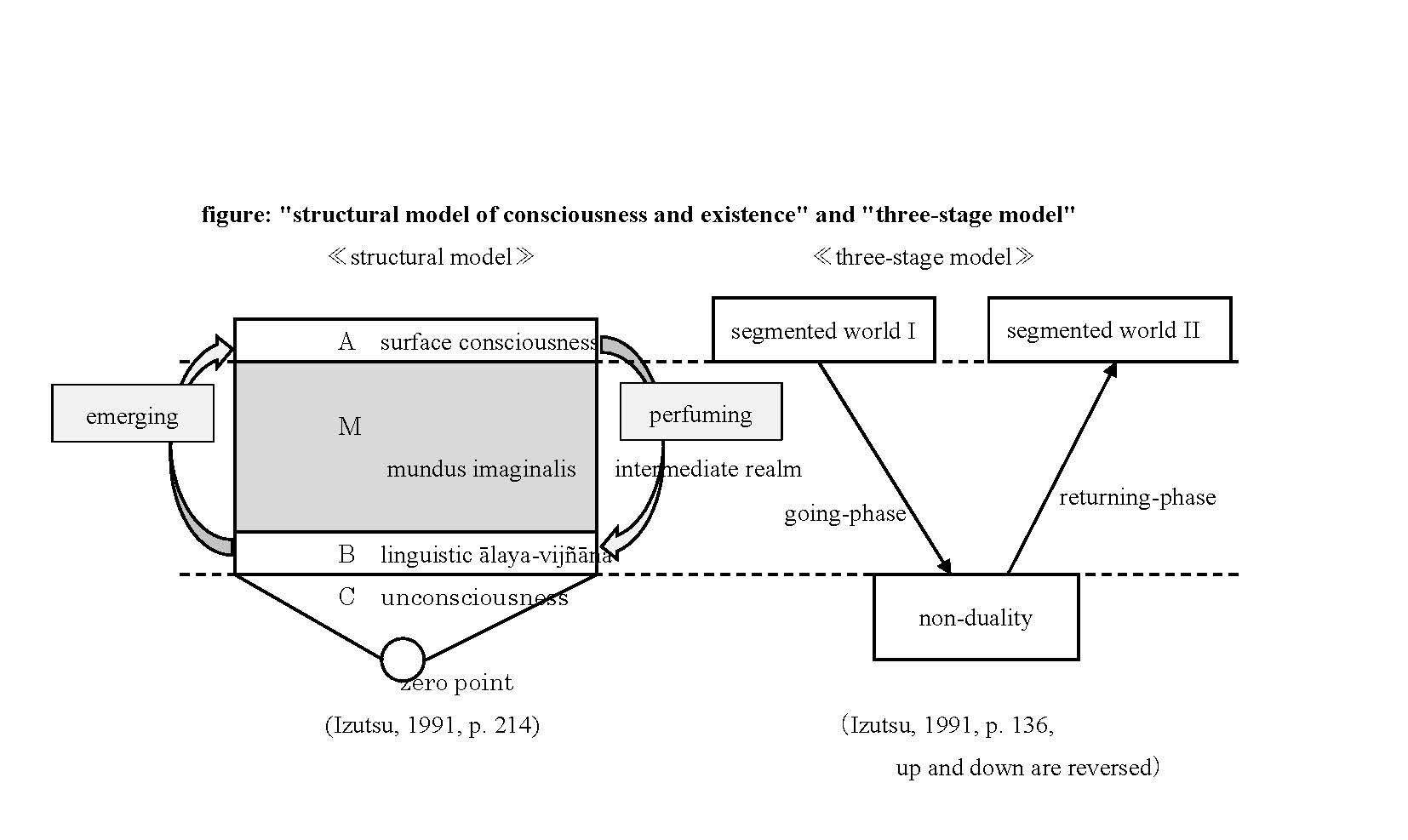
  • God and Language, Love and Resentment

    In a number of Chronicles (notably #749 and #797) I have drawn a parallel between two taboos: that on alluding to the firstness of the Jews (the “chosen people”) as an explanation for antisemitism—the theme of Adam Katz’s and my Rethinking Antisemitism (Brill, 2015)—and that on defending the originary hypothesis, which I have been refining for several decades since the publication of TOOL in 1981, as a minimal model of the origin of human language and the sacred/scenic/representational culture that derives from it.

    The outpouring of antisemitic resentment in response to the pogrom of last October 7 awakened a sleeping monster thought to have been destroyed after the revelations of the Holocaust. We suddenly (re)discovered that the Jews’ sacrificial role in Western culture remains as real as ever, in Europe and the US as well as in the Middle East.

    Antisemitism is the West’s and by extension the world’s Ur-model of intergroup resentment. Its reemergence should be no surprise, given the progress of the Woke ethic as the extreme form of what I have called the epistemology of resentment: the acceptance beyond all other considerations of the moral legitimacy of the resentment of members of the “intersectional” alliance of recognized victims of the (patriarchal, racist, colonialist) social order.

    Discussing the current crisis in terms of public political attitudes offers little hope of helping to turn the political-moral equilibrium away from resentment toward love, as has been the aim of these Chronicles from the outset. Yet the originary hypothesis’ grounding of the human in an egalitarian transcendence of the hierarchy of prehuman society, which at the same time sets no individual or people above or below others, provides a primordial model of the human community that exemplifies the anthropological priority of love.


    Orthodox Jews write G-d, not because the English word “God” is sacred, but because the name of God in any language is something to know (as a word) but not pronounce (as a name). That is, the Hebrew God must not be called by name, addressed in a naming locution that has the force of an imperative. We might ask why God himself, who sees into our hearts, would not allow us to distinguish his name from the word “God” used as a descriptive term, say in a work of anthropology. But although God himself would understand the difference, human third parties would risk becoming confused, for language is an operation of the human scene, and God as the creator of this scene must remain outside it. That we should know The Name (Hashem is the word used to refer to God in common Orthodox speech), and even write it in abbreviated form, but not be able to pronounce it reminds us that, as the originary hypothesis insists, Hashem was first revealed to us through interdiction. For the core of the sacred—to use a meta-word, a term of anthropology—is not, as René Girard thought, violence, but rather interdiction, conducive to the forestalling or deferral of violence, given as a command to our human conscience rather than to our reflexes, so that we first know God as the Subject who wills this interdiction.

    Thus Hashem reveals to us his name, and writing it (in English transliteration) as YHVH—that is, as an in principle unpronounceable group of consonants—makes us understand Derrida’s great intuition that writing is, concerning the sacred, the source of language’s possibility, the only medium in which language, and the human in its distinction from the rest of the universe, can be fully cognized. Which, however, does not mean that we should fetishize this instrument of understanding by setting it in an Orphic sense prior to language, as so to speak the pre-originary form of the deferral of violence through representation.

    Thus we must know that summoning God by using his name (taking it “in vain”) as an imperative is indeed within our power, but that we have not the right to pronounce it; that to claim such a right is blasphemous, and yet that we can write the name of God in such a way as to be a reminder that we must refrain from pronouncing it. Thus the naming of God is not impossible but interdicted, as we have seen the sacred is from the beginning.

    We cannot know if this is the first time in history that the sacred was thus understood, but we can be certain that world civilization, that of the West in particular, first learned this from the Hebrews.


    Significantly, neither of the other two Abrahamic religions have maintained this interdiction. Muslim prayer on the contrary insistently repeats the name of Allah, and uses it along with Mohammed as a privileged element of human names. This suggests that the interdiction on pronouncing YHVH, which at first sight grants no privilege to the Jews over other peoples, is in fact an implicit affirmation of their election that their brother religions could not retain; certainly not Islam, for which the Torah is not a canonical text and which on the contrary emphasizes its own election as the universal religion by making the declaration of faith in Allah sufficient proof of one’s identity as a Muslim.

    As for Christianity, the abandonment of Hebrew as the language of prayer may be said to have made the question moot, while tacitly admitting the unique “election” of the Jews as those who continue to pray in the language in which God’s name was first interdicted. For Christians, indeed, there is no sacred name for God, only words designating God in different vernaculars. A term of address such as “Heavenly Father” has the same valence as “God” or “Lord,” and can be paired with “Jesus Christ” and “the Holy Spirit” as designating the different “persons” of the Trinity. Needless to say, the notion of a Trinity, which depends on and signals the progressive, historical nature of the Christian revelation, as well as its acknowledgement of Hebrew precedence, would be inconceivable in Islam; but it is clear that the lack of reticence in pronouncing the name of Allah is in its own way equally a reaction to Hebrew precedence.

    On this point, refusal to recognize established historical facts such as the millennial presence of the Hebrews in the territory of Israel is a highly significant feature, if not of Islam as such, then certainly of the atavistic “Islamist” temptation of Islam that makes its voice and weaponry heard so loudly today. We have tended to be surprised that a number of nominally Christian nations, and many institutions such as NGOs and newspapers within these nations, have been so ready to take the side of Hamas against Israel. These Westerners would not if pressed deny that the ancestors of the Jews lived in what is now Israel millennia before the Palestinian Arabs, but they are willing to accept the latter’s version of history as a “Christian” gesture of concern for victims whose recent sufferings at the hands of the Jews “deserve” to be projected into the historical past.

    The question for us is then to ask whether this matter of The Name that offers evidence of Hebrew priority in the revelation of the sacred is not, as the marker of Derrida’s différance, related to the taboo on the firstness of the originary hypothesis. We can pronounce a word to designate a thing, and this speech act reflects the deferral of our quest to possess it; but the embodiment of the sacred will that obliges us to this deferral must never be framed as our potential possession.


    One need not be a fan of Hitler or Hamas to point out that the typical Jewish response to antisemitism, that it is simply absurd, is—and the term is quite pertinent—in bad faith. In Chronicle 805, I quoted this classic WWI joke, immortalized by Hannah Arendt in The Origins of Totalitarianism:

    An antisemite claimed that the Jews had caused the war; the reply was: Yes the Jews and the bicyclists. Why the bicyclists? asks the one. Why the Jews? asks the other.

    Pretending that blaming the Jews is no more logical than blaming the bicyclists is certainly valid enough in terms of rational causality, but it begs the question of why the Jews rather than any other collectivity tend to be accused of such things. And even if we need not argue the case with the antisemites, the joke mocks not only them but (tacitly) the Jews’ own failure to explain why indeed they are the default group that gets blamed for disasters.

    We all know that the reason is not some “racial” or even simply historical peculiarity; the reason that the Jews are the unique people so accused is that Western civilization cannot be understood independently of the notion, whether believed or rejected, that the Jews are those to whom God first chose to reveal himself, his “chosen people” (le peuple élu—which, interestingly enough, still comes up in French ironic or crossword-puzzle references to the Jews, although I can’t recall seeing any recent examples in English).

    The situation is complicated by the fact that “Jewish jokes” are meant for internal consumption, and the Jews cannot really pretend to be ignorant of what has made them the Western world’s sacred/sacrificial people. No doubt they are entitled to their little ironies, but when it comes to serious discussions of antisemitism, whether for internal or external consumption, Jews find themselves in the embarrassing position of pretending not to understand the causal link between their historical status and their history of periodic pogroms on various scales.

    In this context, for the Jews to openly admit that, although their special status does not justify hatred and persecution, it is indeed a mark of cultural difference that is normally borne with pride, is a delicate matter indeed. Throughout most of their history, they had been obliged to maintain a low profile as a minority in Christian or Muslim society; for the first time in eighty years I wonder if this status is making a comeback.

    It is only during the past few months that I have been obliged to deal with overt manifestations of the stigma borne by the Jews over the centuries. The other day, the traces of the recent river-to-sea demonstrations having been mostly cleared away, I went to the UCLA library, and when the young lady at the counter wished me a good day, I mentioned that I was happy to be on campus now that no antisemitic demonstrations were taking place. This remark did not elicit a reaction, and I had to realize that it was by no means impossible that my interlocutor sympathized with or at least respected the legitimacy of the demonstrations and/or disapproved of my calling them “antisemitic.” The Overton Window is no longer where it was.


    The parallel between the Jews’ role in transmitting the intuition of the unity of the sacred, or “monotheism,” and my theory of the origin of language is evident. Although to compare the importance of the two taboos would be absurd, they both follow the same pattern: claiming to have “discovered” the origin of language is the secular equivalent of having been first to receive a divine revelation. And the parallel is all the more flagrant given the originary hypothesis’ claim to reveal the origin of the sacred itself.

    It is easy to explain the cloud of obfuscation in which the Jewish community has long preferred to hide the real essence of antisemitism. When Islamists refuse to accept that the Hebrews were present in the areas where their artifacts are still being dug up, one prefers to condemn their hostility as an irrational “prejudice” rather than to insist on facts that are flatly denied, since they are in any case irrelevant to the current accusation: that the Jews are committing “genocide” and all the rest. The residual horror of the Holocaust still allows us to find a response with some legal weight when we identify these accusations as “antisemitism,” which is why including “anti-Zionism” in its International Holocaust Remembrance Alliance definition is so important.

    What then of the origin of language? Here no mobs are crying for my blood; simple skepticism suffices: “you can’t prove it!” But the underlying offense is the same. How dare X claim to be the first to identify the origin of human language, and along with it that of human conscience, of our sense of a sacred external will that orders us to renounce our attempt to possess what we desire, and as a consequence, to (at first involuntarily) represent it, that is, to reveal our renounced desire to our fellows through a sign?

    This first revelation is hypothetical, not historical; it involves no specific claim of time or place, nor seeks to specify through how many stages the understanding of the sacred, signification, or interdiction emerged. It cannot, one might say fortunately, be associated with any specific human group, and in any case, the impossibility for its originators to create, as did the Hebrews, a written record—an inscription—of their deed means that no second sacrificial people need be elected.

    Self-glorification is not my purpose. It is rather that what I believe deserves to be called the discovery of the fundamental process of the origin of language, of what Sartre named, perhaps under Buddhist influence, the néant within the pour-soi of human self-consciousness that separates the human subject from his object and allows him to point to it, is in historical terms no small matter. It has the virtue of making no claims concerning the status of the sacred save that it is accessible to us only through the mediation of the human community. Anthropology has no reason, no need to question the validity of experiences of religious revelation, nor need it choose among them, so long as they embody anthropological truth.

    This does not imply, as Durkheim would have had it, that the sacred is somehow the creation of the community—nor, as Girard polemically put it, as though the scene depicted in the originary hypothesis were the equivalent of the signing of a “social contract.” (“If one accepts Gans’ hypothesis, then all other forms of social contract have also to be accepted.” Evolution and Conversion: Dialogues on the Origins of Culture, Continuum, 2007: 123-24.) It is rather the sense of the sacred experienced in common by the human group that creates it as a human community.


    The structural similarity of the two taboos suggests why this latter revelation has made so little impact. In an era of pundits and influencers, but with no thinkers of the stature of Sartre in his day or even Derrida in his, there is simply no market for such a discovery; what would be its place in a society—and in an academic world—where the perpetrators of the atrocities of last October 7 have attracted more passionate sympathizers to their cause than their raped, tortured, mutilated victims?

    That Anthropoetics and the Generative Anthropology Society and Conference have existed for so many years is as much of a miracle as I could have imagined. Our hypothesis, which puts love, not resentment, at the origin of humanity, sustains our hope that as we come better to understand ourselves, we will ultimately put this era of resentment behind us.

  • Generative Anthropology’s Overcoming of Metaphysics

    At least since Hegel’s attempt at the dialectical fusion of philosophy with the totality of human history, Western thinkers have felt the urgency of escaping the realm of metaphysics inaugurated by Parmenides and Plato. By extending the world of Ideas to include all dimensions of human activity from the esthetic and religious to the political, Hegel had at the same time imprisoned those who accepted his organon in a secular equivalent of the Last Judgment.

    As a summary of the post-Hegelian reaction, the success of Fred Jameson’s pseudo-Nietzschean title The Prison-house of Language was not fortuitous. Nietzsche was more deeply disturbed than the other early “existential” thinkers by philosophy/metaphysics’ fetishistic attitude toward language, for which words such as “Being” were looked upon as bottomless reservoirs of understanding that could be gleaned only through endless meditation.

    One of the most significant offshoots of this dissatisfaction with metaphysics was the 20th-century interaction between philosophy, humanistic studies, and the social sciences that began with developments like the New Criticism in England and Russian Formalism. The structures of literary narration in particular, offering alternate stories to that of the Weltgeschichte, could be understood as agents of liberation from Hegel’s historical apotheosis.

    What emerged from this interaction was the realization that the fundamental questions of human self-understanding could not be confided to a set of specialists in a single discipline. These questions can only be answered, however tentatively, through a constantly evolving dialogue among the cultural, religious, and philosophical dimensions of this understanding that remains in contact with the more narrowly empirical analyses of history and the other social sciences.


    Throughout the history of Western philosophy and its offshoots such as phenomenology, its unique focus had been the individual mind, at the limit conceived as a solitary consciousness facing a mindless universe. Although in everyday life we were well aware that human existence takes place within communities, for the philosopher this was a secondary if not illusory reality. As Japanese philosopher Kitaro Nishida declares at the opening of his Inquiry into the Good, “pure experience” takes place only within one’s own mind; “we cannot experience someone else’s consciousness.” This does not mean that the individual must imagine himself as the sole mind in the universe, but that for the purpose of reflection, the philosopher cannot conceive or intuit or any element of experience other than as an element of his own subjective thought.

    No doubt this is true in the tautological sense that one can only know the contents of one’s own mind, but such bracketing is unfaithful to our experience of human interaction, and most crucially, to our experience of language, which is the fundamental means both of interhuman communication and of subjective “thinking.”

    It is a significant symptom of philosophy’s limitations in this regard that its assertions of the self-sufficiency of the human mind never address the simple fact that humans can acquire language only in a communal context. We are familiar with stories of “wild children” in whose early childhood this learning process was interrupted, none of whom have ever been able to acquire the language mastery of normal adults. Which is to say that the Ideas that philosophers treat as independent signs of Being can only be assimilated by the human individual in the context of what I call scenic communication with his fellows—and that the scene itself on which this communication takes place must become familiar to the child over a lengthy period of early mental development.

    It is no doubt useful to discuss the meaning of words, as in Plato’s Dialogues, with the purpose of gaining a sharper understanding of the values shared by a given human community and, by extension, by any such community. But the Allegory of the Cave obscures the fact that the Ideas themselves acquire their meaning only through interactive use, not only in philosophical dialogues but in the less formal ones of daily life. There is no a priori essence of “courage” or “piety” or any of the words discussed in the Platonic Dialogues from which their uses may be said to derive; nor are Kant’s “transcendental” categories established elsewhere than on the human scene.


    I emphasize the word scene because it is the locus of language and of all human interaction. The originary hypothesis that is the foundation of Generative Anthropology is that the sign was in its origin an aborted gesture of appropriation, that is, an appetitive act consciously deferred as the result of a desire to avoid conflict, and that this deferral, this suspension of worldly, goal-directed action, created the uniquely human shared state of contemplation that I call the scene, as well as the “pointing” gesture of designation that may be considered the most primitive signing or linguistic act.

    I have always imagined this originary sign as that of a party guest, about to take the last canapé on a plate, who sees someone else also reaching for it and aborts his original gesture. The generalization of this hesitation, to which I apply Derrida’s term différance, usually translated as deferral, may on this example be understood to originate as a means to avoid conflict over the distribution of goods, most importantly, food, among our ancestors.

    The prior assumption concerning the emergence of a need for a new conscious system for such distributions within the proto-human community is that, under the pressure of our ancestors’ increasing intelligence, as a result of which the strength of appetitive mimesis and the consequent rivalry among the members of the proto-human community would become intensified, the serial (Alpha-Beta-Gamma…) system of ape distribution, which involves a repeated one-against-all confrontation between the chosen member of the group and the mass of remaining participants, could no longer be maintained.

    Let us then consider this configuration as taking place among a group of proto-human hunters hesitating to divide up the spoils of the hunt. Like the party guests with the canapé, when they each attempt to appropriate the spoils, each realizes that all the others are similarly motivated. If we consider this situation in the context of the breakdown of the serial distribution system, the introduction of the deferral of action through the abortion of the possessive gesture becomes a demonstration of how to avoid conflict—no doubt after many have previously taken place. While the symmetrical relationship of the pointing hunters to the central object of their desire, deferring any aggressive action, prefigures that of the human scene in general, and whose establishment of peaceful symmetry would naturally lead to the egalitarian distribution of the shared central desire-object.

    What turns the aborted gesture into a sign of language is the conscious motivation of its non-completion. As with the canapé, what prevents the gesture from fulfilling its original aim is no longer a reflexive inhibition of the type Pavlov induced in his subjects, but a sense of interdiction that emerges from the symmetrical stasis of the situation—a sense we should not hesitate to call the origin of our sense of the sacred. To abort my gesture out of a desire to avoid conflict makes of this deferral of action the originary moral act, one that appears to me to be dictated by a force of interdiction independent of my will.

    In this scenario, the aborted gesture is not originally an intended action at all, but the interruption, the deferral of an action. Yet it is a physical act observable, and imitable, by all of the group of potential rivals for the prey/canapé, whether two or a hundred. Similarly, as the gesture itself does not culminate in its originally intended purpose, it has at first no worldly function. Yet to the other members of the group, the aborted gesture of each, at the same time as it indicates the renunciation of the act of possessing the desired object, may be said to point to it. And in doing this to avoid conflict, each indicates to the others an example to follow—just as in the canapé example, the other party will normally abort his original gesture in the same way. As a result, the group of hunters can be said to all be pointing at an object which (1) they desire to possess, and that concentrates their attention; (2) whose possession they renounce in deference to the others. In this way, the aborted gesture, transformed into an act of designation, becomes the originary sign.

    Thus the aborted gesture of appropriation may be understood as the originary event of language. The generalization of this act of hesitation/renunciation, which leads to a situation of communal contemplation, comes to be understood by the participants as a sign designating the object as interdicted to individual appropriation, which is to say, made sacred for the members of the group. A set of individual acts of appropriation, through being aborted, has thus been converted into a common act of signification, which is to say, the emission of a sign of renunciation understandable by the other members of the group.

    The payoff for this new behavior could then be realized through the replacement of the no-longer-functional serial distribution system by a new, collective system, in which, all parties having renounced their individual appropriation of the prey, all agree to divide it equally. And we know from the remaining hunter-gatherer societies of our day that the collective acts of egalitarian sharing characteristic of such distributions correspond closely to this hypothetical outcome of the originary event.

    This post-hunting scene can serve us as the originary model and the point of departure of all semiotic communication. Every scene of human interaction involves in principle the expectation of and readiness for the sharing and interchange of linguistic signs by means of what Derrida called différance, the deferral of worldly action. Depending on the nature of the scene, these exchanges operate in everyday life either as means of mediating practical cooperation, or as serving the religious function of uniting the community, whether in a shared evocation of the sacred will that the participants feel has obliged them to convert their appetitive act into an act of communication, or simply in exemplifying their new propensity to shared contemplation.

    At the same time, through the conscious renunciation of its object, appetite enhanced through the mimetic observation of others in the same situation acquires the character of desire. Mensonge romantique et vérité romanesque / Deceit, Desire, and the Novel, René Girard’s 1961 analysis of desire mediated by the real or imagined desire of others as exemplified in a series of great novels marking the epoch of modernity in Western culture, may be considered the point of departure of originary anthropology.

    The essential semiotic element of the hypothetical scene, the pointing gesture designating the central object in what I call an ostensive, is intuitively easy to understand once the group comes to share it—and we should recall that animals, including even chimpanzees, do not communicate via such gestures. For the first time, a living creature has performed an act that acquires a meaning from its employment in its community rather than through inherited instinct. This scenic aspect of language is essential; it is thus that language both creates and is created by what can simply be called the human scene.


    In The Origin of Language (TOOL; UC Press, 1981), I proposed a model of the evolution of the syntactical forms of language, beginning with the ostensive,  passing through the imperative and interrogative, and culminating in the declarative, in which language becomes “self-conscious” in that it can provide its own meta-language—the characteristic of recursiveness that Chomsky considered the key feature of human language. At that time, I had been concerned to show in what way the model I proposed could be related to the “emissary murder” scene of human origin proposed by Girard in La violence et le sacré (Grasset, 1992). In contrast, the hypothesis as presented here takes as its first signified the prey from a hunt rather than the “emissary victim” of Girard’s scenario. This allows for a considerable simplification, since the spoils of the hunt are prima facie an object of desire, which immediately poses the problem of its distribution. Similarly, the sacred, in this version of the hypothesis, is first experienced not as incarnate in an object, but as a commonly felt force that prevents the members of the group from coming into conflict, an experience that the canapé example illustrates in an everyday context.

    By situating concepts such as deferral and sacred in a practical worldly context, generative anthropology demystifies the language of philosophy whose own scene, its laboratory, so to speak, had benefited from its air of mystery, but at the expense of the humility toward reality that the positive sciences know—and which I believe that human self-reflection must learn as well if it is to pursue its task of liberating humanity from its illusions.