Author: staceymeeker

  • Generative Anthropology as Grammatology

    This is the text of my talk at the Eighth Generative Anthropology Summer Conference (GASC) held at Victoria BC in June 2014. It was adapted from my contribution to a colloquium on Girard and Derrida in Paris in November 2013, sponsored by the Association Recherches Mimétiques.

    * * *

    Although the memory of Jacques Derrida is still very much with us, I wonder to what extent young people today can imagine the impact of De la grammatologie when it appeared in 1967, nearly a half-century ago. In contrast to Derrida’s doctoral thesis on Husserl, La voix et le phénomène, and the articles that made up the collection L’écriture et la différance, all published that same year, De la grammatologie, which proclaimed the end of the book and the beginning of writing/écriture, was neither a collection of essays nor a monograph but a book, a whole, composed of parts, no doubt, of chapters on linguistics, on Lévi-Strauss, on Rousseau, but nevertheless a book—that is, in the author’s own paradoxical terms, a work of authority—that presented itself as the opening exposition of a new science of “writing” in the broadest sense—a science of the “trace.”

    A Derridean science would certainly be a science like no other. But we need not, as was so common in the perverse heyday of deconstruction, turn the limits of the positive into a demonstration of the negative. In the same way as we are able to convert Derrida’s différance or deferral, the void of paradigmatic choice in which Derrida never thought to seek the trace of a deferred act in the real world, into the deferral of violence induced by the sacred in mimetic violence à la René Girard, I think that we can equally well understand the projected science of grammatology as something other than a paradoxical denial of the empirical reality of language. Indeed, I think we can conceive it as an intuition of human science in the strongest sense, a science of paradox rather than itself a paradox—something that would correspond rather closely to our own anthropological “science” of Generative Anthropology.

    What is the real thrust of Derrida’s “science of écriture” or of inscription? It is to understand the phenomenon of the human, and perhaps by extension, all of life or all of existence, from the standpoint of the conservation of the trace. That is, grammatology would be the study of the sign, conceived as the trace of an act that re-marks a difference by means of a deferral or différance, a hesitation that is not merely a delay, but that opens up a Sartrean néant or nothingness in which the human mind, no longer ruled by “instincts,” becomes able to think by choosing in the first instance a single non-instinctual and indefinitely reproducible sign that bears the significance of the sacred object but not its interdicted sacrality. The original “paradigm” was simply the binary sacred/profane, and there was no need of a sign for the latter. But once the néant “out there” on the public scene transformed potential violent conflict into the peaceful sharing of food, the trace of the sign preserved in the mind was not a mere individual memory, a recalled sense-impression, but a mental reconstruction of the scene of representation as a whole, a space within which thinking as the free manipulation of signs became possible.

    Thinking in the human, “non-instinctive” sense requires that the thinker be assured of the connection, “sacred” and/or “social,” between the sign and what it represents. To ask where this connection originates is to pose a question that cannot be answered within the context of deconstruction, which can only theorize the hesitation that separates the signifier from the signified within an already constituted paradigm. But we for our part should not hesitate to affirm that this connection derives from the hesitation, the deferral itself, which is in the first place the putting-aside of conflictive, mimetic violence. For hesitation within a constituted paradigm is only understandable as a real, “anthropological,” or even anthropogenetic act when it takes the form of a hesitation to take action in a situation where there is likewise a real danger of intraspecific conflict. And, precisely, GA’s simplest definition of the human is as the unique animal who, its mimetic intelligence having passed a certain threshold, is of greater potential danger to itself than is external Nature.

    Why would signs multiply when the one originary sign had produced peace? In the space of deferral, all things are in contact with the sacred and potentially invested with significance. The sacred is at first the “violent” that must be avoided, but this violence is not an abstraction, it is rather the product of the appetite aroused by the central object. It would be better to say, not that “the sacred is the violent, the violent is the sacred,” but that the sacred is the violent whose violence has been deferred. In the space of this deferral, the sign is not a simple abstraction, but a form that evokes its object; and in the communal peace thus established, however fleetingly, the differences among objects become possible objects of observation. Thus the traces of experience can come to be incorporated into a language, a set of syntagmatic possibilities whose various positions are indeed, as Derrida saw, filled by choosing within paradigms. All of this, of course, is not present at the origin, but it begins at the origin with the phenomenon of deferral, with our putting “instinct” aside to instead represent to each other the object of our “instinctive” appetite.


    In a passage whose “positive” nature is visible through the veil of precautions dictated by philosophical prudence, Derrida (much more explicitly than in the chapter that actually bears this title) gives us a glimpse of what his “grammatology as a positive science” might have looked like. This is a discussion of Lévi-Strauss’ famous “writing lesson” from Tristes tropiques (the anthropologist having demonstrated the use of writing to an Amazonian tribesman, the latter creates by scribbling lines on a paper a “written” document of his own to impress his fellow tribesmen with his authority). Here the question is raised as to the relationship between the birth of writing systems (in the narrow sense) and hierarchical power. We find in this passage a rare, perhaps unique example in Derrida of the use of the word différer, to defer and/or differ, in a very nearly “Girardian” sense:

    It has long been known that the power of writing in the hands of a small number, of a caste or a class, has always been contemporary with hierarchization, which we will call “political différance,” which is both the distinction among groups, classes, and levels of economico-techno-political power, and the delegation of authority, a power deferred, abandoned to a means of capitalization. This phenomenon has been going on since the beginning of sedentary life, with the constitution of stocks at the dawn of agricultural societies. . . . All this structure appears as soon as a society begins to live as a society, that is to say, with the origin of life in general [dès l’origine de la vie en général], when, on quite heterogeneous levels of organization and complexity, it becomes possible to defer presence, that is, expenditure [la dépense] or consumption, and to organize production, that is, the reserve in general. This takes place long before the appearance of writing in the narrow sense, yet it is true, and we cannot neglect this fact, that the appearance of certain writing systems two or three thousand years ago was an extraordinary leap forward in the history of life. (De la g, p. 190)

    This “deferred power” of authority in the universe of writing is, in GA terms, nothing but a new form of the deferral of the “aborted gesture of appropriation” that leads to the emission of the sign in our originary scene. The difference is nonetheless fundamental. Whereas for GA, the dominance of the sacred center with respect to the periphery reflects the hypothesis that the human emerges in escaping the hierarchy of the animal world, Derrida, while attempting to situate writing “in the broad sense” at the origin of humanity, or even at that of “the history of life” itself, can only understand its accumulation of a “reserve” of power within the framework of a hierarchy. This situation of human hierarchy at the origin is precisely the defining postulate of postmodern victimary thought.

    Thus the chapter entitled “On grammatology as a positive science,” in which Derrida might have been expected to begin to develop his own “positive science” of writing by integrating his discovery of la différance into the history of “life in general,” after a lengthy discussion of the historiography of writing systems, ends with a sentence-paragraph that fills an entire page with a long series of denunciations of the servility of writing in the service of power:

    That the access to the written sign insures the sacred power to make existence maintain itself in its trace and to know the general structure of the universe; that all clerisies, whether or not they exercise political power, were established at the same time as writing and as a result of their having at their disposition graphical power [la puissance graphique]; that strategy, ballistics, diplomacy, agriculture, taxation, penal law are linked in their history and in their structure to the establishment of writing . . . [22 more lines] all this refers us to a common, radical possibility that no determinate science, no abstract discipline, can think as such. (141)

    Here we may observe that Derrida’s refusal to see in the néant of deferral anything other than a deconstruction of the scene of “presence,” which in his view constitutes not the human as such, but the myth of the human and the sacred created by “power,” is directly linked to the “late” revolutionary passion so typical of the European intellectuals of his generation and even of ours, that consists in seeing humanity’s “original sin” of inequality as in fact originary, inherent in the very use of signs that makes us human. The consequence of this is that, ignoring the egalitarian relationships among the members of the simplest human societies, Derrida equates the birth of the sign with the birth of hierarchy, as if an asymmetrically superior “father-figure” on the example of Freud’s Totem and Taboo furnished us with our model of a Subject/divinity. A passage in the chapter on Rousseau’s Essai sur l’origine des langues makes this clear—as clear as Derrida ever makes his anthropology in tension/opposition/continuity with that of Rousseau:

    Between the family as a natural society and the organization of civil society, there are relations of analogy and image: [quoting Rousseau] “The chief is the image of the father, the people is the image of the children, and all, being equal and free, only alienate their freedom for their own benefit [pour leur utilité]. . . . The only difference is that, in the family, the father’s love for his children repays him for the services he renders them, and in the State, the pleasure of rule replaces [supplée à] that of love . . .” (374)

    Derrida’s point here is that the dichotomy that Rousseau draws between nature and culture is never definable; the “supplementary” transformation of family love into love of power “must be” related to the incest prohibition, which Derrida then shows to be undefinably natural and cultural in Rousseau’s text, and presumably in any text. But in revealing this undefinable glissement, Derrida in effect accepts Rousseau’s (non-) transition between animal and human hierarchy, between the father and the chief—leaving aside Rousseau’s point that as “children,” all are “equal and free,” which in our terms, but not in Derrida’s, sets the chief-father’s rule under the rubric of firstness.

    This citation of Rousseau’s father-chief filiation cannot bear the weight of an affirmation of causality, nor is the passage from animal to human hierarchy marked here as it is in Freud’s father-murder scenario. On the contrary, it is elided, just as the direction of the dependency of hierarchy with respect to writing (language, deferral…) is undecidable. In effect, no light can be shed on the “original sin” of the sign in the absence of an explicitly originary theory of the human. For Derrida the sign always already embodies, before the “exploitation of man by man,” the original sin of non-presence and in consequence, of the “supplementary” myth of presence. It goes without saying that none of this is simply chimerical; in order that hierarchy may emerge later, its possibility must from the outset be an attribute of the human as created by the sign, and therefore an inherent possibility of representation in general. The space of deferral, born in reciprocity, is one into which hierarchy can always insert itself. The passage from firstness to equality in the originary event is not guaranteed by the structure of the scene itself, once other factors such as the “surplus” intrude.

    It is in this space of deferral that the “preservation of the trace” as language takes on its uniquely human character, one that gives the lie to attempts such as Engels’ dialectic of nature to see human cultural systems as merely a more complex variant of prehuman systems. Derrida’s reluctance to develop the hints he drops about writing’s place in “the history of life in general” should be explained less as a failure of nerve than as a reaction of prudence. Derrida intuitively understands that when metaphysics refuses to think the origin of language, that is its way of sacralizing language, not of reducing it to a phenomenon of nature. Similarly, the deferral that deconstructs this metaphysical sacralization, however “unanthropologically” explained, is never other than a specifically human concept.


    As I tried to show nearly two decades ago in “Plato and the Birth of Conceptual Thought” (Anthropoetics II, 2; January 1997), what unites the two great components of “Western civilization,” the Hebrew and the Greek, is an explicit faith in the objectivity of language, represented in its “mature” form by the declarative sentence or proposition. The declarative sentence encompasses in its “timeless” predication both the firstness and the deferral of the originary ostensive use of language. Instead of designating the center as an interdicted space in which violence is deferred, it takes this center, or “subject,” into itself, and attaches by predication a new “truth” about it that goes beyond the mere guarantee of significance granted by the nominal that designates it. (I suggested in The Origin of Language that this would occur as a replacement for a failed imperative: if I can’t get you the scalpel, I tell you it’s in the other room.) That is, the space of deferral that separated, in the first instance, the peripheral humans from the sacred center designated by the sign has now been incorporated within language itself as a model of the scene, a space of fiction, the locus of all thinking.

    In what since the Greeks we call “metaphysics” or simply “philosophy,” it is the notion of the Ideas as subjects-of-propositions that make of words such as “the Good,” “the Beautiful,” “Courage” (= “the courageous”), independent entities in our mind, neither things that we can manipulate nor beings that we can invoke like gods in order to ask them to aid us in our enterprises, but concepts. As we see no doubt most clearly in the Gorgias, for Plato, following Parmenides, “the Good” in its “true” universal sense, not my good or yours, but the Good of the universe as a whole, must “exist” in the sense of having a real content ultimately referenceable in the real world. And the only proof needed for this assertion is the existence of the word (“Idea”) “good” as a noun that can take predicates in propositions that possess the quality of being true or false, that is, in Parmenidian terms, that are found on the Way of Truth and not on that of opinion, of doxa. Metaphysics does not trust people with language; “sophists” may “make the worse cause appear the better.” But it trusts language-as-such as something other than language, as the repository of Ideas.

    In the world of the Jews, an astonishingly similar story may be told, a point no one ever appears to have noted. When Moses finds himself in Exodus 3 before the burning bush and when he asks for the name of the God who has addressed him, God answers “ehyeh asher ehyeh,” “I am/will be what I am/ will be.” That is, in the place of the name that Moses asks him to supply (I might note that French uses the same word [nom] for both “name” and “noun”), God gives him a declarative sentence, a sentence that implies that simply to be what one is, is the unique privilege of God, that he alone can say this without qualification, and that if we want to and are able to say it at all, it is because his act of creation has granted us this privilege, more precisely, that of using language. And although it is self-evident that without language, no one can say “I” and him- or herself become a “subject” capable of receiving predicates, it does not appear to be self-evident that the ability to use language is more than an ordinary product of Darwinian natural selection.

    The difference between the Hebrew and Greek discoveries of the centrality of the proposition, whose essentially deferred, non-spontaneous or -simultaneous composition is theorized in Derrida’s différance, is that in Hebrew culture, the source of the freedom that permits us to say that we are what we are, and also to speak of the beautiful and the good, remains where it had always been, in the center of the sacred/human scene. Which is to say that whereas in the Greek world, the cogito, the demonstration that the thinking Self is the possessor of being, had to await Descartes, the world of Hebrew firstness had already formulated nearly two thousand years earlier the cogito of the central Subject who bears the name-of-God.

    Or rather who had once borne that name, and others as well, until the Hebrews made the discovery that in fact God has no name, that we cannot call on him, that he is what he is and that any abbreviation of that sentence that we might be tempted to use as a vocative is simply forbidden. For we know that Jews, even “bad Jews” like myself, never pronounce the “name of God.” “Jahveh” is not a word of the Hebrew language.

    From the standpoint of a certain irony, one might find it bizarre that of the two chief sources of GA, Girard and Derrida, it would be the Christian and not the Jew who is revealed as the more faithful guardian of this great Old Testament truth, while the Jew is the one who, having “deconstructed” metaphysics, that is, Greek thought, as the source of all serious thinking, finds nothing remaining but… deconstructed metaphysics. To my mind the greatest contribution of René Girard to Western thought is to have understood that of the two currents that flow together to form the Western soul, it is the Hebrew current that is the more authentically anthropological and that alone has allowed the Greek to spread over an entire continent and finally to the entire planet. If Girard taught me one thing, it is not to waste time seeking spurious philosophical profundities, but to find elaborated in the great literary tradition of the West the anthropological truths first enunciated in the Bible. For it is there that we encounter more clearly than elsewhere the originary truth concerning human violence and the unique defense that humanity has erected against it: representation, language, religion—culture. The declarative sentences that are the guarantees of peace do not emerge, as the philosophers would have it, all by themselves. They come from the center of the scene where violence had been concentrated in detaching itself from human appetite, the center that, in order for us to understand its uniqueness, must—this is the great Hebrew revelation—name itself with the non-name of God, ehyeh asher ehyeh.

    In a most significant historical discovery, Seth Sanders demonstrated in The Invention of Hebrew (U Illinois, 2009) that in the biblical Hebrew world, alphabetic writing, far from being an instrument of authoritarian domination, was rather a tool of proto-democratic liberation. The Hebrew world of alphabetic writing, characterized by a much higher rate of literacy than was typical in the societies of the time, where cuneiform writing was confined to a guild of scribes, was opposed in the name of God’s written law to all tyranny and rigid hierarchy, which is to say, in GA terms, that it emphasized the subordination of hierarchy as firstness to the sacred center and its originary model of non-hierarchical reciprocity; every human relationship, equal or unequal, is subject to the mediation of God’s sacred centrality. Our generative reflection on the human takes its point of departure from the liberating différance effected by the écriture of the Old Testament, the Torah.


    Finally, I think what allows us to equate GA with grammatology, the theory and history of the “retention of the trace,” is that Derrida’s grammatology was never really a “positive science,” despite the passing temptation we have noted toward a “history of life” a la Hegel (or Engels)—an impulse that has never tempted GA. To the extent that GA can inspire a “positive science” of history, this “positive” nature would be essentially retrospective. We must be able to explain the past, but to explain at the same time how this past does not let us, save in the narrowest terms, predict the future. It seems to me that la différance, understood as the originary néant or free space of our grammatology, is ideally adapted to this role. For it is in this space of reflection that those who participate in the scene free themselves from the scene, that is, appear upon the “other scene,” which is not that of the unconscious (or is in a very un-Freudian sense) but that on which we can contemplate the real world, or if we like, recalling Gaston Bachelard, that of the laboratory. It is by deferring their tendency to mimetic violence, to speak in Girardian terms, that humans find the means to explore the world, and in so doing, that they find the material means that facilitate other forms of deferred exchange: at first, that of the gift analyzed by Mauss (in which the later Derrida, in a utopian inversion, refused to see a “true” gift), and finally, that of the “free” market.

    It is obvious that one cannot at the same time theorize freedom and predict the products of that freedom. Human history is not linear, but to the extent that it has a meaning—always provisional, as, among other apocalyptic potentialities, the specter of the Iranian bomb reminds us—it tends toward an ever-increasing number of degrees of freedom. But without attempting to predict what this freedom will bring us, our “grammatology” supplies a configuration, a scene of representation, within which deferral continues to take place, and where it expresses itself not only theoretically but “esthetically” in order to permit us better to grasp the human world as itself worthy of sacred concern and requiring of us a situated moral judgment.


    What Derrida adds to the schema of Girard to make GA (“the deferral of violence through representation”) is that element of delay, of différance, of Nothingness, of language, by means of which alone our mimesis can be creative. What the mere discharge of tension in the immolation of the victim does not permit, it is the element of representation that makes it possible, and that makes us human: a moment of generative freedom. It is on that element of freedom that we found our science, human and not “natural,” of the trace and its inscriptions—our grammatology.

    One final observation will I think make this clearer. Those at all familiar with GA know that its fundamental configuration is that of the scene. Language and other forms of representation, however they are practiced by individuals, are only understandable as manifesting themselves on a scene, which is not in principle an individual but a communal space.

    But then the fundamental state of affairs suggested by the term “grammatology” might seem incompatible with that of GA; one imagines the writer, isolated from his reader, “inscribing” signs that “conserve the trace” of an idea only to the extent that the inscription takes place outside of the “immediate” contact with others that the term “scene” suggests. And indeed, Derrida’s critique of presence is on the surface an expression of anti-scenicity, a denial that a human scene can ever truly be actualized—and more than a suggestion that scenes that bear this pretension, that is, the rituals of culture from the everyday use of language to the rites of religion and public spectacle, or the “performatives” that Austin brought into the philosophical canon (much like M Jourdain who discovered one day that he had been speaking prose all his life), are all one-sided impositions of authority disguised as moments of a free exchange.

    But however distasteful I must say I found Derrida’s politics, it would be unfair to his thought to take his denial of “presence” in a narrow sense. There is indeed a naïve conception of immediacy that the history of metaphysics adopts, and that Rousseau in particular exemplifies as a guarantee of pre-romantic communion. But by opening within human interaction the space of deferral, and even in calling it écriture, writing, Derrida is not in fact denying the human scene but adding the most significant element to its description. I have pointed out that Sartre’s néant does essentially the same thing, but in Sartre it is not at all a question of a human community, but of the presence of the world, the en-soi, to the subject, and to make the néant a scenic concept in the sense of GA would be, however justified, without an anthropological ground in the conceptual universe of its creator. Derrida’s non-presence, in contrast, is already a form of human interaction that GA “merely optimistically” translates as the real, cultural presence of human beings to each other.

    It is here that I find the justification, at least for the purpose of giving us all a useful shock, for calling GA a “grammatology.” Derrida is right to insist that the mode of communication in speech and in a three-thousand-year-old inscription are essentially the same. The virtual scene on which we encounter the one is not essentially different from the “real” scene on which we encounter the other, because scenes as such, that is, human scenes, are never “real,” in the sense of a pre-human instinctual contact with the world and with others. The danger of the notion of the “scene,” a danger that Girard’s emissary murder has not altogether escaped, is the illusion of immediacy, of what Eric Voegelin in a broader context called “compactness.” Voegelin was not fond of “compactness,” a feature of the societies of the archaic god-king emperors, because it was a figure of unfreedom. In contrast, deferral, whatever the politics of its creator, is a figure of freedom. The form of communication called écriture to emphasize its non-immediacy is likewise a manifestation of human freedom, and it is in this sense that I think we can call GA an understanding of the human in terms of its écriture, that is, a grammatology.


  • 2084

    From Mark Steyn’s June 16, 2014 column:

    The world is decaying into twin totalitarianisms. On the one hand, the Islamic imperialists on the march through Iraq and elsewhere, insisting that Islam is beyond discussion, that certain things cannot be shown and certain things cannot be said, or you’ll be decapitated. On the other, the supposedly liberated hedonists of the west, likewise insisting that you can’t say this and you can’t say that, or you’ll lose your job. I would bet on the former in the long run, but these are differences merely of degree.

    In Chronicle 463 I spoke of the evacuation of the traditional “center” of American life, the middle class norms of dress, food, and entertainment, as described at the beginning of Charles Murray’s Coming Apart. It’s not just Piketty and the rich-get-richer argument. Behind what remains today of our postwar douceur de vivre is the constant erosion of a sense of normality. The barbarous violence of the jihadis enforces norms that not so long ago were largely shared in less violent form by the inhabitants of civilized nations: male honor, female modesty, respect for the sacred and its organized manifestations in religious ritual. The “hedonists” Steyn speaks of, whose latest adventure seems to be the drive to legalize marijuana, treat these traditional norms as though only jihadis had ever sought to enforce them; the idea that homosexual marriage might not be a good thing becomes anathema, although decapitation is not (yet) suggested as the remedy. Can a society survive when it can no longer rely on a “typical” image of itself? Perhaps all this is rapidly becoming moot; we’ll stop worrying about “cisgenderism” after the next 9/11. The fecklessness of the current administration need not be parsed from within; it is fairly well crying to be attacked from without.

    A society that has lost its center needs increasing doses of scapegoating to survive. The other day I saw a young woman on the UCLA campus in a T-shirt bearing the slogan “Hate the Haters”—a step beyond “Haters Gonna Hate”—illustrated by the silhouettes of two elderly “white” men. So now the majority ethnic group, which whatever its sins has been mostly responsible for creating this nation and making it prosper, is now a subject of disrespectful opprobrium. Hostility to firstness is extended from the Jews and Israel (antisemitism) to the United States (oikophobia, or as Pierre-André Taguieff calls it, hesperophobia, hostility to the West), from the foundational religious to the modern economico-political example of firstness. Despise firstness, and you can’t lose, for only the first can do real damage. We can be certain, for example, that were America ruled by the Indians, as in the days of the peaceful Aztecs, or Europe colonized by tribal Africans, peace and harmony would have reigned. If only the “Orientals” were writing about the “Occidentals,” Edward Said would have had nothing but praise for the sensitivity of their understanding. But alas, the winners are by definition the worst of the competitors, for they are bad enough to win. History, formerly written by the winners, is now unwritten by their triumphant victims, like a revision of the Soviet Encyclopedia. How much longer will we remain bad enough to go on winning?

    The parlous state of the Republican party, the party of Hateful Straight White Males, is a depressing indication that the current administration’s policies are not as far from the mainstream as irony makes them appear. The Republicans are supposed to be the “party of the rich,” and perhaps most businesspeople vote for the GOP, but not only are the super-rich famously liberal on the whole, but only particularly strong convictions would prevent any person with major moneyed interests from expressing the “progressive” views that, with no harm to his bottom line, would insulate him from the increasing hostility directed at the “1%.” The Sterling case referred to in Chronicle 463 shows that one can exploit black slum-dwellers for years to the praise of the NAACP so long as one avoids making “racist” remarks in the presumed privacy of one’s living room. Why would a business executive express disapproval of “gay marriage” when there is nothing whatever to be lost in expressing approval? No doubt something like the Keystone pipeline is a more serious business matter, but unless you are directly affected by it, you might as well be on the side of greenness and light.


    Culture is, no doubt, about “symbolism”; language begins and ends with the sacred. Although its practical functions are more transformational, this is only provided the sacred ones are first taken care of. The evacuation of “central” normality is very much the equivalent of the loss of the sacred center first discovered/invented in the originary event, what Girard calls a “mimetic crisis.” Gabriel Tarde, for one, saw the everyday rituals of bourgeois life, such as reading the newspaper, as a kind of sacred communion, a point on which we should no doubt award him first place over his younger rival Emile Durkheim, for whom the “anomie” of modern industrial society could be reduced to manageable dimensions only through explicit social welfare measures. (One might, in consequence, consider Durkheim and Tarde as, respectively, the patrons of the Democrats and Republicans, much as it hurts me to associate Durkheim with “Hate the Haters.”)

    The emptying out of this middle-class sacred, this half-conscious sense that “we” are all engaged in comparable pursuits, wearing similar clothes, eating similar foods, and so on, does not in itself imply that the middle will be replaced by the victimary. But we should think of this substitution as that of a marginally more for a less violent mode of sacrifice. The old norms were not explicitly directed against anyone; the abnormal was implicitly excluded, which is how norms are meant to work. (Which does not entail an absence of compassion, although it does not enforce it as itself a norm.) Men and women had generally separate interests, there was relatively little mixing of racial groups, not even to speak of the Jim Crow segregation in the south; public displays of affection tended to be limited, and certainly not considered appropriate between members of the same sex…

    But with the decay of these norms comes the realization of their exclusionary nature, partly inadvertent, partly overtly discriminatory, and in the case of “deviant” lifestyles, quite deliberate. The decline of the normal, so to speak worn away at the edges, reflects the bipolarization of the culture and economy, and at the same time contributes to it. The line of causality is less clear than the overall dissolution of common values and an increased desire to express “rebelliousness” from the norm. It was one of the great clichés of the fifties “youth culture” that took over the world’s popular entertainment that all those “youth” were more conformist in their rebellion than their parents in their conformity. Well, yes, but… The parents “conformed” without thinking much about it. Take a look at a prewar photo of spectators at a ball game or passers-by in the street, even a 30s breadline, and you’ll see they all wear hats, shirts, and ties. For a while it was the lack of hats that seemed to distinguish the postmodern era, but the disappearance of shirts and ties from ordinary working- and middle-class men is the most striking change, unless it be women wearing clothing that in my youth would have risked being associated with prostitution.

    The kind of “solidarity” exemplified by Tarde’s description is implicit; it involves no act of adherence, and is all the more powerful for that. All those spectators wearing ties are affirming “non-thetically” that “this is the way things are, one dresses ‘properly’ to go out.” On the contrary, the 50s “youth” wearing pompadours and peg pants and, more recently, T-shirts emblazoned with “Hate the Haters,” are insisting on a new set of norms, one that exists only to the extent that it is foregrounded, made into a praxis. But a praxis of sacralization is essentially a praxis of sacrifice. The old norm took form by the unconscious coincidence of many wills, and to that extent expressed an unintentional harmony to which nothing was overtly sacrificed. Starting in the 50s, we had to show our solidarity by rejecting the old norm, certainly, but above all those who were associated with it. Wearing a shirt and tie or reading the newspaper was not, in the days of Tarde, an act of exclusion, but wearing the t-shirt certainly is. Thus it is false to affirm that there is no more a sense of the normative. There are conflicting norms, but the one that is more aggressive, that affirms its virtue and purity, is both the more violent and the more blind to its own violence, as that silly T-shirt slogan makes embarrassingly clear.

    The increasingly sacrificial insistence on symbolic domestic politics should not be understood in a void. To return to the Steyn quote at the top of this column, it corresponds on the international level to a challenge, the greatest since the Cold War, to Western and above all to American hegemony. The most stringent restrictions on free speech come from those whose point, unlike Westerners, is to impose with barbarous strictness a set of traditional differential rules rather than deconstruct a set of already rather benign ones. The partisans of Sharia are said to attack our norms from the “right” rather than from the left, but the left’s fear of “Islamophobia” reflects the fact that the right-left terminology imposed by the French Revolution (inherited from the Tory-Whig dichotomy of the British 17th century) is irrelevant and misleading: both trends are equally hostile to Western liberal values.


    No doubt the most obvious proof of the sacrificiality of the victimary is that for the president and many in his party, now faced by the overrunning of Iraq and Syria by barbarian fanatics, the most crucial problem facing the world remains global warming, which the Ministry of Truth has renamed “climate change.”

    The symbolic nature of environmentalism is made clear by the easy and wholly unanalytic passage from virtuous gestures against “climate change” to, as Obama put it back in 2008, making the rise of the oceans begin to slow and the planet to heal. Whether or not “climate change” is as certain as the moon isn’t made of green cheese (which, btw, should really be cream cheese), one thing that is certain is that one’s gestures on its behalf have many orders of magnitude more symbolic than practical weight.

    The debates over warming, melting Antarctic ice, the Mann hockey stick (which has incredibly spawned a libel suit against “denier” Mark Steyn), the failure of world temperatures to continue to rise over the past fifteen years… are not really my point. What is important is not whether the planet is warming or even whether human activity is warming it, but whether the human activity that attempts to combat global warming has an effect in any way proportional to its cost. It is here that the sacrificial nature of this behavior is revealed. Obama’s “stimulus” may not have produced effective results, but at least it was a prima facie reasonable response to an economic crisis. Even Obamacare, whatever its flaws, was a “remedy” applied to deficiencies in the American health care system. But building windmills, refusing to approve the Keystone pipeline, letting the EPA impose punitive regulations on coal-powered power plants… all this has essentially no effect whatever on the world’s carbon dioxide production, and no measurable effect on “global warming.” Never has so much energy, time, money, and political capital been expended with so little effect on the problem one purports to solve. It seems obvious that if we really need to prevent the planet from warming, some global solution, such as seeding the atmosphere with materials that reflect sunlight, would alone provide a reasonable solution. Perhaps such research is indeed taking place, but it is certainly not what we are always hearing about. And the reason is all too evident: If researchers do come up with a simple global solution, all the apotropaic activity that “science” has been providing for us as a substitute for religion would be revealed for what it really is. If we didn’t need to divest from fossil-fuel producers and build windmills to generate a tiny amount of energy by making a horrible racket and killing birds, life for many would lose its meaning (not to speak of crony-capitalist profits).

    There is something just a bit terrifying in realizing that nearly the entire intellectual class fails to grasp the quasi-religious nature of a growing proportion of its activities. To the extent that (in Murray’s terms) “Belmont” pulls ever farther away from “Fishtown,” so do its inhabitants’ spiritual needs require ever more sacrificial behavior, be it ecological or social, whether through the ritual cursing of fossil fuel or the ritual expulsion of “racist” Donald Sterling. The more emotional energy is devoted to these pursuits, the more “solidarity” is created within the professional class, and the more justified is its superior economic status with respect to what used to be called the “great unwashed,” the decreasingly respected and self-sufficient “working class,” many of whose white members are unwashed enough to vote Republican.

    There are many similar victimary attitudes that are revealed as primarily sacrificial by the fact that concern for the victims takes a back seat to angry hostility to the purported victimizers. Such has been the attitude toward “gay marriage,” which is not so much humanely tolerated as a variant on traditional marriage as affirmed as a right toward which any hint of doubt arouses wrath and where possible, punishment. Now that “marriage equality” has become widely accepted, the latest attack on normality concerns the “transgendered,” considered to have a “right” to whatever gender they prefer, regardless of their original physical conformation. For the vast majority, self-righteously accusing others of “transphobia” is a much more consequential act than performing any services for the minuscule transgendered segment of the population. Like the rare but exemplary incidents of racial slurs a recent survey uncovered at UCLA, incidents of “transphobia” are significant as symbols of “haters gonna hate,” and the righteous indignation they arouse surely absorbs far more energy than the acts themselves. “Hate the haters” expresses this with a refreshing, if not exactly charming, naiveté.


    It is possible, in a hopeful mood, to interpret this increased victimary activity as a spike rather than a trend, attributable to the Left’s need to solidify its appeal at a time when its policies are so egregiously demonstrating their ineffectiveness on the international scene, where the US has probably not been treated with so little respect since the War of 1812. Any dip in the president’s ratings may be expected to provoke a new attack on “white male hegemony” in some guise or other. If this is indeed the case, it is not terribly serious in itself, although the international situation it reflects seems destined for long-term instability and no doubt irreversible changes.

    But more pessimistically, Obama is not an aberrant bogey-man, but the twice-elected leader of a divided country, a majority of whom identify with the victimary perspective he embodies (despite occasional ceremonial rhetoric to the contrary). If Ayaan Hirsi Ali and Condoleeza Rice (not to mention Murray himself) cannot be heard at a public commencement ceremony today, what would make them more welcome in 2017 under a possible Republican president? Clearly it is less the specific set of commencement speakers shouted down than the new policy granting student “activists” veto power over them that is the real cause for concern. This kind of mob rule is an unfailing symptom of the sacrificial. With the decline of the “normal,” we do not simply become freer and more “tolerant”: let everyone choose his/her/its own “gender,” and all will be well. No, for the more “genders” there are, the more groups will there be to be examined for “disparate impact,” and their potential “oppressors” for discriminatory behavior. Or to take a recent example, the more employers such as Hobby Lobby, who prefer not to pay (that is, to let the government pay) for abortifacients (not ordinary contraceptive pills) will be denounced as “interfering with women’s bodies” or “indifferent to women’s health.” At a time when wealthy people are more and more likely to share these same victimary views, out of conviction or as a safety measure, it is far easier to identify the “1%” with stigmatized traditional values while identifying with their “victims” than to focus anger on the rich themselves, or what would be potentially far more beneficial, to liberate the economy from some of its bureaucratic restrictions in hopes that its growth rate might become less anemic.

    If this analysis is correct, then perhaps Piketty is right, whether or not for purely economic reasons. Independently of whether the secret of late 20th century prosperity was the temporary suspension of r>g as a result of the two world wars, it is beginning to seem as if we will need some kind of catastrophe to convince the citizens of the West of the desirability of preserving their liberal democratic system, “disparate impacts” and all, as the maximally effective and productive mode of human social organization. Perhaps this is the only solution to the social dissolution of Coming Apart, to the dependency of the “47%,” to the impossibility that all social groups achieve equal results in every domain… in short, to the disparities of market democracy under current conditions. But to answer such questions even tentatively with a reasonable degree of confidence, we must await a change in the party in the White House, whether in 2017 or farther in the future. Let us hope that when this comes about, something will still remain of the postwar hegemony of the liberal democracies.


  • The Eighth GA Summer Conference

    The just-concluded eighth annual GASC conference at Victoria, British Columbia was a milestone in the slow but so far continuously positive-sloped evolution of GA, from its beginnings with The Origin of Language in 1981, through the first GA seminars at UCLA, starting in 1987 and culminating in the first GA conference in 1990 (guest lecturer: the late Marvin Harris), through the MLA section in 1994 at San Diego, where Richard van Oort, then a beginning grad student not yet enrolled at UC Irvine, along with UCLA regulars Tom Bertonneau, Matt Schneider, and myself, gave papers that would later make up the first issue of Anthropoetics, founded the next year. Since then, Anthropoetics has published continuously, with at least four articles per semi-annual issue; the next will begin our twentieth year.

    With Richard’s attendance at UC Irvine and the sympathetic interest of the late Wolfgang Iser, a few more adepts joined our group, including Peter Goldman, just elected the second president of GASC, and Marina Ludwigs. Then when Richard went to UBC in Vancouver in the early 2000s, a Canadian group took shape, including Andrew Bartlett, GASC’s founding and outgoing president, and Ian Dennis of the U of Ottawa, as well as UBC’s and later Ian’s student Amir Khan. The dynamism of this group eventually led them to spin themselves off from COV&R to organize the first “GA Thinking Event” (GATE) at UBC in 2007. The success of this endeavor led to a second conference, organized by Matt Schneider at Chapman University in 2008, and since then we have never looked back.

    But the Victoria conference seemed to me to reflect a new stage in our development. For the first time, every one of the participants had taken the trouble to learn about GA and to show its relevance to their subject. And most of the papers went far beyond that. I won’t express any judgments here, but there were a number of really excellent presentations, and their overall quality struck me as qualitatively higher than at the previous conferences; every one brought something new to our “new way of thinking.”

    One of the greatest strengths of the conference was in its choice of guest speaker, initiated by Andrew Bartlett and Kwantlen Polytechnic University. Raymond Tallis, illustrious British polymath, MD, and philosopher, author of twenty-odd books as well as dozens of scientific articles, was the ideal GA “outsider.” Unlike almost all those who play this role, Tallis was open-minded and intellectually curious enough to have read through A New Way of Thinking before attending the conference, and after his talk, he was willing to engage in a dialogue with me about what we both agreed were the obvious affinities between his way of thinking, which insists on the uniqueness of the human and rejects all forms of scientism, and ours. As a trained scientist, Tallis would no doubt not wish to endorse GA’s (speculative) originary hypothesis, but he appeared to accept the idea that his notion of pointing as a sign of human intentionality was not incompatible with GA’s scenario of the origin of language, which involves (minimally) an ostensive gesture designating, rather than attempting to appropriate, the central sacred object. In addition to our personal discussion, Tallis attended the entire conference, offered many apposite questions and comments, and showed respect and interest throughout the proceedings. It was a pleasure to meet and interact with someone with such a lively and disciplined intelligence, full of wit and magnanimity. We will not find another guest speaker of this caliber in a hurry.

    Among other sources of satisfaction, it was a particular pleasure to see Ken Mayers, who did his PhD in Comparative Literature at UCLA in the 1980s. Ken was the first student to take an interest in GA, and it was largely as a result of his encouragement that I gave the series of seminars, starting in 1987, that were attended by Tom Bertonneau and Matt Schneider. I had only seen Ken a couple of times over the past decades, and it was a welcome surprise to learn he would be in Victoria. I was also glad to see a couple of old Girardians, Andrew McKenna (who has been on the Anthropoetics editorial board since its founding) and Sandy Goodhart, both of whom appreciate the fundamental compatibility of GA with Girard’s fundamental intuition.

    It was also especially nice to have our Australian team of Fleming and O’Carroll present in the flesh instead of merely via Skype, doing one of their whimsical but always insightful numbers, this time on paganism, complete with “native” costumes. And a group of bright younger scholars, including our old friend Amir, gave proof that GA had made it into the next generation.


    Since Richard was formerly my student, I felt proud to see his organizational skills result in this eminently successful conference. Keeping us in one room throughout, in a quality setting with excellent food, was clearly a stroke of genius that enhanced the already considerable “togetherness” of the group. Even the weather cooperated; there were clouds when we arrived on Wednesday and when we were leaving on the following Monday, but from Thursday through Sunday, Victoria was at its best, which is fine indeed. Victoria is rightly considered one of the world’s most beautiful cities, situated on a human-sized inlet with many ships plying the harbor and greenery all around.

    I particularly appreciated throughout the conference the atmosphere of mutual respect and affection, and, so rare in an academic setting, the virtually complete suspension of one-upmanship and rivalry. I was glad to see that GA could become truly a “way of thinking” without degenerating into a set of buzzwords and provoking displays of academic vanity. Perhaps this danger cannot forever be avoided, but I am happy to see that we have been able to come such a long way without succumbing to it. I have written before, perhaps too often, in these Chronicles about GA’s obscurity, and it is anything but clear that this is coming to an end, but within our group it is a pleasure to see that our visibility can modestly increase without affecting the spirit of mutual respect and unpretentiousness that reigns over the enterprise. That Raymond Tallis graciously recognized and appreciated this spirit allowed him to enrich our conference with his active participation.

    Next year we anticipate a lower-profile conference, without a guest speaker, back at High Point University in NC, where Matt Schneider, who serves as a Dean, ran a flawless small conference in 2011. The following year, 2016, we plan to hold our tenth conference in Nagoya, Japan, where Matthew Taylor, who has kindly offered his services, will now be able to start the planning clock. Other possibilities, in Europe and Australia, seem to be opening up. It is curious that a “way of thinking” developed by an American beginning with other collaborators from the US has generated a group of adherents composed of a majority of foreigners. The group in Victoria included 9 Americans, 8 Canadians, 5 Australians, 4 Europeans (including Raymond Tallis), an African, and an Asian (counting Matthew Taylor on his adopted continent). And this number excludes several non-US residents, such as Raoul Eshelman in Germany and Roman Katsman in Israel, for whom distance was an obstacle to attending. The global nature of the Internet is surely a factor in this development, but I imagine that the increasingly victimary orientation of American humanities departments is a factor as well. The theoretical exoticism of GA makes it more palatable in faraway places, whereas in the US it goes against the grain of the post-colonial focus of today’s UCLA Comp Lit program or of my own department, which has become, for good or for ill, a Francophone Studies unit with residual faculty in the traditional literary fields, at least half of whom will not be replaced when they retire.


    To mix a metaphor, the double-edged bright spot on the humanities horizon today is the so-called “digital humanities.” The challenge of this field, ably represented in Victoria by Richard Lane of Vancouver Island University, will furnish the topic of next year’s conference at High Point: “Models and the Human: Digital and Analog,” as suggested by Adam Katz, who will be drafting our Call For Papers. The point is, I think, in the first place, to examine the digital trend in university humanities departments, which is no doubt motivated by a desire to find an alternative to victimary studies, and perhaps above all by the attraction of available grant money, so difficult to obtain for traditional literary research. But beyond this kind of meta-interest, there is a sense that the dominance of our culture by what I recently called the One Medium of the Internet has led to a breaking down of barriers between the genres of “arts and letters,” all reducible at some point to transmittable collections of bytes. On the one hand, as Stacey well knows (and well described in her talk at Victoria) from her struggles to retain copyright in the student journals she oversees at UCLA, this development often becomes a mindless exercise in genre-mixing that forgets the difference between the composition of an argument and that of a video. But on its more positive side, it suggests a broader approach to the transmission of knowledge, one exemplified, for example, in the inexorable progress of PowerPoint presentations at the expense of the traditional paper-based lectures that fogies such as I continue to deliver. To what extent language will continue to stand on its own in the face of the onslaught of the One Medium is an open question. In my lifetime I have witnessed the introduction of the ball-point pen, television, the Xerox machine, mainframe and then personal computing, the digital camera and videocamera, the VCR-DVD, the cell and then smart phone, and above all, the Internet. A world inhabited solely by those born after the introduction of these devices will perforce be a different one from today’s, although I have enough faith in language to expect that the reading of texts, in poetry and prose, will not wholly disappear.

    GA has some right to claim that it understands the function of human language in a more cogent way than any previous “way of thinking.” And the ultimate function of language, as we know, is not “to make sense of the universe” but to focus human desire on sacred objects in such a way that their sharing may be carried out with sufficiently little violence to permit our survival. Large-scale rites have always tended to be multi-media affairs, and with the sound and image capacities of the One Medium, the monopoly of language even in its most restricted domains is at the very least put into question. I am sure that next year’s GASC will shed new light on these questions. I feel confident that at the very least it will offer a number of demonstrations of the superior insight made available by our originary anthropology to those who reflect on them.


    What I find most encouraging in the success of our Victoria conference is that it demonstrates that GA has been able to remain vital for some 35 years both because of and despite its obscurity. This suggests that we have reached a level of intellectual maturity at which, if we by some miracle became à la mode, we would not be disastrously affected by it. As ways of thinking go, I think that is pretty high praise.


  • Still More on the Victimary

    I thought I had said about all I needed to say about the dangers and the possible silver lining in the victimary politics of our era, but a recent conversation with Trevor Merrill led me to draw a less optimistic conclusion.

    I suggested in Chronicle 461, after complaining about recently emerged (let’s call them) “neo-victimary” practices such as stigmatizing “micro-aggression,” that during the current administration, despite some often rather frightening institutional tendencies, personal relations between blacks and whites, and no doubt between members of “majority” and “minority” groups in general, have improved. But we must remain aware that “personal” relations, when not entirely casual, are subject to the pressure of victimary institutional regulations. This is no doubt most problematic in the sexual domain, as we have seen recently in the publicity given to the claimed prevalence of “sexual assault” in universities and in the military. Since 2011, in campus complaints of sexual assault or rape, the (inevitably male) accused is not given due process but dealt with according to “the preponderance of the evidence.” Here the public and private, institutional and personal sides of the question face off against each other in the most critical sense. On the one hand, sexual relations are the most intimate of all; a young unmarried couple’s decision to engage in sexual activity is certainly not determined by their respective institutional roles. Yet, under pressure from the US Education Department, universities are increasingly regulating these relations independently of the civilian judicial system and without providing the normal safeguards this system grants the accused.

    Characteristically, the victimary institutional configuration is presented ideologically as the universal truth of what to the “victim” in the private context might otherwise appear as the encounter of two equals. The notion of micro-aggression, similarly, is not limited to formal settings but provides a means to turn virtually all encounters between members of different groups into potential acts of victimization. If the victim does not notice the micro-aggression, or more likely, shrugs it off, he/she is accused of complicity with the oppressor.

    In opposition, or at least in tension with this official discourse is the “natural” human tendency to consider any human relationship as equal absent any overt signs of subordination. The optimistic position taken in Chronicle 461 was that despite official efforts, this latter attitude would prevail, not simply in opposition to these efforts, but because their overall effect, however much specific instances might be oppressive, would be to sensitize the majority to potential offenses to the minority, and conversely, to empower the victimary group in such a manner that its members, whether benefiting or not directly from affirmative action, would increasingly feel themselves the equals of the formerly dominant majority. This is a dynamic that must play itself out before we can judge its effect. Outside the institutional environment (and the jargon it creates), human interactions are in principle self-regulating and may improve, but given the ever-greater inroads of the “Nanny State,” the danger of expanding legal responsibility for micro-aggressions of various kinds cannot be ignored.


    “Triggering” is a significant new means to anticipate and prevent micro-aggressions that provides an useful point of reflection; as Jonah Goldberg puts it, it displays a “peculiar madness.” The point of triggering is less to prevent offense to the average victimary member, who is unlikely to be offended by the violence or racism of a literary passage, than to the particularly sensitive individual who will. Its function, in other words, is therapeutic rather than interdictive. Behaviors to be “triggered” are not those “macro-aggressions” condemned as openly offensive. A professor using a racial slur against a student will probably lose his job; referencing such a slur in Mark Twain risks troubling the sensibilities of a few students, to whom the “triggering” is addressed.

    So here we have a situation where most students “lighten up,” but where triggering is necessary for those who cannot. But once triggering is considered obligatory, those who had previously lightened up are asked by the system to darken back down and become offended, if not “viscerally” for themselves, then as proxies for the potential sufferers, as the equivalent of those whose dubious sufferings from “secondary” (and now “tertiary”) smoke have led to banning smoking nearly everywhere. The imposition of rules purporting to protect victims earns a dividend in new sources of potential resentment and righteous indignation against offenders. So the question posed by triggering in formal situations as well as by micro-aggression generally is how the process of “lightening up” will fare in competition with the ever-growing occasions for the validated expression of victimary resentment.

    The trigger phenomenon is above all a demonstration of the desire of non-traditional victimary groups to assert their right to victimary consideration: those, for example, who are offended by scenes of violence, or by the foul language that the general culture constantly extends to new venues (e.g., the omnipresent expression WTF). And anyone has a right to denounce micro-aggressions to demonstrate that we are all indeed deeply offended by even the most peripheral forms of racism and sexism.

    The dynamic of the victimary system is just the opposite of Burke’s preference for the tried and true: there is no aspect of “normal” social relations that victimary politics cannot reinterpret as an example of oppression. In effect, what we have been calling “firstness” is for victimary thought oppressive by definition. Clearly the society has evolved to the point where the normative leadership of the traditional majority can no longer provide a model for minorities to work toward. The statements of extreme victimary thinkers, such as the quote from Ta-Nehisi Coates in Chronicle 461, imply that between groups such as whites and blacks, all relations are oppressive. But indeed, so is every interaction between any persons, no two of whom can possibly occupy exactly the same level in every relevant hierarchy. The only possible exception would be one wholly informed by a vigilance that makes “normal” interaction impossible, as in those satiric sketches of a couple who undertake to engage in sexual activity each flanked by an attorney.


    We must not forget that the attack on the normal relations between ascriptive social groups takes place within a context in which other, less symbolic and more structural resentments exist. The most fundamental such resentment has led to the extraordinary success of Thomas Piketty’s recent Capital, which, the book’s intrinsic merits aside, reflects its comforting of the “99%” by characterizing “capitalism” as providing disproportionate rewards for wealth over labor, inheritance over work, being over doing, contrary to the unspoken principle of market exchange that success in the economy is a reward for productive labor. To the extent that this analysis, whatever its value as economics, strikes a chord in the human relations of our era, we are tempted to view the potentially unlimited battle against micro-aggressions as what Girard would call an act of sacrificial substitution for the growing inequality of our increasingly winner-take-all global society.

    “Inequality” here refers not exclusively or even primarily to income, but to recognition, the ultimate value for humans, at least for those who have met their basic biological needs. What generates disaffection in a world characterized by ever-growing numbers of billionaires is the increasingly salient demonstration (e.g., in the political influence of George Soros, the Koch brothers, Tom Steyer…) that some individuals possess a significance to the society thousands, millions of times greater than our own.

    Kevin Williamson, one of the sharper conservative columnists working today, makes the point in a recent column about the Santa Barbara shootings that such actions are a form of “theater” on the stage of public recognition. He might have alluded to the classic case of Herostratus, who supposedly burnt down the temple of Diana at Ephesus so he would always be remembered; a successful effort, as you see (see Chronicle 177). Herostratus doesn’t seem to have killed anyone; in his day, burning an empty temple got you more publicity than mass murder, since gods were considered less replaceable than humans. Today, in the age of global media, killing a few people in an appropriately dramatic fashion moves you from number 4,000,000,000 on the world celebrity list to the top 10, and even after the publicity dies down, you remain in the top few thousand rather than sinking back down to the lower billions. For some who see their lives as devoid of other satisfactions, this is worth the usual outcome of suicide, (rarely) execution, or life in prison.

    These pathological cases may well be no more frequent now than before; they just get more publicity in the increasingly voracious internet-era “24-hour news cycle.” This reflects the fact, which is my real point, that as the means of publicity increase, the famous become ever more famous, and to a far lesser extent, more people become at least temporarily famous (“Everybody will be famous for fifteen minutes”), but most people never become famous at all, and knowledge of the trivial cause of the fame of many, or of the trivial nature of fame itself, even for those who “deserve” it, is an insufficient compensation for the frustration caused by the lack of it.

    What once was such a compensation, fully adequate for the vast majority, is best described by a term one no longer hears: respectability, the local but intensely meaningful respect of one’s neighbors, earned by adherence to the very normality that the victimary despises and seeks to undermine. This kind of recognition, although it has not disappeared, is fatally undermined by the communications network of the global society. The local forces that once defended the normal and the (limited) elements of firstness it demanded are swamped and defeated: the proverbial “main street,” the “local scene,” the theater of small-scale social behavior, has been boarded up.

    It is in this context that we should understand the genius of phenomena such as micro-aggression and triggering, which permit not only members of victimary groups but other potential offendees to consider themselves infinitely aggrieved, to complain, and perhaps be compensated directly or by publicity as victims; to act, in a word, on a little stage of their own. Similar are the ecological offenses that allow even white males not only to feel and overcome guilt but to suffer vicariously themselves. Not as spectacular as the role of mass-murderer, but theater nonetheless.


    The connection between the “winner-take-all” aspect of the postmodern era and its passion for the victimary becomes clearer if we expand the scope of our inquiry beyond the frontiers of the the US and its “capitalist” allies. The resentments aroused by modernity in the global context are far more virulent than those expressed in the white-guilty West, which they nonetheless influence by mimetic contamination. Al Qaeda, Boko Haram, and similar Islamic movements are the barbaric expression of traditional, essentially agricultural society’s resistance to “civilization,” exacerbated by the invasive nature of global modernity. The most prominent point of contact between these movements and Western victimary resentment is hostility to Israel, a predictable variant of an older form of “sacrificial substitution.”

    Thus “Islamophobia” appears with increasing frequency in the ever-expanding lists of victimary sins along with “ableism,” “transphobia,” et al. These hard victimary attitudes reflect the frustrations of the young in a world of (apparently) declining opportunity—and greater student loan debt. The Islamic connection expresses the most fundamental hostility of all to the Western values that have brought about the winner-take-all world. Young people who don’t want to go as far as the recent SB murderer can find solace in the neo-victimary’s alliance with the traditional anti-firstness movement of antisemitism.

    At least for the moment, 9/11 not having been repeated, none of this poses any threat to the “powers that be,” provided they avoid obvious infractions to the victimary (“PC”) code of the sort committed recently by the newly notorious Sterlings. After all, the most curious aspect of this “kerfuffle” (a word borrowed from Walter Scott) is that a brief expression of racial prejudice in a (clandestinely recorded) private conversation provokes expulsion from the NBA owners’ club and a seven-figure fine, but years of slumlord profit-chasing, generating billionaire wealth (and expensive mistresses), result in an award from the NAACP.

    All the fuss about victimary affairs, which occupies so much time and energy in all areas of university and corporate personnel administration (e.g., Google’s recent apologies for “imbalance” among racial and gender groups, as though morality is served only when every victimary group is at least proportionally represented in every “prestigious” position), serves as an ideological safety valve in which the society is willing to invest many taxpayer dollars, so long as the overall economy is not greatly affected. In this regard, even the egregious inefficiencies incurred in pandering to the environmental movement (e.g., the Keystone pipeline) are a relatively small price to pay to maintain the overall socio-economic hierarchy.


    It would seem then that the inefficiency, not to speak of the hypocrisy and nastiness, of the victimary are costs incurred for the purpose of symbolically mitigating the excesses of “market meritocracy,” the rule of those who make themselves marketable via skills not necessarily wholly describable by the term “merit.” But there is one more key element to consider.

    The postwar American self-image was not long ago dominated by a mid-skilled middle class whose lost reign is nostalgically described in the first part of Charles Murray’s Coming Apart, and its incipient decline in Paul Schrader’s comi-tragic Blue Collar (1978). The middle-of-the-road situation of this class, its market position buoyed up by labor unions, held the whole society together—smoking the same cigarettes, drinking the same coffee, wearing similar clothes, watching the same movies and TV shows, driving cars differentiated only by decorative luxury. As Murray’s book despairingly illustrates, over the past few decades, the sharp decline, even more cultural than economic, of this “Fishtown” class, whose modest skills are no longer competitive in the global market, has undermined normality and provoked the excesses of the victimary. The fall of the white (and black) working class from “respectability” as defined above both reflects and contributes further to the decline of local modes of recognition. This vicious circle, as manifested in an appalling increase in the proportion of births out of wedlock and other similar statistics, is far from the end of its run.

    Piketty’s analysis, which I am not qualified to judge, claims that America’s midcentury middle-class golden age (the French version of which was called les trente glorieuses [années] and the German, das Wirtschaftswunder) was not really characteristic of the market system, which tends toward a class separation of the Murray type. The difference between today’s “coming apart” society and that of the “robber baron” era reflects the greater cultural salience of the 99%, no longer downtrodden, and fully exposed to the winner-take-all examples of both the media and, more tragically, the economic system, which limits the possibilities of all but the highly skilled. The recent inclusion of college graduates in this group (e.g., in the “Occupy” movement) no doubt signals a tipping point.

    This suggests that, absent an inconceivable calamity on the scale of WWII, a period of social cohesion like the immediate postwar era will not recur. If this is true, then an exaggerated concern for the victimary is a relatively inexpensive proxy for addressing a human disadvantage that cannot be rectified “symbolically,” a loss of social cohesion that no quantity of transfer payments can address. Today’s poor may be obese rather than underfed, wear $100 sneakers and watch 60-inch TV sets, but they are marginalized in ways that the old working class, white or black, never was, even as the well-off are ever more lionized and aped for their “if you’ve got it, flaunt it” lifestyle. The social divide embodies “aggressions” against the moral model of human reciprocity that university demonstrations against Ayaan Hirsi Ali or Israeli “apartheid” or cisgenderism can do nothing to address. Whence the victimocracy’s originary and ultimate despair concerning the human condition and its fate.


    In a follow-up to this Chronicle, I will attempt a sketch of the history of the postwar victimary era in the light of these reflections.


  • Benchmarks (Anthropoetics XIX, no. 2)

    The authors included in this issue all participated in the 2013 GASC at UCLA, although not all their texts are taken from their conference presentations. All are seasoned contributors to Anthropoetics, to which they have now contributed a total of 29 articles. Their contributions range from the political (Chris Fleming-John O’Carroll‘s essay on “Revolution”) to the religio-political (Dawn Perlmutter‘s article on Islamist symbolism) and the literary (Marina Ludwigs‘ analysis of the “Janus” function in narrative) to the philosophical (Raphael Foshay‘s study of GA’s and Heidegger’s readings of classical philosophy, and Edmond Wright‘s rich essay on the epistemology of faith, which offers many parallels with GA’s analyses).

    Let me take this final opportunity to thank Stacey Meeker and Ian Dennis for their painstaking editorial work, which covered both this and the previous issue (19, 1). I think all the authors in this volume appreciated their skill and conscientiousness.

    About Our Contributors

    Chris Fleming is Senior Lecturer in the School of Humanities and Communication Arts at the University of Western Sydney, Australia. He is the author of Rene Girard: Violence and Mimesis and one of the editors of the Bloomsbury series, Violence, Desire and the Sacred. His book, Modern Conspiracy: The Importance of Being Paranoid—co-written with Emma A. Jane—is forthcoming with Bloomsbury Press.

    John O’Carroll is Senior Lecturer in the School of Social Science and Liberal Studies, Charles Sturt University, Bathurst NSW, Australia. His research interests lie in the area of the philosophy of communication, postcolonial theory, and Western epistemologies of landscapes (especially in Australia and the South Pacific). He has also taught at the University of the South Pacific (Fiji Laucala campus).

    Raphael Foshay teaches in the MA Program in Integrated Studies at Athabasca University. He works on the relations between philosophy and literary theory and is currently writing on mimesis and dialectic. He also works in the area of comparative east/west philosophy, with a particular interest in Buddhism.

    Marina Ludwigs teaches English Literature at Stockholm University. She has a PhD in Comparative Literature from UC Irvine and has worked with, and presented papers on, both Girardian theory and Generative Anthropology. Her current interest is bringing into dialogue narratology and Generative Anthropology.

    Dawn Perlmutter, Director of the Symbol Intelligence Group, is considered one of the leading subject matter experts (SME) in the areas of symbols, unfamiliar customs, ritualistic crimes and religious violence. In her SME capacity, she routinely provides law enforcement and intelligence agencies with specialized information to assist in investigation and analysis. She has advised police departments and prosecutors’ offices on numerous cases of ritual homicide and presented expert witness testimony on ritualistic crimes. As an expert on ritual murder she has been interviewed and appeared on many documentaries and newscasts. She is an adjunct Professor in the Forensic Medicine Program at Philadelphia College of Osteopathic Medicine, and the author of two books and numerous publications on ritual violence. She holds a Doctor of Philosophy from New York University and a Masters Degree from The American University, Washington, D.C. She is an active member of the distinguished Vidocq Society, an exclusive crime-solving organization that solves cold case homicides.

    Edmond Wright holds degrees in English and philosophy and a doctorate in philosophy. He is a member of the Board of Social Theory of the International Sociological Association, and was sometime a Fellow at the Swedish Collegium for the Advanced Study of the Social Sciences, Uppsala.  He has edited The Ironic Discourse (Poetics Today, 4, 1983), New Representationalisms: Essays in the Philosophy of Perception (Avebury, 1993), Faith and the Real (Paragraph, 24, 2001), and The Case for Qualia (MIT Press, forthcoming, May 2008), and has co-edited with his wife Elizabeth The Zizek Reader, (Blackwell, 1999) and is author of Narrative, Perception, Language, and Faith (Macmillan, 2005).  Over sixty articles of his have appeared in the philosophical journals.  He has also published two volumes of poetry.

  • Art and Incarnation: Oscillating Views

    How does this oscillation play out in modern history, in the history of modern art that we date from the Impressionists, and in art today, which we call postmodern?

    With Enlightenment’s appropriation of Christianity’s universal morality, and the post-Revolutionary’s bourgeoisie’s appropriation of Enlightenment values, transcendence is invested in the ideology of historical progress, whose orientation only, not its absolute value, was disputed by left and right wing dogmaticians. In Originary Thinking, Gans focuses on the Parnassian poets as illustrative of the artist’s internal exile from history and society, but the genuine transformation in esthetics operates in painting.

    Manet, The Bar at the Folies Bergeres
    7. Manet, The Bar at the Folies Bergères

    The impressionists turned their backs on the narrative, heroic, and religious content that had occupied the scene of neoclassic art since the Renaissance in order to concentrate increasingly on formal aspects of representation: light, color, volumetric form, and evanescent shapes dispersed by light, and on compositional arrangement as a whole. The impressionists’ subject matter was emphatically contemporary life, what was going on around them: a railroad station or trestle, a boat, balcony, or bar scene. In Manet’s The Bar at the Folies Bergères (1882) the oscillation effected by the mirror–between center and margin, between neoclassic pyramidal structure and drift to the right, that is, between humans as subjects and objects of a gaze–is both theme and structuring principle of a purely immanent reality. Where customer’s gaze meets bar girl’s, the spectator’s gaze is thematized, made the object of reflection, literally, and the object of contemplation thereby, in the person of the customer to the right, so that we know that behind the girl is a mirror, symbol of iconic re-presentation, or painting. Viewing subject and viewed object are rival and complementary themes of the painting of which bottles and balcony are the pretext, the worldly occasion. Like Manet’s Olympia (1863) and his Railway (1872), this is a painting about looking, about seeing and being seen; it is about the human scene in all its immanence. No heroic or mythic or religious material is necessary to dignify its interest: it is good to see, the way fruit is good to eat. The client viewer’s gaze cuts across the painting diagonally, playing with the horizontal and vertical lines of the balcony in the background, that is peopled in a way that is less imposing, impressive than the bottles of wine in the foreground. The content of the artistic image is less important than the arrangement, announcing Cezanne’s still lifes.

    The impressionists’ works notoriously diminish the hieratic significance of content in a way that laid the groundwork for moderns artists, “the first,” as Gans states, “to recognize that esthetic form was prior to any content, and could therefore be given whatever content one liked” (Originary Thinking 195)–or, as was soon the be the case with the likes of Kandinsky, Mondrian, Rothko, and Pollock, no content whatsoever. As Peter Schjeldahl has noted, we experience such works as “engulfing rather than addressing the eye” (80). The artists increasingly focus on relations internal to the scene of the canvas rather than the representation of anything in the world outside it. As more than suggested by the expression “action painting” for the canvases of Jackson Pollack, the work is itself an event.

    Cézanne, Le Mont Sainte-Victoire vu de la carriere Bibemus
    8. Cézanne, Le Mont Sainte-Victoire vu de la carrière Bibemus
    Mark Rothko, Yellow and Gold
    9. Mark Rothko, Yellow and Gold

    The famous twenty minutes that Cézanne devoted to each brushstroke in his landscapes of Mont Sainte-Victoire towards the end of his life testify to an oscillation between the “motif,” the object of his lingering gaze, and its representation on canvas. “Le Mont Sainte-Victoire vu de la carrière Bibemus” (1887) is mostly about masses of shape, color, effects of light, working towards “purely” formal composition. With Cézanne we experience Creation as a Work in Progress, in which the tension between icon or image and structure is at a maximum, though the painter’s fascination with la Mont Sainte-Victoire, which can be seen from myriad vantage points around Aix, made of it a symbol of verticality, height, dominance, transcendence. I don’t think it is stretching art-historical imagination to see variations on Cézanne’s efforts in the so-called abstractions of Rothko and Kelly, where color fields are jubilantly explored in the absence of any iconic representation. Color is not represented but presentified in a way that connects the fiat lux vocation of the painter with that of a divine creator.

    Ellsworth Kelly, Orange Field
    10. Ellsworth Kelly, Orange Field
    Georges Braque, Woman with a Guitar
    11. Georges Braque, Woman with a Guitar

    After Cézanne the movement towards abstraction, purely formal composition, is inevitable, as we customarily see in the pseudo-geometric experimentations of cubism. In Braque’s Woman with a Guitar (1913), the viewers gaze is meant to alternate between an experience of two and three dimensions on the painted surface as well as between recognizable fragments of visible reality and abstract, geometric configurations. For a short period, Picasso and Braque, working together in the same studio, suppress color altogether, along with their signature on the painting, as in this Fruit Dish (ca. 1912), as if to erase the intention of the artist as well from the scene of representation. As if emulating Christianity’s forward progress of institutional self-critique and disenchantment with its own hieratic authority, painting is on a path that will work itself out of a job, conspiring by mid-century in what Harold Rosenberg described as The Dedefinition of Art. Before surveying the impasses implied by those developments, we need to recall that the strange fact that Western art has a history that evolves over time to a point where it flirts with its own devolution is owed to its origin in the doctrine of the Incarnation, where divine revelation inserts itself in human time and in mortal flesh.

    Georges Braque and Pablo Picasso, Fruit Dish
    12. Georges Braque and Pablo Picasso, Fruit Dish
    Bruce Nauman, <em>The True Artist Helps the World...</em>
    13. Bruce Nauman, The True Artist Helps the World…

    From cubism through abstract expressionism and its postmodern aftermath in minimalism, conceptualism, pop art and op art, this story is succinctly and tellingly summarized by Gans in the “Esthetic History” portion of Originary Thinking, where he remarks that “the inherent radicalism of the modern age made it imperative for each generation to announce a new departure, a new movement. . . . Each work must carry out the renewal of esthetic form ab ovo” (181). This fact is explicit in Bruce Nauman’s self-described efforts of “trying to understand what art is and what artists do” (in Tomkins 71): “I knew then,” he wrote in 1981, “that I’d have to start out every day and figure out what art was going to be” (Plagens 58). In “The True Artist Helps the World by Revealing Mystic Truths” (Window or Wall Sign 1967) he is less reticent in his claims—if he’s not just joking. A stark polarization of views greeted his 1994 traveling retrospective in our nation’s capital, in Madrid, at MOMA, with the New Yorker‘s Peter Schjeldahl declaring Nauman “the best–the essential–American artist of the last quarter century” and Time‘s Robert Hughes describing his work as “so dumb that you can’t guess whether its dumbness is genuine or feigned” (in Tomkins 74-75).

    Bruce Nauman, Self-Portrait as a Fountain
    14. Bruce Nauman, Self-Portrait as a Fountain

    These opposing views clearly reflect a fundamental oscillation within critical opinion itself about what, if anything, there is to admire or talk about; and this very ambiguity has become the hallmark of virtually every “new” artist on the scene. The essays by eminent critics collected in a recent volume entitled Critical Mess: Art Critics on the State of their Practice (Rubenstein, ed.) testify to the current exacerbation of this problem. In the third quarter of the last century, art production came to be seen in avant-garde circles like Artforum as discourse only. The art object is emphatically disdained as a source of esthetic experience in favor of the occasion to think about art, as well as about sundry social and political issues, an activity punctuated now and then by “infantile gestures of excremental desecration,” as noted in the Chronicle named “Sacrificing Culture” (No. 184, Oct. 9, 1999). Every avant-garde breakthrough proclaims itself a new origin—nonsensically—and not without doing intended violence to the viewers’ expectations.

    As noted by Gans, twentieth-century art is hostage to an imperative of innovation and the public, concomitantly, to “the terroristic intention of the artist,” namely to the charge of philistinism if it does not submit to the “obligation to enjoy an avant-garde work” (Originary Thinking 194). Consequently, as Gans observes, “The esthetic must race to keep its paradoxical desire-objects out of the reach of the dynamic rationalization of the market, which is ever converting them into commodities of mass production” (191). Postmodernism can be described as the end of this race, with the artist’s jubilant declaration, in the person of Andy Warhol, that the market has won. As Gans writes: “The recognition of this inalterable dependency of art on the market is a defining trait of postmodernism” (182), an observation that echoes Jeff Koons’s comment at a 1980’s colloquium–his works have gone for the tens of millions at a time–that the “the market is the critic now” (in Critical Mess 102). As a Sotheby’s art expert notes more recently of artist-entrepreneurs, “a lot of artists today are succeeding on sound business principles” (in Thornton 38).

    Andy Warhol, Coke Bottles
    15. Andy Warhol, Coke Bottles

    As Warhol’s viewer contemplates the scrupulous representation of commodities available to every consumer, his or her attention hesitates ambivalently between the artwork as an object of veneration and as an item of consumption, “between the expressive gesture and the mechanical mark” [Buchloh in Michelson 22), his studio shrewdly taking an industrial cognomen as The Factory. In sum, the work itself oscillates thematically between deferral owed to the sacred center and gratification of appetite by those on the periphery, a difference by which the Chronicles frequently distinguish between high and pop art, while acknowledging their scandal-seeking postmodern conflation:

    But the effectiveness of the modern provocation is ultimately dependent, not on the artist’s freedom to give an arbitrary content to the artwork, but on the mimetic charge constitutive of the imaginary scene. Regardless of what is in the center, esthetic form forces us to take it seriously. (Originary Thinking 195) 

    Andy Warhol, Marilyn
    16. Andy Warhol, Marilyn
    Andy Warhol, Mao
    17. Andy Warhol, Mao

    Warhol’s transparent ploy is not merely to mock high art seriousness and the spectator’s anxious confusion about it; Duchamp, in his carefully disguised resentment of Picasso had already done that with his readymades, as did Rauschenberg and Johns explicitly in Duchamp’s wake. Warhol’s gambit is at once to explore and explode the structure of center and periphery in which art is born of the sacred. In his ubiquitous representations of violence–electric chairs, revolvers, icons of dead or deadly celebrities–we are reminded that he is not a Catholic for nothing.

    The found object is replaced by the found image (Buchloh 95) whose puerile reinscription or serialization thematizes just that gesture, the ubiquity and non-entity of the art object, and where metallic surfacings insist on machine-like reproduction while gold background parodies the aura of the infinite we see in medieval art that is now claimed by the celebrity. This is itself a self-marketing ploy, of course, one of Warhol’s manyblagues. His actual position, as Hal Foster has noted (in Michelson 81), is in between icon and witness of the icono-idolatry of our image-consuming culture, oscillating between the paired roles of exhibitionist and voyeur, spectacle and spectator, which is to say, with Eric Gans, between the object and the sign that refers to it.

    Andy Warhol, Mona Lisa
    18. Andy Warhol, Mona Lisa

    With postmodern art, as exemplified by Warhol, oscillation now inhabits art’s content itself, as the undecidable difference between art and non-art, an ersatz version of sacred/profane divide that constitutes the originary scene of representation, which any number of art installations parody as an outlandish event:

    When the traditional properties inherited from the ritual scene are discarded, we are forced to realize that the esthetic scene can operate without them, since it antedates the controlled world of ritual. The scandal of arbitrary esthetic content pays homage to the sacred, communal origin of the scene on which it is displayed. In discovering the general form of cultural scandal, modernism unearths, beneath the Aristotelian mimesis it rejects, the conflictual mimesis that is the driving force of the originary event. (Originary Thinking 195)

    But the merely provocative intention of such postures simulating art’s violent origin is so transparent as not to bear much repetition. The art scene lately has been typified by the conversely glossy works of Jeff Koons, which proffer metallicized, and monumentally oversized, cartoonish castings of seaside flotation devices, action figures, or comic-book characters. Inflation is the new minimalism by virtue of a pendulum’s swing away from exhausted scandal seeking. The highly touted work of Murakami, whose name is everywhere printed with the circled “c” symbol of copyright, is an explicit homage to his revered Warhol. His latest installation includes within it, as part and parcel of it, a Louis Vuitton emporium; not a gift shop, but a proper store, where the very well-heeled spectator can purchase handbags and other tokens of ostentatiously trademarked prestige that the highly industrialized artist designed for the absurdly pricey maison de couture.

    Jeff Koons, Balloon Dog
    19. Jeff Koons, Balloon Dog
    Jeff Koons, Tulips
    20. Jeff Koons, Tulips
    Jeff Koons, Michael Jackson and Bubbles
    21. Jeff Koons, Michael Jackson and Bubbles

    So my story ends with the unveiling of the long-awaited Takashi Murakami’s long-awaited Janus-faced Oval Buddha (2007), whose happy face grin mocks the Buddha’s enigmatic smile in a Disneyesque, glitzy mock-up of what in the Buddha’s own cultural context expressed blissful and sovereign indifference, transcendence in the form of withdrawal from the violence of the world. On its other side its mouth opens as a maw of teeth in a parody of the horror-movie monster which typically delights in snarfing down its spectators. In response to the unveiling, Sarah Thornton reports that an art world aficionado, spontaneously reaching down into the popular vernacular, otherwise known as the vulgar tongue, exclaims, in dead earnest, “unbefuckinglievable!” (214). The expletive is not merely an accident or incident of notoriously crude New Yorkese, nor merely the symptom of a degraded critical vocabulary; it is not a hapax legomenon, a one-off interjection, which we could dismiss as insignificant. Another observer exclaims in admiration “entertaining as Fuck!” (215). The impropriety of the taboo words is an implicit homage to prerogatives of the sacred as host to what is ultimately untouchable or unsayable or unrepresentable, except as the name-of-God pronounced at and as the originary scene of representation, and restated here as a more edgy or streetwise variant of “God damn!” or “I’ll be damned!” The exclamations are not declarative nor imperative, but expletive, an ostensive of sacralizing wonderment. It is not constative, but performative, despite the absence of ritual; it is therefore hyperbolic, outrageous, obscene because of that very absence; it is an interjection whose role, in the form of miscreant expression, is to reinject the sacred back into the art object, to infuse it desperately with hieratic significance, and thereby guarantee the “wow factor,” in the words that Thornton overhears in her attendance at the art scene, lacking which there is nothing worth seeing or saying anything about.

    Takashi Murakami, <em>Oval Buddha</em>
    22. Takashi Murakami, Oval Buddha
    Takashi Murakami, Oval Buddha
    23. Takashi Murakami, Oval Buddha
    Takashi Murakami, Oval Buddha
    24. Takashi Murakami, Oval Buddha

    At this point, we begin to suspect that the F word is the mantra of postmodern or postpostmodern art appreciation. We hear it in the claims that Damien Hirst makes for his achievements: “I’m a fantastic phenomenal fucking colorist. It’s like, I’m a Bonnard, a Turner, a Matisse.” (in Mess 36). It is not likely that many people believe this, even if he does, and we cannot know that for sure, and it doesn’t matter. The anti-Warholian claim is meant to provoke public interest in his productions. Maybe he does believe it; anyone whose works command a 200 million dollar price tag, as his have in recent auctions, could believe in anything.

    So the story ends where it begins. For belief itself, now strangely devoid of any specific content, formerly named as God, or genius, or beauty, or the sublime, all placeholders for the name-of-God, is what is at issue. Jean-François Lyotard has famously described the postmodern condition as having outlived confidence in a master narrative, in an overarching story that ensured significance to historical and cultural experience. Now every one gets to tell his or her own story. Everyone is the author of his or her own biography, conceived as the self-fashioning, minor masterpiece that we call a career (Gans, The Origin of Language 278), which is guaranteed by the open and egalitarian dynamics of the marketplace. Gans has argued nonetheless that all these stories follow basically the same narrative line, etched out by desire and the resentment that its frustration inspires, and by the rare but signal occasions when love surpasses or counters resentment.

    Much of this is born out by our present financial crisis. Right now the entire market scene is in trouble worldwide, facing the possible collapse of the financial credit system, which we need to recall is essentially a credo, a belief system. And the art market has imploded as a consequence, because it has obeyed the same speculative dynamics, a revolving hall of mirrors in which each investment is modeled on that of another’s investment, and reciprocally onwards and upwards to what we call a speculative bubble. This is a telling metaphor, designating a structure bonded by the molecules at its circumference, its circumstanding, component members on the periphery, rather than by any substantial or material content. The centrality in the art world of auction houses like Christies and Sotheby’s as loci where art history is made by dollar signs discloses the mimetic rivalry driving up prices and sacralizing their targets by the only measurable standard that a market-driven culture has at its disposal. As Thornton remarks in another telling metaphor, “Even if the people here tonight were initially lured into the auction room by a love of art, they find themselves participating in a spectacle where the dollar value of the work has virtually slaughtered its other meanings” (39). Not “trumped,” as we might have expected, but “slaughtered”: yet another gesture, which I find inept, over the top, cheaply sensational, toward the sacred by evoking the violence it withholds.

    New York Times, Sunday Business Section, June 15, 2009
    25. New York Times, Sunday Business Section, June 15, 2009

    Today financial markets are flooded with toxic assets of no knowable, measurable value. Concomitantly art auctions, where collectors are used to bid competitively, mimetically, on presumably “priceless” art works, cannot garner an opening bid for the works of known masters. Speculators in CDOs, CDS’s, and other financial instruments of recent, unregulated concoction, and art spectators are wrapped in the same downward spiral of mimetic disbelief. The Mosaic ban on idolatry obtains, and we are witnessing the punishment that issues from its violation: according to many observers, we have theologized the market, with, among other fantasies, the idea that it is always smarter than its participants, that it, like Adam Smith’s invisible hand, is beneficently self-regulating and self-correcting for humanity’s benefit. What the Mosaic ban reveals about this particular idolatry is that it was always predicated on belief in another’s desire rather than on anything that could bind a community more substantially together, such as a desire for another’s welfare, as prescribed by Deuteronomy (6.5) and Leviticus (19.18). Now we know better, and an inchoate theory of behavioral economics, reminding us that the market’s creators and participants are humans, not statistical “figures,” is on the rise, though as long as it succeeds in ignoring the dynamics of desire and representation disclosed by GA, it probably won’t get very far in illuminating our present crisis. Not, at least, as far as La Fontaine, whose fables “La Montagne qui accouche” (“C’est promettre beaucoup? mais qu’en sort-il souvent? / Du vent.” ) and “La Grenouille qui se veut faire aussi grosse que le boeuf” (whose punch line is a lesson, a “morale” for bull markets: “La chétive pécore s’enfla / Si bien qu’elle creva” [See the puny yokel wax / So large he cracks]) tell us more about mimetically driven self-delusion than all Wall Street analysts put together. An astute New Yorker journalist has recently summarized this colossal mismanagement “in a few familiar words: debt, greed, hubris” (Paumgarten 44), while bringing up Margaret Atwood’s observation that “in Aramaic the words for ‘debt’ and ‘sin’ are the same” (49) and that the ubiquitous search for causes has all the earmarks of scapegoating (49-50). Elsewhere he describes the disaster in terms which resonate with–or shall we say in current art-criticalese: “reappropriate”–the emergent vocabulary of art appreciation, namely: “the call-and-response recapitulation of a giant variegated clusterfuck” (45). Go figure.

    Works Cited

    Arasse, Daniel. Histoires de Peintures. Paris : Gallimard, « Folios Essais », 2007.

    Baschet, Jérôme. L’iconographie médiévale. Paris: Gallimard, « Folio Histoire », 2008.

    Damisch, Hubert. L’Origine de la perspective. Paris : Flammarion « Champs », 1993.

    Francastel, Pierre. La Figure et le lieu : l’ordre visuel du Quattrocento. Paris : Denoël-Gallimard, 1980.

    Goodhart, Sandor. “Reading the Ten Commandments: Torah, Interpretation, and the Name of God.” In Sacrificing Commentary : Reading the End of Literature. Baltimore: Johns Hopkins UP, 1996.

    Gans, Eric. The Origin of Language: A Formal Theory of Representation. University of California Press, 1981.

    —–. Science and Faith: The Anthropology of Revelation. Savage, Md.: Rowman & Littlefield, 1990.

    —–. Originary Thinking: Elements of Generative Anthropology. Stanford University Press, 1993.

    —–. Chronicles of Love and Resentment. Nos. 184 223, 369, 370. Anthropoetics: https://anthropoetics.org/

    Hart, David Bentley. Atheist Delusions : The Christian Revolution and its Fashionable Enemies. New Haven : Yale UP, 2009.

    Michelson, Annette, ed. Andy Warhol. Cambridge, MA: MIT Press, 2001.

    Paumgarten, Nick. “The Death of Kings: Notes from the Meltdown.” New Yorker. May 18, 2009: 40-57.

    Plagens, Peter. “Nauman’s Own.” Newsweek. June 1, 2009: 58-59.

    Rubenstein, Raphael, ed. Critical Mess: Art Critics on the State of their Practice. Lenox, MA: Hard Press, 2006.

    Schefer, Olivier. “Religions de l’art et modernité. » In Traces du sacré. Paris : Centre Pompidou, 2008.

    Schjeldahl, Peter. “Rough Stuff: A Francis Bacon retrospective at the Met.” New Yorker. June 1, 2009: 80-82.

    Thornton, Sarah. Seven Days in the Art World. New York: Norton, 2008.

    Tomkins. Calvin. “Western Disturbances: Bruce Nauman’s Singular Influence.” New Yorker. June 1, 2009: 67-75.

  • “Revolution!” – The Rhetoric of Exclamation

    Excitement and Exclamation!

    Revolution! Something is happening – but what? Castro pounds the table. Then silence. He looks up, furrows his brow, and declaims:

    The advantages of socialism are truly tremendous if one wants to take advantage of them. [Pounds on table.] I think that some of these programs that we have been mentioning – interest circles, schools, agromarkets, central markets [Mercado concentrado], terminals – are all inconceivable in capitalism. If socialism has all these advantages, then why not take advantage of them? (Castro 1989)

    Even with the repeated table pounding, that’s not terribly exciting. So whence the excitement and on what is it founded? What is its nature? Is it real, the excitement of wonder, the affect of change, the burning shock of spilt coffee, even the “Argh!” we shriek when someone is punching us – or is it some other kind of thing, perhaps something that uses the furniture of exclamation to infiltrate our awareness by simulating excitement – or by promising it? Perhaps excitement here eventually shrinks down to the banality of linguistic categories, even punctuation. The revolutionary utterance characteristically deploys the exclamation mark, and with it, the imperative. “Workers of the world – unite!” is perhaps the best known example, but there are many others, including paradoxical formulations such as the 1968 slogan,”Soyez réalistes – demandez l’impossible!” [Be realistic, demand the impossible] – a request, of course, that one may make, albeit with a rather limited expectation of success.(1)

    In the case of the revolutionary, the exclamation mark indicates a particular cultural metaphysics, whereby the tunes of sacred messianism and culthood are sung in a secular key. Secularity itself invokes – as John Milbank(2) has pointed out – a certain conception of time: the revolutionary date-stamps himself with the modern; yet the sacrality of the secular also reminds us – or should – that despite all disavowals of religio, the revolutionary cult is to be bonded together not just in common cause (religare, to bind together), but also, in secular worship of an idol. This is an important point. The North Korean reaction to Kim Jong Il’s demise reveals a overarchingly religious, rather than political, hermeneutic at work. And this is not a recent thing. The French Revolution’s self-marketing as atheistic shouldn’t put us off. Its putative overthrow of religion involved the formation of the so-called “Culte de la Raison” [Cult of Reason], which had an annual “Fête de la Raison” [Festival of Reason], where a young woman was chosen to lead the procession as the proxy of the Goddess of Reason. While mass was outlawed, Churches were transformed into Temples of Reason; revolutionary martyrs were substituted for Christian martyrs. At one level the French Revolution was explicitly anti-religious – but we don’t understand it properly if we fail to see the religious elements in it. In this respect, the revolution is not at all as it seems – it seems to be (in this case) social and political; and many interpreters of these historical moments and movements have been complicit in extending their self-advertising. Yet in fact, if these had effects on the planes of the social and the political, their primary field of operation is rhetorical and figural.

    This essay explores the rise of a new rhetoric of modernity, the revolution, as well as the figure who advocates it, the revolutionary. While this rhetoric and this figure are not confined to the political sphere, our essay confines itself to this domain. Perforce the inquiry has a number of stages, and yields the structure of this essay. We begin with establishing that there is such a thing as a rhetoric of modernity, and of revolution. Then we look at its figuration, the self-styled revolutionary, borrowing to be sure from older hagiographic and victimary traditions, but by degrees novel nonetheless after 1789. The figural aspect of the revolutionary points to a scene of activity; its rhetorical dimensions suggest a role in relation to violence (its fervour perhaps, but also, at times, its deferral), and therefore, the final two sections of the essay explore on the one hand the ultimate and yet empty metaphysics of revolutionary content today, and on the other, the relationship of the scene of the revolutionary to Generative Anthropology.

    Revolution as Modern Phenomenon

    Unlike “religions,” revolutions have not always existed, at least in the modern sense of that term.(3) Revolutions are not “natural” to humanity – or, at least what we think of as revolutions are not natural to humanity. Of course, if the idea of revolution is taken at the face value of large-scale social or political change – the overturning of a situation – then revolutions have been taking place since the days of the pharaohs. These clearly are not to be confused with the dimension of revolution we seek to describe. What we seek to explore is the gap between a large revolutionary claim and its reality – the modern revolution, and the modern revolutionary, and the textual forms and formats that define them.

    Many feel that revolutions – like nation states – have existed forever. In the modern world, the genesis of revolution lies in its links both to the fact and status of innovation. René Girard has pointed out that the rise of a rhetoric of innovation did not suddenly mean that the people beforehand were somehow deficient, but rather, that there was a theological shift before such that, in many instances, innovation was synonymous with heresy (“Innovation and Repetition” 7). He goes on to cite Thomas Hobbes who, as late as the seventeenth century could remark that there are those “who supposing themselves wiser than others, endeavour to innovate” (7). Girard also cites Montaigne to the same effect (8). The scathing tone in Hobbes’ remark, however, shows the philosopher’s view of the practice in a forcible way. Girard discusses (and dismisses) challenges to his own view of the late eighteenth century as the moment when the dichotomous valuations of innovation and tradition were inverted, rejecting the idea that the Reformation, for instance, was an attempt at revolution (8). We do not ourselves hold to such a strong view of this period as Girard does (and we are hesitant when he proposes such a strongform epistemic rupture as this), but we do agree with him that by the late eighteenth century, tradition had come to be seen as stale and innovation as an inherent good (8-9). For him indeed, the year 1789, serves as a marker – though he does not himself make this year significant. We obviously do see the significance of this date. The French Revolution is a deeply significant date for modernity; it helps us to understand aspects of modernity, its rhetoric, its figures, its paradoxes. The new version of revolution is coeval with the shift Girard describes in value ascribed to innovation. The revolution sweeps away the old, and replaces it with the new. It stands for a flattening of the polity so that anyone can innovate – and anyone, indeed, can make a claim to being a revolutionary, irrespective of the basis of such a claim.

    Revolutions frequently take place against the backdrop of the nation state (many Communist revolutionaries also take on nationalistic roles). In our view, this is no coincidence: modern revolutionhood is often imagined in ways analogous to the way modern nation states are imagined. In this respect, Benedict Anderson went rather further than we do when he contended that nations – through the mechanisms of modern media – are imagined as part of a narrative, with the nation itself as a hero, with enemies, space, a people, and sometimes, a standardised language. This narrative structure lends the nation-story événementialité, and of course, a scene (which in most people’s minds is conflated with the imaged physical space of the national borders) (cf. Derrida 119). Anderson goes so far as to contend that in the imagined community, the nations themselves are characters, with personalities. Writing of the newspaper (which he saw as the daily novel in which the characters play their various roles), he remarks that if “Mali” disappears

    from the pages of the New York Times after two days of famine reportage, for months on end, readers do not for a moment imagine that Mali has disappeared or that famine has wiped out all its citizens. The novelistic format of the newspaper assures them that somewhere out there the “character” Mali moves along quietly, awaiting its next reappearance in the plot. (33)

    Clearly following weakform versions of the theses of Marshall McLuhan and Walter Ong, Anderson suggests these transformations were to some extent enabled by the rise of print culture. McLuhan’s strong-form thesis was that the Gutenberg presses gave rise to nations and vernaculars, and indeed, to modern democracies: his chapter headings give the idea: “Print, in turning the vernaculars into mass media, or closed systems, created the uniform, centralizing forces of modern nationalism” (199). Anderson rightly weakens the thesis to allow him to claim that the modern nation state arose later, and not in Europe, but in Europe’s colonies, in the form of settler cultures finding distinctness – and a need to express it – from their metropolitan overlords. As we have noted in earlier essays, in words that accord well with generative anthropological analysis, the revolution – and the nation – is founded in bloodshed (Fleming and O’Carroll “Understanding Anti-Americanism”).

    Anderson’s analysis helps us to understand the difference between two modern “revolutions” that define our terrain. First, the US war of independence is so called because it was not a revolutionary movement in the sense that we seek to define. It was, rather, an act of resistance to paying taxation to an expropriating foreign authority. It was an act of resistance against a group that were defined as foreign, albeit haltingly, and in the process of – sometimes genial and sometimes militarily aggressive – scapegoating of the “tea drinking” British (hence, legend has it, the American love of coffee). In the French Revolution, on the other hand, the violence was turned on the aristocracy, whose foreignness had to do with ideas of class – and the fact of course that they were above the particularities of the people they governed.

    We leave till later the exploration of the anthropoetic dimensions of ostension and paradox. Suffice now to point to this obvious contradiction: on the one hand, innovation emphasised heightened individualism and – as its other paradoxical facet – innovation in the form of revolution offered fantasies of a combined social and political system which could be planned and organised, with everyone flattened out to have the same status.(4) In this respect, the Marxist revolutionary is especially significant because of his(5) success in claiming, even after mass murder, a kind of absolute ethical priority over other revolutionary leadership models, such as that proposed by, say, Adolf Hitler. In addition, more than the fascist revolutions of the early twentieth century, the Marxist has managed to operate within an historical backdrop extending from the mid eighteenth century to 1989, and often even beyond, to the present. This backdrop provides a rich seam of source material for analysis, enabling the identification of key processes and tendencies in the philosophical and rhetorical mantra of the modern revolutionary mode.

    Revolutions may be marked with a distinctive rhetoric of modernity, but they are not all alike.(6) We should not, if we are interested in massive change (as Jacques Barzun is) mistake the scale of murder for the scale of change (3). Indeed, there have been other, quieter, kinds of changes, frequently with profounder effects than the noisy revolution. These changes include political transformations, of course, such as the American War of Independence (which shares in some, but not all, of the rhetoric of revolution), or the industrial revolution (which has no intentional dimension but is important as an order of change), the so-called “knowledge revolution” (part of a wider process of transformation in media and mediation), the “Green revolution” (a continuation of aspects of the industrial revolution), and so on. These are large scale transformations, but are not directly part of this inquiry into the rhetoric of political revolution.

    As for the original revolutionary in this pantheon, there are also gaps between reality and the revolutionary’s literary flourish. The project Marx pursued, he said in one of his greatest flourishes, was not to understand history but to change it. For us, though, the point is also to see that it was Marx himself who first noticed this and thereby changed history merely by writing it (the writing in this case is in “Theses on Feuerbach” 620), something that leads, as we shall trace later, to the possibility of a metaphysical layer to the rhetoric of the revolution, and the revolutionary). Further in so doing, he assigned his version of socialism centre stage, much as Hitler is lead dramaturge and, ostensibly, exemplary victim in the meanderings of his Mein Kampf.

    The Figure of the Revolutionary

    In his interesting reflection on modernity, Jacques Barzun points out that the rhetoric of revolution is personalised. He contends that revolutions “give culture a new face” (3). The next part of our inquiry involves seeing how that cultural “refacing” works as a rhetoric that is attractive, even today. Even superficially (and is not the hermeneutics of the face a kind of cypher available for coding?), the face of the present revolutionary is at once social and individualistic. The faces of Che Guevara, or of Lenin, or indeed of the many images whose faces are equated with revolution itself have been coded and recoded for generations. At stake here is an affirming value assigned to the revolution, and as synecdoche, to the revolutionary. This rhetorical pattern involves creating something that makes the audience into participants in a wider cultic movement for change, but a movement which is led by someone, a figure whose self-appointed task is to express a phantasmatic “general will,” and to embody that will.

    So the revolutionary’s face is important, as we all know.(7) Yet in terms of generative anthropology, to put one’s face forward (or for others to do so on one’s own account), is a risky affair. It restores a centre, and risks resentment of central authority by those it seeks to enthuse – something that is rather an issue when, as with Castro above, he becomes the central authority. These exclamatory utterances do reflect real history, and indeed, if we may put it thus, they give society an idealisation or image with which to work. They also give the image of life and of the priority of the live speech.(8) The exclamation mark in our title summons the excited, narcissistic, driven and driving figure of this particular kind of speech-work. The punctuation points to fragmented forms of ungrammatical thought (“As if I’d do that!”), as well as excitement, at least on the part of the utterer. As mark, it indicates also a relationship to immediacy, to orality, to priority over the written word. This priority is marked in the speeches of the revolutionary, even though it is almost always partially stage-managed, from notes, from a speech pre-prepared, its exclamation marks indicated in advance, perhaps rolled out intermittently to offset the sheer volume of verbiage.

    A staging and scenic sense is always at work in revolutionary discourses. The revolutionary is a hero on “his” own stage. Such staging suggests an agonistics, a theatricality of idiom. In its victimary orientation (whether by the saintly and self-sacrificing figure of the wan revolutionary or the putatively misunderstood Hitler), the cast of the stage is profoundly Romantic. The scenes of mimesis and desire structure the appeal of the revolutionary in terms that Nietzsche called ressentiment, but which in terms of generative anthropology are at once victimary and modern (1.10; 472). The revolutionary figure is at once a sacralised and yet also emphatically secular figure – and it is one whose “end” has been announced from the very outset in the eighteenth century – but one which is still very much with us today, albeit as a postmodern figure of nostalgia. We may not want to live in Cuba, but they still produce excellent T-shirts. Yet whether nostalgically recalled or Romantically construed, the figure has always been, strictly speaking, impossible. Either the revolutionary must die young – before the ossification and complexity of reality fatally compromises the purity of promise – or else, the figure is corrupted, and one by one the believers fall away, disillusioned by the deception and alternately amused and fatigued by the ongoing self-aggrandisement.(9)

    The figure is of course an absurd delusion, and at times an outright lie. After all, it is hard to be a messiah. If Buddha, Mohammed, and Jesus were able to live up to the expectations they raised, quite the opposite is true of the revolutionaries who “succeeded.” Robespierre was a more brutal killer than Danton, but Danton too was a mass murderer. So were Lenin, Hitler, Stalin, and Castro; in a world system of Marxist legacy, so too were Mao and Pol Pot (between whom there is more a quantitative than qualitative difference). The premise and promise of the messiah is ascetic; yet even the ascetic revolutionary, however, found a need to slake a thirst for blood. And most revolutionaries who found themselves in charge of nation states were not in the least ascetic.

    Many have characterised the massive social upheavals of the “Arab spring” as “revolutions.” If we look at the leading figures (and figurations of these figures), there is a wide variety both in what “the revolution” sought to overturn and in what its leading figures proposed themselves as standing for. Some have participated in stock-standard Romantic revolutionary rhetoric, showing at least partially a revolt against authoritarian oppression of a thoroughly modern and postmodern kind (embedded in the nation-state histories of which each took part). There were differences, too between the situations in Tunisia (the “successful” uprising led to democratisation), Syria and Libya (a descent into internecine warfare), Iran (where it was crushed), and so on. These were sometimes communal, sometimes religious, and sometimes national uprisings, revolutions of a kind to be sure and at times via charismatic leaders, sharing in that rhetoric – with all its attendant risks. Calling all this “the Arab Spring” is not a generalisation that tempts the authors of this essay, for all these reasons.

    Unlike the central figures of the American war of independence, Washington and Jefferson, most other revolutions found their gravitational centre in more determinedly cultic leaders. After the Jacobin heroes, for instance – Robespierre, Danton et al. – there came the others: Cabet and Blanqui from France, but of course, Marx and Engels, who raised the stakes above nation-states to the identification of an entire class of people, based on what they took for the future, but which actually reflected, sometimes poorly, sometimes well, the past. In that characteristic 19th century move, Marx and Engels simply created a negative epistemology in which all who were praised previously now were to be overturned. That they claimed all were equal is without doubt; that they saw their version of communism and their own roles as its custodians as essential is also at stake here. By their own hand, and that of the disciples who followed them, the figures of Marx and Engels were at once secular and sacralised. This certainly did not pass unobserved (and the Gaullist, Régis Debray is perhaps only the best of many commentators who have remarked upon this religiosity) (see for instance, and he writes often of it, Debray 155).(10) Whether we are religious or otherwise, the secularity and sacrality of the leader is essential. The trouble is that the political revolutionary is ill-prepared to be a saint. Those that are (be it the Mahatma or Nelson Mandela) grew to live increasingly ascetically, and hence, perhaps, elude the title of revolutionary, for both, in their ways at once effected massive social change, yet both did so in an evolutionary rather than revolutionary way.

    Rhetorical Figures

    Having suggested that revolutions are modern and circumscribed by modernity, and then that they are themselves typified by a personalised figure-as-emblem who is imagined as embodying the movement or cause, we now turn to the textual formations that allow this scene to unfold, and to give sense to the self-styled leader at its centre. We take this in three steps. First, we look at examples of revolutionary discourse themselves. These reveal extraordinary paradoxes and contradictions, some of which are actually punlike, but some of which are simply breathtakingly foolish. Second we examine the metaphysics of revolutionary “cool” to see the relationship of this kind of discourse to realities today. Finally, we turn to the language-aspect of revolutionary language, what it defers, what it enables, and how it plays a role in social anthropoetics.

    The rhetoric of revolution is filled with so many verbal plays that we have to proceed in summary form. To start with, there is a tendency to increasing simplification. Slogans, of course, have to be striking. They therefore use puns and paradox to create certain effects and, ostensibly, to make them memorable. The trouble is that the effects seem to travel in the same direction – towards a refusal of rational sense, towards absurdity. The ideals of revolutionaries are rarely merely incoherent in terms of socio-political realities. They are also – it seems exigently – paradoxical and often illogical in nature. This is one of the formal features of revolutionary discourse, both theoretical and “applied.” We can see this simply by revisiting some of the slogans written as graffiti on the lecture hall walls of places like UP, Nanterre and the Sorbonne in 1968(11): “Le rêve est réalité [Dream is reality]”; “Crier la mort c’est crier la vie [to cry for death is to cry for life]”; “Pas de liberté aux ennemis de la liberté [No liberty for the enemies of liberty]”; and “La révolution est incroyable parce que vraie [the revolution is unbelievable because it is true].” If the first of these is not a million miles from a possible Microsoft slogan,(12) each of them seems at once absurd and yet appealing. Slogans of this kind operate in a number of ways, sometimes simultaneously. Without exhausting their resources, we can point to at least two aspects of their operation: they use logical ellipsis and are often paradoxical. Let us trace each of these slogans for a moment.

    Take the common slogan, “Property is theft,” a case of logical ellipsis. This expression can be analyzed in a number of ways, but if we want to say anything more than the fact it is not a syntactically sensible equation (that is, theft is neither the logical complement, nor is it an obvious attribute of property), we need also to concede that we know perfectly well what is intended. We can proceed by tracing it as a syllogism whose key premises have simply been omitted:

    1. Property is a form of private ownership;
    2. Private ownership is a less fair form of economic practice than public ownership;
    3. Societies which enable less fair forms of economic practice deprive some members of their society of their birthright;
    4. Deprivation of one’s birthright is a form of theft;

    Therefore, property is a form of theft.

    Doubtless the case could be made in other ways, all of them requiring the supply of missing premises. The problem is, without the revolutionary going to the trouble of supplying all those complicated premises in order to construct a valid syllogism, we cannot see the weakness of its evidence, which, at every turn is not only questionable, but invariably tendentious and transparently self-serving.(13)

    Moreover, and most important of all, at the site of any revolution that bears serious scrutiny, paradox is also involved. “Domptez par la terreur les ennemis de la liberté” [Tame liberty’s enemies by terror], Robespierre orders, “et vous aurez raison comme fondateurs de la république” [and you will be right, as founders of the Republic]. And what, for Robespierre, is such a republic’s government? “Le gouvernement de la révolution est le despotisme de la liberté contre la tyrannie” [The government of the revolution is the despotism of liberty against tyranny.] (Robespierre, “Sur les principes de morale politique“). Landing here, are we now so very far from Rousseau (a man, we should remember, Robespierre dubbed “the divine man”), who in The Social Contract states that “[W]hoever refuses to obey the General Will be constrained there by everyone: which means nothing other than one will be forced to be free”(14) (Part I, Ch. 7)? In all these contentions, as we now know all too well, these are not figures of speech – even if we pay a different kind of attention to Robespierre’s enforcement from the arguments of Rousseau. That is, he was one of the most murderous people of history to that point in time.

    Like the drawings of Escher, of course, logical paradox is only a property of discourse, not the world, and the oscillations involved in these discursive creations have to be resolved in one way or another as they are forced into the social realm. Still, discourse is itself powerful and persuasive, and it is important to understand how this form of paradox works. Roger Scruton points out that beyond its formal features as a speech act, paradox sets out to both excite and destabilize; it is simultaneously an undermining force and a demand for commitment: “There is something in the human psyche which, faced with an unbelievable proposition, rushes forward to embrace it, to say ‘yes, it must be so!’, and to rejoice in the ruin of common sense that follows. A paradox may therefore be an act of defiance, in which the world of ordinary things is set at a distance and ridiculed” (Scruton 398). Of course, this is a risky mimetic game and the act of ridicule itself may end up looking far more ridiculous than its target, especially when seen with the benefit of historical distance.

    It could of course be argued that the slogans of the street are not to be confused with the more complex realities of the master texts. Few who read the texts of the revolutionaries can maintain this impression for long, however. Indeed, the brevity of slogans have at least the merit of memorability and context. Take Frederick Engels at the grave of Marx, where he stated what he saw as Marx’s achievement in these bold terms:

    Just as Darwin discovered the law of development or organic nature, so Marx discovered the law of development of human history: the simple fact, hitherto concealed by an overgrowth of ideology, that mankind must first of all eat, drink, have shelter and clothing, before it can pursue politics, science, art, religion, etc.; that therefore the production of the immediate material means, and consequently the degree of economic development attained by a given people or during a given epoch, form the foundation upon which the state institutions, the legal conceptions, art, and even the ideas on religion, of the people concerned have been evolved, and in the light of which they must, therefore, be explained, instead of vice versa, as had hitherto been the case. (Engels, “Speech at the Grave of Karl Marx”).

    The problem is that any kind of materialist monism – like the one Engels is here advocating – in doing away with human intention (and mentation), or figuring this as simply as epiphenomenon of more basic casual factors, has to now somehow explain why someone should accept such an account (given that “should” seems no longer to have an ontological place). As the Australian philosopher David Stove once remarked, along similar lines: “Feuerbach, though he said that man is what he eats, was also obliged to admit that meals do not eat meals” (125. cf. 207).

    We have until this point proceeded as if there were an actual argument that might, in another theatre, need to be debunked. Mostly it is not like this. Marx, in fact, is not even usually artfully paradoxical – he is much more clearly self-contradictory. The idea that base determines superstructure makes Marx’s thought itself a mere epiphenomenon of more basic material realities; if thought supervenes on history in this radical sense, then it seems difficult to agree with the theory – not on the basis of its incoherence, but because the very notion of an act of mentation called “agreement” becomes inconceivable, given Marx’s materialist ontology. Hence, materialism itself is a dubious basis on which to seek to erect any kind of argument. Criticisms of materialism – and the kinds of determinism which it invariably implies – have been launched from bases too numerous to list here, although the crux of the argument can be stated roughly as follows: whether the acceptance of the thoughts and theories which appear to consciousness can be wholly accounted for in terms of the firing of neurons or class consciousness doesn’t matter epistemically – in either case, we will need to give up the idea that we accept the materialist’s thesis for good reasons for the simple reason that “good reasons” cannot be causally relevant to the adoption of belief.(15)

    One of Marx’s rhetorical skills lay in the way he oscillated between an explanatory monism which he is forced to rescind as soon as he actually carries out historical analysis, analysis which is necessarily pluralist – partly because it has to be. Marx simply has to admit that consciousness – or ideas – contribute to human existence and history, but on the other hand, he cannot admit it in theory because if he does, this whole basis of the Contribution to the Critique of Political Economy as both his “guiding principle” and “general conclusion” evaporates.(16) The ideological is an economy.(17) We might put it thus: Marx makes his own theory of history, but perhaps even he does not make it as he pleases. The reason he seemed able to bring off the impossible effect lies in rhetoric, as have seen, and is how – as we shall see – establishes the impossible metaphysical vanishing points of revolutionary change itself.

    The Metaphysical Apotheosis of Communism: The Revolutionary Advertising Icon

    “No one has any intention of erecting a wall!” (Honecker 1961)(18)

    So said Erich Honecker, the leader of East Germany – as the wall was being built…the phrase was later spray-painted onto the Western half of the wall as a sign of the standing lie.

    Berlin Epiphany, 2014: a kid, not more than twenty years old with a touchscreen and earbuds, sports a red t-shirt. Red, primordial colour, signifier of revolution, faces etched in black: faces of men known intimately as Fidel and Che. Tomorrow, the t-shirt will be a different colour, an Andy Warhol print of Marilyn perhaps, or James Dean, followed, again, on Thursday, with a Coca-Cola image. We may be in Berlin, but this is Berlin after Steve Jobs, after Facebook. The wall – or rather its pitiful fragment – is a tourist destination, and the East is a stop on a tour-bus itinerary; and the East (as in Eastern Europe), in other words, is a signifier, and perhaps it always was. The revolution has, so to speak, become metaphysical. And nowhere, now, is it more metaphysical than the Berlin wall.

    In the Berlin wall, we find a strange and repeating destiny of communism.(19) Aside perhaps from the Wailing Wall in Jerusalem, few walls have so symbolised the fate and tragedies – and perhaps farces – of modern politics as well as has the Berlin Wall. Separating West Berlin from East Germany, it was officially referred to by so-called German Democratic Republic authorities as the Antifaschistischer Schutzwall [Anti-Fascist Rampart], an act of naming which implied that West Germany had somehow not been fully de-Nazified. Its fall on the 9th of November, 1989, ended twenty-eight years, but not the imaginary space of communism, and of the left which lingers uncertainly even today. It is estimated that around 5000 such “fascists” managed to escape to West Germany during these years. Few ever tried to “escape” in the other direction.

    At one level, far from representing the death of communism, the fall of the Berlin Wall signalled its political apotheosis, its final victory. At this moment, revolutionaries the world over were finally relieved of having to reconcile their ideology with the world, to relate Marx’s Capital to all inconvenient concrete political realities, to have to continue the exhausting effort of apologising for its manifestations or showing how these were “not really communist” after all. Revolutionary rhetoric was finally able to attain the transcendental status which it had always sought, as Pure Idea. If, at the end of this process, Marx was not left standing and Hegel was not fully turned right side up, the fall of the wall did show just how comfortable the former could be standing on his head.

    Other barriers are less concrete. They are discursive – but no less paradoxical. The journal boundary 2 – whose radical credentials were no doubt signaled to those of sufficient textual sensitivity in its subversive deployment of the unicase b – announced the following change in editorial policy:

    The editors of boundary 2 announce that they no longer intend to publish in the standard professional areas, but only materials that identify and analyze the tyrannies of thought and action spreading around the world and that suggest alternatives to these emerging configurations of power. To this end, we wish to inform our readers that, until further notice, the journal will not accept unsolicited manuscripts. (http://www.dukeupress.edu/Catalog/ViewProduct.php?productid=45602)

    The editors have taken it upon themselves to provide what intellectuals – and, by some odd extension, the world itself – needs for the next few years, rather than relying on the vagaries of exchange. We would suspect – or at least hope – that we are not the only people to perceive a kind of unwitting comedy here, in the editorial policy. Part of it is surely related to a declaimed opposition to “tyrannies of thought and action” pursued via an a priori exclusion of points of view that don’t already comport to the editors’ conceptions of tyranny. It’s at least a little like the joke about the vigilante so appalled by the actions of serial killers that he announces that he has taken it upon himself to systematically, one-by-one, do away with them all. We are in the realm, once again, of paradox, this time also in the domain of the grand claim that has no effect whatsoever.

    Revolution reaches its highest point once it is completely free of referents. (20) Perhaps the only person who had the panache to suggest this was Roland Barthes, who in his dazzling tour de force,S/Z, suggested blithely that denotation is only the last of a series of connotations (16). His own encounter with poststructuralism allowed this kind of literary play to hold sway briefly in the Anglo-American university English department, yet we suspect a Marxist of the day would be surprised to learn that for Barthes, the pure revolution has no referent whatsoever. Instead, all we have is a sign-series which recalls a past of reference. Rather like Baudrillard’s strange astrology (196) in which the signs of the Zodiac are used as analogies to capture the precession of orders of sign all the way back from an economy in which pumpkins were swapped for tomatoes, through gold, through promissories, until finally it breaks free, the sign of the origin of revolution is there on the kid’s t-shirt as she stands there somewhere on the Unter den Linden wondering what on earth all the fuss was about, how anyone could have died for this. Metaphysical plenitude of this kind, however, raises questions of another kind: the social role of the imagined revolution, the structure of the self-contradictory exclamations we have traced, and the key issue of whether this really is harmless rhetoric, or whether perhaps it either defers – or even incites – appropriative violence.

    Deferring/Inciting Violence: Exclamatory Paradox and Slippage

    In considering revolution, we would be foolhardy intellectuals indeed were we not to take seriously even now that its pronouncements, howsoever absurd or self-contradictory, are directed apparently at effecting real social change, real violence. In “his” self-account in other words, the revolutionary is seeking not to defer violence, but to incite it. In order to tease this out further, we return to the structure of exclamation itself, and discover there more nuances than are at first evident.

    In one of Eric Gans’ earlier works on forms of language, The Origin of Language, the case of exclamation is raised in the following way:

    If in hurting myself in the presence of another I say “Ouch!” I am not merely expressing pain but encouraging my interlocutor to observe the source of my pain – say, for example, having struck my thumb with a hammer. A mere cry of pain would not have this effect – and we might note that “Ouch” is not used unless the source of pain is clearly external… the use of the ostensive in the mutual presence of the interlocutors and the referent establishes, as the examples clearly show, the same relationships as in the original event, where the presence of the “sacred” object to the community-as-locutees was as essential as its presence to the community-as-locutors. (76-77)

    If a sign says, “Revolution now!” or “Liberty or Death!” this has hidden in it this ostensive structure. Entirely consistent with this is the hidden imperative, or the appeal, or even the promise structure. In a book that seems to address itself to many of the paradoxes that confront such utterance-structures, Gans’ Signs of Paradox suggests – perhaps paradoxically itself – that paradox itself is “anterior to truth” (54), and that paradox is the “problem that truth resolves” (54). This, in the case of revolution, does not seem to have ready application until we look a little further: paradox also allows us to see how language does not only avert the engagement with the desired appropriative object, but also, allows us to desire it, but on what he calls a provisional transcendental plane (54). If the revolution did only ever take place in this non-real world plane of language, then it does little harm indeed. And indeed, some of the more absurd recent cases we have taken are examples of revolutions that will take place purely rhetorically, and never take place referentially.

    Gans, however, draws on work in all his previous thought to suggest that the ostensive sometimes also implies the imperative. Now the ostensive – or even where it becomes sufficiently articulate, the declarative – entails interlocutors who can bear witness to one another’s wondrous revolutionary credentials, all on the plane of rhetorical and linguistic transcendence. But, as Gans suggests, sometimes the brute fact of the world is bluntly to the contrary, and the sign itself appears, for all its vehemence of articulation to be simply false. In such a situation, where no revolution appears likely, the imperative mood can make its appearance, a situation that (since the Origin of Language) Gans has counted as a moment of emergence from the ostensive mode. As he puts it in Signs of Paradox,

    This imagination corresponds to no perceptual reality: the sign is “false.” Only its connection with its referent remains true in the imagination. This is the context of emergence of the imperative, which seeks to abolish the paradoxical oscillation between the falsity and the truth of the “inappropriate” ostensive. The paradox forces the thematization of the distinction between absence and presence, with the result that instead of mere imitation of the ostensive sign, the acceptable response to the imperative is the making-present (the transformation into presence) of its referent. (55)

    But there is a problem. If the revolution is not at hand, it is not going to manifest and happen “now” and people in shops trying to choose between “apples or bananas?” will find that a more meaningful bifurcation than the T-junction of “liberty or death!” Mere rhetoric on this occasion does not miraculate a revolution into being.

    The problem has not gone unnoticed of course. The deconstructive approach has yielded some useful fruit in this respect. Jacques Derrida’s meditation on the title of a conference, “Whither Marx?” is both wittingly and unwittingly apposite. How, Derrida seems to be asking, does an event actually happen? His word for the problematisation of the event – événementialité – captures the issue (119), but his example, aptly enough concerns the title of a conference. Derrida repeatedly asks what this can mean, and does so with recourse to Shakespeare’s Hamlet and the ghost which creates events simply by “appearing” (30-32). The appearance of a ghost is at once spectral (to use his word) and for that reason, both an event, and a non-event. The same air of unreality, he notes pervades the way Marxism manifests in ghostly fashion, and does so as something we inherit (46). In a world where Marx emphasised the materiality of things, it seems strange that Derrida was able to stage an entire problematisation of his life, work, and legacy in terms of what he rightly calls a “hantologie” (31).

    Derrida’s commentary on Marx and his spectres is powerful enough – as far as it goes. The trouble is, he never posits in any positive sense, the risks of this spectrality. Instead, a little bravely, a little Quixotically, he proposes his own theses on the kinds of analysis needed (134-42), as well as two “interpretations” of what he contends (142-44). There is no revolutionary appeal structure in this, despite the content of the injustices he protests – this is analytic provocation, not an appeal to arms. We feel this before we know it, and we feel it because of the absence of revolutionary rhetorical exclamation.

    Gans, by contrast, does not even need to say what happens if violence is not only not deferred, but incited. An incitement to violence may be, nearly always is, rhetorical. It may indeed, as he says, remain tied to the transcendental plane of language. The plane, however, is as he also says, provisional. There is nothing other than an absence of referential correspondence to prevent the mimetic fury that revolutionary rhetoric (be it of first-half of the twentieth century fascist, or of communist, rhetoric) spilling into the domain of conflict that language in an originary sense defers. The violence is deferred by the cry of the first utterance: it is indeed possible for that cry to become the cry of the mob in full fury.

    Revolution now?

    The revolution appeared, we have suggested, as part of modernity, and is no more an ancient thing than the modern nation state. It appeared, at times, to address massive social injustice and suffering. It gave shape in the form of mimetic resentments that were shared in the emerging mass society of the eighteenth century. Yet even the early anti-metropolitan battles for independence were not of this kind: the abstract rhetoric of revolution did not emerge fully then, just as it did not emerge fully in the theologies of Levellers and democrats in Oliver Cromwell’s army. These, however, were important precedents for any actual revolt. The rhetoric of revolution in Paris, 1789, really was new, and even though Girard did not state it as such, we do indeed see this as a signal moment in the history of revolutionary rhetoric. Since then, however, there have been many transformations, especially in the aftermath of “successful” revolutions, such as in the Soviet Union in 1917, and in Berlin less than twenty years later. One might think that after such precedents, that the rhetoric of revolution would have been tarnished. Yet it has not been.

    In this essay, therefore, we have sought to confront the puzzle of how the ostensibly alienated and outcast have now become not merely a version of “the cornerstone which the builders rejected,” but signifiers of cool. Not only is there mimetic behaviour at the level of a new, anthropoetically conceived political economy (there never was any other kind), but that the resentments of the original revolutionaries have yielded to another currency in which the sign of protest is actually a sign-in-denial of subscription to the mainstream order. Now, we have reached an apparently impossible situation where the revolutionary is exactly isomorphic with the radical, Randian capitalist. Both have rendered real things abstract. Neither values the person per se, in the Kantian sense of for him or herself – rather, “ideas” of the person (or whatever) take their place. In all this, of course, the prospect of any real revolution seems increasingly unlikely.

    In the mimetic instability of violent warfare, modern technology has enabled not only the purveying of revolutionary discourse and the face of the revolutionary icon to far parts of the nation state (in the nineteenth century) and the world (in the twentieth), but enabled slaughter of an almost hitherto unimaginable kind. If the revolutionary, like Benedict Anderson’s modern nation-state, is steeped in blood, we might be thankful that the dreamscape and apotheosis of the revolutionary in the contemporary world is one in which the revolution is so pure that it hardly takes place at all. But this may only be a temporary state of affairs.

    We have dwelt on the case of Marx (and of Marxism) because this is the most long-lasting legacy, as Derrida suggests. Something in this rhetorical body, be it the allusion to material realities or the abstruseness of terminology, holds strong appeal, even today. His books are usually long, and littered with code words and phrases like surplus capital, political economy, the dictatorship of the proletariat and so on, so there is a need for explanation. At their rhetorical finest, as in parts of the German Ideology or the Communist Manifesto, we see pure resentment at work: they are splenetic tracts directed very often not at the capitalists, but at those most proximate socialist movements Marx correctly discerned as his true enemies. And the “spectres” of Marx (to use that Derridean phrase to describe that legacy) are indeed suggestive of the dangers of descent into resentment even now. In response to the failures of the master-text, the disciples became increasingly ingenious. There is pathos of a kind in the brilliance of some of the contortions in their works. Louis Althusser’s homage in the title, Lenin and Philosophy, still clove to the fantasy, but in his essay in that volume, “Base and Superstructure in Marxist theory,” he deferred, almost indefinitely, the arrival of any material impact on culture whatsoever. Citing Marx (not least the German Ideology), but in a very selective way, Althusser was able to find a new terrain in the space that deferral opened up. Indeed, in place of class struggle over wages, the revolution becomes virtual, with him now seeing “ideology as the universal element of historical existence” – and that class struggle itself somehow takes place in ideology (Althusser 141). That this is “Marxist” can only be countenanced if one accepts that it is symmetrical to his view but inverted; ideology is now the generative principle rather than an epiphenomenon. This “Marxism” is, of course, a very comforting view for academic revolutionaries whose stock in trade is ideology and its debunking.

    The Romantic revolutionary figure still stages “himself” anew, be it nostalgically as Derrida suggests in his subtitle (“mourning”) or as part of the answer to the economic circumstances of the new Europe, or again, most commonly in an internet advertisement for the last revolutionary new consumer item: in this case, we see that a new metaphysical quality has overtaken the revolution, and it seems to suit Facebook somewhat better than the posters of the nineteenth century. It seems that in the movement to mass society the revolution became possible. After that, though, when the revolution became pointless, all that is left is a futile gesture – an abstract metaphysics of cool.

    In this essay, we have taken our analysis of the rhetoric of revolution through a series of stages: we began with examples from the recent past, we traced the links of revolutions to religiosity and the binding of peoples together into a group. This however led us to consider the hagiography of revolution: the figure of the revolutionary-as-Romantic leader. For all its accuracy in capturing a caricature of the image of the revolution, however, the problem then became one of the way language forms and discourses create these master-figures. On the one hand, we sought to show how the revolutionary discourse could be both self-contradictory and also then empty of denotative content (though not of connotative sense). These paradoxes, however supplied a clue to seeking the anthropoetic paradoxes that signal the appropriative nature of revolutionary rhetoric, and enabled the tracing of whether (as we suspected) at present most revolutionary discourse operates to defer violence, but has always the potential for its incitations to take hold.

    References

    Althusser, Louis. Essays in Self-Criticism. Trans. Grahame Lock. London: New Left Books, 1976.

    Anderson, Benedict. Imagined Communities: Reflections on the Origins and Spread of Nationalism. London: Verso, 1991.

    Aristotle. The Politics. Trans. T. Sinclair. Harmondsworth: Penguin, 1962.

    Barthes, Roland. S/Z. Paris: Seuil, 1970.

    Barzun, Jacques. From Dawn to Decadence: 500 Years of Western Cultural Life. 1500 to the Present. New York: Harper Collins, 2000.

    Baudrillard, Jean. The Gulf War Did Not Take Place, Tr. Paul Patton, Bloomington: Indiana UP, 1995.

    boundary 2: an international journal of literature and culture. Subscribe, Back Issues, Submissions, Advertise. “Details: Description.” Duke University Press. <<http://www.dukeupress.edu/Catalog/ViewProduct.php?productid=45602>> Accessed 16/5/2012.

    Castro, Fidel. “The Advantages of Socialism.” Speech 19 July 1989. Castro Speech Database. LANIC. <<http://lanic.utexas.edu/project/castro/db/1989/19890719-4.html>> Accessed 22/5/2014.

    Debray, Régis. God: An Itinerary. Trans. Jeffrey Mehlman. London: Verso, 2004.

    Derrida, Jacques. Spectres de Marx: L’Etat de la dette, let travail du Deuil et la Nouvelle Internationale. Paris: Galilée, 1993.

    “Des slogans de Mai 68.” <<http://users.skynet.be/ddz/mai68/slogans-68.html>> Accessed 22/5/2014.

    Eddy, W.C.H. Understanding Marxism. Melbourne: Edward Arnold, 1979.

    Engels, Frederick. Abstract of “Letter to Bloch.” September 21, 1890. Transcription and markup by Brian Baggins. Marx / Engels Internet Archive. <<https://www.marxists.org/archive/marx/works/1890/letters/90_09_21.htm >> Accessed 22/5/2014.

    —. Speech at the Grave of Karl Marx, Highgate Cemetery, London. March 17, 1883. Marx-Engels Archive. <<http://www.marxists.org/archive/marx/works/1883/death/dersoz1.htm>> Accessed 22/5/2014.

    Fleming, Chris, and John O’Carroll. “Understanding Anti-Americanism.” Anthropoetics 9.2 (2003/2004). <<https://anthropoetics.org/journal/ap-vol-9/ap0902/antiamerican/>> Accessed 22/5/2014.

    Gans, Eric. The Origin of Language: A Formal Theory of Representation. Berkeley: U of California P, 1981.

    —. Originary Thinking: Elements of Generative Anthropology. Stanford: Stanford UP, 1993.

    —. Signs of Paradox: Irony, Resentment, and other Mimetic Structures. Stanford: Stanford UP, 1997.

    Gardner, Stephen. Myths of Freedom: Equality, Modern Thought, and Philosophical Radicalism. London: Greenwood, 1998.

    Girard, René. “Innovation and Repetition.” SubStance. 62/63 (1990): 7-20.

    —. Les Origines de la Culture. Paris: Hachette, 2004.

    Honecker, Erich. “Niemand hat die Absicht, eine Mauer zu Errichten!” [orig 1961]. Television interview. YouTube. <<http://www.youtube.com/watch?v=YjgKKOdVRx4>> Accessed 22/5/2014.

    Marx, Karl. Abstract from the “Preface” of A Contribution to the Critique of Political Economy. Abstracted by Brian Baggins. Marx/Engels Internet Archive. <<http://www.marxists.org/archive/marx/works/1859/critique-pol-economy/preface-abs.htm>> Accessed 22/5/2014.

    — “Theses on Feuerbach.” The German Ideology. Moscow: Progress Publishers, 1976. 618-620.

    McLuhan, Marshall. The Gutenberg Galaxy: The Making of Typographic Man. London: Routledge, 1962.

    Milbank, John. Theology and Social Theory: Beyond Secular Reason. Oxford: Blackwell, 2006.

    Nietzsche, Friedrich. The Genealogy of Morals in Basic Writings of Nietzsche. Trans. Walter Kaufmann. New York: Modern Library 1992.

    O’Carroll, John. “The Cultural Studies Intellectual: Predicaments and Possibilities.” Continuum: Journal of Media and Cultural Studies 12.2 (1998): 173-86.

    Robert, Paul. Petit Robert: Dictionnaire Alphabétique et Analogique de la langue Française. Paris: Société du nouveau Littré, 1982.

    Phillips, D.Z. Religion and the Hermeneutics of Contemplation. Cambridge: Cambridge University Press, 2001.

    Proudhon, Pierre-Joseph. Extraits de la Théorie de la Propriété (1862). Excerpted and annotated from Théorie de la Propriété, Librairie Internationale, Paris 1866 (Oeuvres posthumes de P.-J. Proudhon). Panarchy. Accessed 22/5/2014.

    “Revolution.” Online Etymological Dictionary. <<http://www.etymonline.com>> Accessed 22/5/2014.

    Robespierre, Maximilien de. “Sur les principes de morale politique qui doivent guider la convention nationale dans l’administration intérieure de la république.” CONVENTION. – Séance du 5 février 1794.” From Oeuvres completes. Texte établi par recueillies et annotées [sic] par A. Vermorel, F. Cournol, 1867 (pp. 294-308). Wikisource. <<http://fr.wikisource.org/wiki/Œuvres_de_Robespierre/Sur_les_principes_de_morale_politique>> Accessed 22/5/2014.

    Rousseau, Jean-Jacques. Du Contrat Social. (Orig. 1762). PhiloSophie. <<http://www.ac-grenoble.fr/PhiloSophie/logphil/oeuvres/rousseau/contrat/contrat7.htm>> Accessed 25/4/2011.

    Scruton, Roger. Modern Philosophy. London: Sinclair-Stevenson, 1994.

    Stove, David. Darwinian Fairytales: Selfish Genes, Errors of Heredity, and Other Fables of Evolution. Aldershot and Sydney: Avebury, 1995.

    Notes

    1. We might, parenthetically, how close this archetypically revolutionary slogan now sounds to the language of personal development; Be Realistic, Demand the Impossible could easily be the title of a book written by Anthony Robbins or Dr. Phil. Castro – rhetorically at least – isn’t a very long way from either. (back)

    2. See John Milbank 9-25. (back)

    3. If revolution has a contemporary date, the idea itself is based on a very old word. It comes to us from Latin, whence the earliest sense of “a revolving” or turning back. Part of our inquiry does concern the origin of revolution in ancient politics. Yet revolution is also a distinctly modern word, and this is also, equally, a point of origin. It appears first in English in the political sense of “a revolution” in connexion with the overthrow of King James II in 1689 (“Revolution”). Before this, it had already gained its modern sense in France, where the idea of a Révolution d’état had gained currency in 1636 (Petit Robert 1711). (back)

    4. This kind of uneasy shuttling between the valorisation of the individual and the collective is seen very clearly in the work Jean-Paul Sartre, whose Being and Nothingness on the one hand, and Critique of Dialectical Reason on the other, clearly encapsulate this uneasy valorisation of both the individual (as standing by himself or herself, independent of the group) and the valorisation of the group (standing by itself, incorporating the individual in the name of a greater cause). (back)

    5. And it almost invariably was a he. (back)

    6. In this respect, a useful commentator on modernity is Jacques Barzun, who writes that “[w]e have got into the habit of calling too many things revolutions” (3). He nominates just four key revolutions, or “quakes” as he calls them: those in the sixteenth century (religious); the seventeenth century (monarchical); the eighteenth century (French individualist); and the twentieth century (social) (3). Barzun indicates on the one hand, the need to categorise the sites of actual change (society, politics, culture, language, food and so on), and on the other to pay separate attention to the rhetorical dimensions of revolution that have as much to do with Romantic conceptions of the outsider-self as they do with this or that social change. (back)

    7. Cf. O’Carroll the “Cultural Studies intellectual” is a similar kind of figure, riven by similar hypocrisies and compromises (176-77). (back)

    8. It is this supposed ontological priority and authenticity of the oral that Derrida took issue with in Of Grammatology. (back)

    9. In this essay we confine our comments mostly to left wing revolutionaries, mainly because their claims are presented as being in the interests of others, appropriating the garb of piety. The comments apply also to revolutionaries of the right, especially in 1930s Europe. (back)

    10. René Girard and Debray have had a strange and discontinuously hostile series of exchanges. Perhaps the best place to gain a sense of these is in the actual conclusion to Les Origines de la Culture where Girard devotes the entire chapter to evaluating aspects of Debray’s work on religion (249-78). (back)

    11. All quotations of this kind have been sourced from “Des slogans de Mai 68” http://users.skynet.be/ddz/mai68/slogans-68.html (back)

    12. We should remember that Apple’s last international slogan was “Think Different” and AT&T’s very successful phone advertisement instructed us to “Reach out and touch someone.” (back)

    13. Perhaps, though, the revolutionary is only kidding. After all, property is not really theft. Perhaps these kinds of formulations are puns, requiring intellectual work on the part of the passer-by. .(back)

    14. “Quiconque refusera d’obéir à la volonté générale y sera contraint par tout le corps : ce qui ne signifie autre chose sinon qu’on le forcera d’être libre.” (back)

    15. There are many examples that could be given. It is, for instance, behind Husserl’s critiques of “psychologism” and “naturalism” – see Edmund Husserl, Logical Investigations. Trans. J. N. Findlay(London: Routledge & Kegan Paul, 1970). esp. pp. 98–108, 225ff and The Crisis of European Sciences and Transcendental Phenomenology. Trans. David Carr (Evanston: Northwestern University Press, 1970) esp. Appendix I, “Philosophy and the Crisis of European Humanity,” 269–99. Similar logic is at play in analytic work on epistemic warrant, mental content, and “cognitive suicide.” See, for instance, Alvin Plantinga, Warrant and Proper Function (Oxford University Press), esp. 256; Lynne Rudder Baker, Saving Belief (Princeton University Press, 1987); Victor Reppert, “Eliminative Materialism, Cognitive Suicide, and Begging the Question”, Metaphilosophy 23 (1992): 378-92; and William Hasker, “The Transcendental Refutation of Materialism,” Southern Journal of Philosophy 11 (1973): 175-83 and The Emergent Self (Cornell University Press, 1999), esp. pp.1-26. (back)

    16. This is how Marx states it after introducing it in this way:

    In the social production of their life, men enter into definite relations that are indispensable and independent of their will, relations of production which correspond to a definite stage of development of their material productive forces. The sum total of these relations of production constitutes the economic structure of society, the real foundation, on which rises a legal and political superstructure and to which correspond definite forms of social consciousness. The mode of production of material life conditions the social, political and intellectual life process in general. It is not the consciousness of men that determines their being, but, on the contrary, their social being that determines their consciousness. Preface of A Contribution to the Critique of Political Economy. http://www.marxists.org/archive/marx/works/1859/critique-pol-economy/preface-abs.htm (back)

    17. A similar point has been made before, although not in quite the same terms, by Phillips 132-7 and Eddy 29-30. (back)

    18. “Ich verstehe ihre Frage so daβ es in West-Deutschland menschen gibt, die wϋnschen, daβ wir die Bauarbeiter der Haupstadt der DDR da zu mobiliesieren eiene Mauer aufzurichten ja?….Niemand hat die absicht eine Mauer zu errichten!” [I understand from your question that there are people in West Germany who’d like to see us mobilise the builders of the GDR captital to erect a wall…No one intends to erect a wall!” (http://www.youtube.com/watch?v=YjgKKOdVRx4 accessed 16 February 2014; text partially supplied by postcard, Echte Photo, Kunst und Bild 1 Berlin; based in turn on a Neues Deutschland news-story cited as 15 June 1961; Trans. Assistance, Ton Schaad). (back)

    19. Here we can count, among others, Hadrian’s Wall, The Great Wall of China, the Moroccan Walls, and the Wall of Troy. (back)

    20. It is somewhat akin to those rock bands whose poverty and “street cred” orients their lyrics – an orientation which can no longer be drawn on, at least believably, when they are multi-millionaires, living in affluent suburbs. (back)

  • The Platonic and Aristotelian Mimetic Paradigms In Light of Gans and Heidegger

    In Chapter 8 of Originary Thinking, entitled “High Art and the Classical Esthetic,” Eric Gans notes the importance of classical Greek art in the formation of fully differentiated secular—humanly self-referential—culture:

    The creation of independent esthetic institutions reflects the emergence of the esthetic as a discovery procedure for human self-understanding. The classical is the first historical esthetic because it opens the history of art as an independent vehicle of anthropological knowledge. (132)

    Esthetic institutions do not, of course, emerge sui generis, but out of the context of pre-classical ritual culture, with its intricate interweaving of military, religious, political, and economic institutions. The question of the place of esthetic practices and institutions within the Greek polis becomes a contested issue in Plato and Aristotle, one that is recognized in their work as raising fundamental questions for political and ethical life. What is more, art practices and traditions occupy cultural territory within which the practice of philosophy must define and articulate itself as a form, at least in part, of esthetic practice in its generic function as reflection. That a dedicated discourse of reflection is needed is one of the most persistent themes of Plato’s work, from the earliest to the latest dialogues. That this discourse of dedicated reflection and inquiry should receive the name philosophy, the love of wisdom, rather than simply sophia, wisdom itself, is frequently touched on, for instance, at the conclusion of Phaedrus:

    Now you go and tell Lysias that we came to the spring which is sacred to the Nymphs and heard words charging us to deliver a message to Lysias and anyone else who composes speeches, as well as to Homer and anyone else who has composed poetry either spoken or sung, and third, to Solon and anyone else who writes political documents that he calls laws: If any one of you has composed these things with a knowledge of the truth, if you can defend your writing when you are challenged, and if you can yourself make the argument that your writing is of little worth, then you must be called by the name derived not from these writings but rather from those you are seriously pursuing. . . . To call them wise, Phaedrus, seems to me too much, and proper only for a god. To call him wisdom’s lover—a philosopher—or something similar would fit him better and be more seemly. (278b-d)

    Philosophy shares with esthetic practice the act of reflection, but at the same time it has a distance, a greater degree of independence, than does poetry or drama from the older hieratic and ritual context of sacrificial religious practices, and also a proximity to the practical milieu of the institutions of legal and political life within which decisions and judgements about the conduct of civic life take effect.(1) The central role played in Plato’s Republic by the argument against the poets and by the question of poetic mimēsis—as disproportionate in the context of political theory as it seems from a modern perspective—speaks to the scenic domain of culture that is in contention between philosophy and poetry, to what Socrates refers to in Book X as “an ancient quarrel between [poetry] and philosophy” (607b). Since the quarrel is by no means ancient in the historical sense for Socrates or Plato, and since poetry clearly holds the ground as a primordial institution in Greek life, for the Socrates of the Republic the contest between philosophy and poetry is clearly one for discursive rather than historical primacy. The argument in the Republic for the centrality of philosophy and of philosophical training for the ruler of the ideal polis is an assertion not so much of the specifically political importance of philosophy as for the importance of philosophy to the conduct of the good life as such, in all its communal dimensions. The rationale for banishment of the poets from the city in Republic is that the poets nourish the conflictive, rather than the contemplative and peacemaking, emotions. As Plato has Socrates observe in a central passage in Book VI: “[A] man who has his understanding truly turned toward the things that are has no desire to look down toward the affairs of human beings and to be filled with envy and ill will as a result of fighting with them” (500b-c).

    In other words, for Plato the ideal values of the philosophical city are at the same time practical and ostensibly effectual in ensuring the safety and peace of the community. In this sense, Plato reflects the concern in Generative Anthropology to ground the understanding of human culture in its practical intentionality: the avoidance of the violence that pits members against one another in non-cooperative hierarchies based on threats and demonstrations of violence, violence that continues no less to threaten and determine the presence or absence of well-being for communities in our own, as much as in Plato’s time. If Generative Anthropology shares this theoretical common cause with the vocation of philosophy at its Platonic inception, it remains in conversation with the philosophical tradition in its own generation. Questions of what is specific to human intentionality, and what makes for its qualities as specifically human, remain at the core of philosophical and cultural preoccupations in the 20th as much as the 5thcentury BCE. In exploring in what follows the role of mimesis in Plato’s argument in Republic, I will engage with Heidegger’s way of reading Plato in recent times, so as to reflect on one aspect in which Generative Anthropology takes up its theoretical place in cultural debate.

    With respect to the fight for discursive pre-eminence in the Greek city-state, a striking shift, very nearly an about-face, occurs in the way poetry is addressed in the work of Aristotle. It receives a single treatise, one of Aristotle’s shortest, though a text incisive enough to provide poetics a theoretical foundation that will underwrite close on 2000 years of poetic theory, persisting until the late 18th century Romantic estheticians awaken poetics from its dogmatic slumbers, abandoning Platonic and Aristotelean mimeticism for theories of the creative imagination that constitute an original amalgam of Platonist and Aristotelian traditions of art theory. Early in the Poetics, in direct contrast to Plato, Aristotle approves the root poetic function of mimēsis not only as a distinguishing feature of human nature and intelligence, but the source of a crucial human advantage over animal species. Human beings learn first by means of mimēsis, and they also find it natural “to delight in works of imitation” (1448h 9-10), quite apart from the content of those mimetic representations. Later in the Poetics, in apparently deliberate contrast to Plato’s “ancient quarrel,” Aristotle asserts kinship between philosophy and poetry, affirming affinity between them greater than that, for instance, with historical discourse in being occupied not with the particularities of life as they have actually occurred, but with the universalities of the possible and probable imaginative forms that Aristotle had earlier defined as serving to purge and heal the aversive and attractive passions of fear and sympathy. Later in the chapter in Originary Thinking cited above, Gans notes this paradigmatic opposition in the status of the properly esthetic realm afforded by Plato and Aristotle:

    Throughout history, Plato’s qualms about the subversive nature of art alternate with the cathartic claims of Aristotle. . . . The relative importance of the Platonic and Aristotelian attitudes depends upon the balance of centrality and decentralization within a given society. . . . But the degree of subversion on the one hand or catharsis on the other cannot be fixed a priori; the controversy is undecidable because the action of deferral is itself undecidable. To defer violence now is to render possible greater violence later; the blame to be cast on one deferral or another is indeterminate. (136).

    This character of indeterminacy and undecidability of purpose attaches to all aspects and all levels of the esthetic domain. Indeed, the function of the esthetic realm is to create such an in-between dimension of culture, a space for reflection and the play of the imagination. The question of the purpose or value of that liminal realm will depend on the way it is understood, configured, and actively pursued within a given set of social, political, and historical—and indeed intellectual—circumstances. The esthetic domain is essential to culture not in its content but in its function, as a domain withdrawn from action in order to explore language as such, its character as difference, deferral, and re-presentation, a relatively safe zone of questioning as to how the community should configure and conduct itself in its social, political, and economic institutions. The earliest forms of esthetic practices are strongly implicated in religious interpretations of the world and of the community’s relations, broadly speaking, to the state of nature. But these religious implications of esthetic experience are clearly in crisis for Plato, along with the social and pedagogical formations of the more specifically esthetic traditions of epic poetry and tragic drama. In order to extend the reflective space of esthetics so as to create room for the more deliberate and pointed inquiry of philosophy, the whole network of cultural traditions must come under scrutiny in order to create appropriate discursive space for the practice of philosophy. The polis itself must be re-examined from the ground up, thus the definitive place in Plato’s work held by the Republic.

    The paradigmatic opposition in Plato and Aristotle in the ways in which the reflective and mimetic function characteristic of the esthetic realm should be understood in relation to social praxis configures the tensions and contradictions embodied in the paradoxical nature of the originary scene of representation as Gans illuminates it. For Gans, the mimetic function of the originary scene establishes a pivotal and inherently tension-ridden difference between the object as appetitively consumed and the object as represented. That act of differentiation creates the space of a human culture, an interval that enables a specifically human form of distribution of resources and also, most practically, a deferral of conflict and competition over them. How necessarily scant resources should be valued arises directly from the founding question of how they can be safely apportioned. Beyond the basic needs of survival and persistence, what precisely is the value of the object of representation—the value of the referent and of the act of signifying—as thing possessed or as thing that in our need for it captivates us? An engagement with this question of language, enabled by the act of representation and deferral of an action, requires that both the object and the act of representing it be considered, weighed, and agreed upon by the community if the ostensible—and ostensive—purpose of representation, the deferral of violence, is to succeed.

    For Plato, the mimetic character of the act of representation, in its pleasurable indulgence of the passions, must be constrained to its primary purpose of deferral of action, the purpose that finds its full expression not in the temporal, temporary pleasures of the reception of poetic representations (encapsulated by Aristotle in poetic catharsis), but in the form of a searching inquiry into the significance of what they represent characteristic of the emerging discourses of science and philosophy. In the Republic, Plato has Socrates argue that the purpose of esthetic deferral cannot be properly achieved by the traditionally dominant Athenian cultural and pedagogical traditions of epic and tragic poetry, with their pleasing portrayal of the contradictory behavior of gods and heroes, but rather by the more disciplined philosophical search for a conception of the good life that in its formal consistency can sustain the polis into the future, on the basis of a stable and unchanging knowledge of value, a common understanding of and approach to the idea, and thence to a practical distribution of, justice. For Aristotle, the goal of the generically esthetical act of deliberation on the good life is conceived rather differently than in Plato. For Plato the standard of knowledge is understood not to reside primarily in noēsis, pure intellection, but rather in the application of that knowledge in practice that is characteristic of phronēsis, that is to say, in practical rather than purely theoretical wisdom. In Book X of the Republic, true knowledge of things is possessed neither by the artistic imitator nor by the actual craftsman, but by the expert user, the one who knows how to apply the object effectively to the purpose for which it is intended. As Socrates argues: “Therefore, a maker [or craftsman, whether of real or artistic artifacts]—through associating with and having to listen to the one who knows—has right opinion about whether something he makes is fine or bad, . . . [but] the one who knows is the user” (602a; my emphasis). For Aristotle, in the Nicomachean Ethics, on the other hand, the goal of knowledge is not found in praxīs but in the pure contemplation of the real that alone resides with sophia and theōria. As Aristotle observes in the final chapter of the Ethics:

    So if among virtuous actions political and military actions are distinguished by nobility and greatness, and these are unleisurely and aim at an end and are not desirable for their own sake, but the activity of reason, which is contemplative, seems both to be superior in serious worth and to aim at no end beyond itself, and to have pleasure proper to itself (and this augments the activity), and the self-sufficiency, leisureliness, unweariedness (so far as this is possible for man), and all the other attributes ascribed to the supremely happy man are evidently those connected with this [contemplative] activity, it follows that this [the exercise of contemplative reason] will be the complete happiness of man. (1177b 16-26)

    On the basis of such a clear hierarchical differentiation between the active and contemplative lives, it is comparatively easy, then, for Aristotle to affirm the positive value of poetry in its relative proximity to the exercise of philosophical reason, since, while the reception of the art work is contemplative in its disengagement from ethical action, the superior rational object of philosophical contemplation holds poetic mimēsis firmly in subordination to the exercise of pure reason. None of the perplexities of phronēsis in its attempt to apply the fruits of poetic reception to worldly ethical praxīs disturb Aristotelian poetics. Contemplative catharsis, in restoring the relative health and balance of emotions leaves the audience of the artwork freed of troubling passions. While, unlike the discourse of history, poetry entertains universal ideas, fully rational, theoretical contemplation—and therefore true knowledge of being—is never represented by Aristotle as the goal or purpose of poetical works. For Plato, however, the goal of philosophy is not pure contemplative impassivity but the task of integrating philosophical insight, in phronesis, into effective social praxīs.

    In banishing the poets from the ideal polis in the Republic, Socrates views the poets as similar to the Sophists, in that the poets do not strive for a consistent understanding of virtue or justice, but are content with the kind of passionate identification on the part of their audiences that Aristotle views as cathartic, but which Socrates sees as feeding and nurturing, rather than cleansing, the passions that make disinterested rational inquiry into justice impossible. On the basis of a philosophical training lasting well into middle age, and crowned by a transcendental conception of justice rooted in the ideal vision of the Form of the Good, the philosophically trained ruler only later in life begins active leadership of the community, at around the age of 50. An all-important phase of the training of the philosopher-ruler had previously followed on the foundational vision of the good. After the experience of noetic illumination by the Form of the Good has been absorbed into his/her view, the philosopher-trainee is then expected to re-enter and re-connect with everyday life and to adapt his or her philosophical vision to the murky cave-like conditions that prevail in the everyday world. To truly know the justice to which the philosopher has been introduced, he or she must demonstrate understanding of how that vision of ideal and absolute justice can find expression in the day-to-day exercise of actual political leadership and responsibility. Justice is only truly known and understood, in the Republic, in the real-world context of phronēsis, that is to say, of practical wisdom that applies the ideal of justice in the midst of the tensions, contradictions, and accommodations of worldly affairs. In order to create room for such a philosophically-trained leadership, Socrates exiles the poets, making their admittance to the ideal republic conditional on the conduct of a reasoned argument for their right to inclusion. Socrates reasons:

    Therefore, isn’t it just that such poetry should return from exile when it has successfully defended itself, whether in lyric or any other meter? . . . Then we’ll allow its defenders . . . to speak in prose on its behalf and to show that it not only gives pleasure but is beneficial both to constitutions and to human life. Indeed, we’ll listen to them graciously, for we’d certainly profit if poetry were shown to be not only pleasant but also beneficial. (607d; my emphasis)

    The poets and their defenders, then, must accept the discipline of reasoned argument in defense of the political and social benefit that poetic mimēsis has to offer the community.

    Mimēsis figures as a central construct in Plato’s subsequent twin dialogues, the Sophist and the Statesman. Further light is thrown by these dialogues on the overall range of mimēsis as a construct in Plato’s work and on the ways in which his view of it has been appropriated by the tradition. Both of these later dialogues feature a visiting philosopher from Elea, who never receives a name but is simply referred to as the Eleatic Visitor or the Stranger. Falling apparently close on after the public denunciation of Socrates for impiety and corruption of youth, Socrates is portrayed in these two dialogues as preferring to quietly listen, but with a sharp ear tuned for material that will help him answer in court to the trumped up but highly dangerous accusations leveled against him by his fellow citizen, Meletus. This sobered and preoccupied Socrates is present in these dialogues, making only a brief appearance in the preliminary discussion of each, and his comments to the Eleatic Stranger provide clear indications of his interest in the proceedings. In the Sophist, Socrates sets the topic for discussion that stretches over the two dialogues, and asks the Stranger to identify his preferences for the kind of discourse he prefers to undertake, whether dialogic, as is the custom in Athens, or rather in a long monologic speech after the manner of debate common in Elea. In deference to his Athenian hosts, the Stranger rather reluctantly chooses to speak in dialogue with an interlocutor, on condition that he can choose someone compliant and cooperative, rather than challenging and assertive. Socrates himself would clearly not fit that bill, and the young student Theaetetus is chosen as the Stranger’s partner in dialogue. The question for discussion is set by Socrates, namely, whether there are differences of role and identity for three key figures of public life: the sophist, the statesman, and the philosopher, with the focus of the Sophist on the distinction between sophist and philosopher, and of the Statesman devoted to that between statesman and philosopher.

    In his response to Socrates’ interest in the way the roles of the sophist, the statesman, and the philosopher are understood in Elea, the Stranger uses a method of inquiry that lends itself better to monologue than to dialogue, the so-called method of division (diairesis) in which distinctions are made between qualities shared and not shared by a given category of beings. At the conclusion of a long, painstaking, and at times dry exposition, the key division between the sophist and the philosopher falls on the ways in which each employs the function of mimēsis: that is to say, whether the object of imitation is chosen on the basis of belief and opinion or on the basis of genuine knowledge. As the Stranger puts it:

    Some imitators know what they’re imitating and some don’t. And what division is more important than the one between ignorance and knowledge? . . . What about the character of justice and all of virtue taken together? Don’t many people who are ignorant of it, but have some beliefs about it, try hard to cause what they believe it is to appear to be present in them. . . . I think we have to say that this person, who doesn’t know, is a very different imitator from the previous one, who does. . . . [L]et’s distinguish them by calling imitation accompanied by belief “belief-mimicry” and imitation accompanied by knowledge “informed mimicry.” . . . . Then we need to use the former term [for the sophist], since the sophist isn’t one of the people who know but is one of the people who imitate. (267b-e)

    Two things are instructive in this passage regarding the use of mimēsis as a means to establish a clear distinction between the sophist and the philosopher: first, both philosopher and sophist, as he on the one hand who knows and on the other who relies on mere opinion, are held to be practitioners of mimēsis; second, the concluding observation in this passage, that “the sophist isn’t one of the people who know but is one of the people who imitate,” reverts from a bivalent and undecidably positive and/or negative denotation of the function of mimēsis to a singularly negative and monovalent distinction between knowledge and mimēsis. The sophist who does not know is deemed the one who imitates when in fact the distinction has already been established to be between a knowing mimēsis and a mimēsis of mere opinion. This tendency to foreclose on the more positive significations of mimēsis is also observable in the Republic, where it is argued that philosophical understanding, in its search for knowledge of the transcendent forms, draws—similarly to artistic representation—on mimetic relations between knower and known, but, in like fashion to what we observe here in the Sophist, in Book X of the Republic the term mimēsis is restricted to the less than rational imitation of outward and changeable forms on the part of the artist. Mimēsis is clearly, then, a type of pharmakon, capable of functioning as both medicine and poison, knowledge and mere opinion, reasoned representation of the good or mere rhetorical manipulation designed to persuade in the absence of reasoned argument. We are reminded here of the way in which this instability of signs as such is a key element of the model of human culture in Generative Anthropology. In illuminating this foundationally paradoxical, bivalent character inherent to signs, Generative Anthropology provides in the minimal model of the originary scene a clear demonstration of the paradoxical structure and ethos of human community, of the complex utility and instability of signs, and consequently of the political and legal institutions which they enable.

    To recoup the thread of my argument: I began with Gans’ observation that classical art as “the first historical esthetic . . . opens the history of art as independent vehicle of anthropological knowledge” (1997 132), and further that the esthetics of Plato and Aristotle point to an inherent indeterminacy in the way we integrate the esthetic domain into our social structures and our understanding. Gans points to a dialectic of Platonic concern with mimetic subversion and Aristotelian embrace of mimetic catharsis. I have argued that the indeterminacy and inevitable alternation between these strategies of control and inclusion contains potential weaknesses in their tendency to foreclose on, rather to probe more deeply into, richly suggestive, and ultimately unavoidable indeterminacies. In holding art close to philosophy, Aristotle renders it firmly subordinate and external to the discourse of reason and knowledge, thereby weakening its potential contribution to our understanding of the complex ways in which questions of value are configured in the context of everyday personal, social, and political decision and policy. Plato, on the other hand, in his concern over the inherently pleasurable, distracting, and rhetorically and ideologically obfuscating powers of artistic representation, tends to foreclose on the deeper potential partnership that is inherent to the mimetic character of all signification, shared equally and in complex fashion by rational and by artistic modes of reflection and representation.

    To conclude, I would like to refer to an example of the way in which Aristotelian affirmation of mimēsis and concomitant instrumentalization of artistic catharsis can contribute to lines of interpretation and models of culture that reflect current concerns with questions of the human, the humane, and of the place of the humanities. I return to Plato’s Sophist and bring to bear the interpretation of this text by Martin Heidegger in the only work of his that treats at length with a Platonic dialogue, the reconstruction of his 1924-25 lecture course that forms Vol. 19 of the collected works, translated into English in 1997 under the title Plato’s Sophist. This text runs to 500 pages of close-grained analysis. For that reason and for the perspective it brings to Heidegger’s strategies in his reading of Plato, I draw for my purposes here on the 1997 article by the Plato scholar Francisco J. Gonzalez entitled “On the Way to Sophia: Heidegger’s Dialectic, Ethics, and Sophist.” The most widely read text by Heidegger on Plato is his essay-length study “Plato’s Doctrine of Truth,” published in 1947 in a volume containing his “Letter on Humanism” (see Heidegger, Pathmarks 380-381). The association of the essay “Plato’s Doctrine of Truth” with his topical “Letter on Humanism”(2) indicates the key position statement that Heidegger considered himself to be making in his reading, in the former, of Plato’s cave analogy. The essay is one of Heidegger’s most concise explications of his overall critique of metaphysics as the “forgetting of being” and of the ontological difference between being and beings. The juxtaposition of this key position statement in criticism of Plato with his critique of a humanist interpretation of existential phenomenology is a major progenitor of later poststructuralist and current posthumanist theoretical positions.

    Gonzalez’ analysis of Heidegger’s study of Sophist explores the deeper roots of Heidegger’s reading of Plato and the comparative rôle played by Aristotle’s criticism of his teacher in Heidegger’s interpretation and in his work generally, especially in the formative period leading up to Being and Time in 1927. One of the key issues in Plato scholarship regarding the interpretation of the Sophist and the Statesman is what to make of the reduced rôle played by Socrates in these late dialogues. Does it signify a change in Plato’s thinking, reflected in a changed view of his relationship to the figure of Socrates in Plato’s later work? Gonzalez argues, that several assumptions implicit in Heidegger’s interpretation of the Sophist reveal themselves in his valuation of the argument of the Eleatic Stranger and his method of division (diairesis). Heidegger fails to notice that Socrates, in his brief appearance at the beginning of the Statesman, makes a veiled but highly significant criticism of the Stranger’s use of that method in his previous attempt to clearly distinguish between the sophist and the philosopher in the Sophist. Gonzalez argues that Heidegger’s view is that Plato moves significantly away from concern about the good in his later philosophy. Heidegger sees evidence for this in the Sophist and the Statesman, where he identifies the Stranger and the method of division with the authorial intentions of Plato. The inability of the method of division to make differentiations regarding value and worth is evidence for Heidegger of Plato’s turn away from questions of value toward distinctions of being. Gonzalez argues that Heidegger ignores the weight of Socrates’ criticism in the Statesman of the Stranger’s argument in the Sophist, and its failure to make distinctions of value between the three identities of sophist, statesman, and philosopher. Socrates reproaches the Stranger’s host, the mathematician Theodorus, in the opening lines of the Statesman: “[Y]ou assumed that each of the three were to be assigned equal worth, when in fact they differ in value by more than can be expressed in terms of mathematical proportion” (257b). In a long and detailed argumentation that I can only summarize, Gonzalez contends that Heidegger, throughout his reading of the Sophist, displays a strong alignment with Aristotle’s criticism of Platonic dialectic and the latter’s privileging of ethics over ontology. In a representative passage, Gonzalez argues:

    Heidegger sees the Stranger’s method as approximating, though still falling short of, the level of Aristotelian ontology, an ontology uncontaminated by any practical conception of the good or by the unclarity and tentativeness of Socratic dialectic. But it is only with the question of why Aristotle is made the standard here that we arrive at the crucial point: Heidegger finds in both Aristotle and the Stranger, and not in Socrates or the earlier Plato, his own conception of what philosophy should be. The reason why he defends, without argument and even at the cost of inconsistency, the view that Plato in the later dialogues abandoned the idea of the good along with the ethical orientation of Socratic dialectic is his belief that this is what Plato should have done. (47).

    Gonzalez finds in Heidegger’s clear alignment with an Aristotelian reading of Plato the source of Heidegger’s rejection of all questions of ethics in relation to his phenomenological ontology. The seminal influence of the Heideggerian critique of humanist concern with questions of value, I suggest, carries with it Heidegger’s strong preference for an Aristotelian disjunction between questions of value and questions of being, between phronesis and theōria, and a structural bias toward a conception of theory as ontological science, abstracted from questions of ethical value.

    To speak emblematically, in conclusion, the perplexing and disturbing course of Heidegger’s own political alignments should give us serious pause regarding the potential implications of such an aggressively non-ethical theoretical orientation. While the complexities, paradoxes, and indeterminacies of ethical reflection may have the potential to subvert confidence in our clear grasp of truths and decisiveness about issues, there is no real refuge from the social, political, and indeed personal process of ethical debate and pursuit of a constitutively elusive consensus regarding values. Generative Anthropology situates itself in this uneasy tension—explicit from the beginning of the theoretical tradition, and still exemplary of it—between theoretical analysis and the questioning of values. GA’s preoccupation with the practical rootedness of theory and of value in the avoidance of violence and the task of community situates it in conversation with its philosophical tradition.

    Works Cited

    Aristotle. The Complete Works of Aristotle. Ed. Jonathan Barnes. Princeton: Princeton UP, 1984.

    Gans, Eric. Originary Thinking. Stanford, CA: Stanford UP, 1993.

    _____. Signs of Paradox. Stanford, CA: Stanford UP, 1997.

    Gonzalez, Francisco J. “On the way to Sophia: Heidegger on Plato’s Dialectic, Ethics and Sophist,” Research in Phenomenology 27 (1997): 16-60.

    —–, ed. The Third Way: New Directions in Platonic Studies. London: Rowman & Littlefield, 1995.

    Heidegger, Martin. “Letter on Humanism.” Basic Writings. Ed. David Farrell Krell. New York: Harper Collins, 1993. 213-265.

    —–. Pathmarks. E. William McNeill. Cambridge: CUP, 1998.

    —–. “Plato’s Doctrine of Truth.” In Pathmarks, 155-182.

    —–. Plato’s Sophist. Trans. Richard Rojcewicz and André Schuwer. Bloomington and Indianapolis: Indiana UP, 1997.

    Plato. Complete Works. Ed. John M. Cooper. Indianapolis: Hackett, 1997.

    —–. The Republic of Plato. 2nd ed. Trans. Allan Bloom. New York: Basic, 1991.

    Vernant, Jean-Pierre. The Origins of Greek Thought. Ithaca, N.Y.: Cornell UP, 1982.

    Notes

    1. On the significance of the break on the part of philosophy with mythic thought and integral relation to the emergence of the legal and political institutions of the polis, see Jean-Pierre Vernant, The Origins of Greek Thought: “The desacralization of knowledge, the advent of a kind of thought foreign to religion—these were not isolated and incomprehensible phenomena. In its form, philosophy is directly linked to the spiritual realm that we have seen give order to the city, and which was so distinctly characterized by the secularization and rationalization of social life. But philosophy’s dependence on the institutions of the polis is no less marked in its content” (107-108). (back)

    2. “Letter on Humanism” is a response to a number of questions addressed to Heidegger by Jean Beaufret, provoking a rare engagement of Heidegger with the work of another contemporary philosopher. Both Beaufret’s questions and Heidegger’s response refer to Jean-Paul Sartre’s, Existentialism Is a Humanism (Paris: Nagel, 1946). (back)

  • The Demand for Purity: The Nature of Islamist Symbolism, Protest, and Violence

    The apparent universality of the cultural concept(1) would tend to suggest that purity is an inherent quality of the sacred. From René Girard’s anthropological perspective, the desire for purity and the fear of impurity have roots in the violent rituals of the scapegoat mechanism, and are at bottom motivated by a deeply learned fear of the contagion of imitative violence.(2) In Generative Anthropology, purity is surely a quality of the inviolable center established by the sign, and impurity thus an attribute of any human being who dared arrogate that center to him or herself. As this could in principle be any desiring human being whose attention was attracted by that center, one might imagine impurity becoming established as the prevailing attribute of the “profane” periphery, and purity a quality aspired to by all those—again, in principle everyone—who sought to partake of the peace and other rewards apparently proffered by the center. Western psychology, meanwhile, might strip such concerns of their religious and socially functional aspects and diagnose the demand for purity as a form of obsessive-compulsive disorder (OCD). In any case, purification rituals are found in all known cultures and religions, are expressed in a wide variety of forms, and function to remove specifically defined uncleanness especially prior to the worship of a deity. This essay will survey the concepts and practices related to purity in Islam, arguing that this universal religious impulse, particularly strong in Islam, has been skillfully exploited by Islamists. In brief, Islamists make use of a visceral shaming code to try to prevent any form of religious moderation or cultural assimilation, to evoke primal fear and dread of deviating from Islamic law and to prompt violence when the sacred is being threatened. Islamists seek to achieve this by continually designating others as filthy unbelievers who contaminate the purity of Islamic true believers, their sacred objects, holy personages and hallowed spaces.

    Purity in Islam

    As in other cultures, including those of the West in various historical eras, purity in Islam is both a psychological and physical state of being that functions to instill and enforce the traditions and taboos of its culture. Purity is equated to honor, is considered a moral virtue and more than any other attribute regulates every aspect of individual and group conduct. It is achieved by following strict rituals such as ablutions/ritual washing, prayer and observing dietary rules, sexual conventions and social customs. Purity is intrinsically related to and defined by impurity. Often referred to as ritual uncleanness, impurity is an inherent quality of taboo things and manifested in defilement of a person and desecration of the sacred. Impurity is typically associated with enemies, corpses, bodily functions, corruption, social upheaval, violence, illness, strange, anomalous or inexplicable phenomena and contact with “others.” Impurity is experienced as a form of contagion because it is believed that it may spread from one individual or object to other members of society. Impurity is also experienced as dishonor particularly when manifested in sexual violations, enemy occupation and acts of desecration. Taboos surrounding hygiene, food, sexual and other customs are intrinsically associated with impurity. Significantly, impurity is what gives taboos their efficacy; violation of taboos, customs and tradition results in ritual uncleanness that requires purification rites. Like purity, impurity is both a psychological and physical state of being. True believers experience ritual uncleanness as an impurity of the soul as much as of the body, and for this reason it cannot be washed away with water and soap. The ritually unclean person must be cleansed through strong rites. Additionally, places and objects can be designated as unclean or desecrated requiring purification rites.

    The essence of the Islamic symbolic code is found in Islamic rites of purity that function as ritualization, a form of repetitive symbolic conditioning. Ritualization through strict rules on diet, hygiene, sex and daily ablutions (ritual washing) reinforces distinctions between believers and unbelievers, deeply embeds visceral responses that can make it difficult or even unbearable to assimilate to other traditions, and strengthens allegiance to Islam. In psychological terms rites of purity serve to instill feelings of fear and shame when a devout believer deviates from sharia law. Symbolically, purification rituals are magical rites that remove uncleanness, purge taints, nullify pollution, prevent contagion and restore purity. Socially, rites of purity are a method of preventing Muslims from conforming to the customs of other cultures, including those of the West. This is reinforced by strict religious obligations and images, language, and rituals that implicitly demarcate specific things as unclean, particularly unbelievers.

    Islamic Purification Rites: Ritualizing Bodily Functions

    Taharah, translated as purity, is an intrinsic element of Islam and has both physical and spiritual aspects. Physical purity requires Muslims to observe cleanliness of their body, clothes and surroundings by avoiding contact with designated impure things, necessitating the process of ritual purification. Spiritual purity, referred to as Tazkiyatun nafs, purification of the soul, is observed through righteous living, is obligatory for closeness to God and a prerequisite for entering Paradise. The spiritual struggle for self-purification is described as the greater jihad, an internal effort to lead a pure good life. Self-purification as the sole definition of jihad is the meaning that Islamist apologists choose to focus on, as opposed to holy war, the physical outer struggle of jihad, a purification of Islam through violence. The two aspects of jihad are intrinsically intertwined, however, because the Islamic demand for purity encompasses both the personal and the political. Personal jihad purifies through water. Political jihad purifies through blood.

    Rites of purity are derived from Islamic theology mandated in the Quran that prescribe a large number of purity related rules inclusive of physical hygiene, ritual ablutions, dietary laws and customs such as removing shoes when entering homes or mosques. Spiritual and physical purity are interrelated and not viewed as two different and opposing things, hence, all purification rites, even ritual washing, are considered acts of worship. Physical and spiritual purity is maintained through strict adherence to sharia law. Islamic purification rituals are primarily centered on the preparation for ritual prayer and take the form of ablution (ritual cleansing), in a lesser form, and greater form, depending on the circumstance.(3) Ablution is required because when you are ritually unclean, you are impure to God and prohibited from performing acts of worship such as prayer. Ablution is also required for handling or reading of the Quran. Since one of the five Pillars of Islam, Salat, requires prayer five times a day, purification rituals occur at least five times a day and sometimes more often if the ablution has been nullified or additional rituals are required. There are two primary forms of ablution: the partial ablution referred to as wudu and the complete ablution referred to as ghusl. In addition, there is a symbolic or dry ablution referred to as tayammum that is used when no water is available or a person cannot use water because of reasons of health.(4) Every ritual act including ablution requires intention in one’s heart to perform the ritual for the sake of Allah. Before every ritual act, one must declare that one’s intention, referred to as Niyyah, is worship and purity. Without sincerity of heart, ablutions are devoid of faith and do not differ from ordinary washing. Wudu which is performed at least five times each day before prayer involves very detailed ritualized activities inclusive of washing the hands, face, arms, ears, neck, feet, rinsing out the mouth and cleansing the nostrils. These acts are done in very specific order, and many of the specific acts have to be repeated three times. Ghusl, the full ablution is a complete ritual bath that in addition to performing all of the acts required in wudu also includes ritually washing private parts and hair also in specific order and for a prescribed number of times for each action.

    Repetitive rituals function to inculcate a symbolic code, but it is the actions that invalidate the purified state that provide particularly unique insights into the nature of true believers. Commonly referred to as “breaking wudu“, actions that invalidate the purified state include defecation, urination, passing gas, emission of semen, sleep, passing blood, vomiting, loss of senses, intoxication and other specified conditions. The following circumstances also nullify wudu and require the full ablution: sexual intercourse, wet dreams, the expiration of a women’s menstrual period and childbirth.(5)Essentially, all natural bodily functions are designated as impure and require further ablutions in addition to the five ritual washings before prayer each day. Anthropologist Fuad I. Khuri confirms that

    According to Islamic shari’a, washing for purification should be carried out after reaching orgasm through intercourse, masturbation or wet dreams; after menstruation and parturition; after death or touching the dead. In other situations such as touching dogs or pigs, or any other polluted objects, washing is commended, but not compulsory…. In general, Islam requires the faithful to pray five times a day, and every prayer is preceded by ablution which entails washing the face, the hands and the feet. The body should also be purified whenever it comes in contact with pollutants either through secretions—urine, semen, solid waste, menstrual blood, and the like; or by contagion, such as touching the dead, dogs or pigs. Obviously, the intensity of prayer and the purification rituals that follow continuously urge the faithful to seek personal spiritual fulfillment. This ritualistic approach to spirituality is reinforced by the popular usage of interjections that invoke God’s name and which punctuate all sorts of actions and exchanges…. In brief, the faithful are in constant search for spirituality through rituals of physical purification and/or continuous invocation of God’s name.(6)

    Sharia purification laws also include specific rules for hygiene and behavior that concern the body. These include covering the body, using the right and left hands for specific actions and everything from instructions on maintaining pubic hair to beards. Purification rules are a form of moral hygiene that far exceeds health issues: every gesture, action and decision concerning the body is a spiritual act. There are lengthy treatises on what is designated as impure, types of purifying agents and detailed rituals on how to remove the impurity.

    Questions of purity also involve topics that would not have been considered in Muhammad’s time. For example, it is disputed whether nail polish, hair dye, and hair extensions hinder ablution. Since nail polish is a material that forms a layer over nails and prevents water from soaking through, some Islamic scholars advise women to remove their nail polish before each ablution. This is just one of many mundane concerns on how to maintain purity without violating sharia law. There are so many questions that purification rules are the subject of numerous websites that provide advice on Islamic living. One popular site, translated into twelve languages, is called “Islam QA Question and Answer,” and is hosted by Shaykh Muhammad’s al-Munajjid. It posts hundreds of questions regarding purity rules.(7) Questions reflect specific concerns such as the proper way to wipe oneself, rules for washing and plucking body hair, conditions for wiping over socks, and dozens of questions regarding menstrual and other vaginal discharges. The large number of detailed personal inquiries demonstrates how serious purification is in the lives of the Muslim faithful.

    The result of Islamic purification rites is that both the body and natural bodily functions are experienced as a source of shame. Khuri continues:

    The body as a source of shame applies to both men and women alike. Though in varying degrees, both are urged to be modest, keep clean and protect their chastity… Intercourse or even touching women, like sickness and travel, generates a polluted state to be purified before prayer. The discrepancy between men’s and women’s bodies becomes more apparent in the conditions Islam stipulates for prayer, which include, among other things, a state of purity, clarity of intent, facing Mecca, and covering the body. These conditions are equally required from men and women; the difference lies in what constitutes shamefulness for men as opposed to women. While men’s source of shamefulness refers to that part of the body that lies between the navel and the knee, women’s shamefulness refers to the whole body. The body is a source of shame and its secretions —urine, blood, semen, infected blood, and vomit, are all pollutants that need to be purified before prayer.(8)

    The negative effects of shame have been well documented in Western behavioral science. Numerous studies have shown that deep-seated shame results in feelings of inferiority, worthlessness, inadequacy, self-disgust and alienation that give rise to a strong desire to alleviate those harmful emotions.(9) Islamic purification rituals function precisely to instill shame as a means to urge believers to follow sharia law. When a believer adheres to sharia law, feelings of shame are replaced with feelings of honor and self-respect. Follow the rules and you feel good, deviate from tradition and you feel worthless. Islamic purification rites condition the faithful through a process of ritualization, a form of repetitive symbolic conditioning, whose result is to instill a shaming code that evokes fear and dread of violating sharia law. Designating natural bodily functions as producing impurity that requires repetitive ritual washing is how the symbolic code becomes visceral. “How the human body is viewed ideologically has a considerable impact upon behavior and interaction. If the body is a source of shame and impurities, it should then be covered, concealed and continuously purified”(10) Khuri adds. The compulsory ritual washings involved in Islamic ablutions are one of the most effective methods of symbolic conditioning, continual reminders that the body and its natural functions are dirty and purity and cleanness are only achieved by observing sharia law.

    The focus on the body in Islam cannot be underestimated. Khuri reminds us:

    Body symbolism in Arab-Islamic culture permeates every area of social intercourse, including faith and religion, social and cultural norms, patterns of behavior and various modes of communication. The condition of the body reflects the depth of a person’s religious faith, his status, manners, morality, up-bringing and reputation in society. ….to seek purity through ablution, which involves washing different parts of the body, is not simply an act of cleanliness, it is divine cleanliness imposed by religious law, nor is pollution simply a form of defilement; the avoidance of polluted objects is religiously sanctioned. Purity and pollution represent two ends of a continuum derived from religious texts….Cleanliness and decorum express purity, and purity is an act of faith. In brief, the purity of the soul is derived from physical purity which, if defiled, must be purified by “absolute water”.(11)

    Connecting impurity to bodily functions makes perfection unattainable in this life, which is why believers are taught that purity is one of the many rewards of paradise. Islamic writings describe how paradise is free from all the impurities of this world including the need for excretion, menstruation and childbirth. Alcohol, however, one of the essential earthly impurities, is permitted in Paradise. In a popular treatise titled The Pleasures of Paradise, in the section called “Free From All Impurities,” M. Abdulsalam writes,

    Paradise is free from all the impurities of this world. Eating and drinking in this life results in the need for excretion and its associated unpleasant odors. If a person drinks wine in this world, he loses his mind. Women in this world menstruate and give birth, which are sources of pain and hurt. Paradise is free from all of these discomforts: its people will not urinate, defecate, spit or suffer from catarrh. The wine of Paradise, as described by its Creator, is: “Crystal-white, delicious to those who drink (thereof), free from intoxication, nor will they suffer intoxication therefrom” (Quran 37:46-47)…. The women of Paradise are pure and free from menstruation, postnatal bleeding and all the other impurities suffered by women in this world, and all are free from stool and feces. God says:”…and they shall have therein purified mates…” (Quran 2:25) The prophet answered a person when they asked how the people of Paradise will relieve themselves: “They relieve themselves by perspiring through their skins, and its fragrance will be that of musk, and all stomachs will have become lean” (ibn Hibbaan).(12)

    In Paradise the Muslim faithful are not just free from all impurities but are also released from all ritual obligations including performing ritual washing and prayer five times a day. Shaykh Muhammad’s al-Munajjid responds to a question regarding prayer in Paradise, “There is no difference of opinion among the scholars that Paradise is not a place of obligations, rather it is the place of reward, so there will be no obligation to pray there at all…. acts of worship will be waived in Paradise and there will be nothing left but worship by saying tasbeeh and dhikr (remembering Allah).(13) The psychological reward of paradise is that a lifetime of mandatory compulsive washing, praying, abstaining from alcohol and designated foods is finally over. More significantly, feelings of self-disgust every time you defecate, urinate, vomit, spit, pass gas, ejaculate or menstruate are replaced by a pure body devoid of all excretions and shame free drinking and sex.

    The concept of ritual impurity also provides insights into other Islamic beliefs. For example, one of the miracles of the martyrs is the belief that martyrs’ bodies upon death remain intact and blood is instantly transformed into a perfumed fragrance. Since Martyrs go directly to paradise their bodies upon death are immediately removed of all impurities. Hence, instead of the smell of decomposition the body exudes the scent of musk. This unusual phenomenon has been reported by clerics and allegedly witnessed in 2011 and 2013 amongst mujahideen fighters in Syria and the Afghan Taliban.(14)The concept of purity in Islam also explains the extraordinary attributes of the 72 beautiful women that holy martyrs receive in paradise. The women of Paradise are described as pure which is often misinterpreted in the West to mean that the women are virgins. However, what is lost in translation is that pure is not simply defined as virginal; pure refers to the fact that these perfect women do not defecate, urinate or menstruate,(15) and hence martyrs are rewarded with shame free sex without fear of being polluted and women are no longer ashamed of their bodies. Once in paradise true believers are finally free from the impurities of the body and the corresponding revulsion and shame.

    Body Shame in the West

    Of course, body shame is also an issue in the West but for entirely different reasons. While Islam and other religions induce body shame as a method to regulate morality, Western secularists have aspired to have no shame associated with the body. It is flagrantly evident in Western clothing, advertisements, media and attitudes that there is no shame in exposing the body or publicly speaking of and often making fun of bodily functions. Islamic purity is the reason the West’s permissiveness is so highly offensive to Islamist true believers who are systematically conditioned to be disgusted by unbelievers. Interestingly, the very freedoms that were intended to eliminate the shame of nakedness, bodily functions and human sexuality in Western culture have had unintended consequences. Although positively resulting in women’s liberation and sexual freedoms, body shame is more prevalent than ever in the West, eliciting feelings of self-disgust very similar to those found in Islamic culture. Shame is now associated with issues of negative body image, particularly complexes about weight, the result of cultural conditioning through mass media. People are bombarded with advertisements of unnaturally thin women and altered images of the ideal perfect body that is unattainable in reality. Instead of religious conditioning, secular Americans are programed by Hollywood and Madison Avenue.

    Western psychology has come to believe that it is not healthy to have shame linked to natural bodily functions. This has resulted in theories of toilet training and sexual education in which the objective is to detach feelings of shame from the body. This is sharply at odds with the tendency of Islamic purity rites, which continue to inculcate the view that the body is a source of shame. The Western disassociation of shame from the natural body has of course also been accompanied by a shift in moral values regarding sex, nudity and other previously restricted behaviors. Customs, etiquette, manners and even toilet training all reflect a culture’s morality. Twenty-first century Western freedoms are manifested in a shamelessness that is experienced as a constant insult to the Islamic way of life. Each image of women displaying their hair and bodies, films and television depicting graphic sex and basically the entire Western way of life is perceived as impure and contagious. The Western lack of shame is a primary reason that among the essential impurities in Islam are unbelievers, commonly referred to as infidels. Purification rites function to instill shame so that when an Islamic believer comes in contact with things and people that are felt to be impure, a visceral response may signal the danger of the “other,” whose impurity signifies a highly contagious threat.

    Contagion: The Nature of Impurity

    Impurity is symbolically contagious in many cultural contexts, including that of Islam. Impurity signifies the “other” and is experienced both physically and spiritually as a mysterious and harmful substance of the outside world that keeps attacking, contaminating, defiling and desacralizing the sacred world of true believers. True believers have to protect themselves and their communities against this threat of defilement and to get rid of it once the contamination has taken place. Individuals have to cleanse themselves by means of various purification rites and cathartic practices, while communities cleanse themselves by excluding, expelling, or proscribing the things and people whose presence defiles the community.(16) Impure things are the designated taboos of a community, those things that are prohibited in society: violations of social customs and transgressions of the sacred. Taboos are expressed in dietary restrictions, sexual conventions, customs, laws, etiquette and religious laws. The concept of taboo is intrinsically intertwined with the idea of impurity, particularly the notion that breaking a taboo results in corruption, evil or illness. Many rituals, customs, social conventions and even superstitions evolved specifically to mitigate taboos. Anthropologist Mary Douglas described the function of taboo in her classic text Purity and Danger: “Taboo is a spontaneous coding practice which sets up a vocabulary of spatial limits and physical and verbal signals to hedge around vulnerable relations. It threatens specific dangers if the code is not respected.”(17) Islamic purification rules function to protect true believers from both physical and spiritual contamination by designating specific things as taboo and impure. These impure taboo things are referred to as najis. There are two kinds of najis: inherent, which cannot be cleansed, and acquired, which become unclean through contact with an inherently impure thing. When a true believer comes in contact with something najis he enters into a state of ritual impurity (najasat), which requires undergoing ablutions, Islamic cleansing rituals. Things that are inherently najis and cannot be purified include: alcohol, dogs, swine, dead animals that were not ritually slaughtered, blood, urine, semen, feces, milk of animals whose meat is forbidden, dead bodies and unbelievers.(18) The contagious nature of impurity is evident in detailed descriptions found in the Qur’an and hadith and numerous present-day interpretations by Islamic scholars of how a Pak (pure) thing becomes impure. For example the Grand Ayatollah Al-Uzma Seyyid Ali al-Sistani, the senior Iraqi Shia cleric and the prime marja, or spiritual reference, for Shia Muslims has written extensively on Islamic laws regarding purity. On his website Ayatollah Sistani describes the rules for everything from use of the lavatory to use of utensils. He also describes precisely how a Pak (pure) thing becomes Najis (impure):

    If a Pak thing touches a najis thing and if either or both of them are so wet that the wetness of one reaches the other, the Pak thing will become najis. Similarly, if the wetness of the thing which has become najis, touches a third thing, that third thing will also become najis. It is commonly held by the scholars, that a thing which has become najis transmits its najasat, but indefinite number of transmissions is improbable. In fact, after certain stage it is Pak. For example, if the right hand of a person becomes najis with urine, and then, while still wet, it touches his left hand, the left hand will also become najis. Now, if the left hand after having dried up, touches a wet cloth, that cloth will also become najis, but, if that cloth touches another wet thing, it cannot be said to be najis…If a Pak thing touches a najis thing and one doubts whether either or both of them were wet or not, the Pak thing does not become najis…. If a fly or an insect sits on wet, najis thing, and later sits on wet, Pak thing, the Pak thing will become najis, if one is sure that the insect was carrying najasat with it, and if one is not sure, then it remains Pak. If a part of one’s body which is perspiring becomes najis, all those parts to which the sweat reaches, will become najis. Where it does not reach will remain Pak.(19)

    The hundreds of detailed rules for mitigating impurity are mindboggling. The details and concern of how pollution is transferred from one thing to another reveals how fear of contagion is intrinsic to the nature of impurity.

    In both sacred and mundane activities true believers in religions with highly codified notions of purity, including Islam, must work continually to avoid dangerous contagion. A classic example of the significance of contagion beliefs and the deeply ingrained aversion to impurities is the complex of Islamic rules and customs pertaining to shoes. Shoes are not inherently najis unless they are made from leather products that are from impure animals or from the hide of an animal not slaughtered according to Islamic laws. However, shoes are the definitive symbol of impurity because they continually come in direct contact with inherently unclean things such as urine, feces and other designated najis. For this reason, shoes are not worn in mosques, shrines, temples, or peoples’ homes and are frequently used in demonstrations and thrown in protests as a highly symbolic insult. The fact that each and every thing an individual eats, wears, touches and excretes is subjected to purity rules creates a situation in which life is a constant negotiation of avoiding contagion.

    Purity rituals tend to program moral values into believers, acting to preserve tradition and fend off assimilation by other cultures. Therefore it is not surprising that one of the intrinsically impure things in Islam are Kafirs, a term that is used to describe non-Muslims, and apostates from Islam; it is translated into English as infidel or unbeliever. As unbelievers are ritually impure, there are specific rules regarding physical contact with them and things or places that they have touched. “The entire body of a Kafir, including his hair and nails, and all liquid substances of his body, are najis.”(20)Unbelievers are not just viewed as the “other” but are experienced as untouchable and contagious, and threaten both a spiritual and physical infection. Khuri notes, “The conclusion that impurity, defilement, uncleanness, or pollution is a quality of those who lie outside the mother group to which they should belong, ‘the imperfect members of their class’, is well documented in the Qur’an.”(21)Islamic purity reinforces the tribal aspect of Islamic culture, providing specific criteria for us-versus-them. If a person does not engage in Islamic purification rites he is easily recognized as the polluted other, an impure unbeliever. Islam’s designated unclean things function to divide the world into believers and unbelievers, the sacred and profane, the pure and impure, the good and the evil. This is consistent with psychiatrist Robert J. Lifton’s concept of the “demand for purity,” developed in his classic 1961 book Thought Reform and the Psychology of Totalism:

    In the thought reform milieu, as in all situations of ideological totalism, the experiential world is sharply divided into the pure and the impure, into the absolutely good and the absolutely evil. The good and the pure are of course those ideas, feelings, and actions which are consistent with the totalist ideology and policy; anything else is apt to be relegated to the bad and the impure. Nothing human is immune from the flood of stern moral judgments. All “taints” and “poisons” which contribute to the existing state of impurity must be searched out and eliminated…. The individual thus comes to apply the same totalist polarization of good and evil to his judgments of his own character: he tends to imbue certain aspects of himself with excessive virtue, and condemn even more excessively other personal qualities—all according to their ideological standing. He must also look upon his impurities as originating from outside influences—that is, from the ever-threatening world beyond the closed, totalist ken. Therefore, one of his best ways to relieve himself of some of his burden of guilt is to denounce, continuously and hostilely, these same outside influences. The more guilty he feels, the greater his hatred, and the more threatening they seem. In this manner, the universal psychological tendency toward “projection” is nourished and institutionalized, leading to mass hatreds, purges of heretics, and to political and religious holy wars.(22)

    The Islamic demand for purity inculcates shame-based purification rules that can foster Islamist mass hatreds of others and recruit true believers to fight in the global jihad, holy war. The “other” is not simply impure; he symbolizes contagious evil.

    Desecration: The Phenomenology of Defilement

    The sacred is manifested in symbols, objects, times, places, people and ideas to which a community of believers have assigned special meaning or reverence. Due to Muslim Iconoclasm, an aniconic tradition that prohibits depictions of Allah, Muhammad, and the portrayal of living creatures, especially human beings, there are few representations of the sacred in Islam. For this reason, their defilement and insult is experienced as a serious violation. The sacred in Islam is symbolized in holy texts such as the Quran, the sacred personages of Allah and Muhammad, sacred places such as mosques and shrines and holy cities such as Mecca, Medina and Jerusalem, whose mosques have special status.

    Violation of the sacred is the ultimate taboo. In Islam desecration of sacred artifacts and irreverent behavior toward holy personages, customs or beliefs is designated as blasphemy. The concept of blasphemy refers to speaking evil of sacred matters and exists in every culture. It is a profanation of the sacred, an affront to the deep-seated beliefs of worshipers and the basic values that a community shares. Blasphemy pollutes the purity of the community and requires punishment to set an example to others. Punishment propitiates the offended deity by avenging his honor, thereby averting divine wrath. Violation of the sacred in Islam is not just a personal affront; it is also experienced as an insult to the honor of the Prophet Muhammad. Hence, the impurity of an act of blasphemy or desecration elicits a natural urge to vengeance to restore the Prophet’s honor and the dignity of true believers. Desecration of the sacred, particularly by unbelievers, is symbolic of unclean contact, a tarnishing of Islamic purity and the source of every Muslim controversy from Quran burning to Anti-Islam films. When the sacred is polluted by the impurity of unbelievers, it is experienced as defilement, dishonor and disrespect. Since Islamic purification rites inculcate a hypersensitivity to any disrespect of Islam, the faithful experience blasphemy as debilitating shame.

    This hypersensitivity is the reason there are such disproportionately violent reactions to ostensibly nonthreatening things such as cartoons and films of Muhammad and Quran burning. The Quran, one of the few sacred objects permitted, has been the subject of several desecration controversies that have resulted in worldwide violent protests and deaths. The first highly publicized Quran incident occurred in 2005 when Newsweek published a report alleging that American military personnel at Guantanamo Bay detention camp deliberately desecrated the Quran by placing it in the toilet. The Quran cannot be touched without performing ritual ablutions, and urine is one of the inherently impure substances; therefore, from the Muslim perspective the Quran, which is both a holy object and a symbol of Islam, was both physically and symbolically defiled. Reports of the Muslim holy book being placed in a toilet triggered feelings of revulsion and violation. The physical and spiritual uncleanness of the act elicited righteous outrage resulting in worldwide protests and riots.

    Subsequent incidents involved burning the Quran, which is also considered an intentional act of desecration and regarded as blasphemy. Christian pastor Terry Jones of the Dove World Outreach Center, a church in Gainesville, Florida, publicized his plans to burn a Quran in 2010 on the ninth anniversary of the September 11, attacks which he named “International Burn a Quran Day.” Just announcing his intention to desecrate the Quran triggered protests in the Middle East and Asia in which 20 people were killed. After international criticism Jones cancelled the event. However, on March 20, 2011, he proceeded with burning the Muslim holy book. This intentional desecration caused the deaths of over 30 people in Afghanistan, including seven United Nations workers, two of whom were beheaded. Less than one year later in February 2012 another Quran burning incident triggered five days of protests throughout Afghanistan and even more deaths, another 30 people including six US soldiers. In this incident U.S. soldiers at Bagram Air base in Afghanistan improperly disposed of Qurans that had been used by Taliban prisoners to write messages to each other. In September 29, 2012, just the posting of a picture depicting the desecration of a Quran on a Buddhist man’s Facebook profile caused Islamist mobs to destroy and burn Buddhist temples, shrines, and houses in Bangladesh. Depictions of Muhammad in cartoons and film also provoked international demonstrations, protests, riots and violence. On September 30, 2005, a Danish newspaper published a set of editorial cartoons, many of which depicted Muhammad, that led to over 200 deaths, attacks on diplomatic missions, churches, Christians and an international boycott of Denmark. In September 2013 a 14-minute video clip on YouTube titled “Innocence of Muslims” led to attacks on American and other embassies, worldwide violent protests and the deaths of over 75 people.

    Islamist rites of purity establish special physical and spatial limits surrounding the sacred. Violation of sacred boundaries threatens specific dangers to the community of true believers. In Purity and Danger Mary Douglas warned, “some of the dangers which follow on taboo-breaking spread harm indiscriminately on contact. Feared contagion extends the danger of a broken taboo to the whole community.”(23) The phenomenon of the fear of contagious impurity provides an explanation for desecration controversies. Taboos surrounding the sacred were broken, and the Muslim faithful were disrespected, evoking a deep seated fear of contagious impurity provoking an eruption of violence. The Muhammad cartoons and the anti-Islam video trailer represent an epidemic of impurity similar to an infectious disease because each and every time they were viewed on YouTube or republished, their uncleanness became more contagious, touching more people, multiplying the insult, increasing the revulsion, escalating the affront and spreading the dishonor. This can be likened to Ayatollah Sistani’s descriptions of how impurity is transmitted from one thing to another In his classic text Violence and the Sacred, René Girard described the contagious nature of ritual impurity: “In many religious communities—among the ancient Greeks, for instance—when a man has hanged himself, his body becomes impure. So too does the rope from which he dangles, the tree to which the rope is attached, and the field where the tree stands. The taint of impurity diminishes, however, as one draws away from the body. It is as if the scene of a violent act, and the objects with which the violence has been committed, send out emanations that penetrate everything in the immediate area, growing gradually weaker through time and space.”(24) Girard could not have foreseen the ease of uploading, publishing, copying and downloading blasphemous and violent images on the internet where the image never gets diluted and remains highly contagious and impure. Blasphemous videos viewed on the internet in the personal space of your home can be likened to another description of contagion by Girard: “When a town has undergone a terrible bloodletting, and emissaries from that town are sent to another community, they are considered impure. Every effort is made to avoid touching them, talking to them, remaining in their presence any longer than necessary. After their departure rites of purification are undertaken: sacrifices offered, lustral water sprinkled about.”(25) The internet is the modern-day emissary spreading impurity from one community to another, emanating dishonor and significantly never diminishing nor growing weaker, immune to purification rites.

    Mocking the sacred is not just an insult to Islam per se; it is experienced as an existential threat to the entire belief system. As philosopher Paul Ricoeur suggests,

    Dread of the impure and rites of purification are in the background of all our feelings and all our behavior relating to fault. …We define defilement as “an act that evolves an evil, an impurity, a fluid, a mysterious and harmful something that acts dynamically—that is to say, magically.” What resists reflection is the idea of a quasi-material something that infects as a sort of filth, that harms by invisible properties, and that nevertheless works in the manner of a force in the field of our undividedly psychic and corporeal existence…. With defilement we enter into the reign of Terror.(26)

    One cannot underestimate the power of impurity; it equates to the impact of evil. Unbelievers are not only impure but more significantly, they symbolize evil in the form of contagious pollution. Rites of purity are intertwined in fears of eternal punishment and connect taboo to terror. Defiling sacred objects is a violation of purity that unleashes spiritual pollution that disrupts the sacred order. Mary Douglas explains that “these are pollution powers which inhere in the structure of ideas itself and which punish a symbolic breaking of that which should be joined or joining of that which should be separate. It follows from this that pollution is a type of danger which is not likely to occur except where the lines of structure, cosmic or social, are clearly defined. A polluting person is always in the wrong. He has developed some wrong condition or simply crossed some line which should not have been crossed and this displacement unleashes danger for someone.”(27) The cartoonists, film makers and other producers of blasphemous media have crossed the Islamic structural lines, transgressing purity, violating sharia law and breaking taboos that unleash spiritual pollution that poses a danger to all Muslims believers.

    The disproportionately violent response to seemingly innocuous acts such as cartoons and films needs to be understood in terms of magical thinking. As with the burning of effigies, there is a belief that harming the symbol will bring actual harms. Ricoeur continues, “Defilement infects symbolically…. Dread of the impure is, in fact, no more a physical fear than defilement is a stain or spot. Dread of the impure is like fear, but already it faces a threat which, beyond the threat of suffering and death, aims at a diminution of existence, a loss of the personal core of one’s being.”(28) Defilement of the sacred represents an apparently existential threat to the Muslim faithful. True believers sense that impurity is highly contagious and symbolic of unbridled evil. For this reason they experience desecration of sacred symbols not just as offense but as a source of dread.

    The Islamist Deployment

    We move now from a consideration of Islamic rites of purity more generally to their exploitation by Islamists. “Islamist” has replaced the more controversial terms “Islamic extremist” and “Islamic fundamentalist” and is often used to differentiate radical from moderate Westernized Muslims. Islamist ideology, described as “Islamism,” is sometimes referred to as political Islam, an ideology that has a pan-Islamic political agenda that advocates the unity of Muslims from different cultures, nations, and ethnicities under one Islamic government /state, the Caliphate. Islamism emphasizes the enforcement of Sharia (Islamic law) that advocates the elimination of non-Muslim, particularly Western, military, economic, political, social, and cultural influences in the Muslim world. Militant Islamism, often referred to as “Jihadism,” promotes a global agenda to expand the territories ruled by Muslims with the eventual goal of achieving Muslim dominion over all countries through both overt and covert Jihad, or holy war. Islamists include individuals who are both affiliated and unaffiliated with terrorist groups.

    Islamists have exploited Islamic purification rites as a method to instill shame, induce primal fear of “others” and to justify violence as ridding Islam of Western impurities. Many of the features discussed above are conducive to exploitation by Islamists. From a secular perspective, as noted above, ritual ablutions are often interpreted by Western behavioral scientists as a form of institutionalized OCD. Regardless of their function as secular rituals or religious rites, obsessive, chronic behaviors performed to ward off feelings of uncleanness, degradation and/or shame are fertile ground for the fomenting of violence, intolerance and fear. Systematic repetitive rituals and a demand for purity are also standard indoctrination techniques often used by cult and totalitarian groups. Psychiatrist Lifton identifies the demand for purity as one of eight criteria for thought reform in Thought Reform and the Psychology of Totalism, where he characterizes the demand for purity as a method to motivate members to conform to the ideology of the group, to strive for unattainable perfection and to induce guilt and/or shame as a method of control. Lifton writes,

    The philosophical assumption underlying this demand is that absolute purity is attainable, and that anything done to anyone in the name of this purity is ultimately moral. In actual practice, however, no one is really expected to achieve such perfection. Nor can this paradox be dismissed as merely a means of establishing a high standard to which all can aspire. Thought reform bears witness to its more malignant consequences: for by defining and manipulating the criteria of purity, and then by conducting an all-out war upon impurity, the ideological totalists create a narrow world of guilt and shame. This is perpetuated by an ethos of continuous reform, a demand that one strive permanently and painfully for something which not only does not exist but is in fact alien to the human condition. At the level of the relationship between individual and environment, the demand for purity creates what we may term a guilty milieu and a shaming milieu. Since each man’s impurities are deemed sinful and potentially harmful to himself and to others, he is, so to speak, expected to expect punishment which results in a relationship of guilt and his environment. Similarly, when he fails to meet the prevailing standards in casting out such impurities, he is expected to expect humiliation and ostracism – thus establishing a relationship of shame with his milieu.

    Islamists are brilliant at exploiting shame based purity customs and taboos for propaganda and recruitment. Islamists understand that defilement of sacred objects incites strong emotions of uncleanness, hatred, humiliation and vengeance that resonate with both moderate Muslims and Islamists. This strategy of evocation and incitement succeeds because purity rites are inculcated in childhood and aroused by the impurity of the act of blasphemy and desecration which elicits a natural urge to vengeance, to restore the Prophet’s honor and the dignity of true believers. Islamists exploit controversies that involve insults to Muhammad and Quran desecration to recruit sympathizers, instigate protests, recruit moderate Muslims into radical Islamists and incite Jihadists to action.

    Symbolic Warfare: The Propaganda of Purity

    Islamists understand the fear of impurity. For this reason symbols of Islamic impurity and the symbolism of contagion are found throughout Islamist propaganda in both overt and subliminal images and language. The concept of unbelievers as impure hence contagious is evident in videos, sermons, posters, protest signs, music and other media specifically designed to evoke visceral emotions of disgust, revulsion and hatred. Images of blood, pigs and dogs, all inherently impure things, are often used by Islamists and frequently misinterpreted by Western journalists. The symbolism of blood in Islamist media often appears in political cartoons, posters and in television programs as part of the classic blood libel myth that alleges that Jews murder and drink the blood of children for ritual purposes. Since human blood is intrinsically najiis, blood libel represents the epitome of impurity. Overt images of blood drinking reinforce myths, allegations and conspiracy theories while subliminal images of blood evoke fear of uncleanness and dread of contamination. Depictions of blood libels are no longer specific to Jews but also include many political figures in the West. Dozens of cartoons portray politicians drinking blood, cannibalizing flesh and killing children. In addition to cartoons there have been placards, posters and billboards depicting President Obama, Pope Benedict XVI, President Bush, Secretary of State Condoleezza Rice and other political leaders with fangs and blood on their mouths. Western media misinterprets these images to represent a vampire creature of western mythology, when in fact the imagery primarily denotes impurity, blood libel and is suggestive of demons in the Muslim occult tradition of Jinn. A similar misreading of Islamist symbology occurred in February 2012 when Afghan protesters burned an effigy of President Obama that had a sign attached to it that read “Black Dog Obama.” This was misconstrued in the West as being symbolic of American racism because it was interpreted in the historical and cultural context of U.S. history. Although it was an insult to the American President, in Islamic symbolism it was a reference to dogs as one of the essential najis (impurities). In addition to being ritually unclean animals, black dogs are considered to be demonic and often are viewed as possessed by evil Jinn spirits.(29) Islamists often ascribe and/or depict attributes of impure animals to political leaders in cartoons, caricatures, commentaries and sermons. Dogs, pigs and apes are common symbols of Muslim insults and are often used in Islamist language and images.

    Dogs, pigs and blood are overt symbols of the “impure other.” A more insidious form of propaganda involves stigmatizing the “other” as infectious disease as a calculated tactic to evoke fears of contagion, death and annihilation. Islamists adopted many Nazi themes and symbols in their propaganda including the strategy of depicting Jews as agents of disease and corruption. In his book The Broken Connection: On Death and the Continuity of Life, Robert Jay Lifton describes one of Hitler’s greatest rhetorical talents as portraying the Jew as an impure, life-threatening force to the German people: “The Jew was the embodiment of moral decay—of physical and sexual perversion, spiritual petrifaction, and cultural degeneracy. The images are closely linked to death and deterioration—the Jews as carriers of filth and disease, of plague and syphilis and ‘racial tuberculosis,’ as spreaders of every kind of ‘poison,’ and as parasites, vampires, bloodsuckers, and racial contaminators.”(30) Nazi ideology was also based on a doctrine of purity; however, stigmatizing Jews as disease has been even more effective with Islamists because Islamic purity rules inculcate a particularly potent version of the near-universal moral revulsion against the impure other. Islamist propaganda characterizes the other as both physically and spiritually impure. Contemporary infection libels are found in Palestinian television, cartoons and news reports that characterize Jews and Israel as a disease and a cancer. In 2009, the symbolic warfare campaign to stigmatize Jews as infectious disease intensified when Muslim and Arab media exploited the swine flu epidemic. Symbolically the swine flu was the perfect disease, a combination of an inherently impure animal and an infectious illness. Anti-Israel swine flu cartoons appeared in Arab and Muslim newspapers in Qatar, the United Arab Emirates and the United Kingdom. A prominent theme of the cartoons was depicting Israeli leaders with faces of pigs. The incident was characterized by the media as classic anti-Semitic insults but the subliminal message evokes fear of impurity from diseased others. The fear of infectious impurity corresponds with several full-blown Muslim conspiracy theories claiming that the West infected Muslims with diseases. Allegations include Jews deliberately infecting Palestinians with AIDS and drug addictions, Americans lacing polio vaccines with anti-fertility agents to sterilize Muslims, that Egypt’s peace treaty with Israel resulted in increased instances of hepatitis, cancer and kidney infections and that America infected Africans with AIDS through Christian missionary groups by putting the virus in medicine used to inoculate people. The conspiracy theory that Americans were lacing polio vaccines to sterilize Muslims resulted in an epidemic of polio in sixteen Muslim countries in Africa and Asia where polio had been eradicated. Daniel Pipes writes:

    Local imams repeated and spread the sterilization theory, which won wide acceptance despite vocal assurances to the contrary from the WHO, the Nigerian government, and many Nigerian doctors and scientists.

    Ibrahim Shekarau, governor of Kano, one of the three Nigerian states that refused the polio vaccine, justified the decision not to vaccinate on the grounds that “it is a lesser of two evils to sacrifice two, three, four, five, even ten children than allow hundreds of thousands or possibly millions of girl-children likely to be rendered infertile.”(31)

    Villagers saw the vaccination program as a threat and on occasion “chased, threatened and assaulted vaccinators. Frustrated, some vaccination teams dumped thousands of doses of the vaccine rather than face angry villagers.” With rumors unchecked, “By mid-2004 the conspiracy theory had jumped to India, where a health worker noted that in one slum, ‘many poor and ignorant women regard the anti-polio drops as a deceptive strategy to control the birth rate.’” As Pipes notes, “scientists hypothesize, the polio infection traveled from Nigeria in a uniquely Muslim way—via the hajj, or pilgrimage to Mecca, which took place in January 2005. Testing confirms that all three Asian strains of the disease originated in northern Nigeria.”(32)

    Propaganda has real consequences, particularly when the message is directed at people who have been deeply inculcated with fears of impurity and contagion. The symbolic meaning is clear: the impurity of unbelievers is a life-threatening danger to all Muslims. Islamists exploit the fears that they inculcated. Allegations of being infected with disease as well as images of blood, dogs and pigs are all acts of “symbolic warfare” intended to evoke terror, dread and hatred of the “other.”

    The Dirty Language of Jihad

    “Loaded language,” also known as “emotive language,” “high-inference language” or “language persuasive techniques,” is utilized to elicit an emotional response, either positive or negative, beyond the literal meaning of the word or phrase.(33) Loaded words are often employed by politicians, newscasters and advertisers with the goal of persuading particular audiences to adopt a specific point of view. Islamists, like all propagandists, are experts at loading the language; they know how to use words and images that elicit sympathy, empathy, instigate protests and incite violence. Influence is most successful when evoking deep-seated feelings of humiliation and arousing fears of contagious impurity. This is accomplished by loading the language with references to what is held sacred and taboo, depicting overt and subliminal images of impurity, persistently leveling accusations of insult and blasphemy and exploiting desecration incidents. Islamists encode loaded words, symbols and images in order to prompt emotional responses that are triggered by the media. Lifton describes loading the language as one of the eight psychological themes which are predominant within the social field of the thought reform milieu: “The language of the totalist environment is characterized by the thought-terminating cliché. The most far-reaching and complex of human problems are compressed into brief, highly reductive, definitive-sounding phrases, easily memorized and easily expressed .… In addition to their function as interpretive shortcuts, these clichés become what Richard Weaver has called ‘ultimate terms’: either ‘god terms,’ representative of ultimate good; or ‘devil terms,’ representative of ultimate evil.”(34) Islamist positive / god terms connote purity and negative /devil terms signify impurity. Particular words and phrases are calculated to trigger specific responses. Negative words evoke uncleanness and often include adjectives such as “dirty” and “filthy” or evoke fear of contagion by using words such as “disease” and “infection.” Negative terms used to incite protests and violence include words indicative of sacred violation such as “desecration,” “defilement” and “occupation.” For example, in many of bin Laden’s communiqués he referred to the Crusaders and Zionists (Jews) occupying the holy lands of Islam. Bin Laden’s 1996 fatwa is titled “Declaration of War against the Americans Occupying the Land of the Two Holy Places”. The land of the two holy places is a reference to Islam’s most holy sites, Mecca and Medina. On October 7, 2001, Osama bin Laden justified the 9/11 attacks as a response to humiliation and defilement of sacred places: “Our umma (nation) has been tasting this humiliation and contempt for over 80 years. Its sons have been slain, its blood has been shed and its sacred places have been defiled ….. Thus did Allah Most High bestow success upon a convoy of Muslims—the vanguard of Islam—allowing them to devastate America utterly.”(35) In May 2012, Al Qaeda leader Ayman al-Zawahiri urged Muslims to avenge the burning of copies of the Quran on a U.S. base in Afghanistan referring to violation of holy text and personal honor, “Once again, the crusaders burned the holy Quran, in Kabul …. Kill those aggressors who occupied your country, stole your wealth, violated your honour and attacked your Quran and your Prophet”(36) Positive purity terms use cathartic words such as cleansed, washed and purged. In a 2007 video Al-Zawahiri advocates violence as an act of purification: “Let the Pakistani army know that the killing of Abdul Rashid Ghazi and his male and female students … has soaked the history of the Pakistan army in shame and despicableness which can only be washed away by retaliation.”(37) Osama bin Laden frequently used purification language. In a December 16, 2004, audio tape he said, “Do not relent in purifying and cleansing the Arabian Peninsula of polytheists, heretics, and apostates.”(38) In a 1998 interview bin Laden said, “Allah ordered us in this religion to purify Muslim land of all non-believers, and especially the Arabian Peninsula where the Ke’ba is.”(39) These symbolic words used individually and in conjunction with common phrases are consistent with the Islamist demand for purity and incitement of a tribal imperative of us-versus-them.

    One of the more prevalent Islamist expressions is “dirty infidel.” An Arabic language Google search of the phrase produces over four hundred results often in combination with other popular slurs such as “filthy” and “dog”. (40) The phrase “Dirty Jew” produced over ten thousand results in Arabic and over fifty-nine thousand results in English.(41) The large number of search results in English is due to the fact that “dirty infidel” is specific to Islamists while the phrase “dirty Jew” encompasses all anti-Semitic groups throughout history and across cultures. In both cases the adjective “dirty” is more than just an insult; it signifies disease, corruption and a moral taint. These and other symbolic words and phrases are thought terminating clichés that Islamists seek to encode in the minds of believers to overwhelm rational thinking with primal fears of impurity and contagion.

    Words and phrases that signify impurity, contagion and desecration comprise what I will call the “Dirty language of jihad.” “Dirty” words are found in almost every reference to unbelievers and are used in media, music, sermons, political speeches and more. A classic example is the 2004 rap music video titled “Dirty Kuffar.” Kuffar, as we noted above, means unbeliever, one of Islam’s intrinsically impure things. This jihad rap song is not titled “brutal, sadistic, vicious unbeliever” but specifically “dirty unbeliever” to signify the Islamist demand for purity. Islamist children’s television shows repeatedly emphasize the ideas of others as impure. Quotes from various characters in the popular Hamas program, The Pioneers of Tomorrow, reinforce the idea that the enemy is impure and that they have polluted sacred land and the holy Al-Aqsa mosque. For example, Farfour, the Hamas version of Mickey Mouse declares; “I don’t know how to liberate this land from the filth of the criminal, plundering Jews…”(42) while Nahoul the Bee promises, “We will take revenge upon the enemies of Allah…until we liberate the Al-Aqsa Mosque from their impurity.(43) Nor are Jews the only type of dirt. In a March 2008 episode of the “Exceptionals,” a puppet stabs George Bush to death with a sword while proclaiming “you are impure, Bush, so you are not allowed inside the White House…. because it has been turned into a great mosque for the nation of Islam.”(44) The words “filth,” “impure” and “impurity” are continually repeated in such shows to equate the hated “others” with the concept of impurity.

    Adult television programming continues the symbolization process except cartoon characters are replaced with loaded language in news reports and sermons that perpetuate dirty words and symbols. In November 2011 a program on Palestinian Authority Television, “Sights of Jerusalem,” reported that the weekend rain in Jerusalem, and in particular on the Temple Mount, “cleans[ed] the steps of the foreigners [Jews] so that the feet [of Muslims] in prayer will not step on impurity […] in August the same program referred to Jews praying at the Western Wall as ‘sin and filth’ contaminating what should be a wholly Islamic city.”(45) Hamas’ Al-Aqsa TV often airs sermons that employ the dirty language of jihad. On July 26, 2010, a Friday sermon in Gaza was filled with loaded words:

    ‘Dearly beloved, the Al-Aqsa Mosque is subjected to a vicious campaign of Judaization and defilement, at the hands of the filthiest creatures made by Allah – the Jews. […]

    “Today, we see the brothers of apes and pigs destroying homes with their occupants still in them, uprooting trees from their land, and killing women, children, and the elderly. […]
    “A levy of blood will be paid for the Al-Aqsa Mosque. Our people will never relinquish the Al-Aqsa Mosque or Palestine. We will redeem it with our souls, with our blood, with our sons, with what is most dear to us—regardless of the sacrifices we will have to make—until it is liberated, with the grace of Allah, and until this holy land is purified from the filth of the Jews. […]
    ‘Brothers in faith, the Al-Aqsa Mosque remains under oppressive occupation. The Jews continue to defile it with their filth. The only way to liberate it is through Jihad for the sake of Allah.’ [all ellipses in the original “Special Dispatch”](46)

    This sermon is a classic example of the use of symbolic language filled with the negative words—filth, defilement, apes, pigs, creatures, occupation—and positive words—holy land, liberated, grace, and purified.

    The dirty language of jihad is not just perpetuated on television, but is also used by Islamist professors, political leaders and clerics. Iran’s late Supreme Leader Ayatollah Khomeini proclaimed that “’every aspect of a non-Muslim is unclean’ …He [Ayatollah Khomeini] explained that non-Muslims rank between ‘feces’ and ‘the sweat of a camel that has consumed impure food.’ Other prominent ayatollahs, including Ahmad Jannati, the current chairman of the Guardian Council, have made similar utterances.”(47) Another example of Muslim clerics employing the language and symbols of impurity is Sheikh Abdul Rahman al-Sudais, the imam of the Grand Mosque in Mecca and Islamic Personality of the Year in 2005. al-Sudais described Jews as “the scum of humanity, the rats of the world, prophet killers and pigs and monkeys”.(48) He also referred to Christians as “cross-worshipers” and Hindus as “idol worshipers”.(49) Although the controversial cleric was banned from conferences in the U.S. and Canada in 2009, he toured the United Kingdom and delivered a sermon at the East London Mosque. In August 2006, President Mahmoud Ahmadinejad’s senior advisor Mohammad Ali Ramin told students during a visit at the town of Rasht that “Jews are filthy people, and that is why they have been accused throughout history of spreading deadly disease and plagues.” Ramin, a historian, continued, “historically, there are many accusations against the Jews. For example it was said that they were the source for such deadly disease as the plague and typhus. This is because the Jews are very filthy people.”(50)

    The use of the incendiary dirty language of jihad is not specific to Muslim countries; there are numerous examples in the United States, Britain and Australia of Muslim preachers and professors perpetuating Islamist propaganda. Siraj Wahhaj, a powerful African-American imam of the Al-Taqwa mosque in Brooklyn, New York, told his congregation, “You know what this country is? It’s a garbage can. It’s filthy, filthy, and sick.(51) Referring to America as filthy is a reference to unbelievers. It is not surprising that Wahhaj, an unindicted co-conspirator in the 1993 World Trade Center bombing known for preaching violence and insurrection against the U.S., wants to replace the Constitution with sharia law, and has said he hopes all Americans eventually become Muslim.(52) There have been several incidents in Britain where university students complained about invited speakers and professors characterizing non-Muslims and gays as filth, dogs and pigs. In April 2006 at the Hawza Ilmiyya of London, a religious college that offers a BA in Islamic Studies, Muslim students studying to become imams “complained that they are being taught fundamentalist doctrines which describe non-Muslims as “filth”.(53) The University of Reading in Reading, Berkshire UK, had to withdraw their invitation to Islamic preacher Abu Usamah at-Thahabi scheduled to speak on February 28, 2013 at its Discover Islam Week due to protests from a student’s rights group who claimed that Abu Usamah is anti-gay. The students’ claims were based on a video of Thahabi addressing worshipers at the Green Lane Mosque in Birmingham in which he characterized homosexuals as “perverted, dirty, filthy dogs who should be murdered”.(54) In Australia in 2011, Sheikh Haron, a Shia cleric originally from Iran, sent letters to politicians and members of the Jewish community in which he describes a Jewish soldier as a dirty animal who is a thousand times worse than a pig. Haron wrote, “A Jewish man who kills innocent Muslims, civilians is not a pig. He’s a thousand times worse. Some people don’t eat the meat of pig but they are dirtier than pig. What’s the point when some people don’t eat pork while their behavior is worse than dirty animals?”(55) These are just a few examples of the propaganda of impurity that are taught to students and perpetuated by Islamist clerics around the world. This language is often literally lost in translation when loaded words are replaced with less highly charged synonyms.

    Dirty words and symbols are also frequently employed in protest signs and effigies. Examples include an effigy of President Obama labeled “black dog,” his portrait attached to a stuffed monkey, placards of Israeli Prime Minister Netanyahu as a pig and protest signs depicting Secretary of State Condoleezza Rice drinking the blood of infants. Shoes, the quintessential symbol of impurity, are often used in Islamist protests; held in the air, attached to, thrown at and standing on images of politicians. Placing your shoes on the face of a politician is a common gesture in many such protests. The language of impurity is used to incite protests. On June 3, 2010 the Islamist organization Hizb ut-Tahrir in Bangladesh issued a press release on their website in English and Bengali, organizing a demonstration to protest against Israel’s Gaza flotilla military operation that read, “O Muslim Armies! Teach the Jews a lesson after which they will need no further lessons. March forth to fight them, eradicate their entity and purify the earth of their filth.”(56) The September 2012 protests against the anti-Islam video that prompted a wave of demonstrations throughout the world also included words and symbols of impurity. In one protest several Muslim women were holding up a sign with the photo of a monkey sticking its tongue out pasted over the American flag. One sign had the name Obama written on the tongue of the monkey.(57) Monkeys, dogs and shoes are all frequently used symbols of impurity. In North Africa the Islamist group Al-Qaeda in the Land of the Islamic Maghreb “urged Muslims to pull down and burn American flags at embassies, and kill or expel American diplomats to “purge our land of their filth in revenge for the honor of the Prophet.”(58) The message that the impurity of the filthy “other” must be removed from sacred land is a common theme in Islamist rhetoric.

    For Islamists dirty words are often meant as curse words in the traditional meaning of the term, specifically the belief that cursing someone will bring actual harms. Curse words are a classic form of magical thinking; taboo speech that is a form of magical thinking might be termed “word magic,” the concept that the very act of uttering a word directly affects the person or thing that the word refers to.(59) Word magic is most commonly found in religious practices such as intercessory prayer, blessings, oaths, incantations, ritual formulae used in liturgies and curses.(60) Sociologist Jack Katz describes the significance of cursing for offenders in his book Seductions of Crime, saying that attackers

    curse, not in the superficial sense of throwing “dirty” words in the vicinity of their victims (for example, by ejecting the asides that seem natural to people when irritated), but in the more profound, ancient sense of casting a spell or invoking magical forces to effect degrading transformations in a polluting offender. Such cursing is at best an indirect way of venting anger and is often useless or even counterproductive in removing the irritant. But it is a direct and effective way of doing just what it appears to do: symbolically transforming the offending party into an ontologically lower status . . . . A person who a moment ago was a friend with a recognizably human name now has become fecal material… Cursing is an eminently sensible way of making a subsequent attack into a service honoring the sacred. Now the attack will be against some morally lower, polluted, corrupted, profanized form of life, and hence in honor of a morally higher, more sacred, and-this bears special emphasis-an eternally respectable realm of being. Guttural cries are idiosyncratic, but curses draw on the communal language and its primordial sensibility about the relationship between the sacred and the profane. If the other is shit, attacking him becomes a community service-a form of moral garbage collection performed on behalf of all decent people. Who, after all, wants to touch shit or scum or a bitch or a dirty whore? Cursing at once makes the accursed repulsive and conjures up an altruistic overlay for an attack on him or her. Now the attack will honor not just the attacker but the Good, in a presumptively primordial sense. In the terms in which cursing defines the battle, who would take the side of bitches against human beings, of fecal material against the sanctity of human life? Cursing sets up violence to be a sacrifice to honor the attacker as a priest representing the collective moral being. If the priest is stained by the blood of the sacrifice, by contact with the polluting profane material, that is a measure of the priest’s devotion to society. (61)

    In Islam, the concept of cursing is referred to by the Arabic word La’nat which means deprivation, signifying being deprived of God’s blessing. In Islam it is permissible to pray to Allah to curse unbelievers but cursing fellow Muslims is discouraged. Islamic texts regarding cursing clearly describe it as a form of word magic:

    Muslims should neither curse nor imprecate each other with words such as, “May the Curse of Allah be upon you,” or “I wish you to burn in Hell-fire,” etc. . . . Allah’s Messenger . . . said, “Do not curse one another, invoking curse of Allah or Wrath of Allah or the fire of Hell.” . . . To curse a Muslim is akin to killing him. Allah’s Messenger . . . said, “Cursing a believer is like murdering him.” . . .  The act of cursing is such that one who does it can himself become a recipient of it. . . . Allah’s Messenger . . . said, “When a person curses (La’nah; to ask that something be deprived of Allah’s Mercy) somebody or something, the curse goes up to the heaven and the gates of the heaven are closed. Then it comes down to the earth and its gates are closed. Then it turns right and left, and if it does not find an entrance to go anywhere, it returns to the person or thing that was cursed, if he or it deserves to be cursed; otherwise, it returns to the person, who uttered it.”(62)

    The act of cursing has magical qualities, which is why it is forbidden to curse fellow Muslims. However, cursing non-believers is perfectly acceptable. Fatwa 36674 states that “Cursing the kuffaar and sin in general terms, such as saying ‘May Allaah curse the Jews and Christians,’ or ‘May Allaah curse the kaafirs, evildoers and wrongdoers,’ or ‘May Allaah curse the wine-drinker and thief.’ This kind of curse is permissible and there is nothing wrong with it. ‘It is permissible to curse the kuffaar in general’.”(63) Referring to non-believers as dirty, filthy, dogs and other derogatory curse words is more than just an insult. It is a form of word magic that transforms the person into a lower status of “less than human,” an impurity that must be eradicated. If it were simply an insult, the name-calling could take the form of more mundane expressions such as “stupid” or “ignorant infidel.” In magical thinking words have power, and the Islamist use of dirty words marks the unbeliever as the polluted other.

    Combined with the fundamental belief that impurity must be cleansed, relegating the other to dirt and disease makes it easier to commit violence. Symbolically, instead of harming a person you are just removing dirt, taking out the garbage. Many violent attacks perpetrated by Muslims were accompanied by specific name-calling. On June 2, 2012, over a dozen Muslim youths brutally assaulted three 18-year-old Jewish men in Villeurbaine near Lyons, France. The attackers yelled “dirty Jew,” and cursed and spat on the victims while beating them with hammers and iron bars.(64) In Belgium in November 2011, five Muslim Moroccan girls assaulted Oceane Sluijzer, a 13-year-old classmate. While grabbing her hair and slamming her head against their knees they called her a “dirty Jew” and told her to “return to your country.”(65) Prior to the assault the Muslim girls continually cursed and insulted her until it eventually escalated to violence. Oceane said, “I got used to being called a dirty Jew. It wasn’t unusual, although I was burning up inside.””(66) Name-calling prior to and during attacks symbolically functions as a method of transforming violence into a sacred cleansing ritual. In both incidents the phrase “dirty Jew” demonized the victims and legitimized the cruelty. This form of cursing transforms any potential feelings of remorse into righteousness.

    The dirty language of Islamist jihad functions as “cursing,” marking unbelievers as impure pollution that must be purified through violence. It is the authentic meaning of the term “ethnic cleansing.” Cleansing Islam of its impurities and expelling unbelievers from Muslim holy lands is the ideological goal of Islamism.

    Purity and Violence: The Nature of Islamist Terrorism

    Islamist leaders from different movements, countries, sects and factions all emphasize the need to cleanse Islam of its impurities. They proclaim that the threat to true believers is that the purity of Islam has been polluted by Western ideas and influences. Sayyid Qutb, one of the most influential contemporary Islamists whose ideals inspired many terrorists groups including al Qaeda, “emphasized the need to cleanse Islam from impurities resulting from its exposure to Western and capitalist influence.”(67) Ayatollah Ruhollah Khomeini, the Iranian Shiite cleric and founder of Iran’s Islamic Republic, was determined to rid Iran of what he saw as Western corruption and to restore the purity of Islam. Al Qaeda’s ideological program is the purification of Islam through violent struggle.(68) Osama bin laden and Ayman al-Zawahiri have continually called on supporters to purify Muslim holy lands of infidels, un-Islamic beliefs and practices.

    For Islamists, cleansing Islam is a function of jihad, holy war, and a justification for violence and terrorism. Islamist leaders continually emphasize how purifying Islam of Western influences will restore respect, honor and dignity to true believers who have been humiliated by the occupation of their sacred lands and defilement of their holy places. Many politicians and terrorism scholars attribute the root causes of terrorism to societal issues such as poverty, oppression, alienation and unresolved grievances. In her book Terror in The Name of God, Why Religious Militants Kill, terrorism expert Jessica Stern writes.

    “Over the last quarter century, standards of living have either fallen or remained steady for most Muslim-majority states. In some, extremist groups step in to offer the social services the state is failing to provide. Poor governance and inadequate protection of civil liberties have allowed extremist groups to thrive and to spread the message that the West is responsible for their plight. Weak or authoritarian governments, extremist religious groups, poverty, rage, and alienation work in concert to create a population that is furious with America, which is viewed-often rightly-as a supporter of the status quo in the Arab and Islamic world.”(69)

    In the introduction to his book What Makes A Terrorist, Alan B. Krueger cited some of the arguments for economics and lack of education as the root causes of terrorism:

    In short, what makes a terrorist? Although the answer to this question is complex and surely varies from case to case, many turned to a simple explanation: economic deprivation and a lack of education cause people to adopt extreme views and turn to terrorism. This explanation appealed to a wide range of people, from President George W. Bush and Prime Minister Tony Blair to religious figures of all faiths to public intellectuals. The alleged connection between poverty, lack of education, political extremism, and terrorism continues to resonate with top government officials, even those who leave office and are no longer obliged to toe the party line. For example, Richard Armitage, the deputy secretary of state from 2001 to 2005, published an op-ed piece in the New York Times on Pakistan’s problems with terrorism that claimed, “General Musharraf has shown that he understands the seriousness of dealing with the root causes of extremism, making real efforts to improve economic and educational opportunities” (Armitage and Bue, 2.006, p. 11). Within the Muslim community, a distinguished group of thirty-nine imams and ulama (religious leaders and scholars) signed a statement that claimed, “The tragedy of 7th July 2005 demands that all of us, both in public life and in civil and religious society, confront together the problems of lslamophobia, racism, unemployment, economic deprivation and social exclusion-factors that may be alienating some of our children and driving them towards the path of anger and desperation” (Muslim Council of Britain, 2.005, p. 2). Rowan Williams, the archbishop of Canterbury, chalked up terrorism to “economic powerlessness” (Williams, 2006). And in his acceptance speech upon being awarded the Nobel Peace Prize in 2006 for his work on micro loans, the economist Muhammad Yunus of Bangladesh said that it was essential to put “resources into improving the lives of the poor people” to end the root cause of terrorism (Yunus, 2006).(70)

    Krueger argues against these positions in his book suggesting that terrorism is motivated by political goals not poverty. The Obama administration also views the cause of terrorism as an economic and social issue. In a September 19, 2001 statement on the attacks of 9/11 Barack Obama, then an Illinois state senator, issued a statement to his local newspaper the Hyde Park Herald: “It [terrorism] may find expression in a particular brand of violence, and may be channeled by particular demagogues or fanatics. Most often, though, it grows out of a climate of poverty and ignorance, helplessness and despair.”(71) President Obama’s position that poverty is a root cause of terrorism has been consistent throughout his administration and held by both Secretaries of State Hillary Clinton and John Kerry. A 2011 article in Foreign Affairs reported that “In 2010, U.S. President Barack Obama argued in favor of sending more development aid to poor countries, because ‘extremely poor societies’ are ‘optimal breeding grounds for disease, terrorism, and conflict.’ The same year, Secretary of State Hillary Clinton concurred, declaring economic development an ‘integral part of America’s national security policy’.”(72) When Secretary of State John Kerry met with his counterpart Pietro Parolin at the Vatican in Rome on January 13, 2014 he linked poverty to terrorism in remarks following the meeting: “And so we have a huge common interest in dealing with this issue of poverty, which in many cases is the root cause of terrorism or even the root cause of the disenfranchisement of millions of people on this planet.”(73)

    These theories habitually underestimate the ideological influence of purity rites, and the resulting hypersensitivity to humiliation and thus vulnerability to Islamist messaging. Such politicians and scholars apparently fail to recognize that shame is embodied in Islam and frustrations may be the result of an unattainable demand for purity. It is the dread of impurity, not poverty, that is the direct cause of Islamist terrorism. While it is impossible to predict the cultural effects of long-term economic development, for the moment this is an important reality. Islamist propaganda that is calculated to incite violence focuses on religion and holy war almost entirely ignoring economic conditions. For this reason Islamist messaging continually emphasizes occupation of holy land, defilement of the sacred and offenses to Islam, rather than economic disadvantages and material privations.

    The call to jihad is presented by Islamists as an opportunity to restore dignity, honor and respect and alleviate feelings of humiliation and shame. This is to be accomplished by sanctioning violence in the cause of holy war, which transforms violence into an act of purification. Terrorism justified as sacred violence is a cleansing ritual that functions as expiation of individual shame and as a method to cleanse Islam of the impurity of the West. Islamist messaging that continually tells the Muslim community that they are being humiliated by Western infidels is a proven strategy for inciting violence. Killing in the cause of Islam, Islamist propaganda promises, restores respect and feels moral and good. This is a psychologically plausible strategy. In his book Preventing Violence, prison psychiatrist Dr. James Gilligan posits,

    the basic psychological motive, or cause, of violent behavior is the wish to ward off or eliminate the feeling of shame and humiliation-a feeling that is painful, and can even be intolerable and overwhelming- and replace it with its opposite, the feeling of pride.… The degree to which a person experiences feelings of shame depends on two variables: the way other people are treating him (with admiration and respect or with contempt and disdain) and the degree to which he himself already feels proud or ashamed. The more a person is shamed by others, from childhood by parents or peers who ridicule or reject him, the more he is likely to feel chronically shamed, and hypersensitive to feelings and experiences of being shamed, sometimes to the point of feeling that others are treating him with contempt or disdain even when they are not. For such people, and they are the rule among the violent, even a minor sign of real or imagined disrespect can trigger a homicidal reaction. The purpose of violence is to force respect from other people.(74)

    The Islamist demand for purity chronically shames true believers through purification rites that make them hypersensitive to humiliation, increasing their potential for violence.

    As I have said elsewhere,

    Islamist propaganda is designed to convince believers that their honor has been disrespected, their prophet has been insulted, their territory has been occupied, their holy book has been defiled and they have lost face. Symbols and loaded language are all calculated to trigger feelings of humiliation that can only be assuaged through violence. Exploitation of perceived desecration incidents is emphasized so that violence can be morally sanctioned as a defense of Islamic purity, which has been defiled, transforming murder it into a sacred act. Purification through violence is a sacrificial ritual. Shedding blood, including one’s own, restores honor and washes away shame.(75)

    Suicide attacks, referred to by Islamists as “martyrdom operations,” are purification rituals, sacrificial acts that cleanse the land of impurities and the individual of sin. In his article “Why Does Religion Turn Violent? A Psychoanalytic Exploration of Religious Terrorism,” James W. Jones writes, “In many religions the theme of purification is linked with the theme of sacrifice. The Latin root ‘sacri-ficium’ means to ‘make holy.’ Sacrifice is a way of making something holy, of purifying it. Sacrifices are offerings to the divine and to the community. But they are a special kind of offering in that what is given is destroyed. But something is not only destroyed, it (or something related to it, like the religious community) is also transformed. Something is offered; something is made holy.”(76) Killing and dying for Islam are considered sacred, and sacred violence is always justified. However, the violence must be ritualized into a sacred rite to distinguish it from profane barbarism. This is what Girard refers to as the difference between sacrificial violence and nonsacrifical violence, between blood spilt for ritual or criminal purposes: “Beneficial violence must be carefully distinguished from harmful violence and the former continually promoted at the expense of the latter. Ritual is nothing more than the regular exercise of ‘good’ violence…. Sacrificial violence can, in the proper circumstances, serve as an agent of purification.”(77) For this reason, jihadists in Syria, Nigeria, Somalia, Afghanistan, Iraq and other countries take the time to slit the throats of many of and behead their enemies instead of just shooting them. Enemies are ritually slaughtered in the same manner and for the same reasons as unclean animals: to maintain ritual purity in Islam. According to the rules of Dhabīḥah, the prescribed method of ritual animal slaughter in Islamic law consists of cutting a fully conscious animal’s throat while praising Allah and then letting it bleed to death.(78) Specifically, the prescribed method entails a swift deep incision made with a sharp knife on the throat, cutting the carotid arteries in the neck along with the esophagus and vertebrate trachea with one swipe of a non-serrated blade. Exsanguination should take place before the animal dies because the animal should not be handled while the blood is draining. It is mandatory to invoke the name of Allah during the time of slaughter or the sacrifice is rendered void. Jihadists yell “Allahu Akbar!” during beheadings as part of their ritual human slaughter. After beheading British soldier Lee Rigby on a London street on May 22, 2013, Michael Adebolajo told police that he and Michael Adebowale cut his throat with a knife because “’this is how we kill our animals in Islam’.”(79) Adebolajo claimed that “’The most humane way to kill any creature is to cut the jugular. This is what I believe… He may be my enemy but he is a man…so I struck at the neck and attempted to remove his head’.”(80) Dozens of honor killings also entailed cutting the victims throats and are often described as an act of purification by the offenders. Just a few examples of honor murders in Jordan exemplify how honor killing is similar to animal ritual slaughter. On April 29, 2013 a Jordanian man slit his sister’s throat and stabbed her 20 times in the face and chest “’to cleanse the family honor’.”(81) In November 2011, when an 18 year old man from the southern city of Tafilah, killed his sister in public by slitting her throat, he told police he killed her “to cleanse the family honour.”(82) In July 2011 a Jordanian man confessed to stabbing his twenty two year old wife to death claiming that ” he wanted to cleanse his honor after he suspected his wife of bad behavior.”(83) On April 14, 2013 the burned body of a pregnant woman in her twenties was found in a dumpster in Ruseifeh (east of Amman). Her throat was slit and her womb was cut open displaying her murdered four-month-old fetus. The two men seen dumping her body in the garbage container and setting it ablaze were taking out what they considered trash.(84) The symbolism of impurity evident in the chosen dump site and the act of setting her on fire, a common method of purification, demonstrates the strong visceral nature of feelings of uncleanness. The demand for purity and its manifestation in emotions of shame and honor are particularly evident in honor killings.

    Girard explains the necessity of sacrificial violence for mitigating impurity: “The taint of impurity cannot always be avoided; even the most careful precautions are no security against it. And the least contact with the infection can contaminate the entire community. How can one cleanse the infected members of all trace of pollution? Does there exist some miraculous substance potent enough not only to resist infection but also to purify, if need be, the contaminated blood? Only blood itself, blood whose purity has been guaranteed by the performance of appropriate rites -the blood, in short, of sacrificial victims —can accomplish this feat.”(85) Fathers, brothers, mothers kill their beloved daughters and sisters to purify their alleged contaminated blood in defense of the purity and honor of the family. Jihadists cut the throats of their enemies as righteous slaughter in defense of the purity and honor of Islam. Enemies and tainted daughters become unclean animals. Murder is a purification ritual that restores honor to the community and cleanses personal shame. Rites of purity are the secret weapon in propaganda, recruitment and indoctrination, a brilliant method to prevent Islamists from being assimilated to other cultures, to demonize the enemy, to guard the family bloodline, to demarcate territory as sacred land and to incite violence against the impure other. Purification rites constitute a form of symbolic warfare that is so successful that an army of true believers has arisen willing to kill and die to protect the purity of Islam.

    Notes

    1. “Every culture entails an idea, in one form or another, that the inner essence of man can be either pure or defiled.” “Purification Rite,”Encyclopedia Britannica, http://www.britannica.com/EBchecked/topic/483975/purification-rite/66392/The-introduction-of-purity. (back)

    2. René Girard, Violence and the Sacred (Baltimore and London: The Johns Hopkins University Press, 1972), 1-38. (back)

    3. “Tahara (Cleanliness or Purification),” Discover Islam, Thewaytotruth.org, http://www.thewaytotruth.org/pillars/tahara.html. (back)

    4. Thewaytotruth.org, cited above. See also “Wudu (Islamic Ritual Ablution),” The Threshold Society, Sufism.org, http://sufism.org/foundations/salaat/wudu-islamic-ritual-ablution-2; and Muhammad Imdad Hussain Pirzada, “Tahaarah (Cleanliness) Zavia Foundation,” http://www.zaviainternational.com/books_thumbs/303-ikhlas-79.pdf (back)

    5. See Abdul Rahman Abdul-Kareem Al-Sheha, The Purity, trans. Abu Hisham, (Riyadh, Islam House: 2001), 24-26. http://d1.islamhouse.com/data/en/ih_books/single2/en_The_Purity.pdf; Mehmet Dikmen, “What are the things that invalidate and break wudu?” Questionsonislam.com, : http://www.questionsonislam.com/article/what-are-things-invalidate-and-break-wudu; May 3, 2011, and Muhammad Imdad Hussain Pirzada, cited above. (back)

    6. Fuad I. Khuri, The Body in Islamic Culture (London: Saqi Books, 2001), 31-32, 33. (back)

    7. “Questions regarding purity rules.” Islam QA Question and Answer, hosted by Shaykh Muhammad’s al-Munajjid, Listed under Principles of Fiqh > Jurisprudence and Islamic Rulings > Acts of Worship > Purity, http://www.islamqa.com/en/cat/254. (back)

    8. Khuri, cited above, 36, 41. (back)

    9. See P. Gilbert, J. Pehl, and S. Allan, “The phenomenology of shame and guilt: An empirical investigation,” British Journal of Medical Psychology 67.1 (March 1994); 23–36, Mario Jacoby, Shame and the Origins of Self-Esteem: A Jungian Approach (London and New York: Routledge, 1996); Paul Gilbert and Jeremy Miles, eds., Body Shame: Conceptualisation, Research and Treatment (New York: Brunner-Routledge, 2002); and June Price Tangney and Ronda L. Dearing, Shame and Guilt (New York and London: The Guilford Press, 2002). (back)

    10. Khuri, cited above, 49. (back)

    11. Khuri, cited above, 16, 27, 30. (back)

    12. M. Abdulsalam, “The Pleasures of Paradise: Free From All Impurities,” Islamreligion.com, http://www.islamreligion.com/articles/10/. (back)

    13. “Paradise and Hell: fatwa No. 91836,” Islam QA Question and Answer, hosted by Shaykh Muhammad’s al-Munajjid, http://islamqa.info/en/ref/91836. (back)

    14. See Doctor Muhammad Andar, “The Islamic Emirate Of Afghanistan: Red Cross: Taliban Bodies Do Not Decay!,” Alnarweeg.wordpress.com (December 21, 2011), http://alnarweeg.wordpress.com/2012/01/01/the-islamic-emirate-of-afghanistan-red-cross-taliban-bodies-do-not-decay/; and “The Bodies Of Martyrs Emits Fragrance Of Musk (Syria),” Youtube.com (January 20, 2013), http://www.youtube.com/watch?v=23D46tDw5QE. (back)

    15. See Tafsir Ibn Kathir, “The Wives of the People of Paradise are Pure,” Islamicstudies.info, http://www.islamicstudies.info/ibnkathir/ibnkathir.php?sid=2&tid=1386, Saudi Cleric Muhammad Al-Munajid Describes the Virgins of Paradise,” excerpts from an interview with Syrian-born Saudi cleric Muhammad Al-Munajid, which aired on Al-Majd TV on July 25, 2009, Memritv.org , Middle East Media Research Institute, clip #2237, http://www.memritv.org/clip_transcript/en/2237.htm, “Hoor Of Jannah (Paradise) The Defenders Of Islam,” The Voice of Ahl-e-Sunnat Wal Jamaat, Sheereislam.blogspot.com, (January 19, 2010), http://sheereislam.blogspot.com/2010/01/hoor-of-jannah-paradise.html, and M. Abdulsalam, cited above. (back)

    16. Elemer Hankiss, Fears and Symbols (Budapest: Central European University Press, 2001), 139. (back)

    17. Mary Douglas, Purity and Danger, (London and New York: Routledge Classics, 1966), xiii. (back)

    18. “Najis Things,” Al-Islam.org, created and maintained by the Ahlul Bayt Digital Islamic Library Project (DILP), http://www.al-islam.org/laws/najisthings.html. (back)

    19. “Najis things » How a Pak thing becomes Najis,” Sistani.org, The Official Website of Grand Ayatollah Al-Uzma Seyyid Ali al-Sistani, http://www.sistani.org/index.php?p=251364&id=48&pid=2137.(back)

    20. “Najis Things,” cited above. (back)

    21. Khuri, cited above, 57. (back)

    22. Robert Jay Lifton, Thought Reform and the Psychology of Totalism, A Study of ‘Brainwashing’ in China (Chapel Hill and London: The University of North Carolina Press, 1989; originally published by W.W. Norton & Co., 1961), 423, 425. (back)

    23. Douglas, cited above, xiii. (back)

    24. Girard, cited above , 29. (back)

    25. Girard, cited above, 29. (back)

    26. Paul Ricoeur, The Symbolism of Evil (Boston: The Beacon Press, 1967), 25, 26. Ricoeur attributes this phrasing to Raffaele Pettazzoni, La confession des péchés (Bologna, 1929-36, 3 vols.) French translation, Vol. I (1931), 184. (back)

    27. Douglas, cited above, 140. (back)

    28. Ricoeur, cited above, 35,41. (back)

    29. In general, evil Jinn are characteristically similar to the Western concept of demons and ghosts, while good Jinn have attributes similar to the Western concept of guardian angels. Many Muslims believe that evil Jinn are spiritual entities that can enter and possess people and exercise supernatural influence over them. Evil Jinn are also often believed to haunt people and places while good jinn can protect, empower and assist humans in many ways. For millions of Muslims around the world, both illiterate and educated, jinn exist and are experienced as real. The Quranic message itself is addressed to both humans and jinn. Although there is a recurrent presence of Jinn in legends, myths, poetry and literature, for Muslims Jinn are not solely relegated to myths or superstitious beliefs, they are described in the Quran and are an integral part of Islamic theology. According to the Quran, God created humans from clay, angels from light and Jinn from smokeless fire. The Quran describes Jinn as actual, intelligent life forms, beings that, though different from humans, share some attributes with them. Jinn are complex, multifarious intermediary beings that, similar to humans, have free will and can embrace goodness or evil. There are different tribes, clans and classes of jinn each with their own attributes and powers. Jinn often appear humanoid or even human but possess amazing powers that humans lack. They can change their shapes, fly through the air and can even render themselves invisible. They can take any form they want human, beast or animal, often as dogs, snakes and scorpions. Interestingly, many of the fears associated with Islamic purification rites are expressed in the symbolic attributes of the Jinn. For example, in Islam dogs, urine, feces, and blood are intrinsically impure and Jinn are known to shape shift to dogs, accept impure animal sacrifice and dwell in bathrooms, garbage dumps, sewers, graveyards and other unclean places. This reinforces the deeply embedded concept of evil as contagious pollution in Islamic rites of purity and intensifies the inherent primal fear of Jinn. Women are considered to be more vulnerable to Jinn because they are thought to be weaker in their faith and impure several days of the month which coincides with the idea that impurity wields a strong magnetic influence on jinn. Belief in Jinn directly corresponds to Islamic rites of purity, the origin of local customs, ritual practices and superstitions. (back)

    30. Robert Jay Lifton, The Broken Connection: On Death and the Continuity of Life (Washington: American Psychiatric Press, 1996; originally published by Basic Books, 1983), 317. (back)

    31. Daniel Pipes, “A Conspiracy Theory Spreads Polio,” New York Sun (May 24, 2005), http://www.danielpipes.org/2644/a-conspiracy-theory-spreads-polio. (back)

    32. Pipes, cited above. (back)

    33. Fabrizio Macagno and Douglas Walton, Emotive Language in Argumentation (New York: Cambridge University Press, 2014), 2, 6, 3, 16. (back)

    34. Robert Jay Lifton, Thought Reform and the Psychology of Totalism, cited above, 429. (back)

    35. Raymond Ibrahim, ed. and trans., The Al Qaeda Reader (New York: Doubleday, 2007), 193-94. (back)

    36. “Afghanistan Quran burning: Al Qaeda brushes aside apology, calls for revenge,” Tribune.com.pk, Reuters, (May 10, 2012), http://tribune.com.pk/story/376631/afghanistan-quran-burning-al-qaeda-brushes-aside-apology-calls-for-revenge/. (back)

    37. Isambard Wilkinson, “Osama bin Laden declares war on Musharraf,” Telegraph.co.uk, (September 20 2007), http://www.telegraph.co.uk/news/worldnews/1563688/Osama-bin-Laden-declares-war-on-Musharraf.html. (back)

    38. “Special Dispatch No.838,” Memri.org, The Middle East Media Research Institute, http://www.memri.org/report/en/0/0/0/0/0/0/1287.htm. “In an audio-cassette tape released on December 16, 2004, Osama bin Laden directs his criticism against Arab rulers in general and against the Saudi royal family in particular….” (back)

    39. “John Miller’s 1998 Interview With Osama Bin Laden (Why We Fight Reminder),” Posted by FreeThinkerNY, January 31, 2003 at 4:09:02 PM PST, Freerepublic.com, http://www.freerepublic.com/focus/news/833647/posts. (back)

    40. Google search in Arabic of the phrase “dirty infidel’ on May 25, 2014. (back)

    41. Google search of the phrase “dirty Jew” in English and Arabic on May 25, 2014. (back)

    42. “Special Dispatch No.1642: Farfour, Hamas’ Mickey Mouse Character, Is ‘Martyred’ in the Final Episode of the ‘Pioneers of Tomorrow’ Children’s Show on Hamas Al-Aqsa TV, July 3, 2007,” Memri.org, The Middle East Media Research Institute, http://www.memri.org/bin/articles.cgi?Area=sd&ID=SP164207&Page=archives. (back)

    43. “Special Dispatch No 1657: On Hamas Al-Aqsa TV, Nahoul the Bee Replaces Farfour the Mickey-Mouse Character, Vows to Continue Farfour’s Path of Martyrdom, Jihad, July 15, 2007,” Memri.org, The Middle East Media Research Institute, http://memri.org/bin/articles.cgi?Page=archives&Area=sd&ID=SP165707. (back)

    44. Hillel Fendel, “’Child Kills Bush, White House Becomes Mosque’ on Hamas TV,” Israelnationalnews.com, (April 1, 2008), http://www.israelnationalnews.com/News/News.aspx/125755 (back)

    45. Ryan Jones, “Palestinian TV: Jews are ‘impure,’” Israeltoday.co.il (November 10, 2011), http://www.israeltoday.co.il/NewsItem/tabid/178/nid/23009/Default.aspx. (back)

    46. “Special Dispatch No. 3122: Gaza Friday Sermon on Al-Aqsa TV: Muslims Should Wage Jihad to Liberate the Al-Aqsa Mosque from the Filth of the Jews, the Brothers of Apes and Pigs, excerpts from a Gaza Friday sermon, which aired on Hamas’ Al-Aqsa TV on July 16, 2010,” Memri.org, The Middle East Media Research Institute, http://www.memri.org/report/en/print4478.htm. (back)

    47. J. K. Choksy & Nina Shea, “Religious Cleansing in Iran,” Nationalreview.com (July 22, 2009), http://www.nationalreview.com/articles/227917/religious-cleansing-iran/j-k-choksy. (back)

    48. Barney Zwartz, “Fiery imam invited to speak here,” The Sydney Morning Herald (December 12, 2012), http://www.smh.com.au/national/fiery-imam-invited-to-speak-here-20121211-2b7td.html.(back)

    49. Riazat Butt, “Sheikh al-Sudais: coming to a mosque near you,” theguardian.com (August 4, 2009), http://www.theguardian.com/commentisfree/belief/2009/aug/04/sheikh-sudais-saudi-islam.(back)

    50. “Iran leader’s aide: Jews are filthy,” ynetnews.com (August 6, 2006), http://www.ynetnews.com/articles/0,7340,L-3260391,00.html. (back)

    51. Steve Emerson on Fox Business with Lou Dobbs, “New Documentary Jihad in America: The Grand Deception,” investigativeproject.org (January 10, 2013), http://www.investigativeproject.org/3885/steve-emerson-on-fox-business-with-lou-dobbs. (back)

    52. See Sally Goldenberg and David Seifman, “1993 WTC ‘plotter’ in Mike meet,” nypost.com (November 12, 2009), http://www.nypost.com/p/news/local/brooklyn/item_fz9VZgb1doDTBH3ROWzYdJ; and Laura L. Rubenfeld, “Democrats Embrace Siraj Wahhaj: Supporter of Cop-Killer, Al Qaeda and Hamas,” Frontpagemag.com (August 29, 2012), http://frontpagemag.com/2012/laura-l-rubenfeld/democrats-embrace-siraj-wahhaj-supporter-of-cop-killer-al-qaeda-and-hamas/. (back)

    53. Sean O’Neill, “Muslim students ‘being taught to despise unbelievers as filth’,” thetimes.co.uk (April 20 2006), http://www.thetimes.co.uk/tto/news/uk/article1947337.ece. (back)

    54. Barry Duke, “Mad Muslim hate preacher barred from addressing Reading University students,” Freethinker.co.uk (February 28, 2013), http://freethinker.co.uk/2013/02/28/mad-muslim-hate-preacher-barred-from-addressing-reading-university-students/. (back)

    55. Miles Godfrey, “Jewish soldier described as ‘dirty animal’,” The Sydney Morning Herald (August 23, 2011), http://news.smh.com.au/breaking-news-national/jewish-soldier-described-as-dirty-animal-20110823-1j82i.html. (back)

    56. Press Release, Hizb-ut-tahrir.info, Hizb ut-Tahrir Media Office Bangladesh (June 3, 2010), http://www.hizb-ut-tahrir.info/info/english.php/contents_en/entry_8271. (back)

    57. “Middle East – In Photos: Muslims Around The Globe Rage Over Anti-Islam Film,” Vosizneias.com (September 14, 2012), http://www.vosizneias.com/113609/2012/09/14/middle-east-in-photos-mu.(back)

    58. “Al-Qaeda threatens attacks on U.S. diplomats,” Usatoday30.usatoday.com (September 18, 2012), http://usatoday30.usatoday.com/news/world/story/2012/09/18/al-qaeda-threatens-attacks-on-us-diplomats/57799500/1. (back)

    59. See “Word-Magic,” Merriam Webster Dictionary, http://www.merriam-webster.com/dictionary/word-magic; Timothy Jay, Why We Curse: A Neuro-psycho-social Theory of Speech (Philadelphia: John Benjamins Publishing, 2000), 190, 195; and Leonard Zusne and Warren H. Jones, Anomalistic Psychology, A Study of Magical Thinking, 2nd ed. (Hillsdale, NJ: Lawrence Erlbaum Associates, 1989), 196.(back)

    60. Zusne and Jones, cited above, 196. (back)

    61. Jack Katz, Seductions of Crime: Moral and Sensual Attractions in Doing Evil (New York: Basic Books, 1988), 36-37. (back)

    62. “Cursing is prohibited,” Qsep.com, Quraan Sunnah Educational Programs, As-Sunnah 2.4 (April-May 2005), http://qsep.com/modules.php?name=assunnah&d_op=viewarticle&aid=60. (back)

    63. Shaykh Muhammad’s al-Munajjid, cited above, “Ruling on cursing specific people, fatwa No.36674,” http://www.islamqa.com/en/ref/36674. (back)

    64. See “Update on antisemitic attack in France by Muslim youths which the Guardian still hasn’t reported,” Cifwatch.com (June 5, 2012), http://cifwatch.com/2012/06/05/update-on-antisemitic-attack-in-france-by-muslim-youths-which-the-guardian-still-hasnt-reported/; and Philip Podolsky, “French Jews say Lyon assault latest in series of anti-Semitic incidents,” Timesofisrael.com (June 4, 2012), http://www.timesofisrael.com/lyon-rabbi-villeurbanne-attack-the-culmination-od-unbearable-atmosphere/. (back)

    65. See Tzvi Ben Gedalyahu, “Belgian Jews in Shock over Beating of 13-Year-old Girl,” Israelnationalnews.com (November 23, 2011), http://www.israelnationalnews.com/News/News.aspx/150029; and Menachem Gantz, “‘I got used to being called a dirty Jew’,” Ynetnews.com (December 8, 2011), http://www.ynetnews.com/articles/0,7340,L-4158480,00.html. (back)

    66. Gantz, cited above. (back)

    67. Jessica Stern,Terror in the Name of God: Why Religious Militants Kill (New York: HarperCollins, 2003), 265. (back)

    68. Rohan Gunaratna, “Al Qaeda’s Ideology,” in Current Trends in Islamist Ideology 1 (Washington: Hudson Institute, May 19, 2005), 64; http://www.currenttrends.org/research/detail/al-qaedas-ideology. (back)

    69. Stern, cited above, 287. (back)

    70. Alan B. Krueger, What Makes a Terrorist: Economics and the Roots of Terrorism, (Princeton and Oxford: Princeton University Press, 2007), 1-2. (back)

    71. Toby Harnden, “Barack Obama and John McCain on 9/11: Statements then and now,” Telegraph.co.uk (September 12, 2008), http://blogs.telegraph.co.uk/news/tobyharnden/5213537/ Barack_Obama_and_John_McCain_on_911_Statements_then_and_now/. (back)

    72. Graeme Blair, C. Christine Fair, Neil Malhotra, and Jacob N. Shapiro, “Pakistan’s Middle Class Extremists, Why Development Aid Won’t Solve Radicalism,” Foreignaffairs.com (July 11, 2011), http://www.foreignaffairs.com/articles/67976/graeme-blair-c-christine-fair-neil-malhotra-jacob-n-shapiro/pakistans-middle-class-extremists. (back)

    73. Jeryl Bier, “Kerry: ‘Root Cause of Terrorism’ Is Poverty ‘In many cases…’,” Weeklystandard.com (January 15, 2014), http://www.weeklystandard.com/blogs/kerry-root-cause-terrorism-poverty_774682.html. (back)

    74. James Gilligan, Preventing Violence (New York: Thames & Hudson, 2001), 29, 35. (back)

    75. Dawn Perlmutter, “Prelude to the Boston Bombings,” Middle East Quarterly 20.4 (Fall 2013), 77. (back)

    76. James W. Jones, “Why Does Religion Turn Violent? A Psychoanalytic Exploration of Religious Terrorism,” The Psychoanalytic Review. 93.2 (April 2006), 172. (back)

    77. Girard, cited above, 37, 40. (back)

    78. Dhabīḥah is the Islamic law regarding animal slaughter. Some of the conditions for slaughtering an animal in Islam include: “(i) A person, a man or a woman, who slaughters an animal must be a Muslim. (ii) The animal should be slaughtered with a weapon made of iron. (iii) When an animal is slaughtered, it should be facing Qibla. (iv) When a person wants to slaughter an animal, just as he makes the Niyyat to slaughter, he should utter the name of Allah, (v) The animal should show some movement after being slaughtered. This law applies only when it is doubtful whether or not the animal was alive at the time of being slaughtered, otherwise it is not essential.(vi) It is necessary that the blood should flow in normal quantity from the slaughtered animal. (vii) The animal should be slaughtered from its proper place of slaughtering; on the basis of recommended precaution, the neck should be cut from its front, and the knife should be used from the back of the neck…. As a precaution, it is not permissible to sever the head of the animal from its body before it has died.”

    “Slaughtering and Hunting of Animals Islamic Laws, According to the Fatawa of Ayatullah al Uzma Sayyid Ali al-Husaini Seestani, Laws on cleanliness, prayers, fasting, hajj, transactions, marriage, and other topics,” World Federation of KSI Muslim Communities. http://www.al-islam.org/islamic-laws-ayatullah-al-uzma-sayyid-ali-al-husaini-seestani/slaughtering-and-hunting-animals.

    See also “’An Assessment of the Muslim Method of Slaughter’ by Dr. Abdul Majid Katme, (Chairman of the Islamic Medical Association in the UK) presented at the Universities Federation for animal Welfare (in association with the Humane Slaughter Association) Symposium on Humane Slaughter and Euthanasia, held at the Zoological Society of London, Regent’s Park, on the September 18-19,1986,” guideways.com, http://www.guidedways.com/articles/halalslaughtermethod.php#dhabh (back)

    79. Arthur Martin, “British soldier’s alleged killer ‘told police he went for jugular as he was hacked to death in London street because that is how animals are killed in Islam’,” Dailymail.co.uk (December 5, 2013), http://www.dailymail.co.uk/news/article-2518738/Lee-Rigbys-killer-told-police-went-Fusiliers-jugular-animals-killed-Islam.html. (back)

    80. Martin, cited above. (back)

    81. “Jordanian kills sister to ‘cleanse family honor,’” English.alarabiya.net (April 30, 2013), http://english.alarabiya.net/en/News/middle-east/2013/04/30/Jordanian-kills-sister-to-cleanse-family-honor-.html. (back)

    82. “Jordan: Man cuts sister throat to cleanse family honour,” Ansamed.ansa.it (November 16, 2011), http://ansamed.ansa.it/ansamed/en/news/nations/jordan/2011/11/16/visualizza_new.html_638341809.html. (back)

    83. “Jordanian kills wife to ‘cleanse his honour,’” Timeslive.co.za (July 15, 2011), http://www.timeslive.co.za/world/2011/07/15/jordanian-kills-wife-to-cleanse-his-honour. (back)

    84. Martin Jay, “Pregnant woman in Jordan had stomach slit in ‘honour’ killing before her body was thrown in dumpster,” Dailymail.co.uk (April 16, 2013), http://www.dailymail.co.uk/news/article-2309844/Pregnant-woman-Jordan-stomach-slit-honour-killing-body-thrown-dumpster.html. (back)

    85. René Girard, cited above, 36. (back)
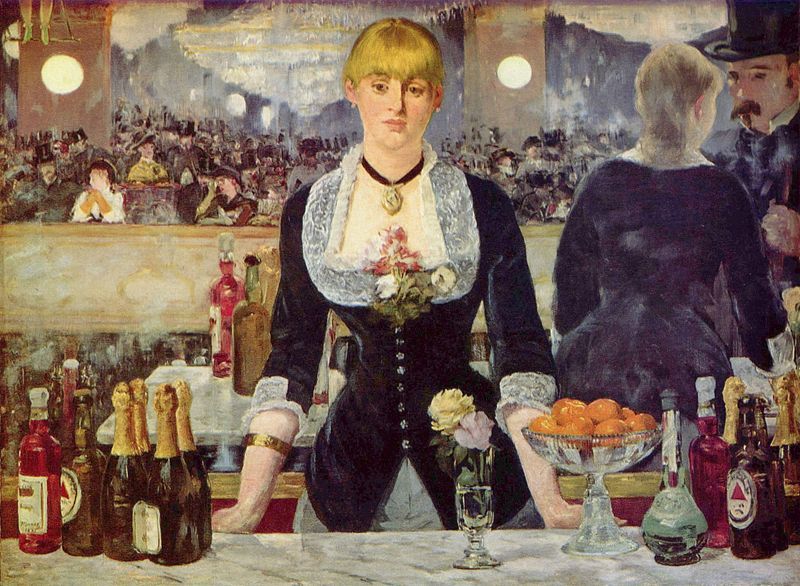
  • Faith as the Prime Epistemological Virtue

    The purpose of this article is to reveal the extent to which knowledge claims in communication that purport to be true should always be supported by the human virtue of faith. When not so supported, it is argued that they are dependent on a blind, even unconscious, trust. Truth or objectivity or certainty and the like are not to be thought of as the principal ethical criteria of speech, but, rather one should accept a single principal one—human faith.

    It will be seen later in what way this faith is not to be identified as divine in the normal acceptation of that word. In view of faith thus being a vital element in dialogues involving truth and knowledge, in all instances of their occurrence, this interlocks epistemology with ethics, with consequent implications for both, particularly as regards the inescapability of sacrifice in human dealings. As the source of dialogue, language is argued to be the ground of what had been regarded as ‘divinity’ as such, and, when properly theorized, that ‘divinity’ loses nothing of its ethical power but gains by the loss of the superstition that enfeebles it. As the final step, I shall indicate why these ethical implications have tended to keep the key proposal out of philosophical attention.

    (Step 1) Sensory and Perceptual Relativity

    The initial premise is the fact of the differences at the sensory and perceptual level between one agent and another, any of which differences, depending on the circumstances of mutually projected understanding, may become relevant to action. All our statements to each other are characterized by both sensory and perceptual relativity. For a survey of the extent of the sensory relativity of vision, see Larry Hardin’s book Color for Philosophers (1986). Similar cases can be made for the other senses. As regards perceptual judgements, the psycholinguist Ragnar Rommetveit has shown that human subjects use markedly different criteria in identifying what they call ‘the same entity’ (Rommetveit 1974: Ch. 4; see also Watzlawick 1977, chs. 5 to 7). Kant acknowledged this: ‘To one man . . . a certain word suggests one thing, to another some other thing; the unity of consciousness in what is empirical is not, as regards what is given, necessarily and universally valid’(CPR B140). The history of our personal learning of what selections from the real to fit to words plays its part here. Notice that, though this appears to be an uncontentious claim, its implications have gone unexamined, and this disinclination deserves analysis.

    Wilhelm von Humboldt, the eminent German anthropologist and linguist, was thus not uttering nonsense when he asserted that ‘All understanding is at the same time a misunderstanding; agreement in thought and feeling is also a parting of the ways’ (Humboldt 1971: p. 43). He put it this way because he wanted to foreground the fact that the genesis of speech can be traced to a felt need to update another person, to improve some selection they are making from their field of experience, and the presupposition behind that assertion is that there would be no impulse to speak unless speaker and hearer did have different understandings of some portion or portions of the world (although the core argument here is confined to the Statement, it has been extended to the Question and the Command; see Wright 2005, 142-7).

    (Step 2) The Idealization of Reciprocity as a Mode of Coping with that Relativity

    Wilhelm von Humboldt, the linguist Fritz Mauthner (1923: II, 117), and the sociologist Alfred Schutz (1962: 11-12) can be taken as representative of a number of thinkers who, aware of this fundamental relativity between persons, have made a particular proposal about the Statement which is a key reference here. They all, like Humboldt, regard the differences mentioned in Step 1 as the source of the desire to try to update another: whether or not that updating is successful is, of course, moot. They see their proposal as necessarily called for because of the Humboldtian ‘misunderstanding’.

    They see the Speaker as faced with the problem of directing the Hearer’s attention to the portion of the real about which the former hopefully wishes to correct the latter. The situation involves a peculiar difficulty therefore, for the Speaker believes that the Hearer has a wrong take on that portion, and, in spite of that, will have to use that focus of misapprehension as the means by which he directs him, namely, the very word or phrase that, in the Speaker’s view, the meaning of which requires readjustment.

    Donald Davidson called the situation a ‘Triangulation’, in which the two people and the object they are confronting are at the three corners of the triangle (Davidson 1991, 159-60). The anthropologist Gregory Bateson used a similar metaphor, a ‘stereoscopic’ or ‘binocular’ relationship, in which there is an ‘interplay’ between two differing perspectives that can, hopefully, produce an enhanced interpretation of the sensory evidence (Bateson, 1978: 79-81). The metaphor of Triangulation connotes an attempt to arrive at a reliable map of a problematic terrain, and thus provides a good analogy for what is in progress when two people compare their experiences of the real (for this reason I originally called this theory ‘Triangulation Theory’, although, in the final analysis, I have come to prefer ‘Faitheism’). Sometimes we do repeat to hearers what they already know, but that is usually with the aim of ensuring they keep it in mind—which still falls under the definition of a problematic situation from the Speaker’s point of view (though that may not be the Hearer’s judgement).

    So the challenge for the Speaker is to effect a transformation of the Hearer’s understanding. Alfred Schutz’s solution was to recommend that the Hearer could be induced to share that of the Speaker in a blending of their perspectives, and the means by which this is to be achieved is by both Speaker and Hearer engaging in an ‘idealization of reciprocity’. He explained this by adding that this could also be described as ‘the idealization of the interchangeability of the standpoints, the taking for granted that, if I were in your shoes, your standpoint would seem to be the same as mine, and you and I see things with the same typicality’ (Schutz, 1962: 11-12). This being an idealization, it is not real but imagined; hence the use of the phrase ‘taken for’. What is imagined is the supposed coincidence of the desires and fears of the partners in dialogue in the future with regard to the ‘item’ and the equally supposed coincidence of their perceptual selections upon the portion of the real which they are trying to bring into ‘common’ focus. A supposed convergence of motivations is thus at the core of this mutual process. Paradoxically, once this double agreement has been accepted as a mutual hypothesis, the Speaker with a new clue to context updates and thus changes the ‘reference’. As valuable as Schutz’s insight was, he made, as we shall see, a significant omission: he did not inquire into the part faith should play in this mutual performance. He should have been stirred to ask the question since his very phrase begins with the word ‘idealization’, which makes plain that the reciprocity of perspectives upon the presumed singular ‘item’ is not real.

    (Step 3) The Idealization of Reciprocity in Language

    In jokes, stories and games, including the language-game, the trick — and I do mean ‘trick’ —is to challenge that ‘reciprocity’, to induce in the hearer, reader, audience to accept another interpretation of the same sensory evidence.

    An example (those familiar with the present argument will forgive my using an example I used before [Wright 2008, 3]): As regards language, consider this interchange between two bird-watchers engaged in a bird-count:

    A: That bird in that tree you just counted.

    B: Well, what about it?

    A: It was two-and-a-bit leaves.

    It seems that B should not really have been so confident in his use of the singular pronoun ‘it’. What is noteworthy here is that A did use the singular form ‘that bird’ —to get B’s attention fixed on the fuzzy region about which she wishes to update B. At the beginning of a statement these two engaged in dialogue have assumed that they have selected the same singular entity from the real continuum. But this mutual assumption was really only something in the nature of a catalyst in the process of transmitting information, for at the end of the statement the ‘entity’ was not the same for B as it had been before.

    One may call the bird phrase the ‘pragmatic subject’, and A’s last sentence the ‘pragmatic predicate’ (there is no necessary tie between these and the grammatical subject and predicate, since what updates the Hearer can be in any part of a sentence—see ‘The cat is on the mat’ as an answer to the question ‘What is on the mat?’. This distinction was first pointed out by the logician John Cook Wilson (1926: 123-6).

    In the example above, the ‘entity’ had not even preserved its singularity, ‘one’ bird becoming ‘two-and-a-bit leaves’, but B had nevertheless been updated by A about his perception of the world. The ‘reciprocity of perspectives’ was transformed. As Dinnaga, a 6th-century Indian Buddhist sage, put it, ‘Even “this” can be a case of mistaken identity’ (Matilal, 1986: 365-7), a fact not realized by Bertrand Russell’. In Russell’s philosophy of language, ‘this’ as an unshakable singularity and should be viewed as such when it appears as a basic ‘referent’ in a statement (Russell 1923, 120-3), which can now be seen as actually believing that the ‘reciprocity’ is complete.

    A defensible interpretation can be put on this claim, one which Russell did not foresee. The core of any informative statement is that the two participants begin by mutually assuming that they have ‘the same entity’ in view—yet this assumption is no more than that, an assumption, a taking-for-granted, which is useful nevertheless in bringing two differing perceptions into enough of an overlap of understanding to allow the updating to go through (that there is no necessary actual overlap in perception can be readily seen in our example). But this is no surprise, for the phrasal verb ‘to take for granted’ contains the same indication of suggesting a tentative hypothesis. ‘To take for’ means to accept one thing AS IF it were another, that is, it is used in situations both parties recognize as having an element of ambiguity or illusion (compare—’It was so foggy I took him for his brother’). Examine the parts of this phrasal verb ‘to take for’: ‘to take’ here means to accept a percept as reliable, as no illusion, no mis-take; and ‘for’ implies that the percept was wrongly interpreted. ‘Granted’ means allowed, permitted, exposed to no expectation of opposition of will and desire from the other. So ‘to take for granted’ means to accept an illusion of real agreement as a perfect agreement, an apparent blending of motivation with another as a perfect fusing, as if there no violent disagreement was possible in the future. And what is this illusory agreement the illusion of which is be temporarily ignored? —that a single object is before the agents concerned—and they are concerned agents. Not the important feature of this fusing of hypotheses, that both agents are undoubtedly attempting to handle the real with something that is imagined ― separately by each of them.

    In order to obtain a rough-and-ready mutual fix on a portion of the real, a partial overlapping of their differing selections, they have to behave as if they have a perfect one. My own way of describing this trick by which we get a rough mutual grasp on the Real has been to say ‘It is by a PRETENCE of complete success that we partially capture THE REAL’. This could be said to explain Saussure’s hybrid view of language as a fixed system, the ‘synchronic’, and as a developing one, the ‘diachronic’ (Saussure 1977, 81). He used these terms because the Idealization is timeless (syn-chronic) as something imagined, whereas the updating clue, as the adjective implies, moves through time (dia-chronic) to a new idealized state. One might almost say that there was the logical on the one hand and the figurative on the other. Saussure himself had no explanation for the relation of the two. So language is ‘hybrid’, but certainly not in the way he imagined.

    Objectors may protest that such an extension of their position is a fanciful exaggeration, but to believe in the perfection of the singularity of objective reference implies precisely that. A divine uniqueness invades the claim of mundane objectivity, but the ‘commonsense’ defenders of it cannot see it. When they typically protest “You are not telling me that that is not a book here in front of us both!”, you can counter with drawing attention to their use of the word ‘telling’: what this implies is that (i) language is all to do with narrative telling; (ii) their prohibition of one’s telling is a sign of their believing in the imaginary perfection of the ‘commonsense’ reference they are making—while ignoring how the commonality of mutual sense is achieved by the Idealization of Reciprocity, and thus, implicitly, forbidding me to speak; (iii) that it is grossly unethical to project one’s own private reference as the touchstone for all; and that (iv) men and women, ‘anthro– ‘, achieve their human nature in talk through ‘-poetics‘, not through literal belief. By the way, it is not without significance that we often use the word ‘telling’ as an adjective to mean of newly persuasive and lasting importance.

    Finally—an apparently disturbing philosophical conclusion — since the notion of singularity is no more than a catalyst, we do not need to believe in ‘the singular entity’ for it is quite otiose in our ontology, however valuable it is in communication. We need to acknowledge this at the very same time as we, with the utmost seriousness,—as in a game or play —treat the singularity as real. Strictly speaking, there is no perceptible difference on behaviour at that moment between those who actually believe in the singularity and those that are co-operatively imagining it; it is just that the believers are using an hypothesis as if it were purely real, while the others are using the hypothesis knowingly (for this linguistic use of ‘as if’ see Hans Vaihinger 1924, 91-95). Compare the extra success of jokers who manage keep a straight face.

    The claim here is that the Word, the Trope, and the Statement themselves, the building-blocks of all communication, are of this form, a view that bears out the opinion of Calvin Schrag, the American philosopher of rhetoric, that ‘Narrative is the linchpin of discourse’ (Schrag 1997: 41). In narratives an expectation is presented as established in order that, by the provision of a clue to a new context, the hearer’s interpretation can be shifted about upon the real, thus changing the ‘world’ (which we can take as the collaborative interpretation of the real). We thus change the ‘objective’ nature of some part of it, that is, its definition within the current interpersonal acceptance.

    What now emerges is that, in order for the speaker, who is armed with the new interpretation, to effect in the hearer a change in percept at this first stage of communication, they must, to begin with, both behave as if they are picking out exactly the same thing from their separate fields of experience. Just as in the Joke and the Story, a speaker, once this needful situation has been set up, produces a clue to a new intentional context, and this affects the context of what was initially agreed, shifting it upon their sensory fields and their memory of them. This, of course, is the aim of the utterance, but, as we know well, it may not succeed. The partners in the dialogue must, as Wilhelm von Humboldt insisted (1971, 36), make their own checks upon their own sensory experience in order to test out that shift, checks which have to be made for the transformation to be appreciated.

    This situation is thus an unusual one: though both think that they have focused on ‘the same entity’, all they are actually doing is bringing two differing selections from the brute real into a rough co-ordination, one sufficient to guide their co-operative actions in the current circumstance, but the key additional point is that this mistaken thought is what enables them to produce that rough co-ordination in the first place. It matches exactly the first move in the joke where it appears for the moment that both the joker and his hearer share the same understanding of a part of the world. It is also, unsurprisingly, what keeps them both from realizing what they are actually doing!—and what has kept most linguists from realizing what was being done!

    It seems likely that what the blind and deaf Helen Keller unconsciously realized, as she ran her hands under the water from a tap and was treated to tactile signing of /water/ from her teacher, was not so much that she had come to understand what a name was (Aitchison, 1996, 96) but that language began with the understanding that the other’s attention, through the hand sign /water/, was on the ‘same’ portion of the Real, even though she and her teacher had markedly different perceptions of it, her teacher having normal sensory access to the world.

    Note, therefore, the paradox that arises from this dramatic performance of the coincidence of each person’s object with that of another’s. Every informative statement is of this form: the two in dialogue begin by getting a rough and partial superimposition of their percepts by acting as if they already had a perfect one, as if there were a single entity that provided an unquestionable referent for both of them. They have to act out Samuel Butler’s notion that ‘everything is what it is and not another thing’ (Butler, 1970 [1726]), as implied by the so-called ‘Laws of Thought’ (which are obviously dependent on the Idealization of Reciprocity). No surprise that that they are called ‘laws’ as they are presumed to apply to any speaker. The next step is to deny that very presupposition, because the speaker provides a clue to another intentional perspective that alters the ‘entity’, which amounts to a common admission that they did not in fact have a perfect superimposition of their selections. They performed what is thus an imagined act, one which cannot be but an act of faith. It is clearly necessary as a part of our method of achieving an overlap of our separate selections from the real that we behave as if it were not a mere overlap but a pure coinciding.

    In actual dialogue the mismatching between the speaker’s and the hearer’s ‘referent’ can vary considerably: (i) they can overlap by a large margin such that the mismatch can be very minor and cause no notable mix-ups for a considerable time; (ii) the overlap can be very small in that a misunderstanding rapidly emerges; (iii) there may be no overlap at all in which misunderstanding leads to gross dissimilarity in action. There is a fourth type of mismatch: it may be that the intended hearer has not sorted any entity at all from the real in that region of it, it being outside the present scope of his or her attention. The fact that the real sensory field may exist unperceived has been contested by some objectors to this theory: the psychologist James J. Gibson for one believes that the real consists of a mass of already distinct ‘invariants’, so in his view one cannot not perceive, that is, that every portion of your sensory fields is already mapped out into separable units (Gibson, 1977, 67). The response is to say that this is our hope, and, too, the basis of our method of guiding us through the real, but not by any means a given (for empirical evidence that disproves Gibson’s claim see Wright 2005, 91-3). One can add that Gibson’s use of the word ‘invariant’ is no more than an expression of the Idealization of Reciprocity without the acknowledgement of the inescapable risk that attends it; for two persons in communication, each has arrived at his or her hopeful ‘invariant’ but they are not the same, so for for each there are regions they are sensing but not perceiving. It needs to be pointed out that a mismatch in understanding can lead to positive as well as negative outcomes, for the hearer may already have assumed something in the ‘taking-for-granted’ which is of immense mutual value and which, initially, had not been at all recognized by the speaker. Teachers are always open to being taught by pupils.

    (Step 4) The Difficulty of Performing the Idealization

    We come now to what Schutz omitted. It probably will already have been realized that, in any case, such ideal coinciding was impossible from the start: the sensory and perceptual differences prevent it taking place. An idealization of reciprocity is impossible to effect, for what does such reciprocity imply but a perfect fusing at some eternal point of all the wishes and desires of both parties? One cannot artificially limit the desires of the partners in dialogue to something immediately relevant as each identically perceives it. It is plain that one’s trust has to move out of the range of current expectations into a consciously imagined fusing, and this is one which is prepared to take unexpected motivational differences into consideration.

    A philosopher, Joel Feinberg, has dubbed this extending of intention into the future the ‘Accordion Effect’:

    This well-known feature of our language, whereby a man’s actions can be described as narrowly or as broadly as we please, I propose to call the ‘Accordion Effect’, because an act, like the folding musical instrument, can be squeezed down to a minimum or else stretched out. (Feinberg 1965: 146)

    (He gives part of the answer to the questions surrounding this odd feature of language in that almost unnoticed little interjection ‘as we please’; in the phrase ‘as we please’ the word ‘we’ has only an individual sense.). The accordion is stretched out by our providing wider and wider explanations of the intentional context. But there is a question that Feinberg did not ask: Is there the assumption that there is some one fixed fully open position, which, although a few of the bellow pleats are tattered, still represents a ‘totality’ of understanding which touches the world securely at its fully extended edges? This is extraordinary in that it appears to envisage an ideal goal of all our actions, some summum bonum for both speaker and hearer beyond the horizon which, of course, can never be achieved.

    One is tempted to say that talkers have to content themselves with taking Feinberg’s accordion as open enough to justify current suppositions about the relevance of what is said, the context thus having distinctly fuzzy edges. But that temptation is to be resisted if we are to analyse the circumstance satisfactorily—for whose are ‘the current suppositions’?

    Another linguist, Sir Alan Gardiner, criticized Saussure thus for neglecting the fact that each person has a different understanding of a word (Gardiner 1951, 52-61). We can quote Immanuel Kant here:

    To one man, for instance, a certain word suggests one thing, to another some other thing; the unity of consciousness in that which is empirical is not, as regards what is given, necessarily and universally valid. (Critique of Pure Reason: B140)

    Kant’s uncontentious statement, that it is not possible for two persons’ understandings to match exactly, has not been given by philosophers the attention it deserves. And why? Why do we take the equivalence as confirming a rational view of the world, that rationality depends on the common singularity of the entities we refer to? Fortunately, Ragnar Rommetveit has concerned himself with this very matter; he has empirically established the fact that it is possible for two persons to arrive at practical co-ordination in speech and action without either being aware that they each have marked differences of sensation and perception (Rommetveit, 1974). These differences would, indeed, only become salient to one or both in some entirely new context unforeseen by either, in which some hidden criterion on which one had been unconsciously relying became relevant to his or her current purposes.

    A logician, Harry S. Leonard, has commented on this universal feature of communication, an ever-present but concealed ‘misapprehension’: notice the radical implication here which goes beyond this remark and that of Kant: the two might not even be using criteria that pick out strictly the same extension, the same ‘thing’.

    Two people engaged in this same process of trying to reach a common understanding may well find two sets of criteria which remarkably well isolate the same extension. But do they understand the word in the same way? (Leonard, 1967: p. 266)

    For one of them, his ‘entity’ might not be considered to last as long as the other’s ‘entity’, or cease to be ‘the same thing’ when it changes in some quality (say, in colour, weight or taste). As Aristotle commented, what are six apples for the seller do not necessarily count as six apples for the buyer. So the actual imputation of entityhood is just that, an imputation, performed mutually. To use phrases from Habermas, one has ‘to play along’ (2008, p. 32), acknowledge that there is only an ‘overlap’ of reference (ibid., p. 40), thus achieving only an ‘interlacing’ of differing ‘perspectives’ (1970, p. 141). This is what objectivists like James J. Gibson are unable to recognize.

    There is thus a detectable taint of inconsistency here in the first quotation from Habermas, for, if there is something ‘unshareable and individual’ in an agent’s perceptions, how can the ‘symbols’ be ‘intersubjectively valid’? This is Saussure’s problem the other way round, for we can ask how can word and meaning perfectly match when meanings change across time?

    Leonard’s remark can take us further: it does not matter (in the sense of how the participants in language judge their intentions and how they direct their separate attentions) whether their attempts at co-ordination do coincide fully, that is, each might have their own ‘entity’, their own selection from the individual experiences they are having, as long as the ‘failure’ of overlap between these selections does not immediately interfere with their immediate pragmatic judgements of success in the action concerned. Another way of putting it is to say that where each puts his or her boundaries upon the real can differ even when both would say that they were satisfied with their mutual agreement at that moment in time.

    The implication is a startling one: there is actually no single entity in front of them at all—its ‘singularity’ is something supposed for the convenience of communication. That convenience is established by each behaving as if their two selections from experience actually did coincide. Obviously, if they did not make this necessary but strictly false assumption that there was only ‘one’ entity in front of them, they could never bring their separate judgements into any sort of harness.

    This vital demand is what requires that the collaboration be ethically based on faith and not blind trust. To accept that all percepts are viable (Ernst von Glasersfeld’s favoured word here; Glasersfeld, 1984, 25) and that the language group is maintaining the co-reference of them by this species of faith is not easy to recognize or accept. Glasersfeld himself, like Schutz, does not carry his analysis further and pick up the ethical necessity of faith in this mutual situation.

    Fearing for the security of our concepts, in particular our self-concept and the group concept bound up with it, leads, as we have seen, to rigidifying the blind faith into an unshakeable conviction of a final truth of our own identifications, which prevents, as we shall see, the challenge of faith from being recognized.

    There is an unusual question here. If language has evolved in this way, few can have been consciously aware of this mutual assumption. Strictly speaking, it is not an assumption, but a natural performance. Analysis of the situation shows the two agents in dialogue behaving ‘as if it they had exchanged bodies’ with the result that a ‘referent’ appears ‘exactly the same for both of them’. The subjects themselves are not in possession of the theory we are now entertaining. Since they are behaving as if ‘a single object’ were in front of them without knowing that they are so behaving, they immediately and certainly believe that ‘it’ is the ‘same object’ for their interlocutor. For them there is no ‘as if’. Hence, they are continually faced with shocks, pleasant and unpleasant, either when a correction works upon them or when brute contingency breaks in upon their assurance. It is not a great deal of consolation to realize that the intrusion of contingency thus is a proof of there being an external real independent of our language; and, furthermore, because of this real residue, solipsism is impossible since one’s notion of oneself is thus inextricably dependent on the judgement of others. The brute contingency of the real as such is as present in the so-called ‘self’ as anywhere else in the real, and much therefore always lies outside our knowing. Habitually, however, the overall false conviction of a objective world is not disturbed, the reason being precisely that the mutual performance of perfect objectivity has to be resumed with every utterance; otherwise we could not talk at all, for we would fail to get our separate perspectives in any kind of rough co-ordination. What cannot be disturbed is our inescapable immersion in the real, which continues in our sensings while our perceptions range dubiously and dangerously over it.

    At this point it is needful to note that a naïve objection to this can be disposed of. The objection goes thus:

    The sensory and perceptual relativity premiss has no force here because it is plain that the objectivity of the entity at the core of the attempts to refer is already an existent fact. There is no harm in pointing out that they may be varying perspectives upon the person or thing or property in question, but it cannot be denied that the focus of these ‘overlappings’ exists apart from them, and that it remains as what the attempts are trying to close in on. However ‘vague’ may be the criteria of recognition, the vagueness is the same for everyone (Wiggins, 1986, 95): it is plain that there is a core common across all perspectives. To use a favourite phrase of John McDowell, it is ‘thus and so’ (McDowell 1994, 9; see also Tye 2000, 46-7). Bertrand Russell dismissed vagueness altogether: ‘There can be no such thing as vagueness or imprecision; things are what they are and there’s an end of it’ (Russell 1923, 85).

    But the ‘singular entity’ is not an ‘existent fact’: the taking of the focus as a singular, pre-existing ‘entity’ is only the means by which differing selections are held in hopeful focus. What undeniably exists is the ground of the real, the ever-changing flux, which has been carved out by each observer applying different criteria of recognition. Indeed, when a correction goes through and is apparently confirmed by one’s sensory inspection, one has been presented with a proof of the existence of the real, but one has not been presented with a proof of a perfect ‘objectivity’ characterizing one’s own selection, which remains irremediably different from that of others (Kuhn 1970, 198-204). Naturally we are disinclined to suspect our own and others’ success in the game of projecting identities: it has taken such trouble to hone them.

    One has to say that each person’s selection outlines and embraces a portion of the reaI, but, because that portion cannot match that of anyone else, there is no final objectivity in that selection. You may be taking for granted as definitive of that ‘objectivity’ something you perceive that no one else does, and no one, including you, as yet knows of that difference between you! The word ‘objectivity’ becomes a useful piece in the language-game but it has no ontological reality except as such a piece; it can only slide about on the real as we adjust it in mutual hope. One curious consequence is that the updating the Speaker hopefully supplies may be unsatisfactory in the long run, but the transformation still proves the existence of the real, for it shows that the two observers have sensory access to it as the ground over which their selections play. There is therefore no pretence in the joys and sufferings that result from our engagements with the real for the whole play has a purpose, namely, to guide its collaborative drama through time for the impossible realization of all our hopes. It does not proceed for the satisfaction of any one of us because that very ‘oneness’ we owe to the great game itself. Pretence at the mundane level is thought of immediately as a form of deception, but the great play is not a deception but the grandest of hypotheses, one we are within and cannot exist without (‘without’ here can be taken as an Elizabethan pun).

    The continuing agreement in co-operative action with that part of the real leads us to equate its historical, temporary, only viable objectivity with the real, but this is to try vainly to turn hope that what we have picked out as the same for all of us, into logical certitude (Glasersfeld 1934, 33). Worthwhile dwelling on this fact: we can point at ‘the’ object and say to ourselves “That’s real!” or, with Ted Honderich, “That’s actual!” (Honderich, 2014), but one is still in the position of one ignoring the access of others: Birdwatcher B could have confidently pointed to the two-and-a-bit leaves he took for a bird and said ‘That’s real!”, and these is a sense in which he would be right, for that portion of the real which he was perceiving as a bird was still a portion of the real, however he was objectifying it.

    Objectivity is thus not a feature of the real: it is only a rough compromise of differing perspectives upon existence that should guide human beings in their would-be collaborative actions within it. We find it profoundly unsettling to think of objective ‘reality’ as shot through with doubt: better, it seems, to hold to a ‘security’ that our partner in dialogue also appears to want to uphold, especially when our own identity would be rendered precarious. What is comfortingly forgotten in such attitude is that the real is full of surprises, and some of those surprises can arise unbidden from within us. How valuable it is, then, that we are unconsciously drawn to stories, which are all about those surprises. Inevitably, one element of the resistance to this theory lies in the fact that it is profoundly disturbing, as well as counter-intuitive, to accept the idea that all our identifications are irremediably uncertain, only maintained by human faith, faith which accepts the attendant risk.

    Borrowing from the theory of the theatre, one can say that we should view all our mundane identifications as betraying a Brechtian Verfremdungseffekt, that is, with the fictive illusion showing through. Brecht counsels his actors to disturb the audience’s cosy acceptance of the theatrical illusion so that they were unable to escape the play’s relevance to their lives:

    The audience were to be nudged into a critical and inquiring attitude by a continual emphasis on the fictional status of the theatrical enterprise. (Elizabeth Wright 1989, 27).

    For Brecht the aim was political, namely, to disturb the numbing effects of bourgeois ideology; but in the present context we can apply it to our habitual absorption in the mundane world, in which we turn a merely viable perception—of our ‘theatrical enterprise’ —into a complacent self-deception. Although Brecht himself would characterize this theatrical method as arising from political insight, we can rather say that fundamentally it is a philosophical one.

    An unforeseen consequence of blind faith is that it transforms the play-assumption of the Idealization of Reciprocity into a real belief in a final coincidence of Speaker’s and Hearer’s desires. Therefore one has right to say that blind trust implicitly projects a summum bonum, a heaven, a utopia, a promised land, a ‘Jerusalem’, where all desires are magically harmonized, when in fact they are no more than poetic expressions of our unrealizable mutual hope (Wright 2012). As Feinberg’s analysis shows, the ‘intentional perspective’ one adopts has no horizon. All our motivation has no idea of where it wants to end up—except as part of the needfully imagined common summum bonum.

    Objectors may protest that such an extension of their position is a fanciful exaggeration, but to believe in the perfection of the singularity of objective reference implies precisely that. A timelessly divine uniqueness invades the claim of mundane objectivity, but the ‘commonsense’ defenders of it cannot see it. When they typically protest “You are not telling me that that is not a book here in front of us both!”, you can counter with drawing attention to their use of the word ‘telling’: what this implies is that (i) language is all to do with narrative telling; (ii) their prohibition of one’s telling is a sign of their believing in the imaginary perfection of the ‘commonsense’ reference they are making—while ignoring how the commonality of mutual sense is achieved by the Idealization of Reciprocity, and thus, implicitly, as a German friend, Ulrike Hanraths, has pointed out to me, forbidding me to speak; (iii) that it is grossly unethical to project one’s own private reference as the touchstone for all; and that (iv) men and women —’anthro– ‘— achieve their human nature in talk through ‘-poetics‘, not through literal belief. By the way, it is not without significance that we often use the word ‘telling’ as an adjective to mean of newly persuasive and lasting importance.

    Honderich, Wiggins, McDowell, and their like—all the way back to Russell—are typical of philosophers who dismiss anti-objectivist arguments thus. What motivates their false sense of certainty is their inability to see that any mutual identification has to take account of the stubbornly residual differences in our access to the real, and, in particular, to understand that a feature of such taking account must involve co-operating observers engaging in a form of play. If they advance to detecting a trace of the ambiguity of play, they can only construe the dual nature of the method as deception or disguise or an attempt at subversion. After all, as they would put it, what could be more destructive of truth than ambiguity?—Could not that ambiguity be deception? This is why they characterize anti-objectivism as relativist, as a view that refuses to accept that the basis of truth can ever be arrived at. So in opposing the relativist they adopt the authoritarian stance of someone engaged in morally correcting another, and thus feel justified in their certainty. To quote Russell again, ‘Things are what they are and there’s an end of it.’ There’s an end of it, because ‘it’ is the taken-for-granted agreement across speakers of language that observers are focussed upon one entity, but to accept that it is only taken for such is regarded as blasphemy.

    However, play proper, whether of a game, a joke, or an aesthetic creation (poem, novel, drama, painting, statue, mime, ballet, etc., etc.), demands the mutual taking of one perception for another together with the serious recognition that all concerned are not ‘concerned’. We have to play ‘with straight faces’, knowing full well that all of us are all doing so. This implies that all speakers should be apprised beforehand that only faith can bridge the disturbing gap between the truth we are projecting together and the response of the real to our hope.

    The objectivist winces away from the fictive character of this unnoticed collaboration: he sees it as delusory, pretended, even mythical, and derides what he regards as relativism with these accusations. But its irremovably dual nature arises from the two hypotheses that the persons in dialogue are trying to match. The objectivist cannot see the duality with a straight face, that is, inwardly acknowledging its presence but outwardly behaving as if it did not exist, all the while knowing that his partner in dialogue is doing exactly the same thing! Ironically ,he is the one who is superstitious in taking the timeless singularity of ‘the’ entity for real.

    When a philosophy professor of the analytic persuasion, Robert Kirk, said to me, “You’re not going to tell me that that is not the sun up there!”, I replied “All you are doing is exhorting me to share the basic, poetic trust of language with you, and I will, for unless we treated our co-reference as a perfectly singular reference, I could never update you about the Real, such as now by saying that, strictly speaking, that bright disc of light is not the sun, for the actual sun is invisible some degrees further down the sky!”

    The actual state of the case is that all ‘entities’, including that of the self, are maintained as co-operative choices from the real by this hidden faith — to quote the poet Edwin Muir, ‘Faith made the whole’ (Muir, 1960, 238-9). Incidentally, this is what had led the religions of the past to attribute the creation of the world to God, which can now be seen as only a poetic acknowledgement of the countless acts of mutual faith between human beings who, in talking to each other, have projected their hopeful sortings upon the real. The popular origin of this faith process as a god or gods is a sidelong admission that faith is at the core. The claim in the catechism that ‘God made everything’ can now be seen as an unknowing disclosure of the actual human construction-in-faith sustaining the whole language system.

    (Step 5) Faith—The type of trust that is ethically requisite

    This hidden mutual faith, then, needs a closer look. If this theory is correct, what Rommetveit has called the ‘naïve and unreflecting faith’ that we have mutually focussed on a perfectly singular entity (Rommetveit, 1978: 31) is essential to all language, and therefore all that is human. Communication apparently displays a need to trust other members of the group, but it is questionable whether at this level it is describable as ‘altruistic’, for how could something evolved be normative? The performance requires this initial trust that enables perceptual correction to go through, but it is trust so second-nature it is entered into without thought. At the animal level, two predators may successfully capture their prey, and we onlookers may be satisfied with identifying the ‘singularity’ of their prey, but differences in their sensings and perceptions may still be evolutionarily significant in the future; the animals themselves, of course, have no such awareness of their differences from the perceptions of others even though those differences may lead to evolutionary survival.

    It is thus profoundly disturbing to this tempting narcissistic view of the world as securely objective by our own standards to suspect that what ‘counts’ for us may not count in the same way after a new interpretation is proffered to us by our interlocutor. This is why the word ‘count’ has the two meanings that it does: ‘count’ as to enumerate singularities, and ‘count’ as to matter, the link being that the ‘singularities’ we have selected were selected at the behest of motivation. This ambiguity is itself low-level evidence in support of the present theory. An ‘it’ certainly exists as my choice from the Real, but the choice that produces the ‘it’ for the Other is not the same as mine. In other words, we each separately see the Real as some-thing in our own way, but we have to behave as if that we just see that there is one identical thing before everyone. The ‘seeing-as’s’ are actual in each observer: the ‘seeing-that’s’ as one and the same for each is a mutual fictive construction. Michael Dummett was indirectly alluding to this when he wrote ‘Knowledge of truth-conditions cannot be reduced merely to verbalizable knowledge’ (Dummett, 1973, 461),’ an echo of Locke, who, in referring to men’s ‘different ideas’, said that they ‘make the signification of [a] common name very various and uncertain’ (Essay, III ix 13).

    It can now be seen why we should withhold the honorific term ‘faith’ for the basic Idealization of Reciprocity, for there is a subtle temptation to move from the tacit performance of an agreement with the Other to the conviction of there being a perfectly shared, timeless singularity as a ‘common’ referent. How easy to build on that needfully imagined projection of that singularity without which a statement cannot be made, to a superstitious belief in it, especially when one is not consciously aware of the Idealization in the first place. The Idealization per se may have the form of trust, but, unless it is informed with a notion of risk covertly arising from our differences from the Other, it is only a pseudo-trust. The ever-present possibility of sacrifice is ignored, especially when the entity in question is one’s self. This may be an underlying fear for the naive objectivist in many cases where an objective truth is being claimed

    A curious surfacing of this conviction, one that hides its origin, is to be found in the work of an American philosopher, Lynne Rudder Baker. In one of her books (2000) she explores the intricacies of the constructed interrelationships of our mundane worlds of ordinary objects and scientific ones. Persons, selves and things are all characterized in their entityhood as ontologically singular atoms. For example, she regards a person and her body together as an ontologically singular unit: ‘it is not as if there were two separate things — my body and myself. There is a single constituted thing—me’ (p. 114). Just as Democritus used the word ‘atom’ (literally not split) in search of the certainty of a basic identity in the constituents of matter (and we can extend this to the modern quarks and bosons), she discerns the same fundamental singularity in an ordinary table. The present argument can explain why. The reason is that the collaboration in trust, or, preferably, faith of Speaker and Hearer in an uttered statement with ‘table’ as its singular referent relies on their mutual imaginative performance of convergence on a singular ‘atom’ of ‘knowledge’, faith, of course, because there is no singular referent in the real. What does exist there is the convergence (or not, as the case may be) of two complex perspectives compounded of two sensory, perceptual, and conceptual selections from the real. So Baker has made the common error of turning a feature of the dialogic compact into an ontological given; she is virtually recommending the Idealization of Reciprocity without knowing that she is.

    This is why I have frequently said that every ‘identification’ that we make should ultimately be seen to depend upon that faith. The very word ‘identification’ betrays the actual nature of the mutual construction that is taking place, for its etymological source is ‘a making of the same’. What we forget is that we are doing the making together, a making of a guide for mutual perception, not, obviously, a making of the material from which we select – the real.

    A proper faith is certainly not blind. It does not superstitiously depend on certainties believed to be absolute. Have not theologians over the centuries protested that faith is precisely not certainty — ‘Oh, Lord, I believe: help Thou mine unbelief’ (Mark 9:24). If the Real can subvert the Thing and the Self, escape the word, rule and custom that attempts to keep it roughly within bounds, then there is risk in every act of trust. To trust someone is not to be sure that they will do exactly as you personally expect. To believe that they will is to put yourself in a narrative over which you have little control, as well as committing the narcissistic sin of believing that your desire is their desire, your objective world is theirs, absolutely without any awkward residue. There is always a residue, as Humboldt insisted, sometimes favourable to both, sometimes harmful to one or both, sometimes for the moment neutral in its implications. A proper faith acknowledges that the Other, a part of the Real, can never be encompassed within the play of language, no more than one’s own self can. It is now plain that one’s self-concept depends upon dialogue with others; one would not even be ‘a self’ without them. We both need our partner in language to talk at all, but, if we are to talk in a genuine fashion, then our faith must be of this second kind, not the pseudo-trust, every time we speak.

    This is what all jokes and stories are about. Are jokes and stories not repeated demonstrations of what happens when someone superstitiously favours their own choice from the Real while disregarding all clues to the contrary, indicative of what others may be seeing? And this is so consoling for readers of stories, safely insulated by foreknowledge of those clues which save them from the misunderstandings of the characters in the text. This is where the pleasure of the text lies. Look at Oedipus, or the rioters in The Pardoner’s Tale, or Marlowe in She Stoops to Conquer, or Emma in Emma, or Pip in the appropriately named Great Expectations. A story follows exactly the same pattern of the informative Statement: having established one projection of the ‘truth’, the author-speaker introduces a second clue to a new intentional perspective which disturbs the Idealization of Reciprocity. The Statement is thus a story, and the Story is a statement. A story proceeds by first establishing a strong wrong first clue for the protagonist, and then proceeds to subvert the first interpretation by providing a faint right second clue to a new interpretation (sometimes often and faintly throughout, sometimes in a final surprising peripeteia, sometimes both, and sometimes protagonists are left in their sad misapprehension (Wright 2005, 59-64; Jane Austen is expert at this teasing).

    Speaker and Hearer are engaged in a hopeful adjustment of the play of language, and their trust in it therefore involves the expectation that the new meaning will contribute to the advance ultimately towards some future felicity for both. Nevertheless, however sincere both parties may be, each may understand the words differently and not know of that difference until later. So in opposition to Robert Brandom’s claim that all should be made publicly ‘explicit’ which is a literalizing of the impossible hope (Brandom 1994), the claim here is that what is implicit for each cannot all be explicit for both (although we all, keeping straight faces, have to behave in the performance of a Statement as if it is!).

    A more self-concealing version of the same error can be found in a definition of ambiguity by Dan Sperber and Deirdre Wilson:

    Everything is ambiguous, as long as it is taken by itself, while nothing is strictly ambiguous if we look at it top-down, placing it in its proper, cognitive environment. (Sperber and Wilson, 1995, 205)

    Notice the belief—not provisional assumption —that a ‘proper’ placing of a word in ‘its cognitive environment’ when one ‘looks at it top-down’ ensures a fixed, utterly single meaning for each word. This plainly reveals the status of the word as an Idealization of Reciprocity. Neither Sperber nor Wilson, as with Baker, are aware that what is really being recommended nor of the possibility of the updating that is at the core of an informative statement.

    The first thing one can say here is that the use of the words ‘proper’ and ‘top-down’ betrays the frankly authoritarian conviction that a single agent cannot change the public meaning of a word. This is often backed up with an amused allusion to Lewis Carroll’s Humpty Dumpty who claimed that he could make a word mean just what he chose it to mean, which suggests that any adjustment to the meaning of word can only be nonsense, or, at the most, a trope. Anyone who uses this dismissal has no right to be amused as the definition rules out jokes, especially ones with a serious purpose. Sperber and Wilson forget that ‘cognition’ is negotiable. The second thing to say is that their definition is unable to see itself as the necessary dramatic performance of a perfect mutual co-reference that allows a shift of reference to take place —one might say, as the mutual imagining of Saussure’s ‘synchronic’ fixedness that enables the mutual ‘diachronic’ adjustment to go through. Unless some rough overlap of referential perspective between participants in a dialogue can be mutually established, no updating can be achieved.

    This acknowledgement of our irremediable difference in sensory and perceptual perspectives must carry with it the admission that both comic and tragic outcomes cannot be scientifically ruled out. The supposedly agreed ‘truth’ thus is secondary to the original ‘troth’. To repeat an earlier dictum of mine: ‘Troth comes before truth, and love before troth’ (worth noting that the word ‘truth’ derives etymologically from the word ‘troth’; Wright 2005, 228-9). In the comic or tragic situations, the troth is ethically secondary to the quality of the love that the two parties have for each other, for the resulting emergence of the mismatch may only be resolvable by sacrifice on the part of one or other or both. So love is extremely difficult on those occasions in which the conflict is not resolvable—Read Great Expectations if you are in doubt.

    That this is an alarming possibility leads many into being blind to the very act of trust involved in speaking, to the point where they project their own understanding as a fact and not a mutual,provisional assumption. A philosophical implication is that anyone who is tempted to take the singularity of entities, either of their own selfhood, other selves, or any external entity as a given, objective, impersonal fact — and not, as it is, a tentative experiment in the co-ordination of two differing selections out of the undoubted real — is being superstitious, and superstition rests on a blind ignoring of the existential risk. What is faith if it is not prepared for the risk of finding that the person one loves is an ‘enemy’?

    That this accusation includes both idealists and hard-headed positivists may come as something of a salutary surprise to both of them. The actual state of the case is that, all ‘entities’, including that of the self, are maintained as would-be co-operative choices from the real by this hidden faith. This mundane ‘world’ of ours that we call ‘reality’ is hopefully kept in place on the recalcitrant real by our co-operating in faith. The word ‘entity’ itself is a trap bestowing as it does a fixed singular existence in the real upon what is no more than the concatenation of all our separate hypotheses fuzzily overlapping on the real. This is not to deny that this language trick has helped us in varying degrees to track the changes in the real; hence the Glasersfeldian ‘viability’. In case one were tempted to extend this viability to the whole of the cosmos, one must recall how parochial our view of it is.

    We can thus correctly accuse Plato of carrying the Idealization of Reciprocity to the point of reifying the imagined coincidence of our selections as his ‘Forms’, and, inevitably, mistakenly bestowing upon them the sacredness of divine ‘truth’, when their ‘sacredness’ arises from our having to have faith, a human faith that is prepared to accept that conflict can emerge in the most loving relationships and the love must learn some way of enduring it. In his elaborate Cave Analogy he forgot the others who were examining the Wall of the challenging real with him; he never considered what the Wall represented in his scheme (Wright 1979).

    Since every ‘entity’ (and ‘property’ – for the argument applies just as much to ‘singular’ properties) they pick out is sustained at the best by this ‘holy’ human faith, it is no wonder that it is easy to believe that ‘God’ has ‘created’ ‘them’ all. The real motivation behind the creationists’ wanting to have a god creating them all is, as I noted above, no more than a skewed acknowledgement that human faith is the ground of all our recognitions, but it undoes its own desire in not accepting the difficulty of real faith.

    One can use a justifiable argumentum ad hominem here specifically addressed to those objectivist philosophers. To believe that objectivity is as one sees it, plus the conviction that everyone accepts it as one does oneself, is an act of narcissism. One’s own interpretation of that portion of the real, one’s own guide to action in that circumstance—for to accept that portion as ‘objective’ is to be convinced that one’s desires and fears are wholly taken account of in that act of perceiving—is to proclaim an absolute certainty and the right to guarantee it. There is both vanity and complacency in such a stance, as well as lack of courage in not facing the challenge of the real that is acknowledged by faith.

    (Step 6) The Ethical Implications

    Faith is thus very difficult. We would not be able to utter an informative statement unless we entered into the play that takes the real as consisting of re-cognizable ‘entities’ (and ‘properties’) visible to us all in the same way; because of this, it is dangerously easy to move from this to believing what we are unconsciously entering into—that is, to taking the play for real. Let us go over the traps here.

    1. To remember that the word of one’s language partner cannot in the final analysis be his or her bond. The motto of the British Stock Exchange is ‘My word, my bond’. Don’t we say ‘I give you my word.’ But it can’t be just your word—it is your Hearer’s, and your hearers’-plural. One salutary way of remembering this is to realize that one’s every use of ‘I’, ‘we’, and ‘you’ is attended by an aura of risk and doubt, and should therefore be imbued with the responsibilities of faith.

    2. To forget that any ‘taking for granted’ is what it says, an acceptance of a partial agreement as a perfect one. To quote Rommetveit, ‘We TAKE a perfect intersubjectivity FOR granted in order to achieve a partial one’ (Rommetveit 1978, 31). After all, that is what ‘to take for’ means.

    3. A hearer’s unexpected interpretation of one’s word may be comic, in that you can ease some of the motivational pain in laughter, laughter in which the body’s pain is assuaged by a concession to the Other, or their concession to you, or a concession by each of you.

    4. On the other hand, the unexpected interpretation may involve a tragic transformation, as it did for Pip. Then a sacrifice may be called for by Speaker, by Hearer, or by both, which was not foreseen at the moment of the original agreement, and this involves challenging negotiation, if that is at all possible. Sometimes in the most tragic cases, as we have seen, it is not possible: the bases of our motivations sometimes go down so deep it would be to brainwash us to proceed further. This dark conclusion is one which those who are suspicious of this approach to the human indistinctly discern, thus adding to the dangerous aversion to engaging with the argument. Nor will this pain necessarily be assuaged – certainly not by some compensation in a non-existent afterlife, as many would-be martyrs expect. The only compensation is perhaps that one’s story becomes exemplary for those who follow after, though they may not know that you were the agent. Tennyson has the line ‘Our echoes roll from soul to soul’, and your echo may have an effect on posterity without posterity knowing that it originated with you. It may not glorify you, for you may be nameless, like those who freely took the place of others in the ovens of Auschwitz. Their example still inspires, anonymity or no. One doesn’t do good in order to be personally rewarded, even in posthumous reputation. One equally certainly doesn’t do good in order to avoid eternal punishment! Surely moral worth evaporates if either of these is the reason for action. These ‘echoes’ are what immortality really is. We have contributed—well or badly —to the great drama that passes on through time like a ‘Mexican wave’ round a stadium through sports spectators, those sitting ahead of it being the unborn, those after, the dead.

    5. Look now at a more insidious temptation. The shift now revealed implicit in the other’s interpretation can look at once like treachery or heresy, this when the mismatch with your own was not at all salient to either of you when the original agreement was made. You may have sacralized your private version in the anarchist manner, or it has been a tradition handed on to you by the ‘authorities’ as sacralized: that the prohibition of action or the instigation to it was presented as divinely sanctified and therefore unchangeable by definition. The residual blind trust is thus defensively rigidified, (a) because the demand of unquestioning acceptance is also a demand for a promise of your utterly unwavering loyalty to the family, the group, or the nation— of course, according to the would-be authority’s interpretation of it, a realization which undermines the would-be moral argument of those who defend ‘Big Brother’ invasions of privacy; (b) all the myths supportive of that solidarity become literal, instead of being aesthetic, indeed playful, encouragements of the Idealization of Reciprocity—which are valuable if supportive of faith and unreliable if supportive of blind trust. What should be consciously dramatic becomes unconsciously self-deceptive: one ends up believing the myths instead of performing them—and this from persons who make a great pother about the treachery hidden in all things ambiguous, equivocal, fictive, illogical.

    6. When the communication does go through and both partners are satisfied, note the additional temptation: the original ideal agreement spreads this feeling of success to the whole of one’s language. One may become an objectivist, with no motive to think that one’s own idiolect does not match the language as a whole. The mundane world seems all the more secure, fears of risk having been tranquillized away. The mundane becomes the real, and one’s sense of its unpredictability fades. One becomes more reassured with talk of objectivity, loyalty, sincerity, reality, and anyone who suggests a flaw in these eternal verities is automatically suspect. Don’t we all know that fiction is akin to lying, that jokers are not serious? That is why Humboldt’s, James’s, Schutz’s, Wood Sellars’, etc. insight was neglected and still is. The unspoken fear is that it leads to relativism—Did not the last pope in his first week as pontiff make it the key enemy to be watched for at all costs? For me there is a keen irony in a leader of what is called ‘a faith’ taking up such a position. A pure authority is as impossible as a pure freedom.

    Playing is something sensible children do without difficulty. Some children, however, find the challenge to their sense of identity too frightening— like the child in an Orcs-and-Hobbits game who bursts into tears when he is ‘taken prisoner’. Read the last two lines of Thomas Hardy’s poem ‘The Darkling Thrush’ where the myth of a final heaven, a summum bonum, as inspiring the song of the winter thrush, is accepted for what it is, a valuable myth:

    Some blessed Hope whereof he knew
    And I was unaware. (Hardy 1952, 137)

    A look at the myths that have produced a recognition of the dark conclusion is worthy of note here. If one examines the ‘Trickster’ figures that characterize a number of unrelated cultures (for example, Eshu Elegba in Yoruba culture, Kokopelli in North American tribes, Hermes in Ancient Greece), one finds

    1. that they are associated with practical jokes of many kinds, most often blatantly challenging the sexual mores of the tribe in question, thus metaphorically putting desire at odds with traditional codes;

    2. their jokes of themselves take advantage of ambiguity at the frontiers of existing law and morality, exactly where linguistic adjustments to accepted patterns of behaviour take place, where talk is going on, so they are gatekeepers and messengers;

    3. (of special relevance here) they are paradoxically both bringers of things of value to the community (such as medicines and fire; Anansi of Ashanti myth made the matter out of which the world is made, as well as providing grain and the tools for farming) and the creators of violence and pain (Carr and Greeves, 2007, Ch. 3). The ambivalence shows itself currently (2014) in the film Thor: the Dark World, in which Loki, the Norse Trickster, is induced to aid Thor in saving the world. One can view this as a poetic acknowledgement both of the creative imagination that has contributed to our material progress, and of the inevitable suffering that attends the use of that ambivalent instrument, language, that the tragic always remains a possibility. Language has thus always been ‘divine’; ‘In the beginning was the Word’. The Idealization of Reciprocity at the heart of language foresees in imagination a final heaven and an omniscient god that it must, in play, accept as real, knowing full well that it is unreal. This core of ancient wisdom is sadly missing from those optimistic religions that turn the myth of a final heaven into a literal end of life’s journey.

    (Step 7) Why Humboldt’s insight has been ignored

    Let us summarize these temptations to ignore Humboldt’s insight that language partners must behave as if the speech-habits of the other ‘were similar to his own’, the thought expanded by Schutz into the Idealization of Reciprocity:

      1. The disinclination to distrust one’s partner in language, for this seems implicated in the idea that the reciprocity is to be idealized, that it actually does not exist in the ideal form assumed.

      2. The narcissistic tendency, as part of the superstitious ‘blind trust’, to equate one’s idiolect with the language as commonly spoken (Saussure’s synchronic aspect of language). It amounts to a prejudice in favour of one’s own interpretation, the anarchist error.

      3. The disinclination to disturb existing structures of trust, loyalty, obedience in whatever group one is, whether political, religious, or of the dominant scientific ‘tradition’ of one’s day.

      4. From ‘authority’s’ point of view the tendency to see mismatches to the public interpretation always as disloyalty, treason, etc., the authoritarian error.


      1. The tendency to consider all adjustments only permissible from established figures, whether those of the authority recognizes or those the anarchic periphery does.

      2. To be in favour of strict logic, agreed objectivity, familiar categorizations, tested criteria, etc.— to the exclusion of all unexpected adjustments.

      3. The failure of love in not being prepared for possible deep-seated disagreement, in not realizing that conflict is an inescapable risk in the language-game— furthermore, especially when a disagreement has not been consciously planned by one’s interlocutor.
    1. Now these are suggested reasons why the insight has been ignored, but there may be more.

      The prejudice against it revealed itself in unconscious resistance in the academic world. Take Fritz Mauthner’s case; he found that he was unable to progress in promotion because of his views. Or that of Roy Wood Sellars, who, late in life, spoke of his disappointment that his ‘Critical Realism’ awoke no response in the philosophical community at large; he confessed that he ‘did not know why’ (Wood Sellars 1970, 141). F. C. S. Schiller, finding himself sidelined by the fashionable philosophers of his time (the 1920’s and 30’s), retired from Oxford to the United States where he hoped his championship of William James and his consequent critique of linguistic philosophy would be more warmly received. The linguist Sir Alan Gardiner, having stated what was in effect a Schutzian analysis of the speech situation, confessed himself wary of current philosophical criticism and held back from pursuing his insight further (Gardiner 1932, 81). George Steiner’s remarkable book After Babel(1998), in which he examined the notion of the Idiolect, has not received from mainline philosophers the attention it deserves.

      The false hint of relativism and solipsism keeps possible opponents away —though one can hardly call them ‘opponents’ as they never seriously do any opposing. The slightest of inquiries, though, would have unearthed the plain fact that, since, within the theory, ‘selves’ are just as much continually corrigible as any other ‘entity’, they fall within the risk that human faith brings with it. Accusations of relativism and solipsism, therefore, pass this theory by, as does that of ‘postmodernism’, which is believed to wrap up these vices in impenetrable jargon— this charge can hardly be levelled at Wilhelm von Humboldt or William James.

      What is extraordinary is the fact that no arguments have been produced to subject the Idealization of Reciprocity claim to careful refutation. The ignoring is so powerful it ignores its own operation. A critic would also have had to cross disciplinary boundaries to create a satisfactory opposing case, and, in academia, there are career obstacles to doing that, especially between philosophy and anthropology.

      (Step 8) The Scope and Simplicity of the Theory

      The fact that the discussion must cross-disciplinary boundaries is a positive feature of the theory, for it testifies to its scope, and scope is one of the common characteristics of a good theory, as is simplicity.

      (8a) Scope

      Let us first indicate the scope and fertility of the theory. This is no place to display all of the riddles would solve outright; a quick list must suffice. The light it sheds on language is one of these: it is a proposal which leads to a defensible account of the origin of language (with help from the anthropologist Gregory Bateson [Bateson, 1980, Wright 2008]. The fact that a wish to inquire into the origin of language used to be regarded in linguistics as naïve, even cranky, is further evidence of the prejudicial fear). At the same time it offers a novel view of logic, rhetoric and grammar, offering an explanation of the Synchronic/Diachronic distinction, of predication, of the nature of the Joke, the Story and the Trope, and such conundrums as the Ship of Theseus and the Cretan Liar (Bateson, 1978: 79-81; Wright 1976, 2005, 2011).

      Outside language there is the placing of human faith as the basis of religion and patriotism, and, highly politically relevant at this juncture in history, as it accounts for the source of fundamentalisms of all kinds (which are not ‘faiths’ at all but superstitions); it also demonstrates that the so-called ‘secular’ can have faith at its heart. All tyrants, all totalitarian oppressors, all dictators. religious or political, are thus superstitious: a proper faith is open to adjustment. It should be deserving of some astonishment that the source of so much oppression, from bullying at school to genocide between social groups, can be traced to a misconstrual of a linguistic requirement in communication.

      As a single indication of the scope, take its account of the continuance of human society over time as new members are born and the old die (see the Mexican Wave Analogy above, and the remark about immortality in Section 5). The account is a scientific one. Its subject of investigation is the interplay between members, for that is what it is, the equivalent of a play. Ask what a scientific account of a stage play could be—and, further, why no scientist has yet inquired into its nature.

      A scientific account of a stage play would have to explain the operation of mutual imagination among actors and audience and how that proceeded. It would have to explain the differences in understanding and yet the measure of co-ordination that was achieved—as has been done in the Schutzian explanation of the operation of language. All the brains, all the bodies of those present contribute to that continuing social act, yet all are projecting in imagination a dramatic ‘reality’ supposedly common to them all. That fictive projection is actually going on in those minds, so it behoves science to explain the material basis of that collaborative fictive projection —indeed, of what such mutual imagination consists. Similarly with the progress of our social history: we are all projecting it, including our notion of the ‘selves’ who are doing the projecting, and the social groupings supporting selves and which selves maintain. However, we do not ourselves have scientific access to the neurophysiological systems that uphold that projection. As a result, for us the ‘selves’ float in the social play seemingly without a material base, and their notions of themselves are always in flux, defined by the state of the game of ‘self-definitions’. Hence, the fear of acknowledging the risk to ‘identity’.

      We can also here perceive the reason why science has been loth to ask scientific questions of drama: it would bring to the surface the fact that the whole would-be logical edifice that we have taken it to be would be revealed for what it is, a mutually maintained, dramatic act of hope— and, ironically, one acknowledging that no total explanation, no ‘theory of everything‘, can be forthcoming.

      The outstanding difference from a stage play lies in the obvious fact that the words and actions performed have no immediate motivational consequences: in a stage play no one suffers or dies or enjoys sensory delight (this is why one could hardly be attending to the film if one is wondering whether Andie McDowell and Hugh Grant in the Four Weddings and a Funeral film were enjoying their kisses, or whether the guests at the banquet in Macbeth like their food and drink; the theory also suggests why the superstition of physical danger in acting Macbeth exerts a strange fascination).

      This theory renders harmless Gilbert Ryle’s jibe about there being a ‘ghost in the machine’ (Ryle 1949, 17ff), as we are metaphorically ‘machines’ that are making real ‘ghosts’, that is, the dramatic projections of everyone including our ‘selves’. This is why there has been talk of the ‘spiritual’ nature of the ‘soul’. Many a theorist has regarded ‘the soul’ as invisible, outside measurement, impervious to experiment, and non-scientific, and thus ‘unreal’. You could say the same of the characters in a play being performed, but ‘they’ as part of our ongoing imaginings are undeniably a part of the real, and, as certainly therefore, a justifiable subject of scientific study.

      When we die, our influence, ‘good’ or ‘bad’ as judged in the ongoing game, continues: this is what ‘immortality’ really consists of. It is not centrally in the active memories of those who knew you personally. Thomas Hardy has a pathetic poem—’Her Immortality’—in which a fading ghost visits a living person with the complaint that, when the latter ceases to remember her, her ‘immortality’ will be over (Hardy 1952, 48). This is a mistaken way of satisfactorily accounting for intimations of immortality. Immortality is not an occult illusion as the aggressive atheists have it, but the Tennysonian ‘echoes’ that really occur in the minds of the surviving members, that is, the multifarious influences that we have had upon each other’s actions. Clearly there is no personal immortality, nor is there a fortiori any bodily immortality, although bodily immortality has been often used as a metaphor for what actually happens. The fact that evil ‘souls’ as well as good ones go on existing in the superstitious account is an attempt to make sense of the persistence in the living drama of their influence on others; in the Christian version, evil people and the devils who tempted them are as ‘immortal’ as the good. Within the great dramatic social game lies all the ‘spiritual’ continuation that old religion was trying to conceptualize. After our death, our human value lies in this legacy and constitutes all the immortality there is. One can add that this perspective upon human life should make this non-occult immortality’ one of our personal aims. Take Shakespeare’s sonnet ‘Since brass, nor stone, nor earth, nor boundless sea’ which concludes with the question how beauty can be saved from the time’s destruction, and answers,

      O! none, unless this miracle have might
      That in black ink my love may still shine bright.

      Here is a case where the word ‘miracle’ has something in addition to its a metaphorical and hyperbolical meaning, namely because something of Shakespeare’s influence still survives today in the great drama of our human life on this planet and not in any occult sense. It is a ‘miracle’ that in principle science could explain, thus supporting this view of what faith requires. This particular utterance can obviously taken as exemplary of all utterances.

      Aggressive atheists are thus mistaken in dismissing the notion as a mythical invention when it can be given a scientific place in our assessment of the human as a mutual act of open-eyed imagination which continues in the living, and, because it should be played, it has no objectivity at the mundane level. Faith for Dawkins is no virtue at all—it is even ‘pernicious’ to teach it as one (Dawkins, 2006, 247); Hitchens equates it with blind belief (Hitchens 2007, 254-9); similarly for Dennett, faith is a ‘meme’ that encourages you with Mark Twain ‘to believe what you know ain’t so’; for Onfray, all entertaining of myth, such as a vision of an after-life, is ‘a really deadly sin’ (Onfray 2007, 217). These Enlightenment-inspired thinkers are so set against the ‘irrationalism’ of religion that they have ignored the notion of human faith altogether.

      Russell’s stress on the key notion of unique reference enshrined in the word ‘this’ can now be seen as an unconscious acknowledgement of the mutually imagined singularity that has to be upheld byfaith. Read Chapter II of his The Problems of Philosophy and you will witness the strange spectacle of a discerning mind unable to subject itself to its own analysis. We can also now understand that this too is the source of the aggression of those misguided atheists: the fact that they have been compared to the fundamentalists they berate is thus not without significance. Like them, they cannot play seriously. A serious atheism has to make space for play in its theories.

      The criminal’s response that such a slack morality, one that asserts that there is no divine denunciation or ‘punishment’ of ‘evil acts’ to back up the legal and social order, contains its own refutation. Such a response ignores what the theory has to say about the ‘individual’, namely, that there is no single self to be found that is aware of its own paths to happiness. The criminal certainly cannot define ‘his or her own’ path. Criminals always place a huge value upon gang loyalty for they have foregone loyalty at the public level. There can, for example, be no financial aggrandisement that can ensure human satisfaction outside the great game, no way criminals can ensure that a satisfying end to his endless scheming can be achieved. But believing that life can be securely defined outside the great language-game-with-others is a recipe for personal disaster. Of course, there are instances where the ‘criminals’ have a right to contest a law which constrains them, as in Bangkok today (May 28th, 2014) where a minister in a former government is being imprisoned by the leaders of the military coup for ‘a crime against the state’.

      The way to sustain human faith is to be well aware with Mark Twain that the myths are what ‘ain’t so’ and yet perform them dramatically as if it were so until a mismatch of understandings brings about a negotiation that reaches a satisfactory outcome—if such a one is possible, because what constitutes undue sacrifice is not a given, not metaphysically engraved in the blankness of the real. There is only one reassurance to be had: that for two hostile people, this theory would help them to know beforehand that enmity was always possible and, paradoxically, love is the only possible solution. In performing it dramatically you know perfectly well that it ‘ain’t so’ (and we have seen that many a child at play or an actor could tell you as much), but you do it just the same, if you judge that the myth has a worthwhile symbolic meaning. We do it happily with Santa Claus, and consequently enjoy the myth of worldwide, generous, familial love. Those parents who initially try to make their children believe in a ‘real’ Santa Claus cannot play, and, worse, do not understand that their children can! The so-called ‘children’s fantasy film’ Tooth Fairy is based on the false assumption that children prefer being thus led by the nose; the whole film sentimentalizes children as sweet little innocents who must be quarantined from the adult world as long as possible, a world that is dourly objective, devoid of imagination.

      Pace Onfray, what is ‘a deadly sin’ is to believe superstitiously that personal survival is what real immortality consists in, when there is a justifiable alternative way to give a scientific place to the notion. That the universe may destroy the great drama on our planet at any time is irrelevant to the value it should have for us, at the same moment we accept that there is no future ‘reward’. This is what a good ‘faitheist’, as I have called him —i.e. an atheist who sees the centrality of human faith—should do (Wright 2012, 53ff).

      Even if you take the non-philosophical aspects of the theory alone, its claim to be a fruitful one is worth considering. It is unique as well as radical in its bringing the ethical power of faith to bear upon knowledge. Even though it prove mistaken, the scope of the theory is undeniable.

      (8b) Simplicity

      As regards that other criterion of good theories, its simplicity, consider this anecdote from my past.

      A distinguished philosopher from the University of Buffalo, the late Peter Hare, heard me explain this view of the human, and his response was immediate: he said, “It can’t be that simple!” I here submit that this is one reason, perhaps the most important one, why the philosophical riddle of the Idealization of Reciprocity has been neglected for it is strange as well as difficult to see that solidarity, friendship, affection, and love are involved in all our ‘identifications’, scientific as well as mundane.

      Finally, one may quote, appropriately, from a story, Tolkein’s Lord of the Rings. As the laughing Gandalf said of the riddle ‘Speak Friend and enter’ (sic, i.e. without commas round ‘Friend’) that was on the door into the mines of Moria, a statement that the humble hobbit Merry had queried—and which we can now take as the password to the entrance to language:

      I have it! Of course, of course! Absurdly simple, like most riddles when you see the answer . . . I was wrong after all, and Gimli too. Merry, of all people, was on the right track. The opening word was inscribed on the archway all the time! The translation should have been Say ‘Friend’ and enter. I had only to speak the Elvish word for friend and the doors opened. Too simple for a learned loremaster in these suspicious days!” (Tolkien 1993, 325).

      Friend’, the password to the entrance to language—and to the human.

      References

      Aitchison, Jean (1996) The Seeds of Speech: Language Origin and Evolution. Cambridge: Cambridge University Press.

      Baker, Lynne Rudder (2000) Persons and Bodies: A Constitution View. Cambridge: Cambridge University Press.

      Bateson, Gregory (1980) Mind and Nature: A Necessary Unity. London: Fontana.

      Brandom, Robert B. (1994) Making it Explicit: Reasoning, Representing, and Discursive Commitment. Cambridge, Massachusetts: Harvard University Press.

      Butler, Joseph (1970 [1726]) ‘Preface’, in T. A. Roberts (ed.), Butler’s Fifteen Sermons Preached at the Rolls Chapel; and A Dissertation of the Nature of Virtue. London: S.P.C.K., pp. 2-16.

      Carr, Jimmy and Greeves, Lucy (2007) The Naked Jape: Uncovering the Hidden World of Jokes. London; Penguin Books).

      Davidson, Donald (1991) ‘Three Varieties of Knowledge’, in A. Phillips Griffiths (ed.), A. J. Ayer: Memorial Essays. Cambridge: Cambridge University Press, pp. 153-66.

      Dawkins, Richard (2006) The God Delusion. London: Transworld Publishers.

      Dennett, Daniel (1995) Darwin’s Dangerous Idea: Evolution and the Meanings of Life. New York, NY: Simon & Schuster.

      Dummett, Michael (1973) Frege: Philosophy of Language. Cambridge, MA: Harvard University Press.

      Feinberg, Joel (1965) “Action and Responsibility,” in Max Black (ed.), Philosophy in America. London: George Allen and Unwin.

      Gardiner, Sir Alan (1932) The Theory of Speech and Language. Oxford, UK: Clarendon Press.

      Gibson, James J. (1977) ‘The theory of affordances’, in Robert Shaw and John Bransford (eds.), Perceiving, Acting, and Knowing:  Toward an Ecological Psychology. Hillsdale, New Jersey:  Lawrence Erlbaum Associates.

      Glasersfeld, Ernst von (1984) ‘An Introduction to Radical Constructivism’, in Paul Watzlawick, ed., The Invented Reality. New York: W. W. Norton.

      Habermas, Jürgen. (1970) ‘Toward a theory of communicative competence’, in: Dreitzel, H.P. (ed.), Recent Sociology No. 2, New York: Macmillan: pp. 115-18.

      Habermas, Jürgen (2008) Between Naturalism and Religion. Cambridge: Polity Press.

      Hardin, C. L. (1993) Color for Philosophers: Unweaving the Rainbow, expanded edition. Indianapolis IN: Hackett Pub. Co.

      Hardy, Thomas (1952) The Collected Poems of Thomas Hardy. London: Macmillan.

      Hitchens, Christopher (2007) God is not Great: How Religion Poisons Everything. New York: Hachette Books Group.

      Honderich, Ted (2014) Actual Consciousness. Oxford: Oxford University Press. (To be published in July 2014, but see the extended summary at http://www.ucl.ac.uk/%7Euctytho/Actual%20Consciousness%20book%20fuller%20summary.html )

      Humboldt, Wilhelm von (1971 [1836]). Linguistic Variability and Intellectual Development. Trans. Georg C. Buck and Frithjof A. Raven. Philadelphia: University of Pennsylvania Press.

      Kuhn, Thomas S. (1970) The Structure of Scientific Revolutions. Chicago: University of Chicago Press

      Leonard, Harry S. (1967) Principles of Reasoning: An Introduction to Logic, Methodology and the Theory of Signs. New York: Dover Publications.

      Matilal, B. K. (1980) Perception: An Essay on Classical Indian Theories of Knowledge. Oxford: Clarendon Press.

      Mauthner, Fritz (1923) [1901-2] Beiträge zu einer Kritik der Sprache, 3 vols. Leipzig: Meiner.

      McDowell, John (1994) Mind and World. Cambridge, Massachusetts: Harvard University Press.

      Muir, Edwin (1960) Collected Poems, 1921-1958. London: Faber and Faber.

      Onfray, Michel (2007) In Defense of Atheism: The Case Against Christianity, Judaism, and Islam. Trans. Jeremy Leggatt. Toronto: Viking Books.

      Rommetveit, Ragnar (1974) On Message Structure: A Framework for the Study of Language and Communication. London: John Wiley & Sons.

      Rommetveit, Ragnar (1978) ‘On Negative Rationalism in Scholarly Studies of Verbal Communication and Dynamic Residuals in the Construction of Human Intersubjectivity’, in Michael Brenner, P. Marsh and Marilyn Brenner (eds.), The Social Contexts of Method. London: Croom Helm, pp. 16-32.

      Russell, Bertrand (1923) ‘On Vagueness’, Australasian Journal of Psychology and Philosophy, 1: 84-92 (read before the Jowett Society, Oxford).

      Ryle, Gilbert (1949) The Concept of Mind. London: Hutchinson.

      Saussure, Ferdinand de (1977). Course in General Linguistics. Trans. Wade Baskin. London: Fontana/Collins.

      Schrag, Calvin. O. (1969) Experience and Being: Prolegomena to a Future Ontology. Evanston, Illinois: Northwestern University Press.

      Schutz, Alfred (1962) Collected Papers, Vol. I: The Problem of Social Reality. The Hague: Martinus Nijhoff.

      Sperber, Dan and Deirdre Wilson (1995) Relevance: Communication and Cognition, 2nd Edition. Cambridge, MA: Harvard University Press.

      Steiner, George (1998) After Babel: Aspects of Language and Translation. 3rd ed. New York, NY: Oxford University Press.

      Tolkein, J. R. R. (1993) The Lord of the Rings. London: Harper Collins.

      Tye, Michael (2000) Consciousness, Color and Content. Cambridge, Massachusetts: MIT Press.

      Vaihinger, Hans (1924) The Philosophy of ‘As If’. London: Kegan Paul, rench, Trübner & Co., Ltd.

      Watzlawick, Paul (1977). How Real is Real? Confusion, Disinformation, Communication. New York NY: Random House, Inc.

      Wiggins, David (1986) ‘On Singling out an Object Determinately’, in Philip Pettit and John MacDowell (eds.), Subject, Thought and Context. Oxford, Clarendon Press, pp. 169-80.

      Wilson, John Cook (1926) Statement and Inference, 2 vols. Oxford: Oxford University Press.

      Wright, Edmond (1976) ‘Arbitrariness and Motivation: A New Theory’. Foundations of Language 14: 505-23.

      Wright, Edmond (1979) ‘Illusion and truth’, Philosophy and Phenomenological Research, 39, 402-3.

      Wright, Edmond (2005) Narrative, Perception, Language, and Faith. Basingstoke: Palgrave Macmillan.

      Wright, Edmond (Summer 2008) ‘Gregory Bateson: epistemology, language, play and the Double Bind’, Anthropoetics – The Journal of Generative Anthropology, Volume XIV, number 1, ISSN 1083-7264. See URL: https://anthropoetics.org/journal/ap-vol-14/ap1401/1401wright

      Wright, Edmond (2012) Avatar-Philosophy (and –Religion) or FAITHEISM. Exeter: Imprint Academic.

      Wright, Elizabeth (1989) Postmodern Brecht: A Re-Presentation. Critics of the Twentieth Century Series. London: Routledge.