Author: staceymeeker

  • Understanding Anti-Americanism

    1. The Field of Anti-Americanism

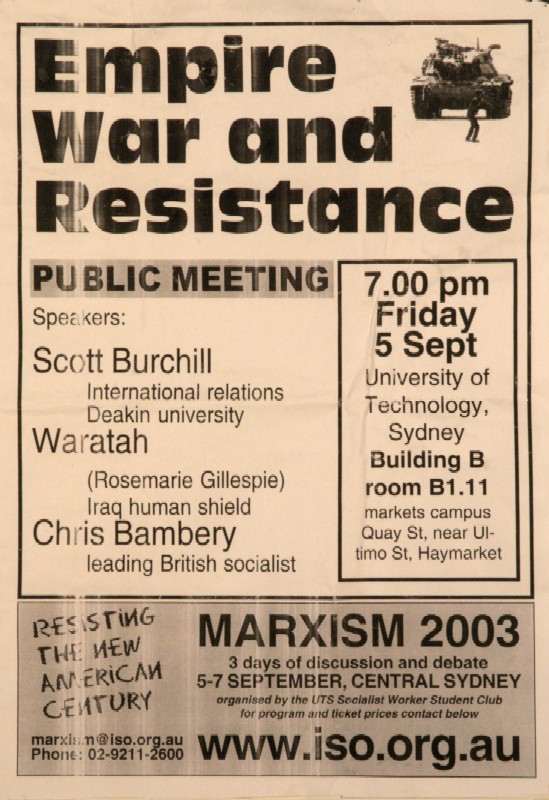
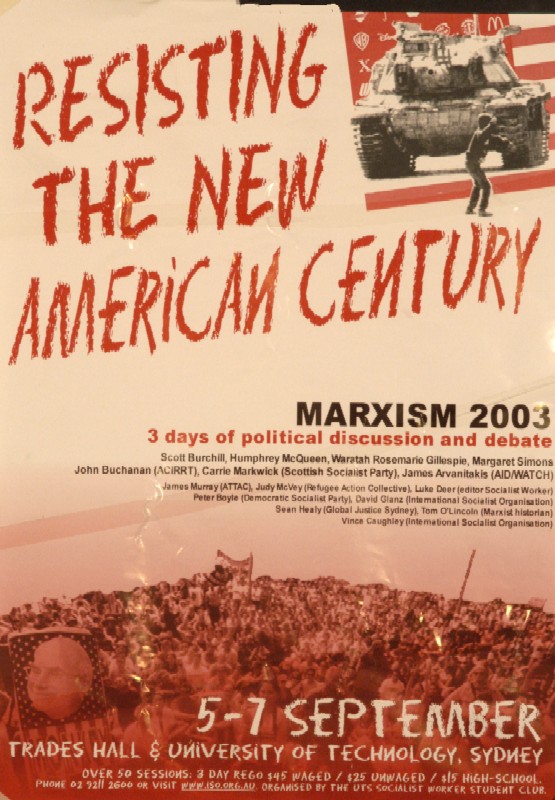
    A poster on our street exhorts us to “Demonstrate for Independence in Iraq, End US Occupation, Stop Corporate Looting . . . Free Palestine” and to “Bring Candles.” The odd array of causes is not random, but neither is its organizing principle immediately apparent. Beyond the issue of the rightness of these particular causes, one apparent invariant is the arch-cause that organizes these causes, what can only be termed “anti-Americanism.” In a world of uncertainties, the last certitude would be the attachment of any contingent cause to the broader sense-making cause of an attack on the United States. The phenomenon of anti-Americanism is so widespread that we are blinded by its sheer ubiquity, by its organizing ability. It will be the task of this essay to carry forward the task of understanding it, which is to say, not just to identify its key histories and varieties, but also to do this so as to understand what kind of thing it is.

    The idea that there is a widespread anti-Americanism worthy of investigation is obviously not our own. Recently, it was proposed directly by James W. Ceaser. His essay, “A Genealogy of Anti-Americanism” outlines five broadly chronological aspects of anti-Americanism. These are a degeneracy myth, a racialist myth, a claim that the US is soulless and consumerist, and the idea that it is technologically dominated. Ceaser’s essay is a useful attempt to assay, indeed to open, a field. But he brings us no closer to an understanding of what kind of thing anti-Americanism is in each of the variants he explores. That is, beyond their existence as metropolitan negations of America as such, we need to wonder what it is that organizes them as a field. Like Ceaser, we consider the early modern history of the US and its relations with Europe; like him we work with examples of anti-Americanism; but we do so in order to understand what sort of thing–or things–anti-Americanism might be. In this respect, a short sketch of the “paradox” of anti-Americanism by David Burchell is closer to what we seek to understand. In a newspaper column, he wrote that “in its heart of hearts anti-Americanism is a profoundly American movement” (17). Even though he does not explore the logics of this claim beyond responses to Woodrow Wilson and the antics of the anti-Vietnam generation, this is an important and obvious observation. The very fact that it is so obvious and yet, as he says, so “unremarked” is itself indicative of the intensities of the cultural forces at work.

    2

    Some who read the title of our work will have already set our views aside as American apologism; we have not the space to be detained by this. We must leave to others (such as Ceaser) the task of showing that there exists an anti-Americanism, or more precisely, that there exists an anti-Americanism which is only incidentally related to the empirical deeds or structures of the US. That all cultures and countries attract and sometimes deserve criticisms we fully accept. But anti-Americanism is far more than this. It is heir to a tradition in which–as we will see in this essay–“the good” has become unspeakable, thanks not so much to postmodernism as to a transfer of the sacred from kingship to the body politic and the self. The good is now unspeakable, a silent vortex. It exists only as the ghost of its opposite, evil; a rhetoric of denunciation prevails at every level: among nations and leaders (the evil incarnate: Hitler, Pol Pot, Saddam…), across nations (terrorists, “Westerners”); within nations (sexual predators, drug pushers…). The sign of the moral is pure negation in a society unable to state its moral good. Denunciation of the US is, above all else, a moral activity.

    In his Sources of the Self: the Making of Moral Identity, Charles Taylor has observed a powerful disjunction between the Enlightenment’s actual sources of moral value and those its modern inheritors are able to attribute to it. He remarks that not only are the theories “all strangely inarticulate” as theories, but also, that the only capacity for judgment left available to them is denunciatory in character:

    Now none of this can be openly recognized. How can utilitarians have access to their moral sources? What are the words of power they can pronounce? Plainly these are the passages in which the goods are invoked without being recognized . . . they consist mainly of the polemical passages in which error, superstition, fraud, and religion are denounced. What they are denounced for lacking, or for suppressing, or for destroying expresses what we who attack them are moved by and cherish. This becomes a recognizable feature of the whole class of modern positions which descends from the radical Enlightenment. Because their moral sources are unavowable, they are mainly invoked in polemic. Their principal words of power are denunciatory. (339) (Cf. MacIntyre 51-60)

    This observation is a particularly brilliant and insightful moment of Taylor’s magisterial analysis. Commenting on intellectuals in particular, Jean Bethke Elshtain has remarked that “to be an intellectual, you have to be against it, whatever it is. The intellectual is a negator. Affirmation is not in his or her vocabulary” (71). In our view, anti-Americanism is a central part of this wider moral order. It partakes in this history, as confirming moral negation, and yet in that very moment, as potential self-idealization and realization.

    Despite its moral intensity, some anti-Americanism is so habitual that it has become ritualized. It is especially possible to observe the ritual dimensions of anti-American practices in the patterns of mechanical gesture and repetition. These rituals are but ethical structures that have been forgotten. For anti-Americanism, deeply held (be it passionately or as an unwitting field organizing other ideas), is an ethical-esthetic structure with a long provenance. It has served many functions, and has gone under other names. At its most superficial, at the level at which it is usually proposed in fact, anti-Americanism is the successor to a family tree of oppositionalities: be they against the king, the empire, the capitalist system, the West. But these all have an esthetic quality that is discernible in the West itself: they are all instances of Romantic disavowal–structures characterized by figures of rebellious alienation, predicated self-characterizations of marginality (belying one’s actual centrality).(1) Romanticism, then emerges as the second deeper inflection of each form of oppositionality. This is the structure that is obviously identifiable with all anti-Americanisms.

    3

    Guiding our inquiry throughout is the thought of anti-Americanism as an anthropoetically definable structure, an esthetic-ethical phenomenon. Instead of asking, as Ceaser does, why it is that people have anti-American attitudes, and then explaining it by tying to other strands of history, we seek to understand what anti-Americanism is, as an anthropoetically defined axiological (ethical and esthetic) structure. We begin with aspects of how it evolved, not so much for history’s sake, but in order later in the essay to see what it does, how it works. Because if our contention that anti-Americanism is a complex structure of autocritique is correct, then it is a foundational dimension of contemporary society, and as such, so far from constituting an attack on distinct or overlapping American and / or Western values, it is actually an attempt, witting or no, to reinforce them.

    2. Current Empire Theory as Dominant form of Anti-Americanism

    And still the caricature glares out: Uncle Sam, with his finger pointing out to each and every citizen to enlist. The poster tells us to “Rally on American Independence Day.” Such is the construction of July 4, Independence Day, that it now stands for everything anti-American. Or does it? For in its own way, the poster cites foundational American values in its demand for “independence” for Iraq, for the “free” Palestine and the end of “occupation.” These, surely, are the values of the American republic, perhaps of republicanism itself. Yet, the dominant form of anti-Americanism today is one that involves seeing the US as the hub of a giant Empire.
    In the post-imperial phase of the twentieth century, especially after 1945, the claim that the US was an imperial power was advanced by its superpower rival, the USSR. But the demise of the communist bloc has not led to the demise of this claim. On the contrary, there has been a gathering of strength in the link between anti-American sentiments and the more or less loosely expressed idea that the US is an empire. The US is increasingly being depicted not merely as a large wealthy nation at the hub of other similar if less powerful nations, but rather as an imperial force that imposes its will on others, whether it be by force, culture, economy, or even its MacDonald’s chain of restaurants. If we are to understand the current form of anti-Americanism, we must understand not only why this claim is made, but also, why it is wrong.

    Under the banner headline, “Blindly, a New Empire Strikes Back” (a paper delivered to a writer’s festival under the title “American Empire: Politics and Culture in the 21stCentury”), Christopher Kremmer argues that

    the new American empire, born in the ruins of the twin towers, Afghanistan, and Iraq has yet to be formally announced. This may be due to the child’s uncertain paternity. George Bush and Osama bin Laden can both credibly lay claim to be the father . . . as an empire, the US behaves much like other empires in the past. It’s often said that it is a reluctant empire . . . .Nevertheless, imperial thinking permeates its foreign policy, especially towards the Middle East. (13)

    4

    For Kremmer, the pattern is already established:

    History will judge that America failed to define the nature of its new empire when it had the opportunity to do so after the end of the Cold War in 1991. It allowed bin Laden to define it for them. Meanwhile, the American emperor concentrated on settling a personal score with the leader of Iraq. (13)

    There are a couple of things to note about these two passages. First, the idea of a US empire as a literal, rather than figural or metaphorical, structure is striking. That is, a concrete claim of this kind is quite different from, for example, Peter Sloterdijk’s warning of the dangers of the US moving towards an imperial formation, of it “playing Livingstone” (and seeing “Europe” with its actual imperial experience as having something to offer in the way of wisdom to a difficult world system) (73). Second, empire rhetoric allows a series of “eternal laws” to be brought into play. These are entirely mythic–but they shut down thought itself. We witness the foreclosure of a “history” before it even happens (an empire that, in this version, was founded less than ten years ago is already being given history’s obituary): history will have judged that America failed. Now this could, and indeed should, be seen as naïve. But it is much more widespread than this example. Michael Ignatieff, a writer of some profundity on human rights, offers the same cautionary morality tale for the US:

    the twenty-first century imperialism is a new invention in the annals of political science, an empire lite, a global hegemony whose grace notes are free markets, human rights and democracy, enforced by the most awesome military power the world has ever known. It is the imperialism of people who remember that their country secured its independence by revolt against an empire, and who like to think of themselves as a friend of freedom everywhere. It is an empire without consciousness of itself as such, constantly shocked that its good intentions arouse resentment abroad. But that does not make it any less of an empire. (3)

    This then would be the empire that does not know its name. The fact that the claim is often made does not make it any the less strange. For Ignatieff, as for Kremmer, the next step is the forecast of doom:

    To call America the new Rome is at once to recall Rome’s glory and its eventual fate at the hands of the barbarians. A confident and carefree republic–the city on a hill, whose people have always believed they are immune from history’s harms–now has to confront not just an unending imperial destiny but the remote possibility that seems to haunt the history of empires: hubris followed by defeat. (4)(2)

    It is strange how readily such critics fall into Spengleresque images of decline and fall, replete presumably with that great writer’s vision of the fellaheen huddled like cavemen in the ruins of the great skyscrapers, building with the shards of former glory.

    We cannot accept the proposition that the US is either imperial in character or is in any substantive sense an empire. Calling the US nation an empire, however, is a platform shared by the most potent and solemn anti-Americanisms we know, and we must examine the claim, and illustrate an obvious counter-hypothesis to show how to think it otherwise. But before discounting the argument, we can already say how this variety of anti-Americanism works. In the first instance, the imperative to call the US an empire is no more than the need to call it by the name that will hurt it most. Closely linked to this, secondly, the desire to call the US an empire embodies a dream that, simply by asserting a historical framework, it will precipitate the reality of US decline and fall. But if we look more carefully, finally, we see that it is in the truest sense also a developing autocritique, that is, it is an unwitting continuation of the US project of declaring independence, liberty, and justice for all who live under tyranny. Just as the Jeffersonian declaration slowly extended its logic beyond the small circle of wealthy white men who made it in good faith, so has the ongoing autocritique extended beyond the consideration of domestic politics to the world beyond. That, put bluntly, is what it is, what it is for, and what it does.

    5

    This brings us to the book Empire by Michael Hardt and Antonio Negri. The authors open their book with the kind of feint that characterizes its hypocritically grand revolutionary style. That is, they open with an argument that calls attention to the multi-polar structure of the current world:

    Our basic hypothesis, however, that a new imperial form of sovereignty has emerged contradicts both these views [of the US as good or bad world leader]. The United States does not, and indeed no nation-state can today, form the center of an imperialist project. Imperialism is over. (xiii-xiv; italics in original)

    This is correct. But the authors then embark on what turns out to be the most bizarre anti-Americanism of all: an insistence based on a word-play that despite the fact the US is not itself an imperial power, there nevertheless exists a new empire. These are what they claim to characterize it: a total territorial claim, a self-conception as an ahistorical order, an attempt to rule human nature itself, and a project of universal peace (xiv-xv). They then further insist that theirs is not a mere metaphor of empire, but the word is being used as a “concept” (xiv). From this eccentric position, the book reels between moments of insight and highly romanticized discussions of resistance and capitalism (this begins early; see for instance, the discussion where a reasonably coherent summary of Foucault’s notion of biopower is succeeded by a transcoding into the way “Deleuze and Guattari develop this perspective even more clearly”) (25).

    Empire is a book that is being taken extremely seriously, and it is one of the first supposedly scholarly attempts to explain the logics of the current world system. But it rests on a thin historical basis, partly because of what is little more than an etymological quirk on the one hand, and mainly because the things attributed to empire-as-general-concept are only to be found in their assertions about the current situation. Perhaps the most important moment in the book is when their big idea, the link between a transformed sovereignty and empire, is brought into the orbit of the idea of the republic:

    The idea of sovereignty as an expansive power in networks is poised on the hinge that links the principle of a democratic republic to the idea of Empire. Empires can only be conceived as a universal republic [sic!], a network of power and counter-power structured in a boundless and inclusive architecture. (166)

    For Hardt and Negri, the official nineteenth century of European colonial acquisition as imperialist policy is to be distinguished from empire as such. The idea looks attractive. As academics, we are familiar with that sort of sophistry that deceives critical sensibilities with clever stratagems. Such in many regards is this book, even at this founding moment. It is true that the word “imperialist” enters certain European languages not via the main Latin root but via English in the nineteenth century, and that it does so as the name for the overt project of securing colonies all round the world. But this narrow point leads them–perhaps deliberately–to misconstrue the whole. If we read the above passage carefully, certain operational issues emerge. The claim that “Empire can only be conceived as a universal republic” is a particularly strange instance of reverse predication of something the authors encountered as a problem that needed sweeping aside: that is, we have come, via a still-unfolding history, to exist in a diverse and multi-polar republicanism we still think of as “Western”; this republicanism may have analogies with former orders of governance, including recent imperialisms and the empires of antiquity, but the thing that is operational in the above passage is not imperialism, but the new contractual basis of society, what even Hardt and Negri briefly name here as the principle of democratic republicanism. In the above formulation, issues of democracy and republicanism are central; sovereignty, rivalry, and interlinkage are relevant; issues of imperialism are not even operational, except perhaps by analogy.

    6

    Our objection to their formulation, therefore, lies in what sort of thing they imagine empire to be. Hardt and Negri claim to use the word empire as a concept, not a metaphor. At risk of banality, we must make a couple of obvious points. If one is to make a claim of this kind, we have the right to expect that there will be at least a minimal relationship between the category and the object being categorized. Given indeed that by its self-representation, the US is not only not an empire, but a modern republican nation state, the onus would be on those who seek to argue otherwise to demonstrate their claims. An empire, minimally defined, requires a single, if sometimes–rarely–devolved structure of government, a shared military, and a defined and limited territory. Beyond this most minimal of definitions, we would also expect to be included some of these features: a single currency or fiscal structure, an imperial rhetoric, a central court or justice system, and, as the name implies, an emperor. One could find as many parallels between the US and a Pacific island as between that country and an empire: the claim is in obvious need of justification and mere repetition will not make it come true. All empires, even split empires like the Eastern and Western Empires, had centers, favored points, and often stories of self-represented origin. Their claim that the concept of empire is characterized “fundamentally by a lack of boundaries: Empire rule has no limits” could refer to the propensity of imperial centers to seek endless expansion. This seems to be the point of the bizarre attempt to make the extensions of the US frontiers stand for imperialism. But in the present era, Hardt and Negri believe such expansion is no longer possible. By this logic, their logic, the age of empires would have run out of room (even if we accepted the thesis that the US frontier was imperial–we do not). If they are referring to actual territory, which is the only valid definition in our view, then the criterion is wrong: the Roman Empire, like the British Empire, did have limits. Then, we have referred to the claim that empire involves biopower. Let us, for the sake of coherence and protection of the shards of their argument, keep this claim at the level on which Foucault proposed it. If we accept Foucault’s argument about the present situation (and while we do not entirely share this view, this is not the place to contest it), then it applies today, but not to the deep past. In consequence, biopower cannot be used as part of the general definition of what constitutes empire, unless one means by that to disqualify all previous empire formations from the purview of the definition. This is also true of the claim about peace. The claim may apply today, in a UN framed, post-French-revolutionary rights context, but it does not apply to previous empires. The other criteria they use to found the definition apply as well to recent empires as to antiquity, and in fact do no more than establish patterns of influence and power.

    We very much regret the decision they took not to explore the notion of empire as metaphor. That might at least have been interesting otherwise than as a symptom of anti-Americanism. Contrary to the oddly strategic idiom of the book (and Deleuze and Guattari from which its worst aspects appear to flow) metaphors and analogies are powerful tools of thought. Their chief value lies not just in the parallels they establish,but in the tensions that arise from their limitations. We fully accept the fact that certain links can be made with empires of antiquity (the idea of an order), with modern empires (the rivalries of nations, the rise of the ethos of a civilizing mission, etc.) and, we would suggest, with the only half-imperial Macedonian Alexander, whose fleeting star illuminated the supersession of one Greek pole by another, like the US for Britain. But these empire-analogies are only as good as the productive tension they set for lines of thinking. Sometimes, the weaker claim is stronger. And sometimes, as in this case, a less radical position is more telling.

    7

    What unites all the writers we have looked at so far is a haste to condemn either the US as part of the West by calling it an empire (Hardt and Negri) or more transparently, a haste to call the US itself an imperial power (Ignatieff, Sloterdijk, Sontag, Berman, et alia). The latter tendency is by far the more common, and it finds its way into journalese very readily. Witness the anti-Americanism even in the offensive title “A New Imperialism Cooked Up over a Texan Barbecue”:

    The Richard Haass formulation, echoing so resonantly that of Robert Cooper, looks set to become a basic text of coming decades. If the campaign against global terror is to last as long as Donald Rumsfeld predicted . . . the new unsovereignty of nations will soon be as central to daily life as the UN charter. The imperial idea, however benignly refashioned, cannot be allowed to slide into orthodoxy. (Young 2)

    In this more common variant of anti-Americanism, the coupling with empire is used to suggest that national sovereignty should transcend international values, that there is a world-wide process (the campaign against “global terror”) that is hastening the issue, and that in this case, there is a “plan” to develop a new imperialism. Empire theory is manifestly an example of anti-Americanism, one that dominates the field today; we’ve seen, however, that it is predicated on a construal of empire so idiosyncratic that the word itself loses its referentiality. Contrary to the claims of the empire theorists, we believe we can accept the US’s own claim to be a modern republic; it now time for us to see what this involves.

    3. The System of Modern Republics

    The US is a modern republic. By modern we mean both that it has the cultural form of the modern nation state and that it is heir to the economic systems of modernity; by republic, we mean that modern form of government that derives its sovereignty not from divine-sacred kingship, but from a sacralized body-politic. Much of the work of showing this has been done by the historian, Benedict Anderson, whose brilliant but sometimes unbalanced book, Imagined Communities, shows just what a modern “thing” nation is, not to mention the US role in its development:

    It is difficult today to recreate in the imagination a condition of life in which the nation was felt to be something utterly new. But so it was in that epoch. The Declaration of Independence in 1776 makes absolutely no reference to Christopher Columbus, Roanoke, or the Pilgrim Fathers, nor are the grounds put forward to justify independence in any way “historical” . . . A profound feeling that a radical break with the past was occurring . . . spread rapidly. (193)

    Anderson sees the modern nation as invented in the Americas and “paralleled in the old” (192). Modern nations might, as Anderson puts it, have visions of permanence, antiquity, and territoriality, but they are “imagined communities” (cultural constructs, imagined as limited, sovereign, and partaking in a deep horizontal comradeship of community) (6-7). That they can be imagined at all is a function of modernity; hence his claim that the nation-state is a new sort of “thing.” For Anderson, the marking off of an older imperial order is self-evident, even if its trappings lingered well after its theoretical demise.

    8

    Anderson’s observations on the republic are more intuitive and less systematic. But he is more correct than he realizes when he claims that the new form is emphatically republican. He remarks that nothing confirms the “cultural revolution” (of new economic and political doctrines) “more than the pervasive republicanism of the newly independent communities” (51). Later he adds, “This independence, the fact it was a republican independence, was felt to be something absolutely unprecedented, yet at the same time, once in existence, absolutely reasonable” (192). Anderson on both occasions emphasizes the word republican, grasping its significance, but not exploring it on its own terms. In emphasizing what he merely notes, that the Americas produced nations that are not only anti-imperial, but a quite new formation, we say again that this is not compatible with the values of empire. Anderson also argues that the new republican nation is bathed in blood, not just in its moment of foundation, but internally, as in the US civil war. Even if his method differs, he grasps the Girardian point that sacrificial logics come into play with the new body politic. But we depart from Anderson in terms of the issue of genesis of the new form, even if his careful analysis is far closer to understanding the current world situation than anything the empire theorists have produced, or are likely to produce.

    We do not accept Anderson’s thesis that the modern republic arose exclusively (in the sense of originated) in the settler-colonies and not in the metropolitan societies that sent them. We do not seek to reverse Anderson’s argument by saying the converse of course. For us, America was neither completely removed from the European context nor immersed in it; one might even suggest that it emerged out of a certain European political sensibility that Europe itself was never quite able to articulate and carry out. For instance, the last paragraph of the American Declaration draws directly on Locke’s Second Treatise of Government. The framers also drew heavily on Montesquieu insofar as he saw Christianity as a stranger to despotic power. (See, for instance, Montesquieu 2: 121-34; see also Wernick, esp. p. 183, and Siedentop 11-15)). What we wish to point out, then, is the event-structure repeated over and over again in the act of colonization itself–with consequences on all points of the triangle (metropole-colonizer, settler-colonizer, and colonized). Anderson actually describes the scene of an “awed” Marco Polo witnessing Kublai Khan (16). His point that the Europeans were ontologically shocked by the discovery of the many non-Christian societies and ways of constructing the world is crucial. In another context, Michel de Certeau, citing Pascal, says

    From a religious viewpoint, doubt, the great problem of the time [the seventeenth century] is linked to division everywhere. From Montaigne to Pascal, all meditation is invaded by the doubt to which plurality gives birth: “I see several contrary religions, and consequently all are false” writes Pascal. (151)

    The abbreviation of this Pensée cuts off “excepté une” (202); and Pascal’s thought is at least partly devoted to justifying Christ, so Certeau is hardly exemplary in his citation. But the point that a mood of “apologetics” proliferates is correct, even in the case of Pascal, and his link to the scene of colonization is also apt and profound. The point we are making is that the scene of the genesis of Western modernity, not to mention republicanism and the nation, is the plural vis-à-vis of colonization, and this scene includes all three points of the triangle. When Anderson sets aside the extraordinary convulsion that racked England in the seventeenth century, we take issue with him, even as a historian.

    9

    We therefore propose a subsidiary hypothesis: the first republic was a vision of seventeenth century England. It was a minoritarian vision, unsuccessful and unrealized. Preceding communism, it was the vision of many of Cromwell’s footsoldiers, the Levelers. Its brief appearance as a specter was a function of extraordinary debate about what a commonwealth in fact was. In seventeenth-century England, in other words, the values of the new social contract emerge in a way unthinkable in Aristotle or even the Roman historians. Indeed, these values are strongly echoed in writers forced to declare for the first time the basis of civil society. What is remarkable about the following passage written by William Temple in 1672 is not the position held, but the fact it has to be stated:

    Thus the Father, by a natural Right as well as Authority, becomes a Governour in this little State: and if his life be long, and his generations many (as well as those of his Children) He grows the Governour or King of a Nation and is indeed pater patrie, as the best Kings are, and as all should be; and as those which are not, are yet content to be called. (65-66)

    The very attempt to establish natural foundations by recourse to argument is the index of the change. Later in the same book, Temple admits that when the “Father comes to lose his Authority” then government by a body (Aristocracy) or by a select few (Oligarchy) follows on the basis of “Authority contracting to it self”; if both these fail, as when “the Children of the Family grows into the manners and qualities, and perhaps the condition and poverty of servants,” then “Democracy or popular state, which is nearest confusion, or Anarchy; and often runs into it” results (75-76). The view is often characterized as conservative. Others, such as Locke or to a lesser extent Hobbes, put forward views that questioned the role of kings more openly. In the course of articulating his view for a commonwealth, Hobbes, who offered what amounted to a new contractual value for kingship (rather than one based on divine right) suggests there are three kinds: the monarchy (representative of one), the democracy (representative of all that come together), and aristocracy (the assembly of a part) (23.105).

    But what are all these writers actually doing? Beyond the particularities of their arguments, each finds a need for a minimal hypothesis, for a hypothesis of origin (of the social order) in fact. For none of the writers is civil society able to be thought about except in terms of a posteriori self-evident recourse to the circumstances of the present, and of known history. This is the scene of Western modernity, the modern republic. Even if we set aside the sentiments of the minority in the ranks of Cromwell’s levelers, the seizure of power in the mid-seventeenth century is itself the first act of confirmation of the new structure. Taking power, even as Lord Protector, severs forever the link between the person of the king and the sacred. Henceforth, the sacred is to be invested in sovereignty itself, be it the Parliament Cromwell briefly elevated, or the office of sovereign. Henceforth too, contractual representativeness displaces the sacred order of kingship: this is achieved by literally scapegoating the King. Robert Hamerton-Kelly writes of this that

    There is no essential difference between the sovereignty of the king and the sovereignty of the people. In both cases sovereignty arises from a metaphorical contract that threatens death to anyone who violates it . . . The transition from royal to popular sovereignty is a transformation of the basic pattern of victim and group. The two poles of King and crowd become the single pole of the crowd governing itself . . . Royal power becomes popular sovereignty and divine right becomes civil religion. (68-69)

    So it does. The Girardian insight in this passage has to do with the sacrificial logics that underpin both forms of socio-political order (which, of course, doesn’t make them equivalent). It is a handy reminder to those in democratic societies that they too are subject to sacrificial structures, that sovereignty continues to exist as a sacred value. The democratic republics sacrifice the kings in their various myths of origin (Cf. Girard,The Scapegoat 12-23). But the displacement is important in the history of the republics: even if they are governed by the same deep sacrificial logics, the rise of the republics sacralizes contractuality and in the US, as we will see, the structure of the covenant.

    10

    England’s republican adventure appears to fail. The phenomenon of the Restoration (and much later in France) is not just a return to the prior situation. In fact, no return is possible. The restored monarchy, unlike the one that was overthrown in 1649, is itself contractually based. Where previous monarchs were embodied sacred figures, their overthrow by other monarchical pretenders (as in 1066) was one thing. The overthrow on the basis of justice, spirituality, and the English nation was quite another. Once it occurred, the previous situation could not be restored. This co-occurs with the advent of modernity and ultimately republican multipolarity. This multipolarity is realized when the fullest realization of the republic finally emerges, when the King is executed in rapid succession in the US and France. England’s king is “executed” in the Declaration of Independence as a consequence of the “history of repeated injuries and usurpations, all having, as direct object, the establishment of an absolute tyranny over those states,” with the “facts” submitted to a “candid world,” a court of public opinion surmised by Thomas Jefferson (1). This is the special triumph of the US: the successful installation of a sacred body politic, on whom and for whom all sacrifices will be made. With the overthrow of the French monarchy thirteen years later, the pattern is internationalized into a world system, what Anderson calls a “blueprint” not just for tearaway colonies, but to the metropolitan homelands themselves.

    The West is not a singularity, still less an empire. If its modern genesis is able to be articulated in the few pages above, if the self-hatred that permeates it will need a few more below, what perhaps does need articulation is a grasp of its form. That this is itself derivative of the genesis we have sketched goes without saying: the nodes of the West are those of trade and culture. But our antidote to the perceived US “hegemony” theory would be an adaptation of one of the founders of mass communication theory, Harold Lasswell. Lasswell argued that we need to distinguish between a public and an attention aggregate. A public is one that has direct involvement in things that affect it, as in a voting public. An attention aggregate is one that includes (for instance) the US as part of its frame of reference, but has no role in decision-making. So an attention aggregate might include everyone in the world familiar with the image of the Statue of Liberty. The West, and the US to the extent that it is seen as dominant in it, has something of the character of an attention aggregate: it appears in many people’s skies, as an orientation and set of ideas. When the West is linked to that wider horizon, it is possible for people from many places to engage in dialogue. That sites like the US figure prominently in world attention aggregates, however defined, is obvious and presumably worthy of study. But studies of this kind will not, we fear, share in the rich sweetly resentful hot-house scents of empire theories.

    If what we’ve surmised in the section is correct, we must inquire into the practice of anti-Americanism in a new way. When writers like Hardt and Negri, for instance, want to attack the US as a Western hegemon, they do so with the poise of the rebel-revolutionary; they wish to be republicans standing up against the global empire. As alienated rebels, however, theirs is the posture of the alienated Romantic. For republicanism is an ongoing project, be it in the US or abroad. Its cachet is the revolutionary, from Dick Wittington to Che Guevara. But there is one aspect of US republicanism that is starkly different from its rival varieties; this is its claim, ever since its inception as a remote colony, that it had a central moral purpose.

    11

    4. City on a Hill

    Our consideration of anti-American empire theory reveals the US as the pre-eminent republic in a larger system of republics. This system, founded as it is on the social contractuality of a people’s rights, is founded also substantially on resistance to empire. The critique itself has two forms. The first, the generalized ethical auto-critique of Westernness can be traced through Judaeo-Christian Europe to modernity where questions are posed about contemporary practices in the light of values of justice and dignity. The second, republican form, which is not only critique but also promise of resistance, is the continuing becoming of the republic in its oppositionality. In the first critical mode, America is a convenient scapegoat for substantially identical republics; in the second, American traditions of resistance turn upon America itself, in a logic at once inexorable, unnoticed, and yet in our view entirely explicable. We have showed in the previous section how America exists among the republics, how it is in fact a contractual republic. In this section, we look at how the American form of that contract allowed foundational resistance to empires to turn upon itself as empire.

    After his visit to America in the 1830s, Alexis de Tocqueville famously remarked “I think I can see the whole destiny of America contained in the first Puritan who landed on those shores” (Democracy 279). That Puritan was, of course, John Winthrop (1588-1649), first governor of the Massachusetts Bay Company, a man whom the historian Perry Miller claims to stand “at the beginning of our [American] consciousness” (in Bellah, 310). In 1630, heading toward New England on board the ship Arbella, Winthrop delivered what must undoubtedly be the best known sermon in the history of the United States–“A Model of Christian Charity.” In this famous (and, for some, infamous) oration, he proclaimed to fellow settlers their destiny: “for wee must Consider that wee shall be as a Citty upon a Hill, the eies of all people are uppon us.”

    As a succession of writers from Louis Hartz onward have suggested, the Puritan English “fragment” has had lasting consequences in the conception of the American socio-political order. Indeed, the Mayflower Compact of 1620 expressed the foundation of a civil body politic founded on a covenental logic. Although often breezed over now, this document represents an extraordinary assertion of independence and power. It is remarkable document for its time by virtue of its enactment of the idea that the settlers could simply found a community of their own free will (without the imprimatur of the authorities of the Church of England); additionally, well before the Declaration, the Mayflower Compact embodied a highly articulated model of participatory democracy and challenge to arbitrary and despotic rule (Smith 62-9).

    We are not simply talking about the presence of a certain level of “Christian sentiment” in the documents of the time. By the mid seventeenth-century, for instance, Puritan codes of law had contained rudimentary bills of rights. M. Stanton Evans: “In an amazingly brief interval, the founders of New England had created most of the features of representative, balanced government” which included a theory of constitutionalism, annual elections with an expansive franchise, power wielded by consent, a bicameral legislature, local autonomies, and a Bill of Rights (Evans 201). When Winthrop wrote that “wee shall be as a Citty upon a Hill, the eies of all people are uppon us,” his words were prescient. In view of how important that city on the hill has become, however, the legacy is complex.

    12

    To put this in terms with which readers of Anthropoetics would be familiar, Winthrop was here claiming centrality for the new colony–operating via an allusion to a statement Jesus made to those gathered in front of him in Matthew 5:14. In military or strategic terms at least, America was at this time certainly not the center, but this rhetorical move could be plausibly described as “prophetic,” given the current state of international politics; the eyes of all people are indeed upon them. Considerably later, in 1832, Hegel claimed that “America is . . . the land of the future, where, in the ages that lie before us, the burden of World History shall reveal itself” (The Philosophy of History86). These might, superficially at least, be seen as roughly analogous claims; but there is a considerable difference between Winthrop’s and Hegel’s assertions, one that is irreducible to putative variations in semantic content. The difference lies, rather, in the position of the locutor in relation to that content: where Hegel’s claim is made on behalf of an inquisitive alien, Winthrop is making the same claim for his own community. If, to other minds, Hegel’s sin is hyperbole, then Winthrop’s is the far more serious one of conceit. Of all the real and putative sins committed by the United States in its extraordinarily complex history, perhaps one stands out as the most offensive, especially in terms of contemporary sensibilities: its propensity for claiming the center.

    Additionally, the position of the locutor in the case of Winthrop has also allowed (and, indeed, continues to allow) others to claim marginality in relation to America. Winthrop’s claim and others akin to it have been seen, as Larry Siedentop remarks in a somewhat different context, as little else than “aggressive and vulgar self-advertisement” (Democracy in Europe 173). The reading implied here attributes to the US what one might call a “Ptolemaic” political cosmology–an assertion regarding America’s belief that the rest of the world does, and in fact should, simply revolve around it. No doubt, this captures elements of a certain American conceit; but as true as this may be, it depicts as well the arrogance of all modern polities, including those most vocally and vigorously opposed to American influence.

    As we have seen, the expressive force and logic of Winthrop’s claim allude also to the explicitly covenental form of American domestic political rhetoric and organization. Although Benedict Anderson is right to emphasize the genuine radicality of the American Declaration, what his account is in danger of obscuring are the very real links between the American “revolutionaries” and the Puritan context in which their ideas took root and were nourished during the preceding one-hundred-fifty years. No doubt, we often hear–in somewhat general terms–that Puritanism was a huge force in the founding of the American republic: of those who declared independence in 1776, seventy-five percent were Puritans. But mere demographics don’t capture of the contours of the ideological landscape; and neither do those easily rendered burlesques of the US Puritan–that “thin-lipped New Englander who passed “blue laws” against all innocent pleasures, his only pastime being to hang witches” (Barzun 261). While, in other words, it is sometimes conceded that Winthrop and Puritanism more generally lie at the origins of American self-consciousness, it is rarer to see any investigation of what this means–of how, for instance, Puritanism gave impetus and shape to American democracy, a legacy still shared insofar as Americans share a common moral vocabulary derived from the “first language.” (Bellah; cf. Sandoz 98-101). Contrary to popular belief, the Puritan settlements should not be seen as “theocracies,” but as embodying the principles of local democratic rule; churches, for instance, were run by locals. Everything demanded public acceptance; consent of all members: “The Puritan experiment demanded that every morally capable adult give his positive and knowing assent to the imperatives issued in pulpit and press. Though it sounds strange to say it, few societies in Western culture have ever depended more thoroughly or more self-consciously on the consent of their members than the allegedly repressive “theocracies” of early New England” (Foster 156. Cf. Siedentop 172-3).

    13

    The kinds of image that Barzun lampoons are those that read seventeenth-century Puritanism as politically conservative, even “reactionary.” But as work by such scholars as Michael Walzer has amply demonstrated, such readings do scant justice to the historical context, which bears out the close links between Puritanism and the origins of what we now think of as radical politics (see, for instance, Walzer’s The Revolution of the Saints). Indeed, American Puritanism (including Winthrop) shared in the “revolutionary potentials” common to reformed Protestantism more generally (Foster 162). Winthrop and fellow Puritans expressed serious reservations about the arbitrary, persecutory and despotic political climate around them–to little avail (in the short term, at least): indeed, shortly before the formation of the Massachusetts Bay Company in 1629, Charles I showed his resolve to rule as an absolute monarch. After the departure of the American settlers, Puritans sought equality in the British Parliament during the English Civil War (1642-45), a project which was quashed but revived again by figures such as John Locke in the latter part of the century. Knowing this context allows us to make sense of Edmund Burke’s ominous warning to the British Parliament, as they sped headlong towards war in 1775, that the religion found “in our Northern colonies is a refinement on the principle of resistance.”

    Although America pioneered the famous “separation of church and state,” this separation should not allow us to overlook the enormously powerful influence religion has on American politics. (And it is the context outlined above–relating to the struggle for Puritan rights in England–that we can see that the separation aimed towards freedom of religion, not freedom from religion). Indeed, it has been claimed, with considerable evidence, that “Americanism” per se emerges with the religious revivalism called the “Great Awakening” beginning in 1730s, a movement that precipitates the emergence of an American national consciousness by the 1760s (Sandoz 99). Again, it needs to be pointed out that American evangelical revivalism was defiant, anti-establishment–it contested despotic political rule, even–indeed, especially–as this was incarnated in Church authority; the Great Awakening both generated and expressed a kind of pre-revolutionary fervor which sought to protect minorities and the dictates of personal conscience (Bonomi 156-8, 186, 216). The notion of “freedom” was central to Puritan self-understanding, particularly freedom of the citizen from arbitrarily imposed state action and freedom of the press (Foster 158). But as Bellah has surmised, the persistence and privileging of this rhetoric in certain forms has operated in such a way as to delimit freedom negatively: one is free of or from something (not free to do something). In other words, many Americans find it difficult to locate an ethical content to their freedom; they have a much stronger sense of what they are up against than what they are for–which is, of course, also a feature of anti-Americanism, including those to which we now turn, those versions of anti-Americanism that seem to come from without.

    5. The End of the West?

    We have taken for granted the existence of a system of networked republics whose values interweave, coalesce, and compete. We have suggested that the most important orders of anti-Americanism are to be found within this system. But as the events of the World Trade Center bombing of 2001 indicate, there are sites, cultures, and societies that lie beneath the shadow of the republics without necessarily sharing in their accomplishments or values. It is tempting, as many have since 2001, to think about this as a structure of difference, of utter alienation. However, we suggest that much of the difference is only apparent. The limits and ends of the West themselves need exploring in a new way. For example, in terms of the West’s own self-analysis, what have sometimes been taken as signs of its imminent demise have turned out, in fact, to be signs of its internationalization. We can see now that the independence and liberation movements which precipitated decolonization, for instance, relied not just on a repudiation of the West but, crucially, on the deployment of the West’s own ethico-political resources as a central tenet (and justification) of the resistance itself. In the earlier part of this century, considerable rhetorical energy was directed to prophesying (and lamenting) the imminent decline of the West and the rising of the USSR. We have seen in our discussions of empire theory that there are still those who persist in this form of thought. We begin, therefore, not with the bombing with the World Trade Center as an example of resistance to the US, but with the discourse of postcolonialism.
    14

    In our exploration of anti-Americanism, we have seen a division between that anti-Americanism which is a generalized anti-Western critique founded on certain ethical reflexes, and that anti-Americanism which is specifically modern and republican, founded on the resistance by the Founding Fathers to the imperial world. In postcolonial discourses we find a similarly bifurcated structure. Typically, by its own account, postcolonialism is divided between concerns centered on independence on the one hand and concerns with specific sites on the other. This is usually presented in terms of an “evolution”: at first, “early” postcolonial theory explored a self-evident problem of relationship between the ex-colonized and ex-colonizing powers. Often discussed in terms of hegemonic theory, the role of the West reflected a hated past, the obverse of a hoped-for future. “Later” postcolonial theory pointed to a need to stop defining issues in Western terms, leading to a range of projects from the genuinely interesting local account or history to attempts to find indigenous human rights or sciences. The second formation seemed to come after the first. That is, independence-related literatures were theorized in the mid-twentieth century as new literatures or ex-colonial literatures, so one set of concerns about the West and colonization were explored. But as the terms of these were defined by Western-ness, so a subsequent generation appeared to define new knowledges in non-Western ways.

    Or so it seemed. For these two structures are functions of one another, different parts of a whole they each imply, rather than existing as alternative wholes. To take an example, Edward Said’s Orientalism presented a version of the first kind of analysis. He explored a relationship between the ex-colonized and the ex-colonizer in history. The thesis of Orientalism was that the West had for centuries reduced the East to a fantasy on which to stage its illusions, constructing thereby the Oriental as the binary opposite of the Westerner:

    Orientals or Arabs are thereafter shown to be gullible, “devoid of energy and initiative,” much given to “fulsome flattery,” “intrigue,” cunning and unkindness to animals . . . Orientals are inveterate liars, they are “lethargic and suspicious” and in everything oppose the clarity, directness and nobility of the Anglo-Saxon race. (38-39)

    The value of Said’s text was that it showed how an ensemble of culture and discourse actually worked in tandem with the military and economic machines of the day to secure a seamless European reality in which Western identity was assured and confirmed through negative affirmation of everything the supposed Oriental was not. But in offering this understanding, Said hoped to effect change both by understanding history, and in seeing the persistence of patterns that need questioning (as when he critiqued Henry Kissinger) (46). However, Said is himself accused of totalizing the Oriental, of being a liberal humanist, of staying within the thought-frame of the West (for a useful summary of such critiques, see Gandhi 64ff.). If the most vitriolic attacks on Said come from within postcolonial theory, this is because he is seen as being somehow aligned with the West, in his method, in his choice of subject, in his moderate claims. In a haunting interview with Tariq Ali conducted when he learned he had leukemia, Said shows himself to be more at home in New York than anywhere else, to have had a background that favored Western arts, and to have detested Jerusalem. Said, then, was in many ways in and of the West, and this, in our view, is not a criticism. To complete this circle, we have only to look at Gandhi’s remark that the move to actual site-specific histories effectively marginalizes the third world all over again:

    the first world academy is now involved, as Spivak puts it, “in the construction of a new object of investigation–’the third world’, ‘the marginal’–for institutional validation and certification.” Far from being disinterested, this investigation testifies in many ways to the persisting Western interest in the classification, analysis and production of what we might call “exotic culture.” (59-60)

    15

    The reading posits a crisis in which the apparent breakthrough into local cultures produces an echo of an earlier structure. But the crisis is no more than apparent, it being more a state of stasis in which the two fields are coterminous parts of the same field. They each concern a relation of alignment with Western-ness, neither precluding the other. The variety typified by Said constructs its inquiry in terms of the adequateness of the Western definition of experience; “marginal” studies seek specificities, and do so as long as marginal studies are, in Girardian terms, central to what Western academies actually require of them. The discipline structure of the American university might be described as that of a “settler culture” that seeks ongoing “identity-work” from its indigenous inhabitants. This desire to break out of the orbit of the West is itself a Western structure. Commenting on multiculturalism, Gil Bailie remarks: “There is nothing more distinctively “Western” than the current debate over multiculturalism. The debate is simply Western culture doing what it has always done. It is Western culture losing its life in order to find it, surrendering its cultural specificity in a specifically Western way” (9). Thus, the gap between the two phases of postcoloniality is very often illusory.

    This division also concerns academic activism. Frantz Fanon, the revolutionary from Martinique in Algeria, proffers one version of resistance; Said, the critic perusing the works of European classics, offers another. In this respect, Gandhi has remarked that

    postcolonialism is not alone or eccentric in its bias toward academic criticism–thinkers from within leftist traditions have always defended the public responsibilities of the intellectual figure . . . Yet . . . postcolonialism’s investment in its intellectuals has been bitterly contested by its antagonists. (54-55)

    But whether in the moment of independence struggle, or in the effort to build a world that is more just, this picture takes little account of the role of the West’s own autocritique in the process of decolonization and international justice respectively. The outcomes in Vietnam were not the sole product of military struggle, but also of a struggle inside the US and its allies at the time. At least part of what postcolonialism involves is the framework of internationalized Western ideas, ranging from “Marxism” in that case, to liberty and social justice. Postcolonialism in this respect often names an aspiration that relates to the Declaration of Independence itself: the right to self-determination, to liberty, freedom, justice, and happiness. In this sense, the discomfiture of postcolonial critics is understandable, for they are advancing arguments that are based on Western ideals; often, postcolonialism is itself a Western formation, the West’s auto-critique. Far from disqualifying it from analysis, this should be seen as part of its analytic of alignment. On the one hand, such fields of study that search for ever more specific locatedness or for ever more extreme activist positions may be doing so as part of an unwitting recuperation of the center by their very marginal status (a romantic Western preoccupation). Conversely, the field that articulates a relation to the West risks being discarded as not having the panache or style of authenticity (even if it does engage meaningfully in analysis). In this respect, to bring a number of points made in this essay into play at once, when Said criticizes his place of residence, the US, for having become a world empire with a long Orientalist orientation (293), he makes the same mistake as his great nemesis, Aijaz Ahmad, who wrote of his sense of “solidarity with his beleaguered location in the midst of imperial America. For Edward Said is not only a cultural critic, he is a Palestinian” (160). Where Said writes from within the US, Ahmad writes from without; but where Said writes from within Western liberalism, Ahmad’s choice is Marxism, itself, in its very generalization, a world system and Western idiom. As we have seen, however, neither wrote from within an empire, although both were old enough to remember childhoods within one.

    16

    This brings us to the consequences and structures of resistance themselves. Like postcoloniality, the World Trade Center attack is seen as a case of resistance to the West. But now, two years later, it is clear that the West has never been stronger, more resolute, and that at the center of such resolve is the US itself. In this regard, we will not be analyzing the circumstances that so enraged the perpetrators that they thought an assault on civilians justifiable on the one hand, or the multiple tragedies that enfolded those directly affected by it on the other. Our inquiry, rather, is into the structure of anti-Americanism that underpinned its planning and execution.

    Analysts of the event have proposed endless theories of alienation of Islam, of the irremediable difference of cultures and religions. Perhaps, however, these differences can be overstated; it is even easier to overstate the differences between those who attacked the World Trade Center and “ordinary Americans.” In relation to the attack itself, Girard has made other important observations about the orders of resemblance that characterized the attack:

    The error is to reason within categories of “difference” when the root of all conflicts is rather “competition,” mimetic rules between persons, countries, cultures. Competition is the desire to imitate the other in order to gain the same thing he or she has, by violence if need be . . . . When I read the first documents of Bin Laden . . . I felt at first that I was in a dimension that transcends Islam . . . Under the label of Islam we found a will to rally and mobilize an entire third world of those frustrated and of victims in their relations of mimetic rivalry with the West. But the towers destroyed had as many foreigners as Americans. By their effectiveness, by the sophistication of the means employed, by the knowledge that they had of the United States, by their training, were not the authors of the attack at least somewhat American? (Cf. McKenna)

    The simplicity of this claim, its astonishing aptness and timeliness, has not led to it being taken up. Instead, the difference discourse continued in its breathless, pseudo-surprised way, unabated.

    Some would be quick to label the Girardian analysis ethnocentric: after all, is this not a mimesis in the idiom of one copying the other? To this we say: sometimes, but not necessarily. First, mimesis is a process, and as when two hands reach for the same object, it does not require one to have precedence over the other. Shared goals are often at stake. Second, when it is a case of one imitating another, this is also a two-way prospect. In the response of the US and its allies, there are symmetries that further the mimetic relation. The resolve of the jihadis was directed against an enemy reputed by Bin Laden to be a paper tiger. The response was swift and merciless. Early speeches by George W. Bush made clear the terms of the ongoing reprisal. What happened in those first moments of response was, at least in part, a mimetic engagement on the terms on which the towers themselves had been attacked.

    6. Concluding Unscientific Postscript

    We take for granted that such a thing as anti-Americanism exists; we leave to others the task of contesting this presupposition. Anti-Americanism is occasionally a powerful and enabling ethical and moral discourse; often, however, this is not the case. Such value as it has–when it has it–lies in its dimension as an ethical auto-critique, provided that this auto-critique engages with empirical structures and deeds of the US.

    17

    The history of the republics themselves has led to a perversion of certain Western auto-critiques into an anti-Americanism that has lost touch with its reasons for existence: to make the West better, perhaps wiser. We hold that the history of the US itself played into this formation, as the resistance to monarchical despotism precipitated a valorization of resistance per se. The US itself produces a variety of anti-Americanisms, which if understood correctly, appear otherwise than their own self-characterizations. Needless to say, many are taken in by this. Such flimsy arrangements as “empire theory” exemplify this pattern, existing as little more than structures of denunciation of the US, they are the purest (if also the most perverse and unwitting) form of Americanization the world has ever seen.

    We have explored historical dimensions of anti-Americanism; we have suggested some of its dominant varieties. What remains to be explored is how it actually works as a system today. It is one thing to see how it has come into being; it is quite another to grasp it operationally. Let us then proffer, in lieu of a conclusion, a series of large–but tentative–suppositions:

    Anti-Americanism is unself-aware. It should be clear, then, that the problem with anti-Americanism is not that it critiques America, but that it fails to comprehend the moral, historical, and rhetorical origins of its denunciation.(3) Further, this repudiation of what it is implicitly beholden to actually depends on not being aware of this beholdenness, the presence of a kind of misrecognition that is integral to its functioning.

    Despite its shortcomings, anti-Americanism has the potential to stage itself as a source of valuable ethical critique. Anti-Americanism gets in the way of critiquing America if only because it never truly encounters its object–or indeed itself. Despite this, its high ethical aim can accompany productive engagement.

    There are several varieties of auto-critique, all of them interrelated in practice. The oldest form of anti-Americanism is a legacy of the Judaeo-Christian West; it is deeply imbricated in the practice of ethical acts of self-questioning.

    As the name suggests, anti-Americanism is constituted by oppositionality (the romantic, the revolutionary). We see this even when the discourse is masked in empire-rhetoric. If Rudyard Kipling’s true paeans to the Empire seem tame compared to the impassioned lyricism of Pericles’ Athens or Virgil’s Rome, then there is infinite distance again between all of these and Sontag’s, Mailer’s, and Vidal’s America (all of which, in any case, amount to very much the same thing). More than anything, the latter three’s invectives evoke nothing if not the Founding Father’s Jeremiads against Old World Despotism. This is why America’s revolutionary history meant that it knew no “conservative” political tradition like a post-Burkean England (indeed the very term “conservative” was not admitted into domestic political discourse except as a pejorativeuntil the end of the 1960s) (Nisbet 94-5).

    Anti-Americanism emerges from the mimetic rivalries of the republics: “The deep suspicion of American influence which runs through the French political class also reflects a growing cultural insecurity in France–for, paradoxically, despite official suspicion and even hostility to the United States, popular culture in France is probably more open to American influence than that of any other European country. From jazz, through films, to male fashions, American models reign supreme in France, to the discomfiture of the French political and cultural élite” (Siedentop 172).

    America functions as a scapegoat; but this is not equivalent to maintaining that America is somehow innocent (although we could say that–at least in some instances–its guilt or moral culpability is unexceptional): it’s that determinations of its culpability are all too often detached from considerations of empirical historical or political deeds.

    18

    Bibliography

    Ahmad, Aijaz. In Theory: Classes, Nations Literatures. London: Verso, 1994.

    Anderson, Benedict. Imagined Communities: Reflections on the Origins and Spread of Nationalism. London: Verso, 1993.

    Bailyn, Bernard, The Ideological Origins of the American Revolution (Cambridge, Massachusetts: Harvard University Press, 1967).

    Bellah, Robert N., Richard Madsen, William M. Sullivan, Ann Swidler, and Steven M. Tipton, Habits of the Heart: Individualism and Commitment in American Life (Berkeley: University of California Press, 1985).

    Berman, Morris. “Waiting for the Barbarians.” The Guardian. http://www.guardian.co.uk/saturday_review/story/0,3605,564084,00.html (accessed 18 August 2003).

    Burchell, David. “Paradox of Anti-Americanism.” The Australian Oct 22 (2003): 17.

    Ceaser, James W. “A Genealogy of Anti-Americanism.” http://www.thepublicinterest.com/current/article1.html (accessed 26 June 2003).

    de Tocqueville, Alexis, Democracy in America. Trans. George Lawrence, ed. J.P. Mayer (New York: Doubleday: 1969).

    Evans, M. Stanton. The Theme is Freedom: Religion, Politics, and the American Tradition. Washington: Regnery, 1994.

    Foster, Stephen. Their Solitary Way: The Puritan Social Ethic in the First Century of Settlement in New England. New Haven: Yale University Press, 1971.

    Freedland, Jonathan. “Rome, AD . . . Rome, DC?” The Guardian. http://guardian.co.uk/usa/story/0,12271,794163,00.html (accessed 18 August 2003).

    Gandhi, Leela. Postcolonial Theory: A Critical Introduction. Sydney: Allen and Unwin, 1998.

    Girard, René. “Colloquium on Violence and Religion.” Interview with Henri Tincq. Le Monde 6 November (2001): http://theol.uibk.ac.at/cover/girard_le_monde_interview.html (accessed 27 July 2003).

    —. The Scapegoat. Trans. Yvonne Freccero. Baltimore: Johns Hopkins University Press, 1986.

    Hamerton-Kelly, Robert G. “The King and the Crowd: Divine Right and Popular Sovereignty in the French Revolution.” Contagion 3 (1996): 67-83.

    Hansen, Suzy. “The Decline and Fall of the American Empire.” Salon.com. http://www.salon.com/books/int/2002/12/02/kupchan (accessed 18/8/03).

    Hardt, Michael, and Antonio Negri. Empire. Cambridge (Mass): Harvard UP, 2000.

    19

    Hartz, Louis. The Founding of New Societies: Studies in the History of the United States, Latin America, South Africa, Canada, and Australia. New York: Harcourt, Brace and World, 1964.

    Ignatieff, Michael. “An American empire? The Burden.” Australian Universities Review (46.1 (2003): 3-7.

    Jefferson, Thomas. “The Declaration of Independence.” Great Books of the Western World. Vol. 43. Chicago: William Benton (Encyclopedia Britannica), 1952. 1-3.

    Kremmer, Christopher. “Blindly, A New Empire Strikes Back.” The Australian 4 August (2003): 13.

    Lasswell, Harold D. “The Structure and Function of Communication in Society.” mass Communications. Ed. W. Schramm. Chicago: University of Illinois P, 1975. 117-30.

    Lieven, Dominic. “Empire Games.” The Australian Financial Review (30 May 2003): 1, 2, 8.

    McLuhan, Marshall. Essential McLuhan. Ed. Eric McLuhan and Frank Zingrone. London: Routledge, 1995.

    Montesquieu, Baron de. The Spirit of Laws. Trans. Thomas Nugent. Vol. II. Cincinnati: Robert Clarke, 1886.

    MacIntyre, Alasdair. After Virtue. Notre Dame, Indiana: University of Notre Dame Press, 1984.

    Pascal, Blaise. Pensées (Extraits). Univers des lettres. No. 444. Paris: Bordas, 1966.

    Plamenatz, John. Man and Society. Vol. I. London: Longman, 1963.

    Said, Edward W. Orientalism. London: Penguin, 1995.

    Sandoz, Ellis. A Government of Laws: Political Theory, Religion, and the American Founding. Baton Rouge: Louisiana State University Press, 1989.

    Siedentop, Larry. Democracy in Europe. London: Penguin, 2000.

    Sloterdijk, Peter. “Au-delà de l’empire.” Interview, with Background by A. Lancelin. Le Nouvel Observateur (13-19 March 2003): 72-74.

    Smith, Page. Rediscovering Christianity: A History of Modern Democracy and the Christian Ethic. New York: St Martin’s, 1994.

    Sontag, Susan. “Courage Under Fire.” Interview with Kevin Jackson. Weekend Australian [Review] (November 22-23 2003): R4-R6.

    Taylor, Charles. Sources of the Self: The Making of Modern Identity. Cambridge: Cambridge UP, 1992.

    Temple, William. “An Essay Upon the Original and Nature of Government.” [1672, 1680]. Los Angeles: U of California P [Augustan Reprint Society], 1964.

    Wernick, Robert. “The Godfather of the American Constitution.” Smithsonian(September 1989).

    Young, Hugo. “A new Imperialism Cooked up over a Texan Barbecue.” The Guardian. http://www.guardian.co.uk/Columnists/Column/0,5673,677322,00.html (accessed 18 December 2002).

    20

    Notes

    1. In the case of the United States itself this portrait will need later qualification. See section 4 below. (back)

    2. Others who project such empire fantasies include Lieven (1-2); Sontag (5); Freedland; Kupchan (in Hansen); and Berman. (back)

    3. In Sources of the Self, Charles Taylor criticizes contemporary moral philosophy for its inability or unwillingness to examine the presence and richness of its own moral sources. Indeed, he notes that we can repudiate these sources and still be beholden to them (339). (back)


  • Benchmarks (Anthropoetics IX, no. 2)

    This issue of Anthropoetics deals with a variety of cultural texts, from Greek myths to Pushkin and from anti-Americanism to Satanism. We welcome first-time contributor Peter Koper of Central Michigan University. Returning authors include his fellow Michigander Tobin Siebers, a founding member of the Anthropoetics Editorial Board, Dawn Perlmutter, whose interest in Satanic cults and ritual murder (not to speak of her two previous Anthropoetics articles) have brought her nationwide acclaim, and Chris Fleming and John O’Carroll from the University of Western Sydney, whose analysis of anti-Americanism could not be timelier or more necessary.

    About Our Contributors

    Peter T. Koper is Associate Professor of English at Central Michigan University where he teaches courses in composition, the history of rhetoric, eighteenth century British literature, and classics in translation. His papers and essays have been in these areas and in the American tradition of writing about nature. He was introduced to the work of René Girard and Eric Gans by his sometime colleague Tom Bertonneau, and has become an avid follower of the Chronicles of Love and Resentment. His recent scholarship has melded a continuing interest in the treatments of persuasion in Greek drama with responses to Girard’s uses of those texts. He presented a critique of Girard’s use of Oedipus Rex at the 2002 meeting of the Colloquium on Violence and Religion and a version of the present paper at the 2003 meeting.

    Chris Fleming is Lecturer in the School of Humanities at the University of Western Sydney, Australia. His research interests include theatre and performance, the philosophy of science, and anthropology. His book, René Girard: Violence and Mimesis is forthcoming with Polity Press.

    John O’Carroll is Lecturer in the School of Humanities at the University of Western Sydney, Australia. His research interests lie in the area of the philosophy of communication, postcolonial theory, and Western epistemologies of landscapes (especially in Australia and the South Pacific). He has also taught at the University of the South Pacific (Fiji Laucala campus).

    Dawn Perlmutter, Director of the Institute for the Research of Organized and Ritual Violence, is the author of Investigating Religious Terrorism & Ritualistic Crimes (CRC Press), Reclaiming the Spiritual in Art (SUNY Press), Graven Images: Creative Acts of Idolatry (UMI dissertation), and numerous publications on ritual violence in contemporary culture. She regularly consults for and trains law enforcement agencies throughout the United States on identifying and investigating ritualistic crimes and religious terrorism. She holds a Doctor of Philosophy from New York University and a Masters Degree from The American University, Washington, DC.

    Tobin Siebers is Director of the Program in Comparative Literature and Professor of English at the University of Michigan. His principal contributions to literary and cultural criticism have been in ethics, but he has also written on the literary criticism of the cold-war era and on the aesthetics and politics of identity. He has been a fellow of the Michigan Society of Fellows and the John Simon Memorial Guggenheim Foundation, and a Visiting Scholar at the Ecole Polytechnique in Paris. His major publications include The Mirror of Medusa (California 1983), The Romantic Fantastic (Cornell 1984), The Ethics of Criticism (Cornell 1988), Morals and Stories (Columbia 1992), Cold War Criticism and the Politics of Skepticism (Oxford 1993), The Subject and Other Subjects: On Ethical, Aesthetic, and Political Identity (Michigan 1998), and Among Men (Nebraska 1999). He is also the editor of Religion and the Authority of the Past (Michigan 1993), Heterotopia: Postmodern Utopia and the Body Politic (Michigan 1994), and The Body Aesthetic: From Fine Art to Body Modification (Michigan 2000). Works in progress include books on disability studies, image theory, and aesthetics and ideology.

  • ” Gay Marriage”: An Originary Analysis

    I have pointed out previously in these Chronicles that the victimary critique of institutions that dominated the postmodern era has lost its epistemological power to discriminate between victims and persecutors. A key example is the Israeli-Palestinian conflict, which has been prolonged in large measure by the ability of militant groups such as Hamas and Islamic Jihad to arouse in Europe and elsewhere a knee-jerk reaction in favor of “victims,” with the perverse but deliberate consequence of making the lives of their fellow Palestinians all the more victim-like.

    A less simplistic and only slightly less controversial application of latter-day victimary thinking–we might take our cue from the neo-Marxists and call it “late victimism”–is the movement urging the adoption of “gay marriage”–the colonization of the word “gay” by the homosexual community being an apparently definitive conquest of the victimary era. Is the exclusion of same-sex relationships from the financial and other advantages of marriage not a form of discrimination?

    If marriage consists merely in the state’s recognition of a pairing of individuals, then nothing essential distinguishes a same-sex couple, or indeed a more numerous “polyamorous” grouping, from a traditional husband and wife. Once we consider marriage to be independent of gender, there is no point raising objections to gay marriage on the plane of love and fidelity, even if, statistically speaking, male–but not female–homosexual couples have been shown to tolerate and practice infidelity considerably more than heterosexual ones, as biology would lead us to expect. Put the other way around, in order to defend the traditional concept of marriage, it is necessary to consider heterosexual relationships–including sexuality and procreation, if not as an obligation, then as a thematically present option–as more legitimate than their homosexual counterparts. The legitimization of heterosexual relations is the purpose of marriage. In today’s victim-addled world, such discrimination in favor of a single variety of sexual partnership appears very nearly scandalous. Because of the private nature of sexual acts, there is an understandable reluctance to grant a superior status to one set over another. But this is to misunderstand the anthropology of the institution of marriage.

    Although modern society no longer takes an official interest in whether marital relations take place at all, let alone in whether they are geared to procreation, marriage is a license to perform such acts. In order to affirm the traditional concept of marriage, one must affirm not merely the social value of restricting this license to heterosexual couples, but the conformity of this restriction with the moral model of reciprocity that all humans as language-users carry with them. In liberal-democratic polities, ethical laws that are felt to come into conflict with moral law generally end up by being discarded. The gay marriage case is a crux because it points up the necessity of defending as moral an arrangement that appears to violate the symmetrical reciprocity of the moral model. It obliges us to choose between simplifying this model to eliminate any element of sexual specificity and defending this specificity as not an exception but a necessary extension of the originary model. Intellectually speaking, the first course seems much the easier, because we define the moral model today in sex-neutral terms. The issue of homosexual marriage forces us to examine the universal appropriateness of such terms.


    If (linguistic and ritual) representation originates as a means to defer violence, then the reciprocity of the originary scene must have operated exclusively among men, not between men and women. The subsequent extension of this reciprocity to women, which has only become definitive in our time (and still not universally) is rightly understood as a victory for the moral model, and, more specifically, as a major accomplishment of the postmodern victimary critique. But the entry of women into the public sphere is not the beginning of women’s role in human society; from the outset, women have been bound to men through the asymmetrical institution of marriage in its various forms.

    In the context of the extension of public reciprocity to women, it is tempting to see the institution of marriage, within which men have traditionally exercised power over their wives, as a fundamentally oppressive one that should be retained only if it can be purged of its asymmetry, even where this asymmetry favors women (thus men have successfully challenged women’s exclusive right to maternity leave). Yet so long as women retain biological exclusivity in childbearing, sexual asymmetry will perforce persist. Asymmetry is not in itself a violation of the moral model, since asymmetry is not (and, despite appearances, never was) synonymous with domination.

    Traditional marriage is not, and has never been understood as, a public relationship falling under the abstract model of moral reciprocity, but a publicly recognized private or “domestic” relationship founded on the biological asymmetry that makes possible human procreation. This point is independent of the specific origin of any given marriage/kinship system. Proponents of gay marriage often assert that if homosexuals should be denied marriage because their sexual relations cannot produce offspring, then childless heterosexual couples are equally illegitimate. But this polemical thrust is incompatible with the notion of marriage as a relationship between two individuals; if children were required to legitimate marriage, then marriage itself would be only a provisional bond. It is marriage that legitimates procreation, not the other way around. Marriage within a given society must institutionalize the asymmetric relationship of the two partners in child-production independently of the symmetrical reciprocity of the originary scene before it can provide legitimacy to child-rearing, an activity which even in our fragmented society involves an “extended family” of grandparents, uncles and aunts, and so on, coupled by the same asymmetric bond whether or not they have children of their own.

    No institution is immune to change or even abolition. But women’s having achieved public equality with men does not imply that marriage has now become a contractual relationship between morally equivalent parties into which it would be discriminatory not to admit pairs of same-sex persons. Once we define, and we might as well say, define away, marriage as a form of civil contract between two abstractly defined individuals, its institutional specificity disappears; society has declared itself by default indifferent to the nature of child-producing and -rearing arrangements, if not to the welfare of the children themselves, which would have to be assured by new institutional means. Such a position, however unpalatable to most, has its own logic. But if marriage is merely a contract between individuals, then it becomes difficult to justify the state’s taking a special interest in promoting it through such means as tax relief. If any two–or perhaps three or ten–people can “marry,” then there is no obvious reason why the state should not deal with marriage in the same way as it deals with any other form of voluntary association; indeed, it becomes unclear in what sense “marriage” is a distinct form of voluntary association.


    The foregoing analysis, although it refutes some arguments often put forth in favor of homosexual marriage, is not an argument against it but an attempt to make clear what is at stake in the debate. If it has a polemical element, it is a polemic in favor of originary anthropology, whose analytic power I have attempted to demonstrate.

    Even in this respect, the content of the model I propose is open to revision. If there is a persuasive gender-indifferent model of the originary scene from which can be derived a concept of marriage as a contractual relation between a man and a woman, well and good; we need only determine which model accords better with the anthropological evidence. The primary point is that the establishment of a scenic model provides a heuristic for understanding the fundamental parameters of human institutions; conversely, this model can be modified in turn in order to fit more plausible sets of such parameters. The “hermeneutic circle” thus described is more rigorous than that attainable from textual analysis alone, the distance between cultural texts and fundamental anthropological categories being inevitably mediated by the same metaphysical presuppositions from which the analyst is, or at any rate claims to be, seeking to liberate himself.


  • Carole Landis and the Concept of Public Beauty

    My interest in Carole Landis may remind those given to literary analogies of old Faust’s infatuation with Helen of Troy. However, I am not awaiting from Carole the kiss that will make me immortal. She has already done her share for the world; it’s time someone did something for her. Rather than giving up philosophy for love, I am trying to give a little love through philosophy.

    Carole Landis is a revelation in the history of public beauty. On her appearance on the Hollywood scene, she was deluged with superlatives: “the most gorgeous figure in moviedom,” “a physical silhouette bordering on the magnificent,” “blonde, buxom, and beautiful, Carole has caused the film city critics of feminine pulchritude to scratch their heads to get fitting phrases for her physique.” Every possible adjective for female sexual attractiveness, from “curvaceous” to “lovely,” was applied to Carole, and she was rarely referred to without one or two. No other actress has so impressed the film world with her physical beauty–and unlike most of the so-called beauties of the past, Carole produces no less an effect on those who discover her today.

    The institutions that determine popular taste and the multitude who follow them have all but forgotten Carole, but no truth once revealed can be fully lost. Carole’s tragedy was that the beauty that brought her to the world’s attention was too exceptional to fit into the comforting legends of popular culture within which her career was charted.


    The experience of beauty–true beauty, not the mimetic sign of a fictive other’s desire–is the worldly correlate of what we call immortality, the timelessness of the realm of signs. It is an individual, not a collective experience, one that finds its guarantee on the individual’s internal scene of representation rather than on the public scene of ritual from which it derives.

    The beauty of art is a beauty of representation, of signs rather than things. Because artworks are composed of human signs, the postmodern spirit that sees natural difference as the product of cultural victimage tempts us to construe them entirely within the “socially constructed” orbit of mimetic desire and its deferral. But mimetic desire, even as a specifically human phenomenon, is founded on appetite, with which it loses contact only at the point of madness.

    The prototype of Kant’s idea of natural beauty is landscape, a source of esthetic pleasure less in itself than by analogy with landscape painting. But by far the most intense experience of natural beauty, indeed, of beauty tout court, is that of human beauty. In classical civilization, this beauty was more likely to be masculine than feminine, but beginning with the troubadours and medieval courtly love, the terms “beauty” and “beautiful” have been applied more and more exclusively to women. Since the demise of the Old Regime eliminated the sacred/aristocratic notion of self-display, the norm of masculine dress has become sober and conventional, whereas women’s clothing and adornment remains attuned to displaying the body to advantage.

    Some feminists have complained of the “objectification” of women in such things as beauty contests. Yet historically, the increasing insistence on feminine beauty parallels the growing equality of women. Today, when women are arguably closer to equal public status with men than ever in history, young women’s dress seems geared more than ever to the flattering display of the body. The obvious difference in the respective degrees to which sexual selection has reshaped male and female bodies obliges us to conclude that, lacking special cultural circumstances, female beauty will always be more humanly significant than masculine. Nor is this beauty appreciated exclusively or even predominantly by men. Not only do women actively seek out examples of female beauty to imitate; they are touched by it, perhaps more authentically than men. Of the many people to whom I have shown Carole’s pictures, a far greater proportion of men than women feel the need to deny her exceptionality. To my mind, this difference is attributable to the interference of the shame of masculine desire with esthetic judgment. In particular, interest in the bosom is so vulnerable to ridicule that efforts to avoid it dominate whole historical eras, for example, the 1920s, during which time men’s real tastes in women’s bodies could hardly have undergone some mysterious mutation. Women, unencumbered by male embarrassment, are much more ready to acknowledge female beauty when they see it.


    The central implication of Carole’s revelation for my theoretical model of the human is a proposition I had taken for granted without reflecting on its consequences for originary anthropology: that, because the imaginary joys and sufferings that are the content of our fictions are grounded in real experience, the oscillation of attention between the sign and its imaginary referent that defines the esthetic is guaranteed by our faith in the possibility that such a referent could wholly satisfy our desire. In the history of the public imagery of beauty during its domination by the Hollywood movie industry, say from 1920 through 1980—although a less exclusive form of this domination is arguably still in effect—I would claim that only Carole fully justifies this faith. The origin of the human is a singularity, a single instance of collective desire for a single object. This one woman’s public beauty stands as a guarantee that, however paradoxical may be the concept of “fulfilled desire,” we can conceive in the presence of her image an idea of desire fulfilled.

    Desire is the stumbling-block of esthetic theory. Kant rightly saw that esthetic experience is not linked to appetitive satisfaction and is therefore “disinterested”; but once desire has been eliminated as a motivation, the principle that makes us call a painting, a sonata, or a narrative “beautiful” is lost. What distinguishes the beautiful object from the merely desirable one is not its lack of an appetitive basis but its provocation of a return of our attention to the image from its imagined referent; we are not incited to practical action in the service of our appetites, merely to a renewed contemplation that is nonetheless inhabited by desire. In the moment in which we experience beauty, we return to the image, real or reproduced, rather than proceed immediately toward fulfillment. Beauty’s deferral of appetitive action is not a denial of desire but a means of making it eternal (“Forever wilt thou love and she be fair,” as Keats put it).

    Art operates through the creation of a utopia of desire that, whether or not realized in the artwork, can never be actualized substantially. Tragedy is more profound than comedy because it thematizes this impossibility; comedy is more realistic than tragedy because in real life we do our best to avoid this thematization: except on the extreme fringes of the mensonge romantique, we marry and live more or less happily ever after rather than hubristically transgress sacred taboos. In either case, however, the esthetic utopia of desire is the source of meaning for our worldly goals, just as religion promises our spirit accession to the eternal realm of signification.

    What I have learned from Carole is that this utopia has its objective correlative in the public as well as in the private world, that it is indeed possible for a woman in the public eye to be truly beautiful, so that, unable to conceive her any more desirable than she already is, we must return to her image to reassure ourselves of her existence on earth at a specific historical moment.

    Carole’s beauty is timeless, but what makes it a historical revelation is determined by the nature of the traces we retain of her existence. If human beauty is to have cultural significance, there must be means to preserve and communicate it to those who have not seen it at first hand. The plastic arts, curiously enough, are not adequate to this task. A painting or sculpture, however closely it may reflect the objective reality of its model, is the product of an esthetic will to which the beauty of the image must in the last analysis be attributed. When we refer to the beauty of the Mona Lisa, it is Leonardo’s painting we are discussing, not some fifteenth-century Italian noblewoman. The possibility of preserving a image of human beauty adequate to its object arises only in what is famously known as the “era of mechanical reproduction.” The fundamental difference between the esthetic of photography and that of plastic art proper is that a photographic portrait, however beautiful “in itself,” must be taken as the image of a real person, unmediated in its detail by human intention, and it derives its power and poignancy from that fact. (The nineteenth-century dream of recording the sounds and images of reality is not coincidentally that of the first modern market societies: this is an idea that will be developed elsewhere.)

    It hardly needs remarking that Carole’s beauty was not hers alone; the beauty of her photographic image is that of a total package that includes clothing, cosmetics, hair styling and coloring, and jewelry as well as such external elements as lighting and, no doubt on occasion, retouching. In the glamour photographs that Carole posed for from the beginning to the end of her career, cosmetics and adornments are more than beauty aids; they are signs of reverence that affirm the photographic subject’s transcendental significance. Carole’s beauty is public and even publicitary; most of her photographs were created to be distributed as advertisements for the star and her studio. The commercial intention of these photographs, far from tarnishing their “aura,” is precisely what makes them objects of public beauty. (The star’s public status once established, “private” snapshots then take on the aura of showing her as she really is.)


    I would not be writing about Carole if I saw her as one among many beautiful and talented actress whose lives were shortened by exploitation and calumny and/or unjustly neglected by history. My experience of Carole is of someone unique, and it would be unfaithful to that experience for me not to begin from the premise of her uniqueness. This leads to an anomaly that must be faced head on. How can it be that during the era when Hollywood wholly dominated the generation of images of public beauty, only one person has left us a truly beautiful public image, and, if this is so, how is it possible that this person and her images are so nearly forgotten today?

    Although many are reluctant to admit it, a woman’s beauty begins with her body, which the glamour photograph can only suggest; with a few possible exceptions, such as the infamous Marilyn Monroe calendar, nude photography before the 1970s was either art photography or pornography, neither of which are modes of what I call public beauty. The subject of the picture says to us, “take this image as a substitute for what I cannot show you, but which I promise you is there.” Yet the typical glamour shot (classically, an 8×10 black and white glossy), even of the presumably most beautiful stars, promises something it cannot deliver. The disparity between the physical beauty that the subject’s dress and comportment promise us and what our objective judgment concludes is really there is a measure of the mimetic element in our cultural perception; one is expected to sacrifice one’s judgment on the altar of cultural mimesis to the (implicitly collective) suggestion emanating from the picture itself. The spectator must supplement the image’s failure to fulfill its promise (a relative failure, to be sure, but the promise is of “absolute” satisfaction) with images of the star’s film roles, perhaps of her off-screen life. The success of the Hollywood publicity machine in determining our sense of public beauty is a tribute to the effectiveness of this sacrificial operation.
    It was in the 1930s, with the coming of sound and the consequent expansion of the film audience, that the studios and their publicityoperations acquired their mature form. An early byproduct of audience expansion was the 1930 Hays code, which strictly limited sexual display, institutionalizing the photographic esthetic of promise within which Carole’s career was encompassed. We may take three stars as paradigmatic of public beauty in this period: Jean Harlow, Mae West, and Greta Garbo.
    Jean Harlow’s screen image was typically (e.g., in The Red-Headed Woman [1932]), that of a woman undeterred by morality from exploiting her sexual value, whether in exchange for wealth or other social benefits, or simply for sensual pleasure. The salient characteristic of Harlow’s body image is that she is often shown not wearing a brassiere or other constraining undergarments; her character as a “loose woman” is exemplified by this particular looseness. Harlow’s dress, with occasional revealing poses, suggests her body’s sensual presence much more explicitly than standard garb, without however making its form explicit.

    Mae West, Harlow’s fellow sex symbol of the 1930s, presents her body most often in the opposite manner: tightly squeezed into a corset or the equivalent. Where Harlow suggests her body’s immediate presence, West discourages us from guessing at her real contours under the restraining clothing. Neither implies an unambiguously beautiful whole; both point to a behavioral narrative of easy availability as a supplement to the image.

    At the opposite pole from Harlow and West is Greta Garbo, who, disdaining to present a sexual image of her body to the public, scarcely presented any at all, preferring to limit photographs to her face or appearing draped in flowing, formless clothing.


    That those who purveyed the images of movie stars were reluctant to obviate the cultural mimetic effect by not just promising but delivering a truly beautiful body explains the exceptionality attributed to Carole throughout her career. Carole’s body was indeed exceptionally beautiful, but had her example corresponded to the generally accepted criterion of public beauty, other actresses of similar body type would surely have emerged. As it is, despite all the hype about actresses’ bosoms, Carole remained in a class by herself; witness the catty remark of Esther Williams (an actress noted for her figure) that she wondered how Carole could stand erect–forgetting that Carole got her big break in One Million B.C. because she could run like an athlete.

    The absence of beautiful implicit bodies in these images stands in contrast to the buxom figures of the fictional “Petty Girls” or “Vargas Girls” of the period. (One revelatory comment about Carole–Life, February 1, 1943–was that she had the body of a Petty girl.) When Carole was starting out in 1937-38 she was much in demand for cheesecake photographs, which made use of young women whose figures were both more voluptuous and less hidden than those of genuine film stars. Although this kind of work was felt to be half way between legitimate photography and pornography, it was quite chaste by our standards. Very little of the bosom was shown; it was the legs that received the most attention—whence the synonym for cheesecake, “leg art.” Long after her early days in Hollywood, Carole continued to pose for such photographs on occasion, no doubt in good-natured acquiescence to the demands of photographers. Carole’s 1940 self-description as “a refugee from leg art” became a tag line for the journalists of the day. One way of describing Carole’s place in the history of beauty is as the unique case of a cheesecake model who became a movie star.


    The canard that voluptuous, untalented Carole got into film by seducing X, Y, and Z is not only slanderous, it begs the question of why no other women with Carole’s body type were found in Hollywood films. Carole herself was exceptional, but the key to her historical role is that her career benefited from an unusual institutional context.

    Carole combined a beautiful body and face (perfected by a discreet 1940 nose job) with innate grace and unemphatic elegance. In a Photoplay article that appeared in November 1948, four months after Carole’s suicide, her older sister Dorothy recalls that she and a friend would sit on the school lawn and listen to Carole sing, “enthralled by her singing, her grace and beauty.” Carole was also talented in a variety of areas: she was a fine singer with a sweet and rich if not powerful contralto, she had an excellent comic sense, and she applied herself very seriously to acting. As she demonstrates in her early films, Carole was also quite athletic; during the filming of Mystery Sea Raider, she picked up the director, Edward Dmytryk, and carried him across the gangplank. How many of those who blithely dismiss Carole as “a lovely torso, not an actress” (Time) realize that in her first four films she plays a prehistoric girl, a pampered housewife transformed into a man, a nightclub entertainer caught up in Nazi spying intrigue, and a circus owner who sings and even performs rope tricks? Throughout Carole’s career, although her films were often panned, she herself received generally favorable reviews and was never criticized for bad acting. One can only speculate what she might have been capable of with quality material and direction.

    From the institutional side, the one word that explains the inhabitual openness of the film world to Carole is war. Carole’s film career began and flourished during the Second World War, which started, as Americans tend to forget, in September 1939. Even before Pearl Harbor, Carole was making war films and visiting military installations; she starred in Mystery Sea Raider in 1940 and Cadet Girl in late 1941, which reproduces one of Carole’s real experiences of singing in uniform on a military base before 15,000 cadets. WW II obliged the United States to set an example for the other “bourgeois democracies” by affirming the superiority of its social order over Axis despotism. The Depression had indulged the distracting narrative of coquetry; war was a time for the genuine article.

    Carole’s devotion to the war effort was legendary; she visited both theaters of the war–contracting dysentery, malaria, pneumonia, and appendicitis in the process–and tirelessly traveled the US, selling war bonds, singing, dancing with the men, visiting barracks and hospitals, being sure to speak to every soldier in person. Carole was very much aware that her most precious gift to the fighting men was a vision of beauty, offered under circumstances where false promises were inappropriate.


    The great lesson of the twentieth century was the triumph of liberal democracy over both left- and right-wing utopias that claimed to replace the anarchy of the market with a rational, conflict-free order. As we have learned, the freest and most prosperous social order is founded on the recognition that, because our mimetic nature makes us as different as it makes us similar, peripheral exchange is more effective in mediating our differences than centralized uniformity. It might seem to follow from this recognition of difference that such a society could not be united by a common image of desire. Yet market society’s inherent optimism turns on the faith that our desires are mimetic elaborations of underlying appetites that are ultimately faithful to their natural paths of satisfaction. Carole’s beauty is never perverse; too patently desirable to seek to whet our desires by coquetry, she need never overstep the bounds of good taste to display herself as living proof that there are indeed objects on earth by which these desires can be satisfied–suggesting that the free circulation of desire leads not to a vicious circle of mimetic rivalry but to a dynamic equilibrium between desire and the means available for its satisfaction. Carole’s beauty gives proof that the world is a wondrous place whose reality outstrips our desiring imagination–proof that gave courage to many soldiers going into battle.

    The postwar era was less happy for Carole; the age of the postmodern critique of difference, however beneficial to society’s victims, was not one in which the centralizing force of beauty, let alone beauty in the service of American patriotism, could be frankly celebrated. But the victimary paradigm that makes collective resentment the primary criterion of social justice appears to have run its course. Now that we are forced to defend our way of life against the destructive forces of those who make victimhood their alibi, we can find no better symbol of the inherent optimism of our liberal democracy than Carole Landis’s incomparable American Beauty.

    (For other photographs of Carole, see https://anthropoetics.org/cl/clpix.htm)


  • The Market and Resentment (II)

    (continued from Chronicle 286)

    As we all know today, Marx’s analysis, brilliant as it was, was simply wrong. The market is not tied by “the iron law of wages” to eking out a “falling rate of profit”; the community, however fragmented and individualized, or rather, precisely because it is fragmented and individualized, evolves a symbolic culture in which its members participate by devoting part of the “surplus” to esthetic and related activities, and, in particular, to communicating with each other through what Jean Baudrillard calls the sign-system of consumption. The central deficiency of Marx’s theory of capitalism is his failure to predict and therefore to analyze the vast expansion of the symbolic exchange-function of the market that gives rise to what we call “consumer society.”

    Curiously enough, this phenomenon was first recognized, if not theorized, in a nation that was far from having the most advanced economy of its day. Why is it that France, economically still farther behind England at mid-century than it had been after Napoleon’s defeat, nevertheless became the cultural engine of Europe after 1848, a role it really relinquished only at the end of the Cold War? Clearly although the French economy could not compete with the English, nor subsequently with the German or the American, there was a sharper awareness in France than elsewhere of the implications of maturing bourgeois society. The explanation of this dilemma may be found in the lessons of French political life, whose volatility ended only with the definitive establishment of the Third Republic in 1880.

    The demise of the Second Republic in Louis Napoleon’s coup d’état of December 2, 1851 put an end for a generation to the democratic political activity that the liberal bourgeoisie had thought would resolve the economic resentments of market society. The ateliers nationaux were a make-work designed to curb unemployment, an ultimate expression of the illusion that socio-economic problems were above all political, and consequently amenable to political solutions. This illusion had originated with the philosophes and the horrors of the first Revolution had not dispelled it among the republicans, who continued to think on the contrary that its failure was a demonstration that still more revolution was necessary. The failure of the ateliers and the subsequent savagely repressed workers’ uprising of June 1848 led to the breakdown of the alliance between the working class and the liberal bourgeoisie, to whom the coup d’état revealed that they could continue to rule the economy only if they renounced their claim to control the polity.

    It is as a result of this lesson that French culture after 1848 reflects an awareness of the displacement of the cultural center, which is to say, the principal locus where resentment is discharged, from the political to the economic, an awareness lacking in the more placid political climate of England, where the opposition among different fractions of the dominant classes could be worked out in Parliament and the dramas of “civil society” expressed in terms of conflicting interests. No English novelist before James and Joyce (neither of whom was English) could comprehend, much less espouse, the radical refusal of the world of action embodied in the novels of Flaubert. Flaubert was not merely the creator of the “art novel,” narration as a beautiful experience of an unbeautiful world; he was the first to write about the société de consommation. The two qualifications are inseparable.

    Emma Bovary is typically described as a reader of romantic novels who naively hopes to realize them in life. Romantic novels correspond to the culture of the first stage of market society, in which nostalgia for pre-market relations creates a refuge from the market that not only makes the latter more bearable but promotes success within it, yet has only a marginal effect on the operations of the market itself. By contrast, in consumer society the market is driven by the need to co-opt non- and even anti-market forces. Emma is not content to read old novels; she subscribes to a fashion magazine and lets the sinister boutiquier Lheureux inveigle her into overspending her husband’s income. When she is contemplating what will become an adulterous horseback ride with Rodolphe, what makes up her mind for her is the prospect of acquiring a riding-habit (L’amazone la décida.) The nascent consumer society of Emma’s day does not yet possess an established universe of purchasable product-signs; Emma’s symbolic acquisitions serve rather to insert her symbolically into an older, precommercial universe of aristocratic pursuits. But this behavior brings out all the more clearly a universal characteristic of consumer society: its paradoxical affirmation by means of the market of values inaccessible to market exchange, whose entry into the market takes the form of a surplus: the priceless always costs a little more.

    Emma, as we know, never attains “the real thing,” as exemplified by her failure to get to Paris. But the “real thing” in Flaubert is such only with respect to those who desire it. In Madame Bovary there is just enough distance between Charles and the Marquis de la Vaubyessard to lend pathos to Emma’s quest; in his later novel L’éducation sentimentale, social differences are no longer a source of envy–for the reader, at any rate–so that there is no equivalent in the later novel to Emma’s “commodity fetishism.” It is nonetheless not without significance that the dénouement of the hero’s personal drama occurs at the auction of the furnishings of the woman whom he loves because she incarnates for him the bourgeois ideal. Where Emma was ready to create a new reality from consumption, Frédéric’s adventure ends when he sees that his image of unmarketable purity is composed of mere commodities.


    That the history of market society might be best told in terms of the sign-system of consumption would have seemed absurd to Marx and Engels, whose theory can be taken as a scientific demonstration that such a system could have no autonomous existence. Yet subsequent history has made it clear, to most of us at least, that the early stage of capitalism in which something like the “iron law” did apply is not full-fledged market society; the latter only comes about when the surplus is sufficient for the population at large to exchange not mere goods but product-signs. Although the exchange of goods and services takes place in private transactions whose cumulative effect determines supply and demand but creates no common bond among the members of the community, the exchange of signs of consumption is in principle public; people can see what each other are consuming. This exchange constitutes a new mode, essential to mature market society, of recycling resentment into the exchange system.

    Let me suggest a division of the history of market society into stages with respect to the development of the symbolic function of consumption. In the first stage, that described by Marx and Engels, this function affected, or was perceived as affecting, only the wealthy; the resentments of the masses were taken into account only as subject matter for exhortatory literary and political texts, such as those of Victor Hugo. In the second, the age of Madame Bovary, goods begin to be marketed that compensate for the resentments of the middle classes. The scenes with Léon in the Rouen hotel in the third part of the novel epitomize the creation, at one’s own expense, of a private nest or haven to shield oneself from everyday mediocrity; we could also cite Baudelaire’s “Invitation au voyage.” This kind of consumerism is already driven by an artisanal form of advertising, exemplified by the blandishments of Lheureux or the contents of Emma’s fashion magazines. Everyday secular consumption can no longer be equated with the satisfaction of appetites in a ritually-established symbolic context; its most significant aspect, which increases in importance, is the satisfaction of desire, whose mimetic nature lends itself to advertising that can augment desire indefinitely.

    Madame Bovary is characterized by a geographical linearity (Yonville -> Rouen -> Paris) analogous to the economic linearity theorized by Thorstein Veblen in his Theory of the Leisure Class. The notion of “conspicuous consumption” implies that the competition between consumers takes place in a single forum and that each knows who has “won”; the potlatch has been incorporated symbolically into the market system. In this model, those who, like Emma, are lower on the scale can only imitate their “betters”; they lack sufficient degrees of freedom to establish mimetic values of their own. At this time, the egalitarian Judeo-Christian virtues that so exercised Nietzsche influenced the market only negatively, through moralizing and denunciation.

    Mature consumer society comes into its own only after WWII. The usual explanation for its expansion is the new affluence of post-war America and subsequently Western Europe and Japan, but the “affluent society” is not independent of the victimary tendency that defines the postwar or “postmodern” era. Consumerism is only weakly hierarchical; it is above all pluralistic and esthetically rather than materially based: the point is to make oneself into an object of mimetic desire by bringing together a number of attractive elements in a single “beautiful” package. The most striking change in consumption in the postwar era is, however, one not usually related to the domination of victimary thinking: the rise of the youth culture, which remains with us today and which if anything seems to grow continually younger as the decades go by. (Cf. Harry Potter.)


    The first serious article I ever published, in the Cahiers internationaux de sociologie, was an analysis of postwar youth culture in what might be called neo-Marxist terms. Consumer culture had always stood on the margin of the market, and not coincidentally was most often associated with women, that is, those members of the bourgeoisie whose productive activities were confined to the domestic economy, from Emma Bovary to the wives of the wealthy whom Veblen designates as the chief exhibitors of their husbands’ wealth. Nevertheless, women and men belonged to the same economic world; the difference in their consumptive behavior, still in evidence today, may best be described as a phenomenon of the division of labor, as Veblen’s analysis makes clear. The postwar youth culture constitutes an important watershed in the semiotic system of consumption that, thirty years after the article just mentioned, I shall attempt to situate within a generative-anthropological perspective.

    The substance of my analysis was that, in contrast to traditional popular culture, associated with the productive forces of the society, the postwar youth culture is a culture of consumers who have not (yet) joined the market and ostensibly reject its values. This is perhaps clearest in popular music; the traditional love-song, so to speak a symbolic marriage proposal, is replaced by a more or less orgiastic celebration of adolescent energy, sexual or otherwise. Instead of recuperating the conflicts of sexual desire for the benefit of the social order, rock ‘n’ roll seeks release through the paroxysm of quasi-ritualized violence.

    Culture in the broadest sense is everything that belongs to the phrase “the deferral of violence through representation.” I am not suggesting that the postwar youth culture offers, even implicitly, a challenge to this formulation. The adolescent revolt is not a genuine rebellion; knowing that daddy and mommy are there to protect you allows one the expression of revolutionary sentiments without having to shoulder the burdens of revolution–or any burdens whatsoever. The youthful consumer is no doubt a future producer, but the youth culture prepares him for an adult role in the productive sector only to the extent that it provides him with an outlet for his resentment during his pre-productive years. This is quite different from the role played by popular culture before the war. It is precisely youth’s temporary status in the margin of adulthood that makes it culturally dominant in the postwar era; this marginality supports the adolescent’s victimary claims while at the same time reassuring the world that victimage, like youth itself, is only a passing phase.

    Superficially, the youth culture is a revolt against the consumerism that the young see typified by their parents (cf. Mike Nichols’ The Graduate [1967]). But outside of what was always a small minority even in the heyday of communes and ashrams, the instruments of this rebellion are consumer goods. Lenin thought that the capitalists would sell the communists the rope to hang them with, but the capitalists have had the last laugh by selling the would-be revolutionaries a symbolic substitute for revolution. In One-Dimensional Man, a 1964 book now largely forgotten but quite influential in 1968, Herbert Marcuse referred to this phenomenon as “repressive tolerance.” As the clearest statement of “1968” ideology, Marcuse’s theorization for adults of youth-dominated postwar culture marks the transition between Marxism and more recent identity-based modes of resentment against the market system.

    The youth culture, both reassuring and disquieting, provides a paradigm for the evolution of market society. On the one hand, as Marcuse’s despair shows, it is a tribute to the pervasiveness of the market and its values that not merely internal maladjustments but its wholesale rejection can be transformed into marketable commodities. On the other hand, that this very despair could be so successfully communicated to those who had occasioned it is a demonstration that no exchange system is closed on itself. The resentments generated on the scenic periphery where exchange takes place can be deferred only by the common affirmation of the sacred center, not discharged within the exchange process itself. An exchange system that has freed itself from the eternal retour of ritual sacrifice is necessarily engaged in a continuous fuite en avant, mitigating one set of resentments only to generate others. The realization of this fact (whose dates may be situated between the 1989 fall of the Berlin Wall and 9/11/2001) is incompatible with the victimary thinking of the postwar/post-modern/consumerist era, and may therefore be said to mark the beginning of a new, post-millennial age.

    The political paradigm of the postwar era, in reaction to the horrors occasioned by the Nazi doctrine of racial superiority, was the delegitimation of de jure hierarchies based on “ascriptive” or permanent, externally visible traits such as nationality and skin color, to which were later added gender and sexual orientation. Colonies disappeared, racial segregation and apartheid were ended, women were given a place in the professional workplace, and so on. The active mechanism in these developments was the legitimation of resentment. The resentments of those ascriptive groups that could be classified as  “underrepresented” were cultivated and the traditional ritual and esthetic means of deferral discredited or subverted. In these collectively legitimized cases, resentment was considered in itself proof of discrimination. Whatever the justifiability of the real conditions that aroused it, resentment gives prima facie (but not definitive) evidence of injustice; resentment is the human means for detecting interpersonal asymmetries, just as our sense of pain detects harmful imbalances in our internal or external environment.

    The youth culture, as one would expect from a vital cultural mode, was a step ahead of the integrationist thrust of the civil rights movement; white youth, as they still do today, identified culturally with blacks not as integrated into a color-blind society but as outsiders of the status quo. Indeed, it is the vitality created by the cultural identification at first of the working class and then of “youth” with African American popular culture that best explains American culture’s unequaled exportability.

    The potential danger of the postmodern cultural model is that the gap opened up by the fuite en avant may be filled by something more dangerous than rebellious adolescents. The more the average member of society is able to define himself through the exchange of product-signs, thereby in effect neutralizing him as a creator of culture, the more culture at the fringes must exaggerate its irreversibility–for example, in the self-mutilations characteristic of “performance art”–in order to counter the pervasive sense that everything is reversible, fungible, exchangeable. The extreme response to this frustration is terrorism, particularly the self-immolatory kind, so popular today, that is the ultimate act of resentment. In liberal democracy, the very “fairness” of the market-cum-political system pushes its enemies to extreme positions. No system is “fair” enough to make everyone happy with his fate; it is difficult enough to separate being happy from enjoying the misery of others without being expected to abolish this misery as well.


    The great socio-political problem of the 21st century will surely be the integration into the market system of those who reject it and who, not being able to leave it, can express their rejection only by having recourse to violence that putatively demonstrates its failure. More specifically, anti-market resentment denounces what it sees as the victimary centrality of the market by focusing on a subset of those whom the system appears to favor and who are designated as its masters. The archetype of this operation is modern antisemitism, which singles out Jews as the putative Subjects of the market who can be held responsible when the exchange process does not go as one likes. It is no coincidence that today the United States, which dominates the global economy, is insistently associated with Israel in hostile political speech (that of Bin Laden comes to mind), so much so that one would like to invent a new term (“antisemericanism”?) for the combination of these two hatreds.

    This situation suggests a few concluding theses.

    1. The end of the victimary era is the beginning of a “new maturity” in which the automatic denigration of the center and its authority is no longer seen as appropriate. We are entering what my colleague Raoul Eshelman calls a “performatist” age in which each person acknowledges his desire for centrality and attempts to persuade others by “performing” this centrality. We increasingly foreground our attempts to (re)create ourselves as esthetic objects for the contemplation and mimetic attraction of others. The unexpectedly enduring activities of body piercing and other “body modifications” make the body into the locus of an esthetic; unlike previous modes of dress and hairdo, they involve a somatic commitment to semiosis. In the context of a weak collectivity, individuals are forced to reinvent their own initiation rites.
    2. If the postmodern era was defined against the Holocaust, the exemplar of victimization that must not be repeated, it has also been marked by the recourse to terrorism in ultimate defense of “the victim.” The contemporary revival of antisemitism within a movement that began as its antidote is an important indication that the victimary paradigm that dominated the postmodern era is no longer viable; we can no longer rely on resentment as a proof of victimary status. The ethic that follows from this demands respect for immediate as well as ultimate ethical values. The end cannot justify the means; in particular, terrorism must be condemned regardless of the “oppression” it claims to oppose.
    3. Finally, the Israeli-Palestinian conflict is the crux (in every sense of the term) of the post-millennial world. If the two parties can find a way to make peace, a by-product of which will be the integration of a new Arab country into the global economy, this achievement will serve as a beacon to the world in its attempt to resolve the great problem of the 21st century.

  • The Market and Resentment (I)

    (This and the following Chronicle are taken from a lecture delivered at the recent COV&R meeting in Innsbruck.)

    Of the various institutional criteria of the human–language, religion, art, politics, and so on–the most general is that of exchange. Animals exchange favors in the immediate present, as in mutual grooming among chimps, but only humans have symbolic systems that permit exchange at a distance, whether of goods, services, or simply of words.

    Once we understand the human in this manner, we realize that although the “free market” is a very recent phenomenon, unknown in the West before the Renaissance and in the rest of the world considerably later, everything specifically human may be understood as a mode of exchange. The free market is symmetrical with the originary exchange of signs around the sacred object; in both cases, the exchange is not prescribed by any prior rule, but entered into voluntarily by the participants. And in both cases, the scene of exchange, virtual or real, both generates and defers or deflects resentment.

    Resentment, or ressentiment, is the sentiment of exclusion from the center where significance is generated. There can be no signification without resentment; the sign that re-presents the central object is by its very nature both an expression and a deferral of resentment at its non-possession, directed at the center itself rather than at the other humans on the periphery. This is the general form of Girard’s scapegoat mechanism.

    If all significance remains in the center, there is nothing to exchange on the periphery. In order for exchange to take place, the central object must be divided up among the peripheral participants, as normally occurs during a ritual feast. The center is sacred, but the central object is sacred only by association; it is in the sacred locus and belongs to the sacred being. Thus when the participants divide it they obtain portions, not of the indivisible sacred/divinity, but of the referential creature that exemplifies the eternal signified.

    The origin of material exchange cannot be derived merely from its empirical history. The model provided in Hubert and Mauss’ Essai sur le don is an important breakthrough on the empirical side, but its anthropological significance can be understood only from the standpoint of an originary notion of virtual exchange. It is a necessary consequence of the originary mutual exchange of signs that the “equal” portions of the subsequent sacrificial feast are virtually exchangeable. At the origin, this guarantees the refocusing of resentment from the group to the center and its discharge in the communal meal. The adaptive value of the sign is made possible by the combination of appetitive payoff and reduction in mimetic tension that it permits; the exchange of identical signs is guaranteed by the exchange of “equal” things. Once this equality is realized in ritual distribution, it implies the equality “outside” ritual of all divisible possessions–bearing in mind that we are never really outside ritual, only outside the scenic ritual context.

    Today’s global market is the ultimate heir to the originary scene of exchange. It hardly needs to be said that the liberation of this scene from a fixed locus and set of ritual objects has led to a vast expansion of human creativity. But what does need to be said is that the market, as the general form of exchange, must fulfill the same function that peripheral exchange fulfilled at the origin: the establishment of “solidarity” around the sacred center. It is not correct to say that this center “no longer exists,” because the center has never “existed.” One way of expressing the intellectual ambition of generative anthropology is to refer to the center as God and, rather than argue about whether God exists, simply affirm that God is. What is important about the sacred center, in other words, is that it is the foundation of being, not that it has some kind of material manifestation. If at the origin the center was a single locus, its status as the object of representation makes it “always already” portable and dispersable, partout et nulle part. In the era of the global market, we can begin to take this formula literally.


    Mimesis is a “surplus,” a supplement to object-oriented activity. Direct attention to the object is deferred as attention is focused on the mimetic model, and only through the mediation of the model does appropriative action take place. The energy devoted to “positive” mimesis, that is, learning from others, must be presumed to be more than recovered by greater flexibility and rapidity of adaptation to the environment; otherwise, mimesis would never have been adaptive. The energy of positive mimesis, we may say, is recuperated by the system. But mimetic mediation in turn generates, even prior to the existence of a symbolic realm, forms of rivalry whose potential violence is limited by the presence of a “pecking-order” hierarchy where the strongest animal dominates the others and has in consequence greater access to sexual and other objects conducive to reproductive fitness. In this simplified model of higher animal (e.g., ape) societies, the energy of negative mimesis is not recuperated productively but allowed to dissipate in one-on-one rivalries. The superiority of the alpha animal is less analogous to sacred kingship than to the rule of the “alpha” member of a street gang (although even here the leadership is bound to acquire some of the trappings of the sacred).

    The institution of the sacred constitutes a great leap forward by recycling within the social order not merely the positive mimetic energy of the learning process but the negative energy of mimetic rivalry that can no longer be dissipated in one-on-one battles. The central human institution of the scene on which the energies of the community are focused arises when it becomes necessary to defer the violence that this proto-resentment threatened to engender when it grew too powerful to be contained within the individual challenges characteristic of animal hierarchies. Focusing the negative as well as the positive energies of mimesis on a central, universal, sacred mediator is the basis for the institutions of representation, an activity limited to humans, which founds a social order that both exists and is represented by its members; the energy of negative mimesis is expended in sacrifice that reinforces the sacrality of this central divinity.

    Hence a minimal model of the originary exchange system requires that to the reciprocity of peripheral exchange there be added a supplementary factor or supplément that reflects the burden or “tax” on the exchange process imposed by the ritual center, in the form of sacrifice or its secular derivatives. From the physio-mechanistic perspective that sometimes creeps into La violence et le sacré, the sacrificial act discharges the excess energy invested in the appetitive object as the result of the mimetic intensification of desire; we may compare Bataille’s justification of his notion of dépense as the discharge of the excess or reserve energy required by evolution to ensure survival.

    That the surplus relies on an excess of energy beyond that required for survival is a physiological, indeed, a physical truism. But this energy is not brought raw into the process; it is mediated by human, or, at the origin, proto-human modes of interaction that cannot simply be assimilated to physiological reinforcement. A more specifically anthropological analysis would measure the violence of mimetic rivalry by the symbolic energy employed to defer it. The mediation of the center is above all an operation of interdiction; the sacred being that guarantees the exchange process is what is forbidden, unexchangeable at least for a time, and the energetic investment of mimetic desire transferred to the sacred center is not “discharged” but on the contrary consecrated to the object of communal devotion.

    The sacred, in the most general sense of the term, is the process whereby mimetic desire is transcended in representation. The sacred may inhere in various objects or practices, but we will not understand it by conceiving it as a quality; like the beautiful, the sacred is only realized in interactive experience, the difference being that the esthetic finds its guarantee on the individual scene of representation, whereas the sacred is linked at least virtually to the communal scene.


    The gift in the Hubert-Mauss sense creates a temporally local inequality that is only comprehensible against the backdrop of originary, virtual equality. In making my “sacrifice” to you instead of to the central divinity, I presume that your implicit participation in the originary reciprocity of the exchange of signs and the consequent equal distribution will lead you to reciprocate here as well, but by introducing a time-delay beyond the bounds of ritual temporality–here we can begin to speak of getting “outside” the ritual context, emerging into an explicitly non-ritual or trans-ritual temporality–I pose this reciprocity not as a quasi-automatic part of a necessary process, but as a challenge: turn this non-ritual time into ritual time by responding in kind. Such gift-giving is linked to the existence of an accumulated as opposed to a momentary surplus; one does not burn one’s only blanket in a potlatch. It also reveals that the scenic configuration does not guarantee egalitarian symmetry; the functions of the center, shared by the community, can be monopolized by a few members or a single member of this community. The utopia of the periphery cannot ignore the center.

    Gift exchange based on surplus leads to hierarchy; the so-called “big-man” emerges whose gifts cannot be reciprocated and who gradually takes over the central sacred distribution function. The sacred was always a “surplus,” but it existed only for the community and in communal or ritual time, whereas with the development of agriculture (or in other cases of abundant resources as in the fisheries of the Pacific Northwest), individuals can maintain surpluses of their own which fall subject to the mimetic rivalry that originary representation had prevented; cashing in these surpluses in a potlatch is a movement toward local equality (“see, I have destroyed what constituted the difference between us”) that contains the seeds of long-term inequality.

    I have just said that the ritual-based gift exchange system leads to hierarchy. Another way to put this is that it leads to undischarged resentment. If I as big-man can give a bigger feast than you, you are going to resent me. Perhaps this will impel you to give a still bigger feast, in which case I will resent you. Fluid hierarchical systems are unstable because they cannot recycle the resentment they generate; they tend to evolve into stricter hierarchies whose leaders acquire the power necessary to maintain them. This renewal of rivalry under conditions of plenty leads to the centralization of the communal surplus under the control of a single political-ritual power: the structure of early state societies. This is the Hobbesian solution to mimetic conflict; equilibrium is found when the object of rivalry is removed from contention. In such systems the basic form of exchange is redistribution; the surplus is extracted from the economy and then sacrificed/redistributed at the ritual/political center; these early state societies are ritual redistribution systems writ large. The center is protected by the force paid for by the surplus; such polities, as the recent history of Iraq, North Korea, or Cuba demonstrates, are highly durable, since any deviance from the centralized system is easily detected and stamped out. Resentment, and the ambition it fuels, is strictly controlled; one can aspire only so high, no farther.


    What we call Western culture is rooted in two smaller societies that broke off from the empires that evolved from these archaic states: Israel and Greece. Whatever the truth of the Exodus story, the Israelites define themselves in the first place as exiles from Egypt, protected by the One God who stands on a higher ontological plane than the gods who are agents of the Pharaoh’s political control. The association of Jews with the market is a staple of antisemitism, but like most antisemitic accusations, it can be taken as a compliment. Because the Hebrews were the first to articulate–and found their ethic on–the ontological distinction between central Being and its worldly manifestations, they can be seen as theoreticians of the free market avant la lettre: the essence of human society is peripheral exchange around a center that does not itself enter into exchange relations with the periphery; ritual hierarchy, and the social hierarchy that derives from it, are secondary to our fundamental symmetry before God.

    The Greeks, meanwhile, created a commercial society that evolved in Athens into the first functioning democracy, although it could not become a true market society in the absence of a free labor market. Slaves are not simple economic goods; they are captured, not produced. For those who capture them, and for the whole society, military affairs are emphasized and labor itself debased.

    Resentment was a real problem in Athenian democracy, one addressed directly by Pericles/Thucydides in the Funeral Oration. Democracy is both symmetrical and hierarchical; social position is hierarchical, but the roles in the hierarchy are not justified by the ritual system. There are no lords to control the citizens, who choose their leaders among themselves, and consequently generate resentment in those not chosen. The great flourishing of Athenian culture, whose exemplary form is tragedy, reflects the necessity of controlling this resentment. Like economic innovation, like human language itself, cultural innovation does not occur spontaneously; it is driven by the necessity of deferring the negative effects of mimetic desire.

    In the post-democratic era in Athens that gave birth to Western philosophy, potentially shareable Ideas take the place of the unshareable objects of the tragic agon. Like Hebrew monotheism, Platonic metaphysics insists on the ontological inaccessibility of the central source of meaning (the Ideas); metaphysics blocks the generation of resentment since no one can make a claim of relative or absolute centrality. The abstraction from Greek democracy that we call “philosophy” has been the model for the optimistically agonistic exchange of ideas or propositions ever since, whereas the Hebrew insistence on the univocal subordination of the periphery to the ineffable divine center sets the paradigm for the peaceful exchange of things.

    If Athenian democracy holds sign-exchange more important than thing-exchange, modern bourgeois democracy reverses this relationship; the bourgeois operates in civil society as producer and consumer of economic goods and engages in political exchange only as an outgrowth of that function. Politics exists in bourgeois society in order to control the resentments generated in the economic sphere–that is the founding ideology of bourgeois democracy.

    Economists who view the bourgeois market as a system of exchange among rational actors cannot account for the resentment it generates. If each person participates only in voluntary transactions, exchanging A for B only when he finds it to his advantage, how can he come to resent the system as a whole? What, in other words, in the exchange process exceeds the system and is not accounted for in the rationalist description of the process? The most ambitious attempt at characterizing this excess is that of Marx, for whom the apparent symmetry of exchange hides the underlying mechanism of the capitalist system: the extraction of surplus value from the characteristic exchange between proletarian and “capitalist” owner of the means of production, that of the former’s labor for the latter’s money. The capitalist enriches himself by paying the worker just enough to reproduce his “labor power,” that is, enough to keep himself alive and provide children for the next generation’s factories, while receiving from the worker a quantity of labor that adds sufficient value to his products to allow him a profit.

    In a famous passage of the Communist Manifesto Marx somewhat melodramatically describes the bourgeoisie as having replaced all person-based economic relations by the closed, atomic acts of market exchange.

    The bourgeoisie, wherever it has got the upper hand, has put an end to all feudal, patriarchal, idyllic relations. It has pitilessly torn asunder the motley feudal ties that bound man to his “natural superiors,” and has left no other nexus between man and man than naked self-interest, than callous “cash payment.” It has drowned out the most heavenly ecstasies of religious fervor, of chivalrous enthusiasm, of philistine sentimentalism, in the icy water of egotistical calculation. . . . In one word, for exploitation veiled by religious and political illusions, it has substituted naked, shameless, direct, brutal exploitation.Marx’s description in this paragraph, which gives no hint of a theory of surplus value, contains an implicit contradiction that hindsight makes easily visible. The bourgeoisie is said to subvert the stable “patriarchal” hierarchy based on agricultural production, substituting a reciprocal exchange system for the asymmetrical relation between our “natural superiors” and ourselves. Yet this reciprocity is immediately characterized as “exploitation,” indeed, “naked, shameless, direct, brutal exploitation”; this, although in other places Marx will remark on the cleverness of bourgeois ideology that disguises its exploitative nature under the mask of symmetrical exchange. The allusion to “free trade” bears witness to this contradiction: “free trade” is the ideology of the “free market” that claims to do away with all but the most necessary coercion by permitting individuals of different nations to exchange goods and services voluntarily. But since only certain individuals own the means of production, those who have only their “labor power” to sell are at a structural disadvantage, and in terms of the model that will later be elaborated in great detail in Das Kapital, are said to be exploited– a scientific-sounding word for “victimized.” Marx’s mature theory predicts a historically falling rate of profit and consequent pauperization of all but the wealthiest capitalists, followed by an apocalyptic moment when the “knell of private property” sounds and the workers “expropriate the expropriators,” ushering in the socialist millennium. For Marx, capitalism remains an essentially sacrificial system that by doing away with “religious and political illusions” merely ensures that its sacrifices not only do not benefit the community as a whole, but in the end fail to benefit the exploiters themselves.

    (to be continued)


  • Benchmarks (Anthropoetics IX, no. 1)

    This issue of Anthropoetics illustrates both the intellectual scope and the international appeal of Generative Anthropology; its four authors are from four different countries other than the USA, and their subjects range from Aristotelian poetics to African victimology. Jean-Loup Amselle’s focus on resentment and the victimary displays an affinity with GA that has been remarked on in the work of this distinguished French anthropologist. Fabio Brotto, a major proponent of GA in Italy, adds to the variety of our literary analyses with a study of a work many have called the major Italian novel of the 20th century. Christopher Morrissey, known to many readers for his activity on the GAlist, derives a wealth of conclusions from an anomaly in Aristotle’s discussion of the Oedipus, and Raymond Swing, in his second article for Anthropoetics, attempts a bold dialectical synthesis of anthropological and natural-scientific thought, from neurology to the anthropology of religion to GA.

    About our Contributors

    Jean-Loup Amselle is attached to the Centre d’études africaines (Center for African Studies) and directs the doctoral program in anthropology at the EHESS (Ecole des Hautes Etudes en Sciences Sociales – Faculty of Advanced Study in the Social Sciences). He also edits the Cahiers d’etudes africaines. His main areas of interest are historical and political anthropology, Africa, ethnicity, identity, hybridity, multiculturalism, and African contemporary art. He has done field work in Mali, Ivory Coast, and Guinea. His main publications are: Ed. (with E. M’Bokolo), Au coeur de l’ethnie (Paris, La découverte, 1985); Logiques métisses, Anthropologie de l’identité en Afrique et ailleurs (Paris, Payot, 1990, 1999), English translation, Mestizo Logics, Anthropology of Identity in Africa and elsewhere, Stanford, 1998); Vers un multiculturalisme français, L’empire de la coutume, Paris, Aubier, 1996, English translation Affirmative Exclusion, Cultural and the Rule of Custom in France, Cornell University Press, 2003; Branchements, Anthropologie de l’universalité des cultures, Flammarion, 2001.

    Fabio Brotto graduated in philosophy at the University of Padua in 1974 with a dissertation on John Dewey’s gnoseology. He teaches Italian, Latin and Comparative literature at Liceo Ginnasio Antonio Canova in Treviso, Italy. His recent publications are Divenire Nulla (Becoming Nothing), Giacobino, Susegana 2000, and Una prospettiva antropologica per la letteratura (An Anthropological Perspective for Literature), Antonio Canova working papers n.1, Treviso 2002. With his web site www.bibliosofia.net he does his best to make GA and mimetic theory known in Italy.

    Christopher S. Morrissey (PGP email: Key ID 0x6DD0285F) teaches Ancient Greek, Latin, and Classical Mythology at Simon Fraser University, where he also studies mimetic theory and generative anthropology as a Special Arrangements Ph.D. candidate. His area of research is Aristotle, Greek tragedy, and Shakespeare, in which he is preparing a book that integrates Aristotelian thought with the work of René Girard and Eric Gans. Previous studies have focused on Aristotle’s Physics. Other interests include music, cinema and computer hacking. His consulting company, More C Communications Inc., specializes in database projects, and has developed a proprietary program for generating concordances of Greek and Latin texts. He also works with Prof. David C. Mirhady on NOMOI, the Bibliography Database on Ancient Greek Law, which is part of a larger research project on Athens’ Democratic Judges.

    Raymond Swing studied music at the conservatory in Aalborg, Denmark and theory and history at the Humboldt University in Berlin, DDR. He taught in Denmark as a schoolteacher for thirty years. Since retiring in 1987, he has devoted his energies to his interdisciplinary interests in philosophy and what he calls Formal and Generative Dialectics, based partly on Marx but also involving physics, biology, economics, history, culture, and the philosophy of science. He is a contributor to the Europäische Enzyklopädie zu Philosophie und Wissenschaften.  In the course of summer 2003 some of his essays and articles (English and Danish) will be available athttp://home20.inet.tele.dk/swing.

  • Oedipus the Cliché: Aristotle on Tragic Form and Content

    1. Introduction: Oedipus the Best?

    One of the most widespread assumptions about a good Greek tragedy is that it must have an unhappy ending. Aristotle himself, in Poetics 13, seems to sanction this persistent misunderstanding with his remarks on Sophocles’ most famous work, the Oedipus Tyrannus. For this reason, commentators have long puzzled over Aristotle’s subsequent ranking of Oedipus Tyrannus as a kind of second-rate tragedy in Poetics 14. The puzzle over the apparent contradiction between Poetics 13 and 14 has not been resolved by philologists, but recent scholarship has nonetheless argued persuasively that Aristotle must be read as making a coherent argument across both chapters (see Belfiore 160-176 and Halliwell 202-237).

    In this spirit, then, that is, in defense of the coherence of Aristotle’s argument about the best esthetic experience that tragedy can offer, I would argue that the Poetics needs to be read more carefully (and more anthropologically) in order to recognize that, in Poetics 13, Aristotle is discussing the content of tragedy, and, in Poetics 14, the form of tragedy. For such a reading, Eric Gans’s understanding of esthetic experience as an oscillation between form and content can help to clarify Aristotle’s argument, because Gans’s theory of esthetic history also helps to clarify, with the benefit of hindsight, the discussion of high culture and popular culture also embedded in the Poetics‘ treatment of tragic form and content.

    As Matthew Schneider has observed, “Aristotle anticipates Gans” in many ways, because the key insights of the Poetics into the esthetic experience of tragedy in fact address key anthropological questions:

    The durability of Aristotle’s theory therefore results neither from historic accident nor scholarly conspiracy: discovering that an anthropologically-grounded theory of the sign could sidestep Plato’s fears about art initiating the contagion of conflictive mimesis enables the classical aesthetic eventually to achieve its logical end point: the exploration [of] the scene of representation qua scene.

    Subsequent literary criticism may have abandoned Aristotle’s rigorous anthropological questioning, as Schneider notes, in exchange for a much more sloppy “sacred ambivalence” about esthetic experience. But in addition to shrinking from the anthropological desacralization of tragedy, literary criticism has also made Sophocles’ Oedipus into a sacred cow, by propagating (on the authority of a hasty reading of Aristotle) the idea that the Oedipus Tyrannus is Aristotle’s favorite tragedy.

    While the play’s peculiar construction of tragic irony is a unique case (and hence a special case that tests the esthetic rule about the best tragedy),(1) apart from its irony the play is a textbook example of clichéd form and content in tragedy: a hero learns the truth too late, and comes to an unhappy end. It is this clichéd form and content that makes it exemplary for Aristotle’s purposes in the Poetics. For Aristotle thinks, and says (1453a27-30), that Euripides, not Sophocles, is the gold standard in tragedy. To understand Aristotle on this point, we need to see that he is not contradicting himself between Poetics 13 and 14 on the matter of Oedipus. Generative anthropology can help us here to make a closer reading of Aristotle’s discussion of form and content, and of high and popular culture, with regard to the esthetic of tragedy. In particular, such a closer anthropological reading solves philology’s special difficulties with the received text of Poetics 13 and 14. But it also serves a more general and salutary purpose. It argues against the popular prejudice of many readers of Aristotle and Greek tragedy, a prejudice to which even writings on generative anthropology have hitherto not been immune: the notion that Aristotle gives preeminent esthetic rank to the Oedipus Tyrannus. On the contrary, Aristotle’s Poetics gives no warrant for us to see this play as the “perfect” tragedy (Schneider) or as the “greatest tragedy” of Sophocles (Gans 1993, 139). It is, rather, in Aristotle’s eyes, a compendium of exemplary tragic clichés.(2)

    2. Unhappy Form, Unhappy Content: The Problem of Oedipus in Poetics 13 and 14

    2

    The plot of the Oedipus Tyrannus is well summarized as, formally, the unhappy belated discovery of a violent pathos (suffering), and, with regard to content, as the unhappy end of a morally serious man, King Oedipus:

    The Thebans, in the grip of a terrible plague, are instructed by Delphi to kill or expel the murderer(s) of their former king, Laius. The present king, Oedipus, determined to uncover the truth, eventually discovers that he himself is the murderer and, moreover, that Laius was his father and the widowed queen, Iocaste, whom Oedipus had married, is his mother. Iocaste commits suicide; Oedipus blinds himself and begs, in vain, to be cast out of Thebes. (Sommerstein 43)

    The play, which is dated to between 436 and 426 BCE, stands on its own, and not as part of a trilogy with either Oedipus at Colonus (401 BCE) or Antigone (c.442 BCE). Even if forced together as an artificial “trilogy” (as in contemporary anthologies commonly used by the public, usually in schools and universities), the three plays scarcely portray an ultimately optimistic reversal of fortune for Oedipus. While he seems at the end of his life, after years of wandering in misery, to be taken by the gods to themselves and to become a blessing for Athens, this outcome in the Oedipus at Colonus would have to give way chronologically to the continuance of the curse of Oedipus in the multiple suicides enacted in the Antigone: those of Antigone, Haemon, and Eurydice. The mythological chronology of the events comprising the artificial “trilogy” would have to be: Oedipus Tyrannus, Oedipus at Colonus, and Antigone. That is, the “happy ending” of the Oedipus at Colonus would be succeeded by the “unhappy ending” of the Antigone.

    In the historical chronology, of course, the play with the “happy ending” is dated two decades after the other two plays, the Oedipus at Colonus being written instead in Sophocles’ old age. But it is interesting to note, in this regard, that the Oedipus Tyrannus did not win first prize in competition. The posthumous production of the latest work Oedipus at Colonus, however, did win first prize. Yet in spite of its lesser acclaim Aristotle nevertheless still has much to say about the Oedipus Tyrannus in the Poetics.

    In the Poetics, Aristotle refers to the Oedipus Tyrannus ten times (Kassel 68; cf. Halliwell 40 n.59): twice with Thyestes, in chapter 13, as possessing the best sort of subject matter for tragedy (1453a11, 20); twice in chapter 11, as an example of peripeteia (reversal of the action) and an anagnorisis (recognition of persons) coincident with the peripeteia (1452a24-33); again in chapter 16 as possessing (along with Euripides’ Iphigenia among the Taurians) the best kind of anagnorisis that arises from the dramatic action itself (1455a18); twice in chapter 14, as a tragedy whose plot summary alone causes one to shudder (phrittein 1453b7), containing an anagnorisis of philia (i.e., of kinship: 1453b31); in chapter 15, as a plot that leaves the inexplicable (the alogon) outside the action of the plot (1454b8); meaning, as he says in chapter 24, that Oedipus’s lack of previous inquiry into how Laius died does not concern the action of the plot (1460a30); and in chapter 26 as being of the right (non-epic) length for effectively portraying the action (1462b2).

    This frequency of mention (a veritable top ten list of Aristotelian literary criticism) has led readers to assume that the Oedipus Tyrannus is Aristotle’s gold standard for tragedy. Yet a major puzzle has long confronted interpreters of the Poetics: if the Oedipus Tyrannus is so unproblematically the gold standard, how are we to reconcile the account in chapter 13 (where the Oedipus myth is the stuff of the best tragedies), and the account elsewhere (that it has the best kind of thrill, a coincident anagnorisis and peripeteia, as part of a taut plot structure that excludes inexplicable external action from the course of its own internal development), with the account in chapter 14? For chapter 14 argues that the Oedipus Tyrannus is an example of the second-best plot structure. The best formal plot structure is exemplified for Aristotle in the Iphigenia among the Taurians, with its coincident anagnorisis and peripeteia preventatively before, and not tragically after, the fact of violent pathos (the violent pathos here which, while certainly being the play’s implicit subject, is never realized as its actual content):

    Iphigenia, spirited away by Artemis when about to be sacrificed by her father Agamemnon at Aulis, is now her priestess in the land of the Tauri (the Crimea), obliged to sacrifice every Greek who lands there. Orestes and Pylades arrive in quest of the image Artemis Tauropolos; they are captured, but Iphigenia spares Pylades on condition that he takes a message back to Greece for her. The message reveals her identity to Orestes, and after a joyful reunion they plan and execute a scheme to escape from the wicked King Thoas, taking the image to be with them (to be set up at Halae in Attica). (Sommerstein 52)

    This is the tragedy with a “happy ending” that Aristotle clearly commends in Poetics 14. In Poetics 17, Aristotle gives his own summary of the Iphigenia play’s plot form, that is, of the general [katholou] form, the form without the “contents” [hupothenta] of the character names [onomata] and episodic details concerning these characters [epeisodia]:

    3

    As for the story, whether the poet takes its general outline ready made or constructs it for himself, he should first sketch the general outline, and then fill in the episodes and amplify in detail. The general outline [to katholou] may be illustrated by the Iphigeneia. A young girl is sacrificed; she disappears mysteriously from the eyes of those who sacrificed her; she is transported to another country, where the custom is to sacrifice any strangers to the goddess. To this ministry she is appointed. Some time later her own brother chances to arrive. The fact that the oracle for some reason ordered him to go there, is outside the general plan of the play. The purpose, again, of his coming is outside of the plot’s proper action. However, he comes, he is seized, and, when on the point of being sacrificed, reveals who he is. The mode of recognition may be either that of Euripides or of Polyidus, in whose play he exclaims very naturally: “So it was not my sister only, but I too, who was doomed to be sacrificed”; and by that remark he is saved. After this, the names being once given [hupothenta ta onomata], it remains to fill in the episodes. The episodes [ta epeisodia] must be fitting to the general action. In the case of Orestes, for example, there is the madness that led to his capture [cf. Eur. IT 281-335], and his deliverance by means of the purificatory rite [cf. Eur. IT 1029 ff.]. In the drama, the episodes are short, but it is these that give extension to epic poetry. (1455a34-b16)(3)

    This passage shows not only that Aristotle is conscious of a distinction between plot form (which can be sketched in outline without names) and plot content (which concerns the people named and portrayed in dramatic episodes). It also shows that he has reflected on the problem of plot form and content with regard to the Iphigeneia among the Taurians, the very play that he has just commended as best in form, inPoetics 14 (1454a4-7). The problem, however, is whether this contradicts Aristotle’s apparent recommendation of the Oedipus character-arc, the “unhappy ending” metabasis (change of fortune), in Poetics 13.

    Stephen Halliwell has rightly observed that the unhappy ending of the metabasis apparently recommended in Poetics 13 is “exceptional within the Poetics‘ discussion of tragedy”; for Aristotle, “the possibility of a change in either direction” clearly describes all the metabasis options available to tragedy (218). A careful reading of the text shows that Aristotle is noncommittal on any formula for the recommended metabasis in tragedy. For Halliwell, then, there is continuity between Aristotle’s discussion in Poetics13 and 14 (223), and “the anomaly between Poetics 13 and 14″ (226) with regard to the variations of plot-form is best interpreted in light of a unifying idea: the consistently serious content of tragedy (227-230, 235-237, esp. 228). While Halliwell thus suggests a reading in the direction of content to achieve a coherent account of Poetics 13 and 14, he does not fully work out, however, the esthetic interplay of form and content in tragedy.

    Elizabeth Belfiore, in her book Tragic Pleasures, attempts to reconcile Poetics 13 with Poetics 14 by reaffirming the Oedipus Tyrannus as Aristotle’s gold standard for tragedy. In absolute terms, she suggests, Aristotle prefers a plot with an unhappy ending, where the coincident anagnorisis and peripeteia occurs after a pathos. The Iphigenia plot, with its happy ending, is ranked superior in Poetics 14 only because it “provides an easily followed formula” (Belfiore 176). The Oedipus plot is thus absolutely best “according to craft” (kata ten tekhnen 13. 1453a 22-23), whereas the Iphigenia plot is only relatively best; that is, relative to what poets have been able to generate in formulaic practice by chance (ouk apo tekhnes all’ apo tukhes 14. 1454a 9-11). Belfiore admits that her suggested interpretation is inconclusive and “a plausible suggestion only” because it rests on “this slight different in phrasing” regarding chance and craft (Belfiore 174).

    Despite Belfiore’s efforts, the distinction between the content apparently recommended in Poetics 13 (an unhappy metabasis) and the plot form recommended in Poetics 14 (a happy anagnorisis coincident with a peripeteia generating an ending without pathos) reflects a tension inherent in tragedy that cannot simply be explained with reference to chance practice and carefully cultivated craft. The question remains why an “unhappy ending” ought to be associated with the best craft, and the “happy ending” associated with allegedly formulaic plots. In a word, if the crowds are relatively happy with the formulaic happy Hollywood endings, why is the art-house “unhappy ending” absolutely superior? Moreover, why did allegedly formulaic happy endings evolve only later, after the earlier, absolutely superior unhappy endings? The case in point: Oedipus Tyrannus is dated to between 436 and 426 BCE and Iphigenia among the Taurians is dated to c.414 BCE (Sommerstein 80-81; cf. Knox and Bates).

    The problem still remains why Aristotle in Poetics 14 would rank later, allegedly formulaic developments in plot composition higher than the earlier, high culture “unhappy ending” type of tragedy. Surely an appeal to chance or formula would define not the superiority, but rather the inferiority, of “happy ending” tragedies, just as people imply today when they sneer at the haphazard and formulaic composition of Hollywood endings. The problem has traditionally been seen as concerning why Aristotle gives highest rank to the Hollywood ending in Poetics 14 but seems to imply everywhere else that Oedipus Tyrannus is, despite its second-best type of ending, the Oscar-caliber gold standard in all other respects. Positing that the craft of tragedy degenerated artistically as it advanced technically introduces unwarranted (Nietzschean) assumptions nowhere justified in Aristotle’s text. A more minimal hypothesis is required to explain the harmony between Aristotle’s remarks on the Oedipus and those on the Iphigenia.

    4

    As I have already suggested, the distinction that explains this apparent contradiction in the Poetics is not, pace Belfiore, the distinction between chance and craft, but rather the distinction between content and form. The evolution of tragedy’s subject matter no doubt followed what, by “chance” in a given year, best resonated with audiences. But the cultivation of such tragic content (a metabasis that proved successful with audiences) surely was a practice that was subsequently refined by the development of craft no less than the cultivation of the tragic plot forms (that used more complicated configurations of anagnorisis, peripeteia, and pathos). The tension between form and content is not reducible, then, to the opposition between chance and craft. The interplay between form and content, rather, opens up more possibilities for the artwork, possibilities greater in number than a simple binary opposition between happy and unhappy endings.

    3. Sophocles, Euripides, and Homer: Aristotle on High Culture’s Form and Content

    The fact that there is an apparent contradiction in the Poetics between the recommendation of happy and unhappy endings points only to the inadequacy of this binary standard for literary criticism, and not to the inadequacy of the Poetics. It is insufficient merely to define the difference between high culture and popular culture as the difference between unhappy endings and happy endings. Someone who classifies every movie with a happy Hollywood ending as crowd-pleasing (philanthropon) popular culture, and every movie with an unhappy art-house ending as serious (spoudaios) high culture, is being superficial. Clearly there can be products of high culture with happy endings and products of popular culture with unhappy endings. A more subtle classification, based on a more careful consideration of both the artwork’s form and content, is required. To Aristotle’s credit, the Poetics does contain such a careful classification and consideration. The tension reflected in the apparent contradiction between chapters 13 and 14 testifies to the depth of Aristotle’s analysis, a nascent critical theory that distinguishes between popular effect and more refined artistry, and that does so, moreover, with reference to form and content.

    Evidence for reading Poetics 13 and 14 this way is indicated elsewhere in the work. The plot summary of the Iphigenia in Poetics 17, which distinguishes between form and content, has already been mentioned. But the distinction is prepared from the beginning, in Poetics 2, where Aristotle outlines the ultimate subjects, that is, the defining content, of tragedy’s mimesis: namely, the type of people it represents. Tragedy represents people as better than they are in real life, whereas the content of comedy is people represented as worse than they are:

    We must represent people either as better than in real life, or as worse, or as they are. . . . The same distinction marks off tragedy from comedy; for comedy aims at representing people as worse, tragedy as better than in actual life. (1448a2-5, 16-18)

    In Poetics 25, Aristotle remarks that Euripides in his drama, unlike the drama of Sophocles, represents people not as they ought to be but as they are (1460b33-36). This remark should not lead us to conclude that Aristotle thinks that Euripides composes in a third genre of drama, one that, by virtue of its realistic content, is neither tragedy nor comedy. For Aristotle says in Poetics 13 that Euripides is “the most tragic of the poets” (1453a27-30). What we have here, rather, is an only apparent contradiction between Poetics 2 and 25 in Aristotle’s comparison of Sophocles and Euripides. Like the tension between Poetics 13 and 14, we also have here a tension that reflects the tension between content and form. We ought not to say that Sophocles is high culture and Euripides is popular culture, any more than we ought to say that unhappy endings are high culture and Hollywood endings are popular culture. We will return, therefore, to this comparison of Euripides and Sophocles at the end of this paper, after having studied how Aristotle balances a consideration of content in Poetics13 with a consideration of form in Poetics 14. Any apparent contradiction between the two considerations merely reflects the inherent tension between form and content. The proof of this interpretation, unlike Belfiore’s weak distinction between chance and craft, is a strong textual basis for reading an underlying unity in the discussions of high and popular cultural effects in the Poetics.

    The treatise’s unity is visible when it becomes clear how the distinction between form and content neatly solves longstanding difficulties with interpreting some notorious passages. In Poetics 18, four “kinds” [eide] of tragedy are identified in a passage that has long baffled interpreters with regard to how it is connected to the discussion in the rest of the Poetics (cf. Lucas 184-186):

    There are four kinds [eide] of tragedy: the complex [peplegmene], depending entirely on reversal and recognition; the pathetic [pathetike]–such as the tragedies on Ajax and Ixion; the ethical [ethike]–such as thePhthiotides and the Peleus. The fourth kind is the simple . . .  (1455b32-56a2)Here the “simple” and “complex” kinds can only refer to the plot forms discussed back in Poetics 14. But the introduction of “pathetic” and “ethical” as kinds of tragedy is novel. I would suggest, however, that these two terms refer to the two possible outcomes for a character’s character-arc (metabasis, or change of fortune): an “unhappy” or a “happy” ending as the tragedy’s content. For example, Ajax and Ixion are two characters who, considered as tragic subject matter, invariably come to an unhappy end. Ajax commits suicide after losing the battle over Achilles’ armor to Odysseus and then descending into dishonorable madness. For trying to rape Hera, Ixion suffers eternal punishment in Tartarus on a flaming wheel. The pathetike outcome of both their stories offers tragedy the straightforwardly poignant and sacrificial content of intense human suffering.

    5

    The Phthiotides (“Women of Phthia”) and Peleus (the father of Achilles), on the other hand, are perhaps less clear for us as examples, for the plays do not survive. Based on what evidence we do have, however, it is sound to conjecture that they had “happy endings.” For example, the famous myth of Peleus, Achilles’ father, tells of how he wrestles the goddess Thetis who, in spite of her best efforts to change shape and escape, nevertheless is compelled to be his bride. A wedding is the classic example of a happy ending, and the wedding of Peleus and Thetis could have been the happy finale of a Peleus (cf. Euripides, Iphigenia at Aulis, 1036-1079). (The judgment of Paris at the ensuing wedding reception, however, and the Trojan War which followed upon it, would not be episodes proper to the unitary dramatic action of the wedding, if the wedding were taken as the content for a Peleus; cf. Aristotle at 1462b2-5 and 1459b1-7.) But if Aristotle is referring in Poetics 18 rather to the non-extant Peleus of Euripides, that play would treat the rescue of Peleus from persecutors by Philoctetes on his return from Troy (Post 15; cf. Euripides, Trojan Women 1126-8).

    Similarly, the ending of the Phthiotides would also have been happy, since the play would concern the rescue of Hermione and Orestes from their persecutors and then their marriage. Aristotle could be referring to the non-extant Phthiotides of Sophocles, in which this is likely what happened. Or else when he says, “Phthiotides and Peleus” (hai Phthiotides kai ho Peleus), he is referring to them, not as names of plays, but simply as characters, as he has just done with Ajax and Ixion. That is, he is perhaps referring to both the character Peleus and the chorus of the Women of Phthia in an extant play of Euripides, namely, the Andromache (as Post 13-15 suggests), in which precisely this persecution and marriage of Hermione and Orestes does happen:

    Hermione, daughter of Menelaus and wife of Neoptolemus, plots in her husband’s absence against his concubine Andromache (widow of Hector), whom she accuses of making her barren by witchcraft. She calls in her father, and Andromache and her son are about to be put to death but are saved by Neoptolemus’ aged grandfather Peleus. Hermione contemplates suicide, but her ex-fiancé Orestes, who hates Neoptolemus for having robbed him of Hermione, opportunely arrives; she runs off with him, and he successfully plots to have Neoptolemus murdered at Delphi. (Sommerstein 51)It would not be unusual for the play to be known by a second name; that is, by the name of its chorus, the Phthiotides, as well as by the name Andromache (Post 14). In any case, by adducing the Phthiotides and Peleus as examples, it seems clear that by ethike Aristotle means a tragedy that has a plot whose content is “persecution and deliverance” (Post 15); in other words, he means a metabasis with a happy ending.

    This reading of Aristotle’s classification of tragedy (in terms of form and content) is strengthened by the parallel passage in Poetics 24, where Homer’s epic poems are also described both in terms of general form (being either simple or complex) and their content (being either “pathetic” or “ethical”). The passage confirms, with reference to the Iliad and the Odyssey, my thesis about the “pathetic” and “ethical” in Poetics 18 as being descriptions of the metabasis content (“unhappy” or “happy”):

    Again, epic poetry must have the same kinds [eide] as tragedy: it must be simple [haplen], or complex [peplegmenen], or ethical [ethiken], or pathetic [pathetiken]. The parts also, with the exception of song and spectacle, are the same; for it requires reversals, recognitions, and sufferings. Moreover, the thoughts and the diction ought to be done well. In all these respects, Homer serves as our earliest and sufficient model. Indeed each of his poems has a twofold composition. The Iliad is at once simple [haploun] and pathetic [pathetikon], and the Odyssey complex [peplegmenon] (for recognition scenes run through it), and at the same time ethical [ethike]. Moreover, in diction and thought they are supreme. (1459b7-16)

    Aristotle’s remarks here make sense when we consider the facts. On the one hand, the Iliad has an unhappy ending, as Achilles accepts his impending death and the women of Troy mourn for the slain Hector; but not only is the Iliad thus pathetike in content, it is simple (haple) in form, for Achilles’ anger has simply destined him for eternal glory (kleos) all along.(4) (Of course, he had not foreseen how his anger, and how he does or does not control it, would be the motive force for his winning glory in the successive conflicts, first with Agamemnon, then with Hector, and finally with Priam. But the simple plot form of the Iliad works out the consequences of Achilles’ wrath in all its glorious manifestations.) On the other hand, the Odyssey has a happy ending, as Odysseus returns home, slays the interloping suitors, and is reunited with his wife Penelope; but not only is the Odyssey thus ethike in content, it is complex (peplegmene) in form, as the suitors undergo a reversal (they intend to insult a beggar for sport, but in doing so they precipitate their destruction) and a recognition (for they incur the wrath of Odysseus, who it is in disguise as the beggar).

    6

    Better translations for “pathetic” and “ethical” in chapters 18 and 24, therefore, would be “poignant” (pathetike) for the unhappy metabasis, and “morally uplifting” or “inspirational” (ethike) for the happy metabasis. Generative anthropology, moreover, would probably be most comfortable with translations that point to generative contexts for the content of these two types of metabasis: “sacrificial” (for pathetike) and “sentimental” (for ethike). If we admit with Schneider that “Aristotle anticipates Gans,” then it is not hard to see that, in terms of ultimate content, tragedies can be either “chronicles of love” (ethike) or “chronicles of resentment” (pathetikon).(5)

    Both Sophocles and Euripides achieve the high culture effect of Greek tragedy, but in Aristotle’s literary criticism their mimetic achievement can be distinguished with regard to how they employ form and content. Further, Aristotle’s remarks on Homer help us discern his views on the kinds of tragedy composed by Sophocles and Euripides. But before clarifying Aristotle’s stance on these more general questions, it is time now to confront the particular problem still before us: the fact that, in Poetics 14, Euripides’ Iphigenia among the Taurians is ranked by Aristotle above Sophocles’ Oedipus Tyrannus. In the latter play, I maintain that Aristotle sees how Sophocles reworks clichéd tragic form and content to good effect, whereas in the former Euripides play we see innovation that is not simply effective tragedy but, in Aristotle’s view, the development of the composite of form and content that is most proper to the high culture of tragedy. To see this, we need to recognize the harmony in Aristotle’s presentation, as already evidenced in the discussions above (from Poetics 17, 2, 25, 18, and 24), where he has shown his sensitivity with regard to distinguishing form and content. We turn now to read this harmony in Poetics 13 as commending a certain exemplary content for tragedy, and in Poetics 14 as commending a certain exemplary formal structure. In the end, this will help us to see, not just how each poet is a master of the “complex” (peplegmene) plot form, but which poet is more “sacrificial” (pathetike) or “sentimental” (ethike) with regard to content.

    4. Serious (Not Unhappy) Content: The Exemplary Metabasis of Poetics 13

    First we turn to Poetics 13 to discern its recommended metabasis. We have a clear distinction between types of content in Poetics 13 with Aristotle’s distinction there between what he calls the “single” plot and the “double” plot. Aristotle describes the content of the “double” plot as what is popular with the audiences (philanthropon):(6)the good are rewarded, and the bad are punished. In contrast, Aristotle affirms the superiority of a “single” plot because it exemplifies what he considers to be the right kind of metabasis:

    A well-constructed plot [muthon] should, therefore, be single [haploun] in its issue, rather than double [diploun] as some maintain. It is required to change the fortune [metaballein] not from bad to good [eis eutukhian ek dustukhias], but, reversely, from good to bad [ex eutukhias eis dustukhian]. It should come about as the result not of depravity [dia mokhtherian], but of some great error [di’ hamartian megalen], in a character either such as we have described, or better rather than worse [beltionos mallon e kheironos]. The practice of the stage bears out our view. At first the poets recounted any plots that came in their way. Now, the best tragedies are founded on the story of a few houses–on the fortunes of Alcmaeon, Oedipus, Orestes, Meleager, Thyestes, Telephus, and those others who have done or suffered terrible things. A tragedy, then, to be perfect according to the rules of art should be of this construction. Hence they are in error who censure Euripides just because he follows this principle in his plays, many of which end unhappily [eis dustukhian]. It is, as we have said, the right procedure. The best proof is that on the stage and in dramatic competition, such plays, if well worked out, are the most tragic in effect; and Euripides, even if in other aspects he may be considered not to manage his content well, is still conspicuous as the most tragic [tragikotatos] of the poets. Thus in the second rank comes the kind of tragedy which some place first. Like the Odyssey, it has a double [diplen] thread of plot, and opposite endings for the good and for the bad. It is usually ranked in first place because of the weakness of the spectators; for the poets are guided in what they write by the wishes of the audience. This popular pleasure, however, is not the pleasure proper to tragedy. It is proper rather to comedy, where those who, in the plot, are the deadliest enemies–like Orestes and Aegisthus–depart the stage as friends at the close, and nobody is slain by anybody. (1453a12-39)

    The sentences in this passage, usually taken as commending an unhappy ending over a happy ending, must be read in the context that clearly frames the entire discussion: Aristotle’s express preference for the “single” metabasis over the popular “double”metabasis. Euripides follows the right procedure because he uses a single metabasis. It is following this principle of using a single metabasis that ensures that a poet’s effect is “the most tragic.” Aristotle remarks that many of Euripides’ plays end unhappily (1453a26-27), but with that remark, read in context, he is still implying nonetheless that Euripides’ plays are all single in metabasis. Further, when Aristotle says that the single metabasis should be from good to bad (1453a9), he is speaking relatively, not absolutely, and intends only to contrast the usual metabasis of good people portrayed in a double plot (viz., from bad to good fortune) with the usual metabasis of good people portrayed in a single plot (viz., from good to bad fortune). The remark is not a general prescription that all tragedies must have unhappy endings in order for them to be “most tragic.” It can only be misread as such if taken out of context.

    7

    In Poetics 13, the type of content that is being commended is the singular focus of plot on one person’s fortune, and not so much the type of end that that person meets. The only prescription for the ending is that it should be a single (haplous) plot metabasis. Tragedy’s high culture is best achieved through a single metabasis, and not through the popular metabasis of a double (diplous) plot ending. On the one hand, as Aristotle remarks, the double ending in comedy would have the bad man (Aegisthus) coming to a good end (avoiding the death penalty at Orestes’ hands), and the good man (Orestes) coming to a bad end (failing to exact the necessary vengeance against his enemy, instead making Aegisthus his friend). On the other hand, the double ending in tragedy would be what we actually have in Aeschylus: Orestes kills Aegisthus in vengeance; hence the bad man comes to a bad end (The Libation Bearers 838-877), and the good man comes to a good end (Eumenides 752-777). Aristotle is silent on whether Aeschylus’s treatment of this plot outline is more haple than diple in its execution in the Oresteia, and thus he is silent on the rank of Aeschylus’s Oresteia as an achievement in tragedy. But in outline, nevertheless, the revenge tragedy, with its content of double metabasis, is a “formulaic sub-genre” (Gans 2000, 62) that risks descending into the crude satisfactions expected by popular culture, however much we must still affirm that the Oresteia and the Odyssey do not descend into such diple cliché (cf. Gans 1985, 227-268). In any case, it seems clear enough that in this passage Euripides is the “most tragic” poet, the one who has mastered the use of the content of single metabasis.(7)

    The classification of the possible kinds of single metabasis that precedes this very passage in Poetics 13 also supports the thesis that, for Aristotle, a single plot metabasis with an unhappy ending is not the preferred content. For in that preceding section he says that an unhappy ending can be miaron, vulgar (1452b36). Instead, the single plot metabasis that is to be preferred is selected, not on the basis of the ending being happy or unhappy, but on the basis of the metabasis being generated by a hamartia (mistake):

    First, it is clear that the changing of fortune [metaballontas] presented must not be the spectacle of noble men [epieikeis andras] brought from prosperity to adversity [ex eutukhias eis dustukhian]: for it moves neither pity nor fear; it is merely vulgar [miaron]. Nor, again, that of depraved men [mokhtherous] passing from adversity to prosperity [ex atukhias eis eutukhian]: for this is the most un-tragic [atragoidotaton] of all things; it possesses nothing of these things: it can neither be popularly satisfactory [philanthropon] nor does it call forth pity or fear. Nor, again, should the downfall [ex eutukhias eis dustukhian] of the utter villain [sphodra poneron] be exhibited. A plot composed in such a manner would, doubtless, be popularly satisfying [philanthropon], but it would inspire neither pity nor fear; for pity is aroused by unmerited misfortune, fear by the misfortune of a man like ourselves. Such an event, therefore, will be neither pitiful nor terrible. There remains, then, the character between [metaxu] these two extremes–that of a man who is not preeminent in excellence or righteousness, yet whose changing into misfortune [metaballon eis ten dustukhian] is brought about not by badness or depravity, but by some error [di’ hamartian tina]. He must be one who is highly renowned and prosperous–a personage like Oedipus, Thyestes, or other illustrious men of such families. (1452b34-53a12)

    The important thing to note here is not that Aristotle talks about Oedipus as an example of this kind of single-plot metabasis content. To do so would risk being misled into thinking that an unhappy metabasis is the criterion of high culture. The important thing to note, rather, is that the desirable single-plot metabasis is one whose content concerns hamartia. Whether or not this content, with its hamartia criterion, is sufficient for high culture is not reducible to an “unhappy ending” formula. Aristotle states only the guideline for the mimesis of the metaxu person (“the character between these two extremes”: i.e., the above-average person), and of the hamartia, that is to be the content of the tragic representation. That is, he says that the representation ought to be of a person beltionos mallon e kheironos (1453a16-17): more of a person as people ought to be, rather than of a person as people are. The content guideline concerns the person, and not the ending. In other words, the high culture criterion with regard to content is that a spoudaios (morally serious) person, and the presence of a hamartia, constitute the content of the representation. By chance, plays with unhappy endings brought this fact about content to light. But we should not mistake an unhappy metabasis for Aristotle’s recommended content.

    The classification of the possible kinds of single metabasis in this preceding section can be summed up as:

    c(1) the very good [epieikeis] meet an unhappy end: miaron
    c(2) the below-average [mokhtherous] meet a happy end: atragoidotaton
    c(3) the very bad [sphodra poneros] meets an unhappy end: philanthropon
    c(4) the above-average [metaxu] meets an unhappy end: pitiable & fearful(8)

    8

    What is needed to read this list in context is to realize that the third item, c(3), listed here on its own as a kind of single metabasis, can also be taken as one half of a double metabasis; the other half would be: “good person meets a happy end.” From this point on, after the classification of possible types of single metabasis, Aristotle proceeds, as we have already seen, to discuss just this sort of popularly satisfying double metabasis. We may note that Aristotle does exclude the logical possibility of “good person meets a happy end” from this list of four here (cf. Else 367). The reason is that he does go on to identify this thread of plot as usually characteristic of one half of the popular double metabasis. As he does so, he limits himself in Poetics 13 to rejecting its incarnation as half of the thread in the popular double metabasis. He remains silent on whether “good person meets a happy end” is acceptable as single metabasis content in Poetics 13. Only in Poetics 14 does he go on to consider this single metabasis content, not spoken of in Poetics 13, and to articulate the sort of form that can shape it into the best sort of composite of tragic form and content.

    In sum, it is only the type of person who is here in Poetics 13 being commended as content, and not so much a happy or unhappy ending. A double metabasis is identified as being (like certain types of single metabasis) often characteristic of inferior, vulgar (miaron), and popularly satisfying (philanthropon) culture, and hence more proper to comedy than to tragedy. Further, an unhappy ending is not sufficient for tragic high culture content; a morally serious person implicated in mistaken action certainly is. Thus the high culture criterion is content consisting of serious (and preferably mistaken) action, which is ultimately related to how the person is portrayed relative to how people are or ought to be. By chance, craft discovered workable serious content in the unhappy metabasis. But Aristotle’s point about Oedipus as exemplary content is not that his metabasis is unhappy, but that it is only unhappy because its serious hamartia content is opposed to the popular effect of the double-plot metabasis (1453a12-17). Moreover, concerning how the practice of the stage has demonstrated that Oedipus is exemplary content, Aristotle merely observes that, when in search of an effective metabasis, poets have discovered that by experience the unhappy single metabasis is an easy way to achieve this, because pathos is already embedded in the unhappy content. The happy single metabasis, however, is formally more challenging, and hence a later development, as Aristotle goes on to explain in Poetics 14, since it has to formally generate pity and fear in the absence of any realized pathos content.

    5. Timely (Not Belated) Deferral in Form: The ExemplaryAnagnorisis of Poetics 14

    So much for content in Poetics 13. Regarding form, we have a clear distinction in Poetics 14 between four possible plot forms and their configurations of pathos, anagnorisis, and peripeteia:

    Let us explain more clearly what is meant by skillful handling. The action may be done consciously and with knowledge of the persons, in the manner of the older poets. It is thus too that Euripides makes Medea slay her children. Or, again, the deed of horror may be done, but done in ignorance, and the tie of kinship or friendship be recognized afterwards. The Oedipus of Sophocles is an example. Here, admittedly, the incident is outside the drama proper; but cases occur where it falls within the action of the play: one may cite the Alcmaeon of Astydamas, or Telegonus in the Wounded Odysseus. Again, there is a third possibility: when someone is about to do an irreparable deed through ignorance, but comes to recognize it before it is done. These are the only possible ways: the deed must either be done or not done–and that wittingly or unwittingly; of all these possibilities, [the remaining and as yet unmentioned fourth possibility (which we ought to number, rather, on account of its extreme rarity and unsuitability for tragedy, as “possibility zero”), namely,] to be about to act knowing the persons, and then not to act, is the worst. It is vulgar [miaron] and is not tragic, for it involves no suffering [apathes]. It is, therefore, never, or very rarely, portrayed in tragedy. One instance, however, is in the Antigone, where Haemon tries to kill Creon [but fails, and then kills himself instead: see Sophocles, Antigone 1226-1243]. The next and better way [namely, “possibility one” as mentioned above] is that the violent deed should be perpetrated. Still better, [“possibility two” as mentioned above:] that it should be perpetrated in ignorance, and the recognition made afterwards. There is then nothing vulgar [miaron] involved, and the recognition is thrilling [ekplektikon]. The last case [namely, “possibility three” as mentioned above] is the best, as when in the Cresphontes Merope is about to slay her son, but, recognizing who he is, spares his life. So in the Iphigeneia, the sister recognizes the brother just in time. Again in the Helle, the son recognizes the mother when on the point of handing her over. (1453b26-54a9)

    Commentators, as usual, have made the passage more complicated by postulating a lacuna (cf. Belfiore 171); my comments inserted in editorial brackets above, however, demonstrate that the passage can be read naturally in a logical progression. Following my numbering, then, the entire passage can be summarized as follows, with the four possibilities corresponding to Aristotle’s classification of plot form, from worst to best:

    9

    f(0) Un-tragic plot, without pathos: about to occur with full knowledge, but averted. Example: Haemon’s attack on Creon in Sophocles’ Antigone.
    f(1) Simple plot, with pathos: occurs, and happens with full knowledge. Example: Euripides’ Medea.
    f(2) Complex plot, with pathos: pathos occurs in ignorance, and anagnorisis happens afterwards [usually without a coincident peripeteia]. Example: Sophocles’ Oedipus Tyrannus [in which, unusually but most effectively, a peripeteia is coincident with the anagnorisis].
    f(3) Complex plot, without pathos: a coincident anagnorisis and peripeteia averts pathos. Example: Euripides’ Iphigenia among the Taurians.(9)

    The fact that a plot structure that takes the complex form having no pathos is ranked highest by Aristotle should not mislead us into thinking that an Iphigenia-style “happy ending” is the gold standard for high culture, in contradiction with the apparent indications elsewhere that Oedipus, unhappy metabasis and all, ought to be. The recommended plot in Poetics 14 is not simply a popularly satisfying “happy ending” but, more rigorously, a unitary plot that avoids an unhappy pathos by means of a coincidentanagnorisis and peripeteia having a thrilling effect.

    In other words, a happy metabasis content is not as important as the formal discovery of hamartia. Formally, preventative discovery of hamartia is superior to tragically belated anagnorisis. Formally, Oedipus Tyrannus is only second-best. But this means only that high culture can treat pathos, peripeteia, and anagnorisis in various configurations as either present or absent in the plot structure. It does not require them to be configured so as to generate formulaically an unhappy metabasis (following a crude “high culture” formula: i.e., “avoid Hollywood endings”). Nor does it require them, pace Belfiore, to be configured so as to generate by chance (learning by chance what pleases the crowd) a formulaically happy metabasis (following an easy “popular culture” formula: i.e., “strive for big box office”). Formally, what is essentially prescribed by Aristotle in Poetics 14 is the superiority of a timely deferral of pathos to a belated recognition of the hamartia that generated a pathos.

    In summary, then, Poetics 14 distinguishes between the various simple and complex plot forms, while Poetics 13 distinguishes between the single and the double metabasisof plot content. And Poetics 13 rejects, not the happy ending metabasis, but only the popular culture incarnation of it in the double metabasis. The failure to read Aristotle’s remarks about the unhappy ending metabasis in their context leads to the mistaken conclusion that Aristotle commends only the unhappy metabasis. On the contrary, Aristotle simply commends the single metabasis. Although longstanding theatrical practice has associated the single metabasis with the unhappy ending, this is only because a single metabasis that has a happy ending is harder to achieve than the single metabasis with an unhappy ending. Hence Aristotle proceeds in Poetics 14 to analyze in detail the evolution of form that has led to highest achievement of tragedy’s high culture. At the summit, he ranks the single metabasis content with a complex plot form that discovers and prevents violent pathos.

    6. Drowning Resentful Form-of-the-Content: Complex Form and Single Content

    Yet the question remains why Aristotle ranks the happy absence of pathos higher in terms of formal plot structure, when he has so emphatically treated the high seriousness of Oedipus Tyrannus as exemplary in terms of content. The answer to this question lies in the esthetic theory of Gans, who has developed his analysis of esthetic history in response to René Girard’s theory of mimetic desire (cf. Gans 1977), to explain more fully the relation of texts to material culture. Gans credits Girard alone among critics as seeing the “priority of cultural form over content” (Gans 2000, 55). By this Gans means that prior to both form and content in the artwork is the cultural form-of-the-content (forme du contenu): “literary works, like all cultural forms, can be traced back to events which form their original content” (Gans 1981, 807). There is an anthropological form-of-the-content that is prior to, and originarily generative of, both the artwork’s literary form and content. The anthropological form-of-the-content visible in literary works is found in individual triangles of desire or, more generally, in the resentment of the periphery toward the center. This is the human reality behind the artwork, the cultural reality that generated it. Resentment is our emotional state with regard to those ways in which we are powerless to change our station in life. In a particular situation, for example, we may be frustrated in a triangle of desire and resent the rival who models our desire for the object; the clichéd example here is the romantic triangle. In general, we inhabit the social periphery, and hold resentment towards those who inhabit the social limelight; some clichéd examples here would be resentment towards politicians or celebrities.

    10

    In this regard, improving upon Girard’s literary analysis of triangular mimetic desire, Gans’s generative anthropology has observed how “resentment is the basis of all esthetic form.” By using resentment, Gans is best able to distinguish between popular culture and high culture in esthetic phenomena. Popular art “satisfies the resentment that generates formal closure.” For Aristotle, such popular formal closure can happen both in the happy endings of the double plot or in the unhappy endings of the single plot. But “high art turns us against [resentment]”: this is the more austere experience generated by successful esthetic complications in high culture (Gans 2000, 62 n.9), as Aristotle intimates with his preference for the deferral of violent pathos.

    Gans explains esthetic experience as an oscillation between the contemplation of form and content. It is this oscillation that “drowns” resentment, whether in the askesis of high culture that lingers on the form of the artwork, or in the appetitive satisfaction of popular culture that lingers much more over the consumption of its content (Gans 1993, 117-131). Resentment is deferred in high culture through sublimation, but deferred in popular culture by being discharged (Gans 1997, 132). In this way, “mimesis is a purgative cure for resentment, a catharsis” (Gans 1993, 135). High culture encourages us to dwell more on form, whereas popular culture encourages us to dwell more on content. Yet we can never have an artwork made up of either exclusively form or exclusively content. And thus, on the one hand, high culture can satisfy the full range of our esthetic appetite, by allowing us to oscillate to the “vice” of popular culture (a resentful enjoyment of pure content) and, on the other hand, popular culture can satisfy our esthetic appetite by allowing us to oscillate to the “virtue” of high culture (a sublime contemplation of form). But esthetic experience, of course, is concerned primarily with neither virtue nor vice; its amoral oscillation is what makes it, not moral, but esthetic. Esthetic experience is a purgative cure for resentment because it is not concerned with either moral discipline or indiscipline in the real world, but rather with an emotional catharsis generated of, by, and for the imaginary world of the artwork.

    The content of an unhappy metabasis is consumptively enjoyed as we resentfully delight in the fearful downfall of a great man who had previously occupied the center inaccessible to us, dwellers on the periphery. But the literary revenge enacted to satisfy our resentment also oscillates from the content to the form. The unhappy discovery of unwitting hamartia arouses our pity as we esthetically contemplate the narrative form of the suffering: the formal structure highlights the belatedness that makes our literary revenge possible. Paradoxically, in the case of Oedipus, the pathos has already occurred, before the discovery, and so we can oscillate back to resentful enjoyment of the content. Esthetically, we have our pitiable tragic form and eat its fearful content too. We pity the sacrificial form our resentment takes while, at the same time, we witness the dramatic enactment of that resentment’s fearful power (cf. Gans 1993, 136-142).

    In Sophocles, the esthetic experience is one of high culture as we can linger on the ironic form that depicts how people ought to be, that is, how they ought to bear themselves in undeserved suffering and thus merit our pity. Noble people (people “as they ought to be”) meeting an unhappy end would merely merit the pop-culture Schadenfreude provoked by the merely miaron (vulgar) metabasis: for example, as in the movies, when the wealthy businessman gets a punch in the face from the downtrodden employee; and if the businessman, moreover, is caricatured as totally evil, the violent pathos that occurs is philanthropon (popularly satisfying). Sophocles, however, innovates in developing tragedy’s form, refining the practice of complex form in the service of high culture. His audience’s resentment towards the “better people” (the very resentment that shapes the form-of-the-content of Sophocles’ people) is sublimated by their contemplation of his artistic refinements of complex form.

    But in Euripides, who lingers more on people “as they are,” our emotional engagement with the human content deepens. Moreover, when hamartia is discovered and pathos is avoided, as in the Iphigenia among the Taurians, the formal structure is a higher order of culture than the Oedipus plot form, because there is no pathos and hence less impetus from the narrative form (which is merely the artifice that relates the story of the violent pathos) for us to oscillate back to resentful enjoyment of the content. The height of Sophocles’ formal achievement was the coincident anagnorisis and peripeteia of the Oedipus Tyrannus, which was purchased, however, by placing the pathos outside of the drama (1453b31-34); but in Euripides, the pathos is deferred, and not just by the poet, but by the play’s action: a signal advance in esthetics, for which Aristotle gives him due credit. The violent pathos in tragedy, as a formal closure with regard to human content that mimics the form-of-the-content of a longed-for, resentful real-world pathos, attains its highest possibility of deferral in Euripides. In a word, our resentment is sublimated more than indulged.(10)

    Oedipus Tyrannus then is not so much the gold standard and exemplary paradigm of tragedy’s high culture as it is a handy compendium of its resentful clichés and stereotypes generative of both pity and fear: unhappy metabasis as content, and unhappy belated discovery as form. While useful for illustrative purposes, the Oedipus play’s composite of form and content is not as tragic as Euripides’ plots. For Aristotle’s distinction between form and content, implicit in the Poetics‘ analysis of the esthetic of tragedy, allows us to see how Euripides’ works of high culture are unlike Sophocles’ works of high culture. While, on the one hand, Euripides more effectively appeals to the sentimentality prized by popular culture, on the other hand, he deepens our emotional engagement with his plays’ human content (by having us identify with characters as being “like us” more than having us resent them as being “better than us”). Thus Euripides, not Sophocles, best sublimates the vengeful power of resentment visible in tragedy’s clichéd sacrificial form: “somebody has to die.”

    11

    Aristotle’s apparent endorsement of this clichéd single-plot “unhappy” tragic ending at Poetics 13 (1453a12-17) ought to be read more carefully for what the text in fact says there: that this kind of single-plot “unhappy ending” is preferable only to the inferior double-plot “happy ending” preferred by popular culture. This in no way means that the single-plot “unhappy ending” is the best possible high culture ending. Aristotle’s preference in Poetics 14 for the single-plot “happy ending” that defers violence confirms his attunement to the anthropological function of high culture. A timely recognition that formally defers violence is better than belated discovery of mistaken violence. For in this way, our catharsis formally sublimates our resentful identification with the drama’s content, a content that, anthropologically, is a mimesis of our resentful relationship with the form-of-the-content. That is, the people of the drama (as “better than” or “just as” people are) are shaped as content by a form-of-the-content: by the social resentments that originarily generated the drama’s subject matter and that continue to generate our fascination with its literary content. Formal deferral best sublimates our resentful relationship with the content: that is, with both imaginary content and the real form-of-the-content.

    How ironic that literary criticism has been so scandalized by Aristotle’s apprehension in Poetics 14 of this anthropological truth. For it is no small irony that, in spite of Aristotle’s rigorous desacralization of the play’s form and content, Oedipus has become, not anthropology’s recognition of tragedy’s cultural form-of-the-content, but rather literature’s foremost tragic cliché. Indeed, the hardest reading to do is a close reading of what you are closest to: neither content nor form, but the form-of-the-content.

    12

    Works Cited

    Bates, William N. “The Dating of the Oedipus Tyrannus,” American Journal of Philology54.2 (1933): 166-168.

    Belfiore, Elizabeth S. Tragic Pleasures: Aristotle on Plot and Emotion. Princeton, New Jersey: Princeton UP, 1992.

    Burnett, Anne Pippin. Catastrophe Survived: Euripides’ Plays of Mixed Reversal. Oxford: Clarendon P, 1971.

    Carey, C. “’Philanthropy’ in Aristotle’s Poetics.” Eranos 86 (1988): 131-139.

    Cropp, M.J. (ed.) Euripides Iphigenia in Tauris. Warminster, England: Aris & Phillips, 2000.

    Else, Gerald F. Aristotle’s Poetics: The Argument. Cambridge, Massachusetts: Harvard UP, 1963.

    Gans, Eric. Essais d’esthétique paradoxale. Gallimard, 1977.

    —. “Differences.” Modern Language Notes 96.4 (1981): 792-808.

    —. The End of Culture. Berkeley: U of California P, 1985.

    —. Originary Thinking: Elements of Generative Anthropology. Stanford, California: Stanford UP, 1993.

    —. Signs of Paradox: Irony, Resentment, and Other Mimetic Structures. Stanford, California: Stanford UP, 1997.

    —. “The End of Seinfeld.” Chronicles of Love and Resentment 121 (January 10, 1998): <https://anthropoetics.org/views/vw121.htm>.

    —. “Form Against Content: René Girard’s Theory of Tragedy.” Revista Portuguesa de Filosofia 56 (2000): 53-65.

    Garvie, A.F. “Aeschylus’ simple plots.” in Dawe, R.D., J. Diggle, and P.E. Easterling (eds.), Dionysiaca: Nine Studies in Greek Poetry. Cambridge: 1978, 63-86.

    Golden, Leon and O.B. Hardison, Jr. (eds.) Aristotle’s Poetics: A Translation and Commentary for Students of Literature. Translation by Leon Golden. Commentary by O.B. Hardison, Jr. Englewoord Cliffs, NJ: Prentice-Hall, 1968.

    Halliwell, Stephen. Aristotle’s Poetics. Second edition. Chicago: U of Chicago P, 1998.

    Hiltunen, Ari. Aristotle in Hollywood: The Anatomy of Successful Storytelling. Bristol: Intellect Books, 2002.

    Kassel, Rudolph (ed.) Aristotelis de arte poetica liber. Oxford: Clarendon Press, 1966.

    Knox, Bernard M. W. “The Date of the Oedipus Tyrannus of Sophocles.” American Journal of Philology 77.2 (1956): 133-147.

    Lucas, D.W. (ed.) Aristotle Poetics. Oxford: Clarendon Press, 2001 [1968].

    Murnaghan, Sheila. “Sucking the Juice without Biting the Rind: Aristotle and Tragic Mimesis.” New Literary History 26.4 (1995): 755-773.

    Post, L.A. “Aristotle and Menander.” Transactions and Proceedings of the American Philological Association 69 (1938): 1-42.

    Rutherford, R.B. “Tragic Form and Feeling in the Iliad.” Journal of Hellenic Studies 102 (1982): 145-160.

    Schneider, Matthew. “Sacred Ambivalence: Mimetology in Aristotle, Horace, and Longinus.” Anthropoetics I.1 (June 1995): https://anthropoetics.org/journal/ap-vol-1/ap0101/schneid/

    Sommerstein, Alan H. Greek Drama and Dramatists. London: Routledge, 2002.

    13

    Notes

    * Portions of this essay were delivered as part of the presentation, “Aristotle on Textual and Material History: Mythical Structures of Reality,” a paper read at the 2003 Classical Association of the Canadian West conference on Texts and Material Culture: Possibilities and Problems at the University of Calgary on March 22, 2003. I would like to thank the conference participants for feedback and discussion of the paper. In particular, the comments of Prof. Laurel Bowman of the Department of Greek and Roman Studies, University of Victoria, inspired me to refine my argument. I would also like to thank the referees for Anthropoetics, whose feedback helped me to revise and expand this article.

    1. I would argue that Aristotle in Poetics 14 (at 1453b31-34) is aware of the special case that the Oedipus Tyrannus presents, because of his distinction between Oedipus, on the one hand, and Alcmaeon and Telegonus, on the other hand. Hence I surmise that Aristotle would have shared my opinion about the Oedipus Tyrannus, namely, that it is such an interesting topic for conversation about tragedy because it is both so sui generis and so clichéd. (back)

    2. The Oedipus Tyrannus, however, is admittedly a tour de force that turns stones to bread. Sophocles’ esthetic miracle is one of clichéd form and content reworked, to turn out unparalleled, and literarily exemplary, tragic irony. But our concern here is not this unique esthetic achievement of Sophocles (on this, see instead Gans 1985, 289-295; cf.Gans 1997, 72 and Gans 2000, 58-59). It is, rather, the persistent misunderstanding of Aristotle’s discussion of the play’s clichéd form and content in Poetics 13 and 14, which both professional scholars and Greekless Hollywood amateurs have preferred to read as an endorsement of Sophocles’ Oedipus Tyrannus, and of its unhappy ending, as the Oscar-caliber “master plot” of Greek tragedy (cf. Hiltunen 5-20). Murnaghan, for example, defends this misunderstanding by tracing Aristotle’s “contradictions” back to those of tragedy itself: “The contradictions of the Poetics are conditioned by the nature of tragedy itself, which has the paradoxical mission of giving acceptable form to unacceptable actions, of presenting the unpresentable” (767). (back)

    3. All translations from the Poetics are my own modified versions of Malcolm Heath’s modified version of S.H. Butcher’s translation. Heath’s adaptation is available on-line at <http://www.leeds.ac.uk/classics/resources/poetics/poettran.htm>. See Lucas, Kassel, or Else for recent editions of the Greek text. All my references to Aristotle, Homer, and the tragedians are keyed to the line numbers of the Greek text (and hence not reliant on any particular bibliography entry for page numbers). On the history of the happy plot of Iphigenia the Taurian priestess, see Burnett 73-75. For an excellent recent edition of the play, see Cropp. (back)

    4. For a different view of the Iliad, arguing that it is complex due to a peripeteia and anagnorisis in response to the death of Patroclus, see Rutherford. I am not persuaded, however, since Achilles forswears neither anger nor glory at Iliad 18.98-126. (back)

    5. Cf. the thematic discussion of love and resentment in the first few Internet Chronicles of Eric Gans at <https://anthropoetics.org/views/vw9596.htm>.(back)

    6. This is my fresh interpretation of philanthropon in Aristotle, for which I credit the generative anthropology of Gans as my inspiration. At any rate, it is a word that has exercised many an interpreter. See Carey for recent discussion. (back)

    7. Aeschylus, in contrast, may be seen to have mastered, not the content of single (haple) metabasis, but the form of simple (haplous) plot. See Garvie for details. (back)

    14

    8. Halliwell 217-220 complicates things rather too much, but relatively useful schemata of the discussion are found in Belfiore 161-162, Else 367, and Golden and Hardison 185. Examples from Belfiore corresponding to my schema are: c(1) Prometheus in Aeschylus’ Prometheus Bound (pity and fear is generated, however, by Io’s analogous suffering); c(2) Medea in Euripides’ Medea (pity and fear is generated, however, by the suffering of Jason’s loved ones); c(3) the suitors in Homer’s Odyssey (pity and fear is generated, however, by longsuffering Penelope and by Odysseus in disguise as a beggar); and c(4) Oedipus in Sophocles’ Oedipus Tyrannus (whose story, even in plot outline, generates pity and fear; cf. Poetics 14. 1453b7). (back)

    9. See the useful schemata at Belfiore 173, Else 418-419, Golden and Hardison 197, and Halliwell 224-225. (back)

    10. An example of how sublimated resentment might be effected in a relatively crude dramatic scenario: The student of the story does not throw a pie in the face of the teacher; the student comes to a knowledge of the teacher’s burden in life and bakes a pie for the school bake sale instead. For a more nuanced discussion of the configuration of high and popular culture in the postmodern era, in which they no longer simply contrast, but rather commingle, see Gans 1998. (back)

  • Conceptualizing and other Generative Acts

    a) Introduction. Simple notions, concepts, and measurements

    Consciousness cannot be separated from what consciousness is about, whether sensations, feelings, or mediations in the sense of “thoughts” or aesthetic creations. These mediations include music, dance, art, and–especially in our own Western culture–language, linguistic structures consisting of words and numbers. First, we shall here be concerned with the representation of a quite everyday notion about the experience of temperature.

    Even concerning this linguistically and numerically mediated content of consciousness we recognize that representations may have different forms. Besides simpler “notions” about temperature as such we may also have genuine “concepts” (in the strict sense of the word) about it. But how are we to develop such concepts (or other more specific forms of representation)? That is, how are we to define the meanings of the words (and/or other representational moments) when talking about these things so as to include also numbers and their denominations? Furthermore, being able to do all this consequently also requires us to define further more abstract concepts such as, for instance, “identity.”

    The question to be touched on here shall involve only a few such “intellectual” concepts developed outside of their real contexts that alone give them meanings; so, for example, we shall examine how the real concept of temperature is founded. In this connection we shall refer to a psycho-physiological theory about consciousness as such, the “motor theory” of consciousness, as proposed by Rodney Cotterill in his book Enchanted Looms (1998). He views consciousness to be in steady correspondence with–in addition, of course, to the functions of the brain and sense organs–the bodily functions of, among other things, the spindle system in the muscles. But let me affirm at the outset that this concept may in no way be viewed as a mere psycho-physiological phenomenon.

    As a starting point I choose a common-sense technical example, the function of a thermostat. We adjust its pointer to 25° C and see what happens. The heating element switches on and the temperature increases until a control mechanism switches the electrical current off, not letting the temperature become too high; then the temperature falls and the control mechanism switches the heater on again not letting the temperature become too low. Then again the temperature increases a little, falls a little, and so on. Cf. figure 1 (left side).

    Figure 1

    This diagram indicates three temperature domains (to the right). The upper domain indicates temperatures being “too high”; the lower one the temperatures being “too low.” In the first domain, the temperatures are certainly higher than the desired 25° C, in the other they are certainly below 25° C (“certainly” here in the sense of “undeniably”). The interesting domain, however, is rather the middle one indicating temperatures neither “too high” nor “too low.” But really, what is the temperature there? We don’t know–at least not exactly! We can only say that the temperature is appropriate, but that the exact temperature T in this middle domain is, indeed, undecidable.

    2

    Observe here the negations: “neither too hot nor too cold,” or “not too hot” & “not too cold.” Even the word “too” represents something as being not-convenient. Also observe–in this specific context–the use here of the positive negations. Thus “too hot” is not merely the negation of “too cold” but its positive contra-affirmation. And so also is ‘not too hot’ the positive negation, or contrapositive (in the sense of contra-affirmation) of ‘not too cold’ where the “not” in this connection is interpreted as simple negation.

    We shall use this diagram reading in one further quite trivial way. We turn it around, letting its vertical temperature axis become horizontal like a kind of surface. Imagine this to represent a living space, for instance a long box in which to some hypothetical animals like ants or caterpillars one end is “too hot” and the other is “too cold.” These animals will therefore concentrate themselves in an area “neither too hot nor too cold,” “not too hot” & “not too cold.” We recognize, however, that these negations are merely linguistic expressions; language is the only medium in which we can express such negations explicitly. So our hypothetical animals will in no way be able to express themselves in this way, but they are nevertheless able to “express” themselves by tacitly (without mediation) realizing a local distribution somewhere in the middle of this box–and so “expressing” themselves through actual behavior–analogous to that of the thermostat. See figure 2.

    Figure 2

    Here the part of the box indicated by the words “neither too hot nor too cold,” or “nottoo hot” & “not too cold” represents the milieu that makes life comfortable or at least possible to these animals. Accepting that “too hot” (call it h) in this connection is just the positive negation (the contra-affirmation, C) of “too cold” (c) we may write h = Cc. Further we here write the simple negation “not” as N and so “not too cold” as Nc, its opposition “not too cold” (using the double negation) as Nh = NCc. In this way we characterize the vital domain by means of the complex expression Domvital/e (Nc &NCc) containing the complex predicative (N & NC). This, as we shall see, is an essential dialectical term here characterizing the vital domain.

    We must presume that our hypothetical animals are in the possession of some non-linguistic “notion” about–or at least some simple experience of–that temperature domain in which they can live. If such an experience shall be somehow “conscious” to the animal it must have “meaning” to it and so have achieved the character of a quale. Cotterill refers to different quasi-automatic reactions in primitive organisms like bacteria (using “random walk” behavior to come nearer to or farther away from “good” or “bad” sources) or like our hypothetical insects doing some “probe-by-movement” actions relative to their environments. In this connection Cotterill recognizes that at least higher organisms must further be in possession of such “notions” (based on his hypothetical “schemata”) so that these organisms also may realize what Cotterill calls “probe-by-proxied-movements”:

    Ultimately, the probe-by-movement mechanism [as in bacteria; R.Sw.] appears to have bifurcated into two sub-mechanisms: one, a direct descendant of that seen in unicellular organisms, and the other covert, a probe-by-proxied-movement. The latter faculty, conscious . . . Indeed, it would seem to be no exaggeration to call such reflex modifications and acquisitions the raison d’être of consciousness. (Cotterill 2001, p. 5)

    And he adds:

    The term proxied . . . requires explanation. For a given set of synaptic couplings in the motor-planning areas, a specific pattern of output signals from the former will produce a specific sequence of muscular movements. Efference copies of those output signals must carry the full information sent to the muscles, but they will not directly produce movement because their target neurons are not immediately concerned with motor output. Those efference-copy signals may be above the threshold for thought, however, and the latter will thus be tied to a pattern of possible motor output, albeit in a rather subtle manner because that output is not actually executed. This is the rationale behind the use of the term proxied movements. (Ibid., pp. 10-11)

    3

    Even on the simpler “probe-by-movement” basis it will be possible for the animal to “warn” itself if it makes dangerous movements, thereby anticipating the threatening consequences (for instance, pain) of going too far in the direction of hot or cold. So we must presume the existence of such schemata concerning the essential conditions for performing safe behaviors relative also to the “notion” of temperature. So these schemata in the organisms react just like the switching mechanism of the thermostat.

    To go one step further in direction of “intellectualization” we shall now, in contrast to simple “notions,” turn to the real behavioral process of temperature measurement. This demands, first, that we already have a well-established notion of temperature as such; secondly, that we also have material devices for estimating temperature beyond simple feelings (qualia); thus we strongly (historically) depend on the existence of readymade thermometers, and, finally, that we also linguistically and numerically are able to operate with these notions, that is, that we mentally have the necessary words and numbers at our disposal. So, now we take our thermometer and look at the column of quicksilver in the tube. See figure 3.

    Figure 3

    We observe (to the left) the quicksilver along the temperature scale reaches the mark 25° C. We now might be content with saying that the temperature of the room is 25° C. However, we could observe the device more carefully: Does it really point to the 25° C mark, or is it a little below, or possibly a little above? No! Under the given conditions of observation we must judge that the temperature is really neither below nor above 25°C. So now we state that the temperature is 25° C. But how can we say that? In our thoughts we have indeed imagined a couple of “probe-by-proxied-movements”–the “proxied movements just being “conscious” to us relative to our “notion” of temperature–the one seeking below, the other seeking above this mark. Obviously, no one of these probings gave defendable results; we have to deny these possibilities. Eventually we stop the measuring activities and simply (to the right of the figure)decide that the temperature is exactly (that is, unfalsifiably) 25° C. In our logical way of expression, therefore, we propose the following implication–on the basis of the subjective decision made under the actual observation conditions:

    IF the temperature T /e (25° C &25° C), THEN T =decision 25° C.

    This implication as the “logical” result of a conscious “probe-by-proxied-movement” and the subsequent decision raises the primordial notion to the status of a genuine “concept” that formally has assumed the character of a “value” (here taking the form of a numerically expressed (measurable) parameter, but not necessarily) and as such generated by “abstraction.”

    Using the above presented notation the sign > can reasonably be reinterpreted as C<, the crossing / meaning the simple negation N. So we write the following implication:

    T /e ( N< 25° C & NC< 25° C) Þ decision T = 25° C.

    On this basis we judge T = 25° C to be true. But what does that mean for the concept of “truth” in general? It means that “truth” as such can in no way be something existent in the world. Quite on the contrary, generally it means that “truth” to the extent that it is itself a “value” is an ideal construction made under given material, subjective, and social (communicative) conditions.

    4

    This expression, indeed, at the same time offers us a genuine concept of identity. If by comparison (for example, relative to temperature) one thing (A) is neither smaller nor greater than another thing (B), and when < and > may be interpreted as any couple of moments, properties, characteristics, and so on standing in the mutual relation of contra-affirmation, that is, when > = C<, then the complex term (N< & NC<) as the predicative of the sentence B/e ( N<A & NC<A) is valid and the things A and B are–under the specified aspect–equivalent. This, in other words, means that their compared (measured) magnitudes in the sense of “values” (indicated by []) of the explicitly defined dimension are identical; we therefore write [A] = [B]. In this case the “values” can be numerically mediated (insofar as they are isomorphic to the rational number system) and consequently these “values” may be expressed by means of real numbers (their denominations assuming the dimension, or parameter, in question).

    In this sense the concept of identity itself represents a “generative” valuation moment of the “intellectual” work to obtain “objective” knowledge about the thing in case. But even such a primordial moment of generativity must have been realized under certain social conditions to make people capable of this form of “intellectual” decision-making. This then, has, on the basis of the primordial “notions,” introduced once and for all a further constraint on consciousness, which hereafter “intellectually” expresses itself in binary terms (using the negation “not,” N, in its strong sense). Quite trivially, nevertheless, all of this simply means that two things in a certain sense either are valued as identical, or they are not. In other words, linguistically expressible identity must (unfalsifiably) be declared either “true” or “false”–thereby introducing the quasi-axiomatic assessment of the non-existence of any third possibility of thinking, tertium non datur.

    This conscious activity of “probing-by-proxied-movement” and the following act of decision really anticipate a form of (only linguistically expressible) generative-dialectical logic. But how are we to “defend” such an “intellectual” activity and its actual emergence? In what context and under which conditions could such a way of thinking, the first time, have had any meaning at all? On the other hand, this question concerns nothing less than the concept of “Truth” as such. What does that mean? Even our hypothetical insects realized their simple form of behavioral adequateness, “rightness” and practical “truth”; but such “truths” cannot be linguistically mediated and explained like the numerical “truth” of the thermometer reading. Neither do they represent “Truth” as such, whatever meaning we might give the capital letter. We can only assume that inherent in “Truth” we find the dialectical contradiction of subjectivity and objectivity, the one side of this opposition inseparably connected to the other. Indeed, other forms of “truth” might be grounded in other domains of life, in religious belief, or simply in the everyday functionality of common human activities, all of them being subject to relevant decisions on the basis of likewise relevant “probe-by-proxied movements.” More or less logical reasoning in this sense, measurements, and so on, have been realized for millennia and purified in genuine scientific work–but seldom reflected on as intellectual creations in themselves.

    b ) Parmenides’ “Way of Truth”

    Thus the real question is how concepts such as “Truth,” “Identity,” and “Congruence” in particular could emerge at all. Common sense notions of “truth,” “correctness,” “rightness,” and so on are not identical to logical truth based on predication and proof. On the contrary, we should ask how “proofs” in general could be reduced to purely linguistic operations in the sense of Cotterillean “probings,” but under the strict condition of their linguistic mediation. This question is essential to understanding the specific Western way of thinking and its emergence.

    In the history of philosophy the first remarkable example of this way of thinking is given by Parmenides and his famous concept of the “One.” In his great essay Prologue to Parmenides, Giorgio de Santillana asks with the words of John Burnet, which he calls “words of wisdom”:

    Does Parmenides refer to the world of sense or the world of ideas; concrete existence or abstract being; matter or spirit? All these questions would have been absolutely meaningless to an early Greek philosopher, and the system of Parmenides is the best touchstone for our understanding of this fundamental historical truth. (de Santillana 1968, p. 84)

    Whether referring to “the world of sense or the world of ideas,” however, the Parmenidean concept of “Truth” is of the purely linguistic (logical) kind. But on what might be the ground–or contextual condition, or even the excuse (!)–for reflecting this unity in a way that apparently opposes these “worlds” to each other–even calling this way of thinking the “Way of the Gods” themselves? “So we are led back,” de Santillana says, “to the neutral ground on which Parmenides had placed himself, a ground where reason and truth about nature were one and the same” (Ibid.). This “ground,” therefore, must be just that from which the new concept of “Truth” emerged–and we must ask, then, what happened.

    De Santillana characterizes the introduction to Parmenides’ famous hexameter poem in this way:

    The overture is a grandiose and mythical adventure. . . The poet is taken aloft on a divine chariot, beyond the Gates of Night and Day, until he reaches the abode of the Goddess of Truth, who undertakes to explain to him the ways that are open to mortals, that of Truth and that of Opinion. . . (de Santillana 1968, p. 84.)

    5

    This original Female principle of production and reproduction, the Goddess herself–de Santillana identifies her to be no less than Aphrodite Ourania, the “Daemon who steers all things”–unites two seemingly contrasting aspects, the intellectual and the physical, into one and the same universal principle of absolute, pre-Olympian power (cf. ibid., p. 88). Thereby de Santillana attempts to “look at the formal and mythical element” on the explicit basis of the new possibilities that Greek culture’s beginning literacy and social self-consciousness offer its thinkers. Hence the issue must be more than an explication of some personal notions. “Given the character of the poem, which is evidently an “intellectual purification,” and the straight Pythagorean lineage of the author, we might speak of a Hieros Logos, a Sacred Discourse” (Ibid, p. 85).

    One problem about this “Sacred Discourse” is the meaning of the term doxa, “opinion without any pejorative connotations.” “It means, barring supernal knowledge, the kind of conclusions a man has been able to reach and is willing to stand by. . . In Pythagorean language, it is equivalent to “scientific inquiry” pure and simple” (ibid., p. 84). From quite another perspective, Wolfgang Lefèvre in his Rechensteine und Sprache (1981) mentions that this “science” to a great extent operated through material means such as reckoning-tokens, that is, exactly by means of materially realized and intellectually reflected-on specific “probings-by-proxied-movements.” However, Lefèvre also adds that the results of such operations were explicitly expressible only through language, this medium alone having the necessary strictness to be the genuine medium of unfalsifiable “truth.” We should remark that this form of scientific work uniting “the world of sense” and “the world of ideas” contains no hints of meaninglessness at all.

    Parmenides’ “Way of Truth is,” as de Santillana says, “without any doubt, one of the most impressively obscure affirmations in the history of thought.” “But,” he adds, “if the way of Opinion is a physics–and it has taken centuries of exegetic blinkering to obscure this obvious fact–then the Way of Truth must make a sense which is correlative to that” (ibid., p. 89).

    Essential is here that the Way of Truth ascertains indivisibility of Being, its inseparability, wholeness, continuity, permanence: “the idea of a homogeneous plenum seems to be passionately insisted on” (p. 90). So, “the substrate of all things is found back where it should be–everywhere, rather than nowhere” (ibid., p. 91). This he attempts to prove unfalsifiable.

    De Santillana solves the problem of Parmenidean Being as follows:

    I suggest then, that we treat the word “Being” throughout as an undefined term, and replace it in the text with X. . . . Now . . . there is one, and only one, other concept [sic!] which can be put in the place of X without engendering nonsense or contradiction, and that concept is pure geometrical space itself, for which the Greeks did not yet have a technical term… Moreover, as I think I could show, it was built up by the use of what we could call scientific logic . . .

    So, after Parmenides the physicist, there emerges another, and even less known, Parmenides the mathematician. Why is it strange? It is, because we tend to forget that the Master of Elea was considered among the foremost mathematicians and astronomers of his own time. (de Santillana 1968, pp. 93-94)

    This philosophy emerging about 480 B.C. was a clear and revolutionary breakthrough expressible only by a non-visualizing and therefore purely linguistic, abstract representation. So de Santillana concludes:

    This, the conversion point in which Truth and Being become interchangeable, contains in itself all future developments of speculative thought. They are not distinct as yet, and can be confused in fieri with dangerous ease. But Hegel is quite right in seeing here the transition from the stage of Vorstellung to the stage of Begriff. (de Santillana 1968, p. 100)

    This concept of the One, therefore, contains nothing but relations, “all-the-relations-there-is” (ibid.). “A strange kind of a ‘body’ indeed, devoid of all concreteness. It might be more adherent to this stage of ideation not to call it ‘real body’ but ‘body-of-my-thought’; body of Truth, body of reality; not Being, but ‘Be-er’ . . . But from this stratospheric peak of logical immediacy there is no going backward; no, nor forward either, except in mathematical theory” (ibid. p. 101). Exactly this “strange kind of a body” is generated through the process of abstraction and as such builds a concept. At the same time, in the spatial sense it comprises just “all-the-relations-there-is” and hence conditions the whole of later conceptualized Greek geometry.

    “Is this, then, the Truth?” de Santillana asks. Non-being–as a “Non-body-of-my-thought”–is non-thinkable, “is not to be spoken of.” The answer, therefore, must be Yes. But we have no organ “that can be imagined as grasping Being.” “This is indeed the first time in which thinking has to mean “being aware” in an explicitly different sense than that of perceiving or imagining through phantasia.” (Ibid.) And this “being aware” in the course of time and under new conditions just developed into the modern measuring sciences.

    6

    Exactly this idea of the abstract “space” in the sense of a “homogeneous plenum”–if de Santillana is right in this interpretation of Parmenides–realizes the concern of all theoretical sciences: to find the substrate of things, the One that unifies the Many, the Pythagorean numbers or the Euclidean points having positions, relations to each other, and so defining the homogenous geometric background for all that happens in reality. The non-limit as bearer of position and number itself carries in it the very determination of position and other forms of the limit. As mentioned above, for example, the concept of “parameters” represents just such a “non-limit.” Any logical concern with such ideas brings forth the idea of the homogeneous continuum underlying it, some kind of “substances”–eventually even bringing forth the idea of the “irrational,” the “existence” of which, nevertheless, is “not to be spoken of”–at least until new forms of awareness of concepts have been generated (cf. ibid, p. 102).

    So, on this complex background, outside geometry “mathematical theory” cannot be anything but a general numerical theory of magnitudes, of “values” in this sense, representing exactly such specified abstracta and “homogenous plena” based on the equally abstract concept of congruence and identity.

    We really have to acknowledge this Parmenidean breakthrough of about 480 B.C. in a revolutionary way, as generating these non-material, therefore merely linguistically (possibly numerically) expressible abstracta, just what Hegel described as Begriffe, or–in the terms of Cotterill–the development from more or less diffuse qualia-based notions to exactly defined logical concepts produced under the condition of “probing-by-proxied-movements” on the basis of literalized language.

    However, an essential moment not to be forgotten in this connection is the mentioned postulate of the participation of the Goddess herself, Aphrodite Ourania. Why this divine ingredient in this conceptual generation? Her ideal existence, certainly, must be grounded on contemporary mythic-religious rites (especially in the secret religious “lodges” of Elea and the Pythagoreans). Consequently we must ask how there could emerge the mode of abstract conceptual thinking that Hegel had in mind. Our attempt to answer this question will lead us into further domains of generative dialectics.

    c) Rappaport and “The Obvious Aspects of Ritual”

    To take this further step we shall refer to the essay “The Obvious Aspects of Ritual” by Roy A. Rappaport, reprinted in his book Ecology, Meaning, and Religion (1979). If we accept that Parmenides’ ritualistic background cannot be quite contingent but must have some relevance to the development of his “Way of Truth” then we must take notice also of this profound analysis of the meaning of ritual and liturgy in general.

    Like Hegel, de Santillana saw the Parmenidean “Way of Truth” as the “transition from the stage of Vorstellung to the stage of Begriff” and called the overture to the Parmenides’ poem “a grandiose and mythical adventure” led by the great Goddess Aphrodite Ourania. So Parmenides’ journey behind the “Pillars of Day and Night” must itself be characterized as a grandiose generative event, even an epochal one in terms of philosophy. Below we shall again compare this “generative event” to other simpler, “objective” measurement events (and to equalization and comparison events in general, for example, payments on commodity markets), thereby defining their mutual analogy.

    We shall therefore suppose that Rappaport’s essay too defines a “generative event,” being a study of religious experiences essential to all mankind in the form of rituals, and we shall attempt on this basis to give a formal definition of such an event. Our purpose is not to declare all such “events” to be similar, nor to affirm the necessity of religious experiences in philosophical and scientific work, but rather to reveal the similarity of their forms and dialectical structures that establishes them as analogous. In short, we shall show each of these forms to be representative of the same general form of “generative event,” the key structure of generative dialectics.

    Rappaport distinguishes between two double-negative concepts, one defined as the unfalsifiable, the other as the undeniable. He relates unfalsifiability to the “sacral” aspect of ritual and the concept of the “numinous”–thereby referring to Rudolph Otto (1926)–to ritual’s undeniable aspect. Finally he defines ritual as such as the unification of these–in themselves contradictory–conceptual structures. In the traditional manner of dialectic, we recognize these aspects to be distinguishable but inseparable.

    In the sense of logic we must here distinguish between “outer” negations of a statement (sentence) in the sense of denial (traditionally indicated by the sign Ø: “It is not true that…”) and “inner” negations of the predicate in the sense of “not” (indicated by the sign ~). It will then be possible to give a quite formal–or, as Rappaport calls it himself, a “meta-logical”–definition, first, of these two aspects of ritual singly and, finally, of ritual as one behavioral whole.

    7

    To achieve this, let us try to interpret these expressions in words and then by means of logical signs to give these dialectical concepts their formal definitions. We shall use the signs ¦ for false; w for “true” (= not-false); finally, we introduce the terms s for the simple ostensive form of expression and m for the manifest ostensive form of expression to indicate that to the minds of the participants themselves these religious experiences indubitably emerge out of the ritual situation as such. We then obtain the following definitions (where !, opposite to Ø, means “It is true that…”):

    The Numinous (undeniable): It is not possible to declare this simple ostensive false:Ø s/e ¦ (= /e ~ w). [It is not true that s is false (= is not-true)]

    The Sacred (unfalsifiable): This manifest ostensive is declared in principle non-false: !m/e ~ ¦ (= /e w). [It is true that m is not-false (= is true)]

    It is of interest here that Rappaport relates the “numinous” in the sense of the undeniable to forms of anthropogenetic evolution, thereby viewing language as a specific moment emerging from the very process of ritualization to be found, indeed, even among animals–this being also a central theme of GA, the introduction of the sign to establish the acculturation of anthropoid groups. On the other hand, behaviorally these domains of falsity and non-falsity can be controlled by “probe-by-proxied-movement” tactics in the sense of Cotterill, and thereby in the given social context threaten ritual-breaking participants with excommunication or other difficulties. On this basis human ritualizations may easily have developed out of forms of animal ritualization, generating the stable ethological background necessary for symbolization (e.g., language) to emerge. Hence ritualization might be the necessary generative moment not referred to by de Santillana. The crucial moment here is that any confirmed form of falsifiability as such (as well as its opposite, unfalsifiability) must be viewed precisely as the consequence of ritualization in general and the creation of language in particular. So the negation marker “not” of the primary formulae could directly refer to some breaking out of that ritual “invariance,” indicating a kind of “more” or “less” (“hybris”) or simply refer to the general ability of developed language (possessing the declarative sentence) to combine words more freely than ritual had originally prescribed.

    Formally, therefore, the evolution undeniability ® unfalsifiability may be expressed by the transition: Ø s/e ¦ ® !m/e ~ ¦ » – but notice that this last term seemingly involves comparison, decision, etc. That is, on the basis of the undeniability of the simple ostensive “impossibility of stating something false” (cf. Parmenides!) there follows (temporally, logically) the certainty of the corresponding manifest ostensive (predication, judgment) emerging under ritual conditions as unfalsifiable. This would in common language mean that such social predications–here in the sense of the ritually defined sacred–are always true, that is, representing the social “Truth.” However, this “Truth” must concern the whole ritual situation, including its sacred utterances and their meaning, taken as an originary form of the manifest ostensive; this truth is opposed to that of the declarative, truth in the sense of the rightness of individual linguistic or numerical propositions. In our connection here, however, the negative term “un-false” is of quite special interest. In the light of the discussion above about the decision made in reading the measurement device, this means precisely that we cannot make such singularized truths “sure” in any other way than–under the given conditions–by deciding them to be so, that is, just un-false, respectively by “believing” in their non-falsity as expressed by the complex predicativeof the neither-more-nor-less (N> & NC>).

    However, a severe problem is veiled in this formal expression. On the one hand, the predicative presupposes as mentioned above predicative expressions the truth-value of which must be either decided or simply “inherited” through correct logical deduction. This must be considered an unsound condition. On the other hand, the predicativein the sense of the neither-more-nor-less (N> & NC>) also presupposes a conscious decision-making in a concrete situation of intellectual “navigation” among different questions at issue. This cannot be a valid model for understanding rites more often experienced as behavioral wholes rather than singular examinations of the environment.

    These objections might be related to Parmenides’ abstraction of space (according to de Santillana) defined as the comprehensive One, the homogeneous plenum containing nothing but relations, “all-the-relations-there-is.” This, indeed, must be the very foundation of geometry in the form in which we have inherited it from the Greeks–but only its “foundation.” This apprehension of “space” is the condition for all subsequent geometrical knowledge and single geometrical “laws” formulated, for example, in Euclid’s Elements. These Euclidean “truths” must necessarily be seen on the background of the “Truth” of Parmenides.

    8

    On the basis of Rappaport’s essay these formal considerations can be related to de Santillana’s discussion of Parmenides. First Rappaport states, concerning the principal concepts of the sacred, the numinous and ritual as such:

    It is of interest that sacred propositions and numinous experiences are the inverse of each other. Ultimate sacred postulates are discursive but their significance is not material. Numinous experiences are immediately material (they are actual physical and psychical states) but they are not discursive. Ultimate sacred postulates are unfalsifiable; numinous experiences are undeniable. In ritual’s union ultimate sacred propositions thus seem to partake of the immediately known and undeniable quality of the numinous. That this is logically unsound should not trouble us for, although it may make problems for logicians, it does not trouble the faithful. In the union of the sacred and the numinous the most abstract and distant of conceptions are bound to the most immediate and substantial of experiences. (Rappaport 1979, p. 217)

    The assumptions of this quotation from Rappaport can very well be viewed as throwing some further light on Parmenides’ ideas according to de Santillana. So the Parmenidean One, assumed to represent abstract “space” in the sense of the “ultimate sacred” learned on the “Way of Truth” is clearly discursive; the whole hexameter poem (at least its first partly preserved part) is one great logical discourse. It is even “a Hieros Logos, a Sacred Discourse,” as de Santillana says. In this sense, in the words of Rappaport, the significance of its postulates is “not material”; that is, it is abstract. On the other hand, “in ritual’s union ultimate sacred propositions . . . partake of the immediately known and undeniable quality of the numinous.” That is, these “sacred propositions” are endowed with the quality of undeniable “evidence” that according to the quotation must be based on the “immediately material” in the sense of actual physical and psychic states (presumably of the celebrants). This sense of evidence that even modern readers of Parmenides’ poem feel so strongly is just the feeling of the undeniability of the “numinous” according to Rappaport. Precisely in this sense, therefore, we may conclude that Parmenides expresses something at the same time evidently undeniable and discursively unfalsifiable; that is, he expresses a teaching, or doctrine, learned probably through some religious experience related to Aphrodite Ourania.

    Rappaport’s essay contains other remarks of great interest in connection with this last comment. If in the light of the Parmenidean “Way of Truth” we consider the analysis of the discursive sacred in relation to our previous analysis of the temperature measurement process, taken as our general model of measurement praxis, then, indeed, we find also on this point astonishing parallels. Rappaport writes:

    I would hesitantly suggest that the notion of the divine has at least four features. First, while divine objects may be incarnated, the quantity of the divine itself is not material in any ordinary sense. Second, the divine exists, or, rather, has being. It is not deemed to be, simply, a law, like the laws of thermodynamics, or an abstraction, like truth, but a being, like Zeus. Third, it is powerful, or efficacious. It has the ability to cause effects. Finally, it is something like alive. It possesses something like vitality. To use Rudolph Otto’s term, it is “urgent.” (Rappaport 1979, p. 215)

    What Rappaport here “hesitantly” suggests is certainly, on the one hand, in most beautiful accord with our measurement analysis. The aim of measurement is to determine “values,” here the value of a given temperature; but we have assumed that a “value,” too, may have different forms depending on the conceptualization that generated it, that is, abstracted it as “value.” All this will be even more striking if we interpret “values” in the more specific sense of economic values of commodities being “measured” by purchase on the market. Just in this form “measurements” are certainly most essential to the whole way of material life in society today and so also most relevant material for “probing-by-proxied-movements.” Consequently, in a society built on an universal interest in manipulating physical, economic, and other abstracta, here called “values,” these values and their material carrier-bodies will be just such “mystical” (cf. Marx: “fetishist”) “divine objects,” generally endowed with specific social meanings.

    In this last quotation about this “divine object,” Rappaport even challenges the Pauline opposition between the “Christ” kata sarka (i.e., “Christ according to the flesh”) and the “new,” mystical nature of Christ in his own teachings. Incarnation here means an implicit acceptation of the “monophysite” view of Christ and of humans in general. In this connection we even notice that this “sacred” value is quantitatively incarnated, that is, the “sacred” as such indicates or itself “contains” a certain quantity of this divine moment, even if this “is not material in any ordinary sense.” Hence, secondly, such values “exist,” they “have being” and this even in a powerful way. The final point by Rappaport could perhaps be more difficult to assess. But if, following Karl Marx and others, we accept specific economic and socially essential “value” as the product of productive human labor, that is, of a form of the very human vitality over time, then we really, like Otto, might call this determining moment of the market economy “urgent”–although not necessarily associated with Zeus himself or other Gods or Goddesses.

    9

    Although the concept of “value”/”the sacred” would be unthinkable without language, it seems common sense to suggest, first, that possibly language and the social order founded on language could not have emerged without any support of the numinous, nor possibly numbers without reference to socially interesting magnitudes and other values of some kind–and, secondly, that natural sciences could not have emerged at all without mathematical support and implicit knowledge about “space” as such. Exactly counting and measuring are the intentional processes in which material things are ideally reduced, or converted, into abstractions, to mere idealized carriers of “values.”

    However, a most essential problem of language as well as of magnitudes is that both may lie. Therefore, the general need for socially accepted, confirmed, invariance of religious liturgy as well as the equally confirmed invariance of scientific praxis and the terms used to generate real truth; such generation, or “production,” must follow the most generally accepted sacred laws of identity and, correspondingly, a generally accepted (“sacred”!) methodical (“meta-scientific”) “law” of scientific work as such. However, this again actualizes the opposition mentioned above between the “logical” (= true) prepositions and the “meta-logical” conceptualization of the One; between the true Euclidean sentences and the Truth of the Parmenidean “space” as the homogenous plenum; between “scientific” work and the fundamental, more philosophical, “meta-scientific” forms of work. All of these “meta-“terms contain moments that must necessarily be implicitly accepted as fundamental to the very ways of thinking and arguing–presumably contained simply in the specific syntaxes of the languages or formula systems used–and hence endows the concepts in question with the necessary unquestionable, just undeniable evidence (an immediately felt truth) under the given social/historical conditions. This unquestionable evidence transcends in a fundamental way all questions about more specific qualitative and quantitative congruencies and identities, the “neither-being-more-nor-less” and so prepares for the sacral “Word,” the “Logos” (cf. St. John 1.1), and the very “Truth.”

    Rappaport himself expresses this idea as follows:

    At the very least they [lie and alternatives] pose problems to any society whose structure is founded upon language, which is to say all human societies. I have therefore argued that if there are to be words at all it is necessary to establish The Word, and that The Word is established by the invariance of liturgy. It may be at least suggested, furthermore, that it emerged phylogenetically as some expressions drawn from the burgeoning language of earlier hominids were absorbed into, and subordinated to, the invariance of already existing nonverbal rituals which seem to be common in the animal world. (Rappaport 1979, pp. 210-11)

    So, we might take Parmenides’ “Way of Truth” to mean exactly this “sacred” articulation of this “Word” opposite to other words, the True “One,” which–even if originally generated in the name of the most powerful and life-giving Aphrodite Ourania–has value also in the modern secular and scientific world. Therefore again:

    One important difference [between language and ritual] is implied in the opposition of Word to words. All natural languages consist of words and sets of rules for combining them into meaningful utterances. While these rules restrict how things may be said they do not themselves restrict what things may be said, and it is possible in any language to say whatever there is vocabulary available to say. In contrast, to the degree that a liturgical [or scientific] order is invariant there are obviously restrictions being placed upon what it can communicate. In the extreme case what it can communicate is reduced to unity. . . Therefore, ordinary language easily accommodates argument, nuance, graduation, and modification, but liturgical language does not. A liturgy [like the “meta-science”] does not argue, but it may [ostensively] assert. . . . The rigidity of liturgical [and in some restricted sense also natural “law” and scientific] discourse, in contrast, is such that it can represent whatever is concerned to be never-changing [natural or social identities, abstract “values,” “substances,” etc.], and changes in it may be taken to be pathological: erroneous, unorthodox, inefficacious, unhallowed, heretical, or blasphemous. In short, natural languages are open codes; liturgies, although they must use the words of language, are more or less constricting orders. It may be suggested that the very act of confining words that may also appear in the free and loose usage of ordinary discourse to the places assigned to them in liturgy emphasizes that liturgies [as well as scientific paradigms and syntagms] are restrictive orders standing against the possibility of unrestricted disorder. (Rappaport 1979, p. 203; insertions by R.Sw.)

    d) Thinking in the form of anticipation

    Let us follow up the above discussion by recurring briefly to our initial definition of measurement. On the basis of the distinction between the different forms of negation we now shall introduce the new sign <x|y> to characterize the fundamental function of anticipation; <x| indicates an acknowledged initial situation in which an actualized future state or event |y> is anticipated. So y necessarily has to be defined as the positive (necessary, not accidental) negation (the contra-affirmation, C) of x, y= Cx. If this was not the case it would have been impossible to experience any form of causal, logical or other form of entailment between events. Without the function of anticipation all change would be nothing but inexplicable “random walk.” No “meanings” would be found at all. But this also means that anticipation as a temporary intentional function introduces time and hence an essential moment of generativity as defined above; through anticipation we “construct” in a self-referentially “meaningful” way what we are “seeing” as being just “our” experience. So, anticipation also defines the very moment of creativity in humans and other living organisms that anticipate aspects of the future, even in the more abstract sense of deducing unfalsifiable conclusions from logical (predicative) judgments. On this general basis we shall attempt the unification of Rappaport’s double definition into one single formal schema taking our starting point in

    10

    defining the results of the measuring operation by means of double negation in the sense of the generative dialectics:

    “undeniability”  ® “unfalsifiability”
    Ø s/e ¦  ® !m/e ~ ¦ »
    experience  ® predicative declaration
    observation  ® decided identity
    It would be false to declare the temperature 25° C to be false; i.e., it cannot be false to accept the temperature measure 25° C.  ® After intense observation I decide that neither25° C nor 25° C is the case; i.e., I declare “not being false” to mean the “truth” of declaring the measured temperature to be = 25° C on the basis of the concept of “identity” defined by the predicative.

    The transition from observation to decision using the terms of the simple (s) and manifest (m) ostensives we may define thus (where “manifest” means a historically developed contra-affirmatively defined form of operativity):

    m » Cs ; or: !m/e w = CØ s/e ¦ = !Cs/e w.

    Finally, this transition defines itself an anticipatory process analogous to the generative ritual process in which the “sacred” itself is anticipatorily defined as actualized on the basis of a realized (experienced) “numinous” moment. That is, we may also define the sacred (s) as the contra-affirmation of the numinous (n). So we get the

    definition of the ritual situation as a whole through the socially conditioned anticipation

    <Ø s|!m> » <~ ¦ | >, or <(s)|(n)>.

    The same mode of argument was used above to define the real, so to speak, “scientific” (as well as economic, etc.) measurement of magnitudes (parameter values) in contrast to the simple everyday reading of thermometers (prices, etc.). The formal analogy between such everyday operations, Parmenides’ finding the very “Way of Truth” and Rappaport’s logic of rituals, the “numinous” and the “sacred” is remarkable. These three generative processes form a kind of evolutionary stepladder, the first step of which is clearly embedded in the animal world, the second in the religious world, and the third in the logical (predicative) world that emerged in Antiquity, the–until now–uppermost step leading up to the modern (mathematical and other) sciences. The defining term connecting these intentional domains is the same, exactly that of the generative (literal) dialectics.

    e) Final comments

    At this point we may ask how this theory of cultural genesis relates to Eric Gans’s Generative Anthropology (GA), with its hypothetical “originary scene of representation.” This “scene” with its “abortive sign” was proposed as the generative event preparing for the development of language and the function of symbolization and so for human culture in general. It has been objected to GA that this “scene” is too appropriatively defined and therefore fails to reflect to a sufficient degree the more general “social intelligence” based on complex inter-individual relationships in the groups of apes and other higher mammals now living. Hence the question must be whether the theory of GA including its critique can be reflected within the framework of the dialectical theory proposed here, primarily on the basis of Rappaport’s essay.

    However, in the light of the theories of de Santillana and Rappaport there is, perhaps, no longer any real contradiction at all. Imagine again Gans’s hypothetical group of anthropoids, everyone equipped with dangerous canines and collected around a large beast of prey, all of them strongly obsessed with getting a big piece of the flesh for himself. As so often in the animal kingdom these “socially intelligent” pre-humans had learned some way of ritualizing their aggressive behavior into more peace-securing modes in order to prevent a disastrous fight of all-against-all. Presumably we must seek the solution of the anthropogenetic problem in the very transition from the non-verbal to the verbal form of group life (society) that Rappaport suggested to be an essential aspect of the transition from the “numinous” to the inclusion of “sacred” aspects of ritual. However, we may possibly have to assume the “numinous” to be just as dependent on its “sacred” contra-affirmation as the latter is on the “numinous” itself. This we attempted to formalize above as the anticipation defined <Ø s| !m> » <~ ¦ | >, where indeedwas characterized as the discursively “decided truth.”

    11

    But this interpretation needs further comment. Presumably, as just suggested, the “numinous” as such will not be experienced by any animal, as opposed to feelings of panic in a situation of crisis. Of course, we cannot know, but I think we have to assume this as a matter of fact, even as a precondition for all further arguments. Consequently we must assume that no animal ritualization immediately leads to proper “rituals” and “liturgies” in the human sense. Hence we have to revise the merely analytic formalisms above based on Rappaport. What formal relationship between “aggressive behavior” and the “ritualized behavior” of the hypothetical hominids has to be acknowledged here? Is it the relationship of (analytic) negation N, simply stating “ritualized behavior” to be non-aggressive behavior? I don’t think so. Even “ritualized behavior” is certainly aggressive, however positively transformed. We defined this form of negation as the contra-affirmation C. Calling “aggressive behavior” p we therefore shall call “ritualized behavior” a “no-longer” aggressive (rather than a non-aggressive) behavior, Cp.

    At the opposite pole from Rappaport’s contrastive definition we find the “sacred” analogized to the identity-based logical judgments of, for example, Parmenides, leading to the logical and quantitative “modern sciences.” This point too, however, requires a critique. We have analogized this “identity,” homogenous abstract spatiality, to the constancy, permanence, and so on of all ritual behavior as basic to the notion of “eternity.” Now, on the one hand, as always we have in the case of anticipation to define the right actualized side of the opposition |y> as the contra-affirmation of the left confirmed one <x| . If we call this logical, identity-based, quantitative scientific qfrom the anticipation formula <p|q> we must here also write q = Cp; however, the “sacred” q cannot be the simple contra-affirmation of the primordial p (as the temporal “no-longerp) but must rather represent its double-contra-affirmation CCp, that is, represent the contra-affirmation of the primordial q, that is, be Cq. In this sense, therefore, “sacred eternity” (as a temporal “not-yet q”) contra-affirms the modern concept of substantial or temporal identity. In the same sense p is contra-affirmed asCp but here too when q = Cp we nevertheless must say that Cp ¹ q. We notice the important distinction to be maintained between the (symmetrical) logical and the dialectical negations N and C.

    Together these arguments oblige us to reinterpret the genuine “rituals” and “liturgies” formally by defining then by the predicative (Cp & Cq) where q = Cp. In an anticipatory formalization, therefore, in the sense of “no longer & not yet,” genuine ritual must be redefined exactly in the generative dialectical form as a “portal” opening onto new and immediately undecidable developments, of which the genesis of language (and other forms of symbolization as well as all the different “cultures” in general), later logic, market exchange, valuation and measurement, etc. are some of the more essential ones.

    And exactly this term (Cp & Cq) also characterized the domain of life when seen from the vantage point of our speechless hypothetical insects (cf. figure 2 above). From this “portal” of undecidedness too new and unpredictable life forms sprout.

    But we should also notice the remarkable formal similarity between the “Word,” the “One,” and even the hypothetical (abortive) “Sign” of GA–all of them just being negatively defined: without syntax, without (theological, geometrical, or other) sentence generation, and so on. Or, more positively (contra-affirmatively) and promisingly expressed, all of these “pre-concepts” represent forms of plena characterized by the term of the “not-yet,” being “not-yet”-syntactical, therefore making theological, geometrical, or other sentences “not-yet”-possible (“not-yet” Euclidean geometry, Galilean/Newtonian physics and mechanics, political economy, etc.)–but, on the other hand, “no-longer” animal (in earlier times therefore presumed “unconscious”!). And, finally, all of these comprehensive “pre-concepts” are generated in (real, presupposed, or hypothetical) extreme emotional situations–the importance of which is later intellectually, even very passionately(!) negated.

    So we note the essential difference between the language-specific dialectical formulas

    (Np & Nq) Þ Identity

    and the generative dialectical one, the “portal”

    (Cp & Cq) Þ ?!


    Literature

    Rodney Cotterill (1998): Enchanted Looms. Conscious Networks in Brains and Computers. Cambridge University Press.

    Wolfgang Lefèvre (1981): “Rechensteine und Sprache. Zur Begründung der wissenschaftlichen Mathematik durch die Pythagoreer.” In: Peter Damerow und Wolfgang Lefèvre (Eds.): Rechenstein, Experiment, Sprache. Historische Fallstudien zur Entstehung der exakten Wissenschaften. Klett-Cotta.

    Roy A. Rappaport (1979): “The Obvious Aspects of Ritual.” In: Ecology, Meaning, and Religion. North Atlantic Books, Richmond, California.

    Giorgio de Santillana (1968): “Prologue to Parmenides.” In: Reflections on Men and Ideas. First M.I.T. Press Paperback Edition, 1970.

  • Anti-pathos: On Italo Svevo’s Zeno’s Conscience


    There is only one small difference of opinion between Augusta and me: what is the proper way of treating troublesome children. I always feel that a baby’s sufferings are less important than ours, and that it is worthwhile making it suffer if by that means a grown-up person can be saved a great deal of annoyance; she, however, takes the view that having brought children into the world we have got to put up with them.
    Zeno
    The evil of originary resentment is the price man pays for a first glimmer of lucidity, for eating of the tree of knowledge.
    Eric Gans, Signs of Paradox

    I. Mimetic Zeno: survival and power

    La coscienza di Zeno (1923), translated into English by Beryl de Zoete after discovery by James Joyce (Confessions of Zeno, 1930), and retranslated by William Weaver (Zeno’s Conscience, Everyman’s Library, 2001, used here) is a well known Italian novel. Italian criticism has much enlarged on and argued over it, and now views Italo Svevo’s book as one of the most innovative and important narratives of the twentieth century. But Svevo’s writing being unstylish (dialogues are clumsy, vocabulary is limited, there are many errors of form, etc.), criticism has made many very different arguments for his greatness as a writer, none of them very persuasive. (Italo Svevo’s real name was Ettore Schmitz, his family was a Jewish family living in Trieste, the chief port of the Austro-Hungarian Empire till 1918; little Ettore, born in 1861, spoke first Triestine dialect, then studied in a commercial German school, so that Italian was his third language.) Poet Eugenio Montale, for instance, said Svevo was the greatest Italian novelist of our time, and that “there is no modern author who extended the knowledge of the human soul more than Svevo.” But since this criticism isn’t familiar with Mimetic Theory, not to mention Generative Anthropology, the underlying reasons for Svevo’s significance are still virtually unrecognized. Here I shall try to demonstrate how Zeno’s Conscience points out the modern market’s predicament as a Darwinian-fighting-for-survival terrain from which violence is only partially removed and deferred, and where there is no place for sentiments like sympathy or mercy. The leitmotiv of all Svevo’s works is mimetic resentment, which all forms of exchange can only increase, while deferring violence at the same time, until the saturation point is reached.

    Zeno’s Conscience indeed begins with evidence of a particular (and impossible) resentment, that of psychoanalyst doctor S. toward his own patient, Zeno. The doctor declares his intention to publish his patient’s memoirs “and I hope he is displeased” (3). The novel ends with a manifestation of absolute resentment: mankind is regarded as a parasitic mass, of which Earth should be catastrophically purged. If Svevo’s work as a whole lies under the sign of resentment, and if the disguising strategy (partially failed) of Zeno, who manipulates his own memory–a strategy accurately investigated by criticism–is rooted not so much in a misunderstood Oedipus complex as in a more fundamental problematic, then it is necessary to subject this novel to a closer scrutiny. It will reveal the signs of a collapse of bourgeois identity qua something historically definite, a breakdown as well of traditional mimetic mechanisms (a crisis our postmillennial world is consummating), and yet this survey will be particularly concerned with highlighting the real nature of these mimetic mechanisms. In my opinion, Zeno’s Conscience is the most conspicuous example within twentieth-century Italian literature of penetration–albeit only partially lucid–into what constitutes the crux of human relations: mimetic inter- and intra-subjective rivalry. Here lies the true greatness of Svevo’s  novel. In this paper I can’t deal with the questions regarding the novel’s intricate pattern; instead, my goal will be to show how it lends itself to Mimetic Theory-based investigation, and how René Girard and Eric Gans can give us guidelines for an anthropological understanding of Zeno as a character and as a human specimen. Zeno, in fact, represents the twentieth century self as striving for its own escape from the boundaries of the Jewish and Christian revelations.

    It is absolutely necessary always to distinguish between appetite and desire. While the first belongs also to animals, desire is properly only human. Sexual desire itself, as Gans notes, “as opposed to the sexual appetite, is desire before being sexual.”(1) In the decades gone by, a lot of criticism has gotten lost in a tangle of paths, difficult to follow, faint or even aporetic, ending with embroidering the signs of fetishism discoverable in the novel’s text, thus losing contact (or never reaching it) with the primary reality, that of desire itself, and not being able to understand the necessity, very strong in Zeno, of contrast with a mimetic rival, a necessity of mimesis that makes models and rivals rise one after the other in an infinite process.

    2

    Zeno seems to me first and foremost to be a master of resentment, a resentment that in him mingles with desire in an inextricable knot. He feels different from others:

    Even when I was not thinking of my mistress, I still thought of her in the sense that I craved her forgiveness for thinking of other women as well. Other men leave this mistress disillusioned and despairing of life. I have never known life without desire, and illusions sprang up afresh for me after every shipwreck of my hopes, for I was always dreaming of limbs, of gestures, of a voice more perfect still. (399)

    This is one of the keys of this book–Svevo’s Don Juanism. Zeno’s desire for women is restless and unlimited.

    I was not satisfied with one or even with many; I desired them all! (13) . . . my dying eyes will be lifted in desire to the nurse by my death-bed, supposing she does not happen to be my wife, and that my wife allows me to have a pretty one! (14)

    This unlimited desire, this unrestricted psychic urge to possess females, is in itself somehow primitive. Yet it is the expression not so much of the need to confirm a dubious potency through brutal sexual actions as that of a Power which feels threatened by death and therefore craves only its own survival (Canetti):

    Hitherto my way of approach to the women I had had to do with had been quite different. I had put my hands on them at once without asking anyone’s permission. (81)

    Perhaps I didn’t mention my virtue because I was constantly being unfaithful to Augusta in my thoughts, and even now, speaking to Copler, with a shudder of desire I thought of all the women that I was neglecting on her account. I thought of the women hurrying along the streets, all bundled up, and whose secondary sexual organs for that reason became too important, whereas those of woman possessed then vanished as if possession bad atrophied them. I still felt keenly the desire for adventure: that adventure that began with the admiration of a boot, a glove, a skirt, of all that covers and alters shape (173-174).

    This Power in a simple middle class bourgeois such as Zeno finds a possibility of residual display, as regards the immediately sexual, only in clumsily seductive behaviors, which sometimes verge on paedophilia (the young girl Teresina, at the end of the novel), or entail the mediation of money (his mistress Carla, etc.). Moreover, it’s important to bear in mind that Zeno always thinks about death, and this is a thought absolutely and purely selfish, stemming from archaic selfishness, bound to the idea of survival, as is revealed by the remark to his father when he tells him that he has made his will:

    I’ll never have to undergo that nuisance, because I hope all my heirs will die before me! (36)

    The fear of ageing is linked by Zeno himself to a kind of jealousy (151): his wife could get into another’s hands–just like all his possessions, we may add. Actually “The moment of survival is the moment of power,” says Elias Canetti in Masse und Macht,(2) where we find a passage that clarifies Zeno’s attitude towards his rival/brother-in-law/business partner Guido’s death.

    The moment of survival is the moment of power. Horror at the sight of death turns into satisfaction that it is someone else who is dead. The dead man lies on the ground while the survivor stands. It is as though there had been a fight and the one had struck down the other. In survival, each man is the enemy of every other, and all grief is insignificant measured against this elemental triumph. Whether the survivor is confronted by one dead man or by many, the essence of the situation is that he feels unique. He sees himself standing there alone and exults in it; and when we speak of the power which this moment gives him, we should never forget that it derives from his sense of uniqueness and from nothing else.

    All man’s designs on immortality contain something of this desire for survival. He does not only want to exist for always, but to exist when others are no longer there. He wants to live longer than everyone else, and to know it; and when he is no longer there himself, then his name must continue.

    The lowest form of survival is killing. As a man kills an animal for food, and cuts bits from it as it lies defenseless on the ground and divides it for himself and his kin to devour, so also, and in the same manner, he seeks to kill anyone who stands in his way, or sets himself up against him as an enemy. He wants to strike him down so that he can feel that he still stands while the other lies prostrate. But this other must not disappear completely; his physical presence as a corpse is indispensable for the feeling of triumph. Now the victor can do whatever he wants with him, and he cannot retaliate, but must lie there, never to stand upright again. His weapon can be taken away and pieces cut from his body and kept forever as trophies. This moment of confronting the man he has killed fills the survivor with a special kind of strength. There is nothing that can be compared with it, and there is no moment which more demands repetition.

    3

    What can’t be performed again in reality becomes an object of a recalling ritual repetition, and hence an object of narrative repetition. Narration re-presents endlessly the high point of triumph. Lying prostrate, whereas the subject stands alive and well, the rival’s physical body will give way to its representation within the transcendental world of signs, in the linguistic-narrative universe.

    If we compare to this Canetti passage the famous “Hymn to Health” that erupts from Zeno after Guido’s funeral (which he misses), we clearly see how this fundamental anthropological truth is interwoven with Zeno’s consciousness.

    That day the weather had turned fine again. A splendid spring sun was shining, and, in the still-soaked countryside, the air was clear and healthy. My lungs, taking the exercise I hadn’t allowed myself for several days, swelled. I was all health and strength. Health is evident only through comparison. I compared myself to poor Guido and I climbed, higher and higher, with my victory in the very struggle where he had fallen. All was health and strength around me. The country, too, with its young grass. The long and abundant watering, the other day’s catastrophe, now produced only beneficent effects, and the luminous sun was the warmth desired by the still frozen earth. Surely, the more we moved away from the catastrophe, the more disagreeable that blue sky would be, unless it could darken in time. But this was the forecast of experience and I didn’t remember it; it grips me only now as I write. At that moment there was in my spirit only a hymn to my health and all of nature’s: undying health. (392)

    I shall make a point that will be hereafter confirmed: the comparison Zeno sees as a source of health is first of all a confrontation, an antagonistic relation between two competitive subjects. He is always driven to enter the lists.

    Zeno proves to be fully aware of the true nature of desire. He knows that the objects on which it centers have no autonomous existence, being mere creatures of desire itself.

    I was dealing with the simplest of girls, but thanks to my dreams of her, she appeared to me as the most consummate flirt. (82)

    It is true that now I wanted all of Ada, whose cheeks I had assiduously polished, whose hands and feet I had made smaller, whose figure I had thinned and refined. I desired her as wife and as lover. But the way a woman is approached the first time is decisive. (84)

    Thinking about Ada, whom he presumes he has freely taken as his own wife, the protagonist says:

    She was the woman I had chosen, she was therefore already mine, and I adorned her with all my dreams, so that the prize of my life would appear more beautiful to me. I adorned her, I bestowed on her all the many qualities I lacked and whose need I felt, because she was to become not only my companion but also my second mother, who would adopt me for a whole lifetime of manly struggle and victory. (81)

    For Zeno, a virile life is one based on confrontation and clash with other men; fight is necessary, victory desirable. Zeno’s basic models are three. Of these, two are differently ideal; the first, abstract and ideological, is the Nietzschean-Darwinian victor in the fight for life and domination. The second, which we may call local, is the Triestine bourgeois and successful entrepreneur. Third we find the Girardian model-obstacle, here figured by Guido. As Eric Gans writes in Signs of Paradox, “mimesis itself defines a hierarchy, however unstable, between subject-self and other-model, and this hierarchy is the basis upon which all others are founded.”(3) In the case of Zeno this hierarchy is extremely unstable, since the first model-mediator of desire for him is Guido, actually a weak personality, who’s unsure about what to do, and whom Zeno certainly chooses simply because from the outset he looks vulnerable. Indeed, to defeat Guido seems to be an easy task.

    II. Guido: rival equal and violence deferred

    In the eyes of Zeno, Guido Speier is an equal rival. The closest thing to a brother is a brother-in-law. Actually the core of this novel is not the Oedipal relation with the father, about which too much has been written by those who have been lured into the deadly traps set by Svevo’s text. The core of this novel is brotherly antagonism; its subject is doubling, doubles and their endless proliferation.

    Svevo seems to be perfectly conscious that appropriative desire alone does not trigger rivalry, and his novel shows indisputable evidence of this consciousness. For instance, when Zeno feels himself compelled to counter the little fables composed by Guido, in competing for the admiration of Carmen–the secretary of the “business partnership” and Guido’s mistress–by telling better fables than his brother-in-law’s, the writer says something crucial:

    What did I have to do with this? I didn’t have to fight to win Carmen’s admiration, which, as I have said, meant nothing to me; but remembering my behavior then, I have to believe that even a woman who is not an object of our desire can drive us to fight. In fact, didn’t the medieval heroes fight over women they had never seen? To me that day it so happened that the shooting pains in my poor organism suddenly became acute, and I thought I could alleviate them only by dueling with Guido, immediately writing some fables of my own. (308)

    4

    The model-rival precedes the object of desire, which one chooses just because it is desired by him. Given Zeno’s evident drive to deceive (other characters, readers, and himself), hence without stretching Svevo’s text (but this text is always conducive to demystification), we may suppose that in fact the protagonist got to know Guido first, and Ada only later on. As he states: “I would have hated him even if Ada hadn’t been present” (109). It’s hard to figure a rivalry more unambiguously declared.

    But behind us a hesitant call was heard: “Signorina! May I -?”

    I turned, outraged. Who dared interrupt the explanations that I hadn’t yet begun? A beardless young gentleman, dark-haired, pale, was looking at her with anxious eyes. In my turn I also looked at Ada, in the mad hope that she would call on me for assistance. A sign from her would have been enough to make me fall upon this individual and demand an explanation of his audacity. And if only he were to persist! My ailments would have been cured at once had I been allowed to give free rein to a brutal act of force.

    But Ada didn’t make that sign. With a spontaneous smile that slightly altered the line of her cheeks and mouth and also the light in her eyes, she held out her hand. “Signor Guido!”

    That given name hurt me. Only a short time before, she had addressed me by my surname.

    I took a closer look at this Signor Guido. He was dressed with an affected elegance, and in his gloved right hand he held a walking stick with a very long ivory handle, which I would never have carried, not even if they were to pay me a sum for every kilometer. I didn’t reproach myself for having actually considered such a person a threat to Ada. There are some shady characters who dress elegantly and carry similar canes. (108)

    Here the ambivalence of Guido’s character is in full view, an ambivalence that will last until the end. His entry is marked by expressions of utter repugnance. His eyes are anxious, an evident sign of weakness, as is also his pallor, while we should notice that the stick, brassy as it is, is a token of strength, evoking shady characters clearly inclined to violence. Girard taught us, developing Max Scheler’s lesson, that the model who is an object of resentment is always at the same time idealized, to the extent that to him are attached signs of a superiority he objectively does not have, and together with them, negative features equally unreal.

    This passage reveals also another important point: Zeno has a drive to the use of force, to aggression, but never yields to this drive, because his socio-psychological and cultural condition doesn’t allow him to be openly violent, and he always defers his violence through language. Thus language in him performs the function defined by Generative Anthropology.

    In spite of his frequent protestations of close friendship with his brother-in-law, whom Zeno comes to proclaim his own “closest friend” (392), the novel’s text is peppered with many expressions of enmity. Guido is “disliked” (112), “fool,” “genuine fool”(119, 120), “charlatan” (128), “a fool whose every word shows what a jackass he is” (132), “a clever fool . . . also truly foolish” (310), “a boy,” “a child,” (340, 341), “nauseating and unmanly” (368).

    In regard to the model-rival’s ambivalence, the event in Via Belvedere is illuminating (141-48). “He was a very important person for me, and I would have been unable to refuse him anything” (141), Zeno says, beginning the narration of the fateful walk that will bring him to the threshold of homicide. After these words the text recounts that for Zeno “Guido’s company was downright terrible” (142), and that in the conversation the protagonist contrives to sting him severely. But immediately they “were friends again” (143). Then the narrator-protagonist claims to have listened, “with admiration” for his learning, to Guido delivering a tirade against women, inspired by “the brilliant theories” of Weininger (144). And then once more Guido’s chatter drives Zeno to distraction, until his rival, incongruously, stretches himself out on the wall that separates the upper road from the one below, placing himself in a perilous position where he runs the risk of falling thirty feet, and Zeno begins “to wish fervently that he would fall” (145).

    We reached the foot of the Via Belvedere. Guido said a little climb would do us good. Once again I fell in with his wishes. Up there, in one of those acts best suited to very young boys, he stretched out on the low wall that separated the street from the one below. He thought he was being brave, risking a fall of about ten meters. At first I felt the usual horror, seeing him exposed to such danger, but then I recalled the method I had invented that evening, in a burst of improvisation, to free myself from such suffering, and I began to wish fervently that he would fall.

    In that position he continued preaching against women. Now he said that, like children, they required toys, but costly ones. I remembered that Ada said she liked jewels very much. Was he actually talking about her? I had then a frightful idea!

    Why didn’t I cause Guido to fall those ten meters? Wouldn’t it have been fair to exterminate the man who was robbing me of Ada without loving her? At that moment I felt that when I had killed him, I could rush to Ada and receive my recompense at once. In the strange, moon-filled night, it seemed to me she must have heard how Guido was defaming her.

    I have to confess that, honestly, at that moment I was ready to kill Guido! (145-146)

    5

    However, Zeno doesn’t carry out his murderous intention. An prohibiting inhibition always stops him when he is on the verge of violence. But there is nothing moral here, only Zeno’s wish to sleep well that night (146). He then has a fit of psychosomatic pain, which expresses his inhibition, and afterwards, as he has mentioned to Augusta how Guido talked about women, he notes:

    The recollection of my words poisoned my mind for several days, while I may say that the recollection of having wanted to kill Guido hadn’t troubled me for so much as an hour. But killing, even treacherously, is more virile than harming a friend by betraying a confidence. (151)

    Physical violence is always deferred by Zeno, whereas backbiting or verbal attack is allowed. In the same way as he manages his deathly rivalry with Guido, Zeno’s attitude in his extramarital clandestine affair reveals the complete irrelevance of the Judeo-Christian ethical perspective for him.

    I felt no trace of remorse. Therefore I believe remorse is generated not by regret for a bad deed already committed, but by the recognition of one’s own guilty propensity. The upper part of the body bends over to study and judge the other part and finds it deformed. The repulsion then felt is called remorse. Even in ancient tragedy the victim wasn’t returned to life, and yet the remorse passed. This meant that the deformity was cured, and that the tears of others had no further importance. Where could there be any room for remorse in me, when, with so much joy and so much affection, I was speeding to my legitimate wife? For a long time I had not felt so pure. (214-215)

    Zeno’s intermittent remorse and sense of guilt belong always to the psychological-verbal domain and never to the ethical one. Here archaism appears, and not by chance, when the narrator refers to Greek tragedy. Side-stepping two millennia of Judeo-Christian culture, as many western intellectuals pretended to do in the last two centuries (Nietzsche and Heidegger definitely, but also Freud), Svevo goes back to a scapegoat-based victimary culture, to the pharmakos as a means of purification. The victim does not return to life, and yet remorse vanishes; it never was true remorse. It vanishes because the deformity has been cured. Purification is always achieved by means of sacrifice.

    III. Other rivals

    Guido’s playing of the central antagonist’s role doesn’t prevent the emergence of other rival figures in the Svevian text, namely, the brother, the father, and Mr. Malfenti (Svevo’s father-in-law). The first rivalry is that between two brothers (Abel and Cain being the archetype), and it is the first for Zeno too. The brother’s figure is deleted; he is annihilated even in memory, except for a very short flashback that reveals his pale face and prognathism. His absent figure is invoked at the beginning of chapter III, just at the moment when Zeno remembers the genesis of his “filthy habit”(8) of smoking, which corresponds substantially to the beginning of Zeno’s psychoanalytic treatment, and it is invoked again at the moment of the ultimate crisis of Zeno’s involvement in psychoanalysis as well, in chapter VIII.

    In the first of these two moments (7-8) the genesis of Zeno’s weakness for smoking is clearly related to a contest that is acutely mimetic. This is strikingly revealed in a scene of his boyhood, rescued (and elaborated) by Zeno’s memory: round one of the cardboard boxes in which cigarettes were then sold, several people collect, people who “are replaced by some clowns, who mock me” (7). The perception of being ridiculed is one of the concurring causes that generate resentment. One of those figures is a friend, Giuseppe, who has money and cigarettes, another is Zeno’s kid brother, whose features we don’t see. And the narrator says he is “certain he offered more of them to my brother than to me” (7). It’s Cain’s syndrome: the subject is sure he is mistreated in receiving a third less than he thinks himself entitled to, in contrast with his unworthy brother, who receives more. Then Zeno writes that he and two other boys engaged in a competition to see who was able to smoke the most cigarettes, and he triumphed. From the outset therefore the cigarette signifies rivalry, mimetic contest. And we know that the primum movens of little boys to smoking is the mimesis of adults, the drive to be like them. Zeno’s father is a heavy smoker. Chain-smoking for Zeno is a means to be like him.

    In the second moment we have another scene from Zeno’s manipulated memory, in which the brother “didn’t appear, but he was its hero” (385).

    I sensed him in the house, free and happy, while I was going to school. I went off, choked with sobs, dragging my feet, an intense bitterness in my spirit.” (ibid.)

    Where the English version translates “intense bitterness,” the Italian text has intenso rancore, which means “intense resentment.”

    Italian literary criticism, with Freudianism well rooted in it, has engaged in a long-lasting analysis of the figure of Zeno’s father, emphasizing his importance. I’ll confine myself to noting that mimesis is so powerful in Zeno that, when his father is dying, he “almost unconsciously” imitates the accelerated rhythm of his breathing (45). Surely in chapter IV (The Death of My Father) we could read many signs of paternal weakness. And if in Zeno there is something never called into question, it is his contempt for weakness (his own paradoxically included).

    6

    Giovanni Malfenti, the businessman who becomes the hero’s father-in-law, is a powerful man.

    My deeply felt desire for novelty was satisfied by Giovanni Malfenti, so different from me and from all the people whose company and friendship I had sought in the past. Having gone though two university departments, I was fairly cultivated, thanks also to my long inertia, which I consider highly educational. He, on the contrary, was a great businessman, ignorant and active. But from his ignorance he drew strength and peace of mind, and I, spellbound, would observe him and envy him. (62)

    Zeno always oscillates, when he is confronting the other, between envy (sometimes disguised as admiration) if the other seems to him to be like him but stronger, and antipathy if the other is apparently different. Mimetic antagonism, however, is always operative. When Malfenti appears, Zeno’s mimesis is like a flash of lightning:

    When I admire someone, I try at once to resemble him. So I also imitated Malfenti. (63)

    What does Zeno admire in his father-in-law above all? His brute strength (67). Malfenti is a successful wholesale dealer, absolutely free from what he calls “humanitarian fancies” (68), whose sole aim in life is to get rich, whose morality is that of mere success. At the end of the novel, when Zeno succeeds in financial transactions, he becomes another Malfenti, with a difference: a more developed awareness of the mimetic nature of human beings.

    On his death-bed Malfenti holds on to his tenets, and expresses, with the habitual brutality that Zeno so much appreciates, the envy of the sick towards healthy people, an envy without mercy.

    I wept at my father-in-law’s grave, even though his last farewell to me hadn’t been too affectionate. On his deathbed he told me he admired my shameless luck, which allowed me to move freely while he was crucified on that bed. Amazed, I asked him what I had done to him to make him wish me ill. And he answered me with these very words: “If I could pass my illness on to you and thus rid myself of it, I would give it to you immediately, even doubled! I have none of those humanitarian fancies of yours!” (67-68)

    We must underline that we don’t find in Svevo any form of refusal (be it “social” or explicitly cultural) of his own society’s structure, nor any utopian transcendence in the future (that appears only in the nihilistic outburst at the novel’s end). On the other hand, Svevo doesn’t dream of a pre-bourgeois past.

    A mature Zeno is the novel’s narrator. The gap between the narrated younger Zeno’s time and the other characters’ time (the major source of Svevo’s humor and irony) could be explained à la Gans as deferral of violence. In several pages of the novel Zeno comes, in fact, to the threshold of violence–the most significant episode is the one we have seen of Via Belvedere, but there are others, such as the failed clash with his mistress Carla’s singing teacher, or the violent action he dreams of against his fiancée Augusta–a violence he never condemns qua violence, whereas he often attacks people affected by a persecution complex. Zeno, however, never crosses the boundary of the transcendent domain of signs to enter the arena of real violence. Therefore the Svevian hero’s attitude is open to a mimetologic and to an originary analysis alike.

    Everywhere Zeno encounters enemies, he sees every male as a rival.

    During those days of isolation, the most bitter jealousy was my constant companion. I had made the heroic vow to correct my every fault in preparation for my conquest of Ada in a few weeks’ time. But for the present? For the present, as I subjected myself to the sternest discipline, would the other males of the city remain inactive, or would they try instead to take my woman away from me? Among them there was surely one who didn’t need all these exertions in order to make himself welcome. I knew–I thought I knew–that when Ada found the man suited to her, she would immediately consent, without waiting to fall in love. During those days, when I encountered a well-dressed male, healthy and carefree, I hated him because to me he seemed to fit the bill for Ada. The thing I remember best from those days is the jealousy that descended like a fog on my life. (100-101)

    Zeno’s omniconflictual attitude is fully revealed throughout his honeymoon.

    In our long progress through Italy, despite my new-found health, I was not immune to many sufferings. We had set out with no letters of introduction, and very often it seemed to me that many of the strangers among whom we moved were my enemies. It was a ridiculous fear, but I was unable to master it. I could have been attacked, insulted, and, especially, slandered; and who would have protected me?

    This fear reached a real crisis, which fortunately no one, not even Augusta, noticed. I was accustomed to buying almost all the newspapers that were offered to me along the street. One day, having stopped at a news vendor’s kiosk, I felt the suspicion that he hated me and might easily have me arrested as a thief, for I had acquired only one paper from him, while under my arm I was holding many others, bought elsewhere and as yet unfolded. I fled, followed by Augusta, to whom I gave no reason for my running off. (160-161)

    7

    Here Zeno’s mimetic drive is revealed to be inextricably bound up with his fear of a confrontation in which he could be defeated. He evidently projects his own inclination to be resentfully aggressive onto every male human being he comes in contact with. It’s a confrontation that could occur anywhere, at any time, and for any reason: for it has no cause beyond itself. Polemos is the father of everything.

    IV. Pure Nature: Club-Law

    Polemos is the father of everything. In this way we can speak of a Svevian naturalism, to the extent that nature, seen as a merciless legislator, is the steady landmark and the touchstone that enables him to measure the essential folly of the human, which, in Svevo’s view, consists in opposing nature’s demand for universal conflict, victory of the best, survival of the fittest. This is a folly that borders on impurity, which is a leitmotiv, strangely ignored by criticism, of Zeno’s Conscience. Let us examine some passages where animal nature offers to Zeno guidelines that he generalizes and applies to the human realm.

    The protagonist is put off by nurse Giovanna’s “old crone demeanor and her youthful eyes, shifty like the eyes of all weak animals” (23). Weak, more than timid, suggesting the idea of a Darwinian natural selection. “The sick animal will not allow himself to be observed at any orifice through which disease or weakness can be perceived (39)” is said in reference to the father who turns his face when Zeno looks him in the eye. “Many animals become prey to hunters or to other animals when they are in love” (105-106)–a sentence followed by the episode of the fly at which Zeno aims a blow. The insect has a leg paralyzed by the blow, but for a long time it cleans its wings, as if appearing to ignore which was the wounded limb, and

    in the determination of that effort it revealed that its minuscule mind contained a fundamental belief that good health is the birthright of all and must surely return when it abandons us. (106)

    Here a mind and a faith attributed to an insect don’t signify the ironic promotion of flies to human status but rather the equation of humans with insects, or with crustaceans, as we see in the night fishing scene. When Zeno accepts his brother-in-law’s invitation to go fishing with him, the shrimp with the hook through its tail–the bait–seems to him

    to be moving slowly the upper part of its impaled body, that part that hadn’t become a sheath. This movement made it seem to be meditating rather than writhing in pain. Perhaps whatever produces pain in large organisms can be reduced, in the very small, until it becomes a different experience, a stimulus to thought. (301)

    Birds are invoked to emphasize the importance of the violin in the contest for Ada between Zeno and Guido.

    It seemed ridiculous to me because, honestly, among human beings the violin should not count in the choice of a husband, but that thought didn’t save me. I felt the importance of that sound. It was decisive, as it is among songbirds. (116)

    Animality is simple, as it is club-law.

    Once married, you don’t talk anymore about love, and when you feel the need to speak of it, animal instincts quickly intervene and restore silence. Now, these animal instincts may become so human that they also become complex and artificial, and it can happen that, bending over a woman’s head of hair, you also make the effort to find in it a glow that is not present. You close your eyes and the woman becomes another, only to become herself again when you leave her. You feel only gratitude, all the greater if the effort has been successful. This is why, if I were to be born again (Mother Nature is capable of anything!), I would agree to marry Augusta; but never to be engaged to her. (154)

    Here animality is clearly distinguished from humanity by the absence of complication and falsification, that is, by its purity, whereas the human is characterized by a desire that creates its own object–beauty, of hair in this case–an imaginary object.

    Guido told me Ada wouldn’t believe him when he said that certain wasps could, with their sting, paralyze other insects even stronger than they, then preserve them, paralyzed, alive and fresh, as nourishment for their offspring. I thought I recalled that something so monstrous did exist in nature, but at this point I was unwilling to give Guido any satisfaction.

    “You think I’m a wasp, so you’re aiming at me?” I said to him, laughing. (217)

    8

    This joke of Zeno’s that turns into lusus the significant speech of Guido is in fact much more significant than the latter’s, and points out a monstrous human reality: he desires to be that wasp, he desires his rival’s paralysis. Each time animal behavior is invoked by Svevo within a conflictual situation, there is struggle, confrontation, and the doubles: predator and prey, healthy and sick, winner and loser. And sometimes the pure rage of the defeated turns into a verbal furor illustrated with an animal simile, as occurs when his mistress Carla leaves him.

    I felt lost, and in my anger, like the dog who, when he can’t reach the desired morsel, bites the clothes of the one withholding it, I said: “This husband of yours has an excellent stomach. Today he digests me. Tomorrow he will be able to digest everything you like.” (264)

    Sometimes an animal incurs Zeno’s violence, a violence that is never discharged physically on a human being, and is always deferred. An animal can’t strike back mimetically, and Guido’s gun dog is a surrogate victim (“I took great pleasure in giving him an occasional kick when Guido wasn’t in.”) (281) Hence in Guido’s presence the dog doesn’t trust Zeno, and shows his dislike, but Guido misunderstands it–he doesn’t grasp this dislike as a revelation of his brother-in-law’s hostile feelings, as it really is: “How strange! . . . A good thing I know you, because otherwise I wouldn’t trust you. Dogs as a rule never get their dislikes wrong.” (ibid.)

    The simple idea of sympathy (syn-pathos, lat. compassio, the true pity as Dostoevski sees it) just as it entails pathos, that is, suffering, is abhorrent to Zeno/Svevo, who is the opposite of Dostoevski. He thinks that its inexistence in nature makes it unjustified also among human beings.

    In my opinion, even someone more innocent and more unlucky than Guido doesn’t deserve compassion, because otherwise in our lives there would be room only for that feeling, which would be very tiresome. Natural law does not entitle us to happiness, but rather it prescribes wretchedness and sorrow. When something edible is left exposed, from all directions parasites come running, and if there are no parasites, they are quickly generated. Soon the prey is barely sufficient, and immediately afterwards it no longer suffices at all, for nature doesn’t do sums, she experiments. When food no longer suffices, then consumers must diminish through death preceded by pain; thus equilibrium, for a moment, is reestablished. Why complain? And yet everyone does complain. Those who have had none of the prey die, crying out against injustice, and those who had a share feel that they deserved more. Why don’t they die, and live, in silence? On the other hand, the joy of those who could seize a good part of the food is pleasant, and it should be displayed in broad daylight, to applause. The only admissible cry is that of the triumphant. The victor. (367-368)

    The law of nature is invoked here in a passage that is basic for reading this novel, within a scene of resentment that includes first Zeno’s brother-in-law and then all who, being unfit for competition and defeated, become indignant as about an injustice. Syn-pathos and anti-pathos are here clearly outlined.

    V. About resentment and purification

    Doctor S. is resentful of  Zeno. Has this resentment a reason? It could express Svevo’s refusal of Freudian psychoanalysis as not concerning reality (no matter how intimate his knowledge of Freud’s works), inasmuch as it is a mere discourse, a set of narratives. Zeno declares himself a positivist–“I am a convinced positivist and do not believe in miracles” (112).

    We have to say that this novel as a whole comprises a rejection of psychoanalysis, which Zeno clearly and violently formulates when he claims to be healthy, absolutely (434), and the story (in all senses) ends.

    If those hours of reflection at the doctor’s had continued to be interesting bearers of surprises and emotions, I wouldn’t have abandoned them, or before abandoning them, I would have waited until the end of the war, which makes all other activity impossible for me. But now that I know everything, namely that it was nothing but a foolish illusion, a trick designed to affect some hysterical old woman, how could I bear the company of that ridiculous man, with that eye of his, meant to be penetrating, and that presumption that allows him to collect all the phenomena of this world within his great new theory? I will spend my remaining free time writing. To begin with, I will write sincerely the story of my therapy. All sincerity between me and the doctor has vanished; now I can breathe. No stress is imposed on me any longer. I don’t have to force myself to have faith, or to pretend I have it. The better to conceal my true thoughts, I believed I had to show him a supine obsequiousness, and he exploited that to invent something new every day. My therapy was supposedly finished because my sickness had been discovered. It was nothing but the one diagnosed, in his day, by the late Sophocles for poor Oedipus:

    I had loved my mother and I would have liked to kill my father. (403)

    9

    Qua discourse analyst, the doctor deals with words and with words only. He can’t attain reality. With his memoirs Zeno challenges him to do this. In the doctor’s eyes, what Zeno writes to justify his own behavior is secondary to the impossibility of discriminating in the text even the simple reality of the events from the reconstruction made by Zeno, which decidedly he manipulates. However, if Zeno is Svevo, doctor S. is also S(vevo): they are doubles. And the bond between doubles is always automatically mimetic and violent, while doubles proliferate in an endless circulation. Svevo, who generated Zeno as a double, cannot but generate doubles in succession: his little brother, Malfenti, Copler, Guido, doctor S, and so forth. Incidentally, since the Italian for Health is Salute, doctor S. might also mean “doctor Health.”

    Zeno desires Health. It is tantamount to true life, true being, which is always where the self is not. Health, inasmuch as it is elusive, manifests a transcendental predicament. It is the residue of the divine central object. It is therefore the object of originary resentment. Here we can grasp the meaning of the ultimate phantasmagoria in the last pages of this novel. As Gans states, “the ironist is a masochist; his proof of being is furnished by suffering,” and “the persistence of irony is proof that resentment of the divinity outlasts faith in it; the ironist is an atheist who condemns God for his failure to exist.”(4)

    The character of the great talker is always that of a resentful creature, and qua antihero it dominates modern literature. Zeno is a resentful human being, and he is such from the beginning; he retains this character, eluding every conciliation, unless it is merely apparent. Thus the end of the novel is by no means a sham; it is necessary, it is the omega that corresponds to the alpha of the beginning. If Health is unattainable, it’s because the sacred has vanished, and for Zeno the sacred coincides with club-law, which the civilization of mankind, unfortunately, has opposed. Since Health can be experienced only as victory in a conflict, that of effeminate humans is secondary and deceptive. As the dead Guido is pure (“Guido now was pure. Death had purified him”) (385), so only a global extinction of human life on Earth could purify our planet.

    Max Scheler notes that old people are notably affected by resentment, because in their eyes the young have a strength that they don’t deserve, and which would be better used by themselves who are so much wiser.(5) Before his third novel, which we are discussing here, Svevo titled his second novel Senilità (Senility).(6) When Zeno figures universal annihilation in the last pages of Zeno’s Conscience, he is almost old. Max Scheler also elaborated the notion of organic mendacity, meaning that the resentful become more and more unfit for human relations, because their sympathy for humans is aborted in them, who see themselves surrounded by enemies. The resentful are inclined to mistake goodness for enmity.

    The more the resentful are self-conscious, the more hypertrophied are their egos, relegating others to a role of mere functions, obstacles, ghosts. In fact, we see all the other characters of this novel through the eyes of Zeno actor and Zeno narrator, without any certainty of objective truth. That is, if Zeno the narrator tells the truth, Zeno the narrated often tells lies, for various reasons. Moreover, Zeno always tries to highlight the poor self-consciousness others have, which points to their difference from him.

    Resentment is circular. What criticism has noted with regard to the formulations in chap. IV and chap. VII respectively: “He was dead, and I could no longer prove my innocence to him” (59); “Now she was abandoning us, and never more would I be able to prove my innocence to her” (401), would signify no attainment of independence in Zeno’s life, whereas it is better explained by knowledge of resentment, of its nature, and of the possibility of escaping from its dominance only through scapegoating. In Zeno’s Conscience we have a scapegoat; it is Guido, but for reasons we can easily understand, this scapegoat can’t fulfill its function, so that Zeno’s resentment, increasingly mounting, reaches a climax where for the purification of Earth the human species as a whole has to be expelled from the world.

    VI. An archaic dream: lynching Basedow

    Basedow’s disease plays a major role in Svevo’s novel. After she gave birth to twins (an archaic sign of mimetic crisis that is by no means incidental) the disease affects Ada, Guido’s wife and Zeno’s sister-in-law, whom the latter had fancied as a wife for himself and whom he desires still. She now is deprived of health and beauty. By meditating on this pathology, Zeno reaches the conclusion that health is a median value between the two extremes of a scale.

    Basedow’s is a great, significant disease! For me, becoming acquainted with it was highly important. I studied it in various monographs and thought I was finally discovering the essential secret of our organism. I believe that many people, like me, go through periods of time when certain ideas occupy, even cram, the whole brain, shutting out all others. Why, the same thing happens to society! It lives on Darwin, after having lived on Robespierre and Napoleon, and then Liebig or perhaps Leopardi, when Bismarck doesn’t reign over the whole cosmos!

    But only I lived on Basedow! It seemed to me that he had shed light on the roots of life, which is made thus: All organisms extend along a line. At one end is Basedow’s disease, which implies the generous, mad consumption of vital force at a precipitous pace, the pounding of an uncurbed heart. At the other end are the organisms depressed through organic avarice, destined to die of a disease that would appear to be exhaustion but which is, on the contrary, sloth. The golden mean between the two diseases is found in the center and is improperly defined as health, which is only a way station. And between the center and one extreme–the Basedow one–are all those who exacerbate and consume life in great desires, ambitions, pleasures, and also work; along the other half of the line, those who, on the scales of life, throw only crumbs and save, becoming those long-lived wretches who seem a burden on society. It seems this burden, too, is necessary. Society proceeds because the Basedowians push it, and it doesn’t crash because the others hold it back. I am convinced that anyone wishing to construct a society could do so more simply, but this is the way it’s been made, with goiter at one end and edema at the other, and there’s no help for it. In the middle are those who have either incipient goiter or incipient edema, and along the entire line, in all mankind, absolute health is missing. (316)

    10

    This is, however, a temporary conviction. At the end Zeno will claim his own absolute health. But he will be able to do it only after he has understood: 1) that health is a mere conviction, just as sickness is; 2) that he, Zeno, is a winner. Sickness is, then, just a conviction, sometimes groundless as in his case, of being a loser. Is also symptomatic of the fact that Zeno attains his health against the background of WWI, and that the token of health is the money he easily makes by seizing the opportunities provided by war. In contemporary inter-human competition, success is economic success, and the mark of a winner is money.

    At the moment I pocketed that money, my chest swelled, as I felt my strength and my health. (435)

    At the same time, Health is not given to humans insofar as they are human beings; in fact it resides only in the central object. Since all humans are lacking in Health, Zeno can feel himself to be supremely healthy. If you are purely and simply human, to declare yourself healthy or sick is one and the same thing.

    Present-day life is polluted at the roots. Man has put himself in the place of trees and animals and has polluted the air, has blocked free space. . .

    Any effort to give us health is vain. It can belong only to the animal who knows a sole progress, that of his own organism. (436)

    Because of techne

    Devices are bought, sold, and stolen, and man becomes increasingly shrewd and weaker. His first devices seemed extensions of his arm and couldn’t be effective without its strength; but, by now, the device no longer has any relation to the limb. And it is the device that creates sickness, abandoning the law that was, on all earth, the creator. The law of the strongest vanished, and we lost healthful selection. We would need much more than psychoanalysis. Under the law established by the possessor of the greatest number of devices, sickness and the sick will flourish.

    Perhaps, through an unheard-of catastrophe produced by devices, we will return to health. When poison gases no longer suffice, an ordinary man, in the secrecy of a room in this world, will invent an incomparable explosive, compared to which the explosives currently in existence will be considered harmless toys. And another man, also ordinary, but a bit sicker than others, will steal this explosive and will climb up at the center of the earth, to set it on the spot where it can have the maximum effect. There will be an enormous explosion that no one will hear, and the earth, once again a nebula, will wander through the heavens, freed of parasites and sickness. (436-437)

    For Svevo, technology blocks natural selection. Whoever evades the purely natural way is sick. Thus, all humans are sick. And all humans are resentful. And the Destroyer will be driven by what is the main characteristic of every human being, since he is like the others, only a little sicker (that is weaker, i.e. resentful). To what extent does Zeno-Svevo identify with him? I hazard a guess and say: totally.

    The ultimate phantasmagoria of Zeno’s Conscience seem to be endowed with a truly modern character, even an anticipatory one, but indeed it is only the consequence of a logic of purification that is very archaic, a perverted logic of which our text presents many signs: from the very beginning, where smoking is a filthy habit, through the many passages where Zeno’s dream of Health is invested with an aura of purity, as in the liberating outburst subsequent to Guido’s funeral. Sickness is impurity, pollution,miasma. Purification is attained through fire, violence, lynching. Hence I find very interesting that dream of Zeno in which we see the very scientist whose name is associated with Ada’s disease. He is identified with the disease itself, and seems to be a veritable plague-spreader, a pharmakos. Criticism has always found a close affinity between the old Basedow of the dream and Zeno’s father, whereas I think it would be better to read the passage of Philostratus’ narrative in which Apollonius of Tyana purifies Ephesus of the plague by lynching an old beggar, an individual who looks much like the Svevian Basedow. René Girard in I see Satan Fall Like Lighting points to the revelatory and antichristic predicament of the Horrible Miracle operated by Apollonius.

    “Take courage, for I will today put a stop to the course of the disease.” And with these words he led the population entire to the theatre, where the image of the Averting god has been set up. [The Averting god in this case is Hercules, as will become clear later.] And there he saw what seemed an old mendicant artfully blinking his eyes as if blind, and he carried a wallet and a crust of bread in it; and he was clad in rags and was very squalid of countenance. Apollonius therefore ranged the Ephesians around him and said: “Pick up as many stones as you can and hurl them at this enemy of the gods.” Now the Ephesians wondered what he meant, and were shocked at the idea of murdering a stranger so manifestly miserable; for he was begging and praying them to take mercy upon him. Nevertheless Apollonius insisted and egged on the Ephesians to launch themselves on him and not let him go. And as soon as some of them began to take shots and hit him with their stones, the beggar who had seemed to blink and be blind, gave them all a sudden glance and showed that his eyes were full of fire. Then the Ephesians recognized that he was a demon, and they stoned him so thoroughly that their stones were heaped into a great cairn around him. After a little pause Apollonius bade them remove the stones and acquaint themselves with the wild animal which they had slain. When therefore they had exposed the object which they thought they had thrown their missiles at, they found that he had disappeared and instead of him there was a hound who resembled in form and look a Molosian dog, but was in size the equal of the largest lion; there he lay before their eyes, pounded to a pulp by their stones and vomiting foam as mad dogs do. Accordingly the statue of the Averting god, namely Hercules, has been set up over the spot where the ghost was slain.(7) (my emphasis)

    11

    Here is the correlated passage in Zeno’s Conscience. In my view, Basedow bears all the signs of the scapegoat. He is old, alien, shaggy, and his demeanor is half threatening and half frightened. He is the one who has to be sacrificed, and the mob wants him to be lynched. But the modern world can’t accept scapegoating openly, as its mechanism works only when misunderstood, nor is Zeno himself, who regrets the loss of hard natural selection, in a position to invoke bloody rituals. Nevertheless, in the core of bourgeois Zeno’s life lurks the ancient monster of sacred, purifying violence. It can emerge only as an apocalyptic vision of universal annihilation. Indeed, if the world can’t be purified, depolluted through the old violent ritual, it will sink into chaotic violence and final undifferentiation.

    Where’s Basedow now?” “Can’t you see?” asked Augusta, the only one of us who managed to look into the street. With an effort we leaned out also and we could see a great crowd advancing, with threats and shouts. “But where is Basedow?” I asked once more. Then I saw him. It was he who was advancing, followed by that crowd: an old beggar wrapped in a huge cloak, tattered but of stiff brocade, his great head covered by disheveled white locks flying in the air, his eyes protruding from their sockets,anxiously looking forward with a gaze I had observed in fleeing animals, of fear and of menace. And the crowd was shouting: “Kill the disease-spreader!”

    Then there was an interval of empty night. And then, immediately, Ada and I were alone on the steepest stair of our three houses, the one that leads to the attic of my villa. Ada was perched on some higher steps, but turned toward me, as I was about to climb up, though she seemed to want to come down. I was embracing her legs and she was bending toward me, whether out of weakness or the desire to be closer to me I don’t know. For an instant she seemed to me disfigured by her sickness, but then, looking at her breathlessly, I could see her as she had appeared to me at the window, beautiful and healthy. She was saying to me in her solid voice: “Go ahead, I’ll follow you at once!” I promptly turned to precede her, running, but not fast enough not to notice that the door of my attic was very slowly opening and Basedow’s head, with its white mane and that face, half-afraid, half-menacing, emerged. I saw also his unsteady legs and the poor, wretched body that the cloak was unable to hide. I managed to run off, but I don’t know whether it was to precede Ada or to escape her. (320-321; my emphasis)

    Conclusion

    Gustaw Herling, a famous Polish writer who lived in Italy and was a great expert in Italian literature, argued that contemporary Italian writers were always too much concerned about style to be able to say anything truly substantial. I think it’s difficult to disagree. At the bottom of the matter we find the inheritance of Petrarch’s poetics and Pietro Bembo’s (1470-1547) theory of literature, which have had innumerable reincarnations. Italian novelists are always–at least potentially–self-reflective academics, as we can see in Italo Calvino’s divertissements and in Umberto Eco’s narrative Titanics. No wonder then that modern Italian literature has little to say about such a substantive and crucial issue as resentment. We have had some exceptions, for instance in Ignazio Silone, Federigo Tozzi, and Cesare Pavese, who look at the sacrificial in some way (D’Annunzio is a special case), but the stylistic obsession (something to be studied as a mimetic phenomenon, perhaps) prevents Italian novelists from investigating reality with the insight into mimetic violence that we find in Jean Giono’s Colline or William Golding’s Lord of the Flies.

    Svevo’s narrative has nothing in common with the virtuosity of the Italian literary tradition. This is due to his immersion in the world of industrial activity and commerce, far from belletrism: the domain of production and exchange. Nevertheless, Svevo’s view of the modern Western world is in no way an optimistic one, and in his text exchange never occurs between equals who recognize each other as such, and all humans as free subjects. On the contrary, the exchange of information (signs) and goods turns into an exchange of blows; within the conflict, the sign itself, which emerged to defer violence, becomes a weapon, deferring and igniting it in an endless circle, like the mythical spear that wounded and healed the wounds. Exchange of signs may be an exchange of deceitful signs, as we see in Cormac McCarthy’s novel Blood Meridian, where Mexican scalps are deceitfully sold for Indian, in a perverse market transaction.(8) In Svevo’s text, where truths and lies are inextricably interconnected, signs are absolutely ambiguous and are manipulated to trap the reader, for whom the narrator feels no sympathy. But in his turn the reader, who is aware of mimetic mechanisms, so powerful in Zeno’s Conscience, can find just in this ambivalence of signs the revelation of the nature of the modern market system, where deceit is by no means less important and effective than veridicity. Moreover, Zeno’s Conscience points to the untranscendability of the modern market system as a means of controlling violence, because, all things considered, Zeno, with all his drives to violence, remains an old inoffensive bourgeois, who evokes club-law, dreams of universal annihilation, but never crosses the border. Market resenters would cross the border not many years after Svevo’s death.

    Outside the civil garden
    Of every day of love there
    Crouches a wild passion
    To destroy and be destroyed.
         Auden

    12

    Notes

    1. Eric Gans, Signs of Paradox. Irony, Resentment and Other Mimetic Structures, Stanford University Press, Stanford, California 1997, p.112. (back)

    2. Elias Canetti, Crowds and Power, The Noonday Press, New York 1998, p.228. (back)

    3. Eric Gans, op.cit., p.19. (back)

    4. Eric Gans, op.cit., p.68-69 (back)

    5. See Max Scheler, Das Ressentiment im Aufbau der Moralen, in Gesammelte Werken, Bern, Franke, 1955, vol. III, 33-147 and Richard H Weisberg, The Failure of the Word, New Haven-London, Yale University press, 1984, passim. (back)

    6. Translated into English by Beryl de Zoete, As a Man Grows Older, New York Review Books Classics, 2001 (vintage translation); and by Beth Archer Brombert, Emilio’s Carnival, Yale University Print, 2001. (back)

    7. René Girard, I see Satan Fall Like Lighting, Orbis Books, Maryknoll, NY, 2001. (back)

    8. Cormac McCarthy, Blood Meridian, Vintage, New York 1992. (back)